Episode Info
- Season11
Hosted by Christina Ruffini and Sir Richard Dearlove
Guest
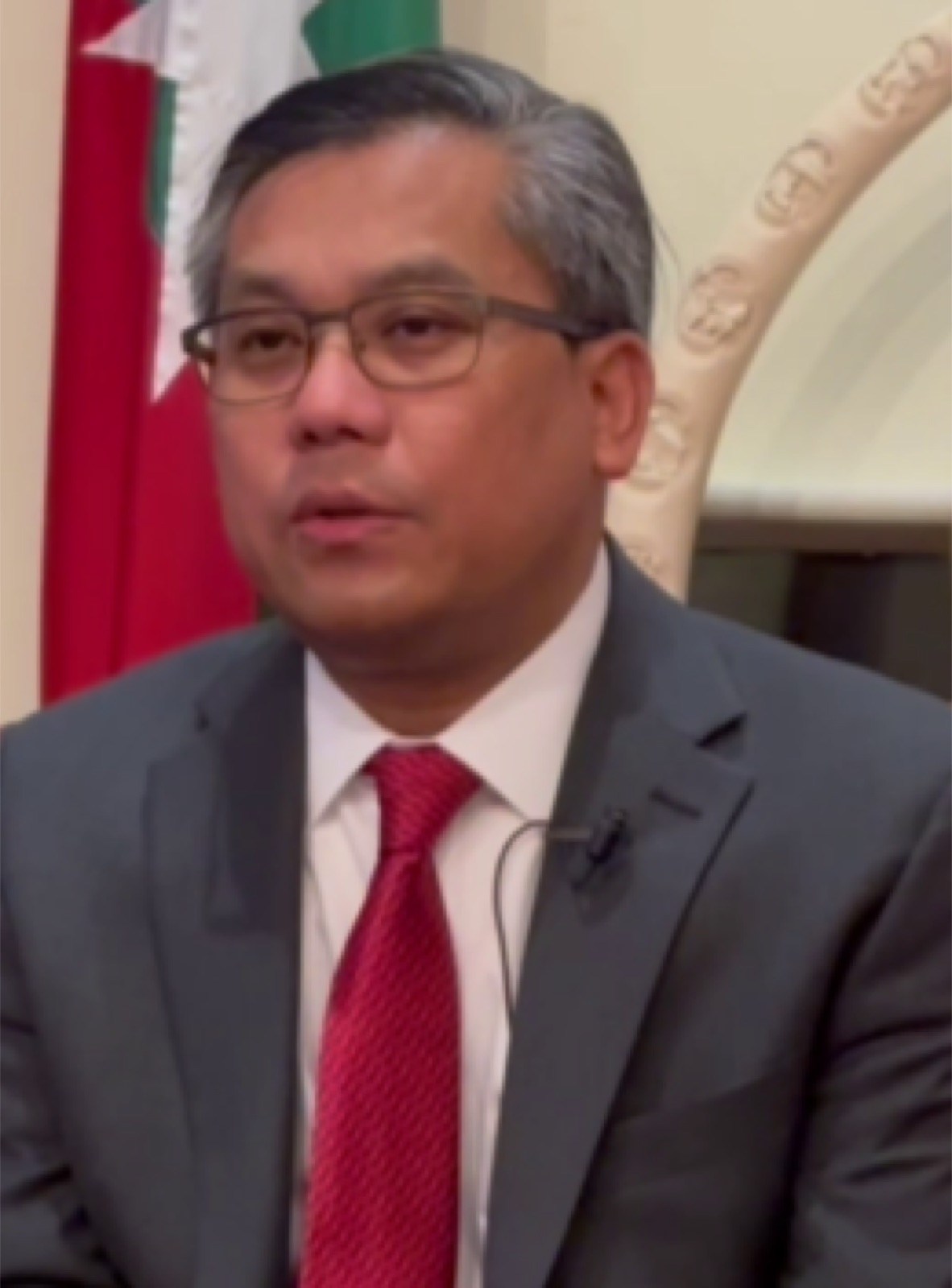
Ambassador Kyaw Moe Tun
Ambassador Kyaw Moe Tun is Myanmar's ambassador to the United Nations who has refused to step down following the military coup and continues to plead the country's plight on the world stage.
Episode Summary
The democratically-elected government he served was ousted in a military coup. Yet, he still refuses to give up or go home. Instead, Ambassador Kyaw Moe Tun remains in New York, pleading his people's plight on the world's most powerful stage at the United Nations. We first interviewed him just over a year ago, shortly after he gave an impassioned speech before his fellow diplomats, denouncing the overthrow of his country's legitimate leaders. How has he managed to keep going? What more needs to be done by the international community to help restore democracy and free political prisoners? He also shares how global powers like Russia and China continue to provide critical support to the junta. As new reports of gross human rights violations emerge, we explore how much worse the situation can get and what lessons can be learned on addressing authoritarian abuses from this dark period in Myanmar's history.
Listen & Subscribe
- Watch on YouTube
- Listen on Apple Podcasts
- Listen on Spotify
Transcript
INTRODUCTION
Mcfarlane: This is a special episode of One Decision. I'm your host, Julia McFarlane. This week, airstrikes by Myanmar's ruling military allegedly killed more than 60 people at a concert, according to rescue workers and members of the Kachin Ethnic Minority Political Organization. It comes just days before Southeast Asian foreign ministers are to hold a meeting in Indonesia to discuss the violence in Myanmar. Last year, the Burmese military, who seized power from the civilian government, fired their ambassador to the UN. Kyaw Moe Tun made global headlines when he appealed to the international community to help his country and the elected government to whom he remained loyal. It's been a year since we debuted our podcast, which sits down with the key decision makers, politicians past and present, activists, experts around the world to examine the choices made that have shaped our lives. Our very first guest was Kyaw Moe Tun, or Joe as he likes to be known. That speech he made was beamed across the world, and he ended it with the three-fingered salute, a symbol made famous from the Hunger Games movies that have become adopted by pro-democratic protesters around the world, but especially in Southeast Asia. State TV denounced Joe, saying he betrayed his country, announcing he was fired and no longer recognized by the junta. But he remains in place at the UN, representing a civilian government that has been dismantled since the coup, with all of its central leaders either arrested or detained, while the dictatorial general Min Aung Hlaing ultimately rules. We caught up with Joe in New York on the sidelines of the UN General Assembly, a year since our first conversation and just a few days after the grim news earlier this autumn that a military airstrike in Myanmar had hit a school, killing nearly a dozen people, including several children.
INTERVIEW
Mcfarlane: It's a real privilege to be able to reconnect with you a year after our inaugural podcast, where you were our guest of honor. You're here at the United Nations. You are a representative of the National Unity Government, that civilian government was deposed in a coup by the military junta back in February 2021. Talk to us firstly about how this week at the UN has gone for you. What is the message that you are hoping to bring to the international community? And what is the plea that you are giving to the UN General Assembly? MOE TUN [2:31] Thank you so much for giving this opportunity to meet you again here at this year. Of course, the situation back there in Myanmar is really deteriorating, and the many people being killed. And now over the nineteen months, more than 2,300 people being brutally killed. And there are many peoples being arrested and the torture. And then also, like, 14,000,000 people in a situation of food insecurity. And then also, 1,300,000 people became internally displaced persons. And then also, million children in need of humanitarian assistance. So it is quite challenging for the people of Myanmar. If you look at in terms of economy, half of the population, it is equivalent to 25,000,000 people are now living under the national poverty line. So it is quite challenging. And also, many of us are worried about if the military stay dragging their power, then the situation were much worse than the ever. So that is why we, the people of Myanmar, together with ethnic resistance organizations, we are working together to end this military dictatorship in Myanmar, then we need help from the international community. But we'd like to thank those countries who are supporting us, so the international community should come in and take the decisive actions against their military dictatorship. That is what we need. So that is, if I had the chance, I would inform to the international community through the UN platform that the people are suffering. We also need the assistance like those who are giving to the Ukraine, that the people of Myanmar are also equally need that kind of assistance from the international community.
Mcfarlane: It's been a year since that very impassioned speech that you gave at the UN appealing to the international community on behalf of the people, Myanmar, representing not the current government, in inverted commas, in charge running the country under General Min Aung Hlaing, but the National Unity Government, which was headed up by Aung San Suu Kyi, detained. What has been your reception at the UN one year later? Which delegations have you been speaking to? Who do you feel is really on your side? MOE TUN [5:39] I'm trying to reach out to the member states, the delegation here in New York as much as possible. Of course, the member state have their own interests. The member state have their own policy or own positions with regard to the situation Myanmar. Of course, because the case of Myanmar, we are always mentioned about, you know, we are fighting for democracy, restoration of democracy. We are working together with all our partners to promote and protect the human rights in Myanmar. Of course, some member state, they explicitly expressed their support towards the people of Myanmar, in particular, National Unity Government and also our efforts for restoration of democracy. Of course, the United States, United Kingdom, the European Union, and the others, they are working side by side with us, but some of them express explicitly that they support towards the national unity government.
Mcfarlane: And what is the status of your mission here in New York? Because of course, you represent a government that was overthrown in a military coup, whose leaders are mostly in jail. The UN was postponing a decision on continuing to recognize the National Unity Government and ambassador, the military junta back in Myanmar, obviously very unhappy with you. They want to replace you with someone of their own choosing. What is the latest on that? Has the UN decided to continue its recognition of the National Unity Government as the legitimate government in Myanmar? And how does that work on a practical level, that there is recognition of a government that has been disassembled? MOE TUN [7:40] Thank you so much for raising this question. You made aware that, you know, the people of Myanmar express their wishes to keep the current permanent representative of Myanmar to the UN at this post. Because last year, the UN General Assembly's Credentials Committee decided, as you rightly mentioned, to defer the decision so that according to that decision, the current permanent representative will continue. Like, I continue doing as a permanent representative of Myanmar to the UN. And then I do, like I mentioned earlier, I convey the messages of the people of Myanmar, and then I inform the desire of the people of Myanmar to the international community through this UN platform. So that is my main part of the responsibility. Of course, I'm trying to make sure that any representation from the military not participating in the any kind of UN meetings. So that's the way, with the help from our friends and colleagues and all the democracy loving countries, we can stop the participation from the military to the UN meetings. But we hope that the member states of the UN, in particular, the permanent members of the UN Security Council, have more willingness to reform the Security Council. I think in the near future, we can move somewhere. But it will take time. So that is very, very challenging issue that we are facing. But of course, we really like to see a resolution adopted at the UN Security Council. And do understand that at this moment, United Kingdom is already initiated to have a draft resolution at the UN Security Council. As you rightly pointed out, that we really like to see the elements to be contained in the draft resolution be strong enough for protecting and saving life of the people of Myanmar. That is why it's come to the arms embargo. But I don't know. It's very difficult, definitely because of rule of the permanent members and rule of the negative vote from the permanent members were say a lot. But at the same time, because of the veto initiative resolution that initiated by the Liechtenstein, whenever there is a resolution being killed by the negative vote from the permanent member states, then it automatically come to the General Assembly. So that is also another option that we are looking forward.
Mcfarlane: You're dancing around the elephant in the room, which is China. Talk to me about your understanding of the Chinese position as it currently stands and their relationship with the Myanmar military. Do you talk to the Chinese? And do you think there is any chance that one day the Chinese would allow a binding resolution on something like an arms embargo to throttle the military? MOE TUN [11:24] Yeah. Of course, that is what the people of Myanmar are expecting. Of course, here, as a diplomat, we meet and talk, but sometime informally, right? So that's the way we meet because as members of the United Nations, as a permanent representative of Myanmar, so we attending the meeting, meeting each other on the way at the corridor. That's the way the engagement that we have. Of course, the relationship between the military and the China, because we look at recently, there is a visit by the Chinese Foreign Minister, Wang Yi, to Myanmar for attending the Lancang-Mekong Subregional group meetings. But what we learned is that the Chinese Foreign Minister make it clear that the visit is for the meeting, for the regional meeting, not for the bilateral meeting. So I do understand that during the visit, he didn't meet with the Min Aung Hlaing. So to engagement between the military and the China, at this moment, when it's come to the procurements of the arms, weapons, ammunitions, I think now mostly the procurement is coming from the Russia instead of China. So that is some changes that we have lately. But that change is not immediately, but it's like during the three, four years ago, the military procurement is more focused on Russia instead of China.
Mcfarlane: I'm so glad you bring that up because it's interesting what you said about the Chinese trying to be very deliberate about the fact that they were there for a regional conference, not specifically for bilateral talks. Is that possibly the tiniest change of positioning slightly from Beijing? Because it wasn't long after the coup happened, was it not, that the Chinese did actually send a delegation to Myanmar. And I do believe also Sergei Lavrov also popped up in Myanmar, not that long after the coup that overthrew the civilian government. MOE TUN [13:50] Yeah. The Russian foreign minister, mister Lavrov, he visited Myanmar actually last month, the August 3, on the way to Phnom Penh to participate in the ASEAN related meetings. So he visited. He clearly made that this is a bilateral visit, and he expressed their support to the military. So that visit make a lot of disappointments to the people of Myanmar. So we are very clear in this point that because we don't want any member state to recognize the military because this is the military, which is supposed to protect its own people, but they are the one who killing the people, who arresting all the anti-military movement. So that sort of thing that we want them to see it, we want them to listen the voices of the people. So the good thing that what we still have is that even though there is some engagement from China, the engagement from Russia, there is no publicly recognizing the military.
Mcfarlane: But that's so interesting, would you say, that perhaps the key relationship for the military has changed, and then it's not so much the Chinese, but the Russians who they are becoming closer with? MOE TUN [15:16] Yes, that is what we see, look at the visit of the Min Aung Hlaing. So Min Aung Hlaing just only visited Russia. I think this year, he already visited Russia two times. One is the private visit, one is attending the East Asia Forum. So whatever the visit that take place, it means that there is an engagement, because also what we learned is that there is some signing the contract. But it's a, I don't see it as like a government to government agreement, but it's a bit like contracting with a private company or contracting with a company. So that's sort of impression that I have. But anyway, what we always like to appeal or we always like to urge the member state is that, you know, don't support the military. That way they're supporting the military is indirectly supporting the military to kill people. So that is very, very important that don't support the military.
Mcfarlane: Well, the Russians are very quickly running out of people to do business with, and the Myanmar military as well, who control a lot of business of your country, also perhaps in similar position. You said earlier that you want the world to aid Myanmar and help Myanmar in a way that it has helped Ukraine. Are you asking the international community to help in military sense in the way that they have with Ukraine? Is that a call to arms? Or do you mean more in terms of focusing commitments and helping with resources? What exactly do you mean by that, that the world should help Myanmar the way it's helped Ukraine? MOE TUN [17:15] Thank you. Both sense, right? Because in terms of commitment is also very important. Because that one is 10 of commitments. Of course, the member states keep expressing their commitment towards the people of Myanmar for our efforts for the restoration of democracy. Those commitment need to be translated into the action, of course. So in that sense, that we need the strong and decisive commitment from all our supporters, all our friendly countries towards the people of Myanmar. Of course, as a diplomat, maybe my answer may be quite vague. But what we always mention is that we need to have the support, not only in the financial way, but also in kind. That is why we are mentioned about in kind, it can be considered everything.
Mcfarlane: Two days ago, there was a military airstrike on a school in Myanmar in which 11 children had been killed. The military, is led by General Min Aung Hlaing, they worked with ASEAN last year on a five point plan for peace. And ASEAN, at the moment, are continuing dialogue with the military, trying to convince them to reform, to cease their attacks on the civilian population. ASEAN are going to revisit that decision in November. Given what the military is doing to the civilian population, to the people of Myanmar, the people it is supposed to protect, as you say, what do you say to ASEAN about their engagement with the military and General Min Aung Hlaing? Is it time for them to cease engagement with a man who leads his army to do things like carry out airstrikes on schools? MOE TUN [19:32] There are so many such incident took place in Myanmar. Whenever the incident happened, the international community came out and condemned the attacks. But what we want is that how to prevent it, that the lives of the people, especially the children, they are our future. How to prevent those our future being killed. So that sort of action that we need from the international community. So that is why people keep saying that statement is already enough. We need the action. We need the decisive action from the international community. So that is why we like to see a decision, a resolution coming out from the UN Security Council to stop the Min Aung Hlaing to kill its own people. So that is why, taking this opportunity, I like to appeal the international community to listen thoroughly and listen attentively to the people of Myanmar who are asking, who are helpless and asking for the help from the international community to save lives of the people of Myanmar. I put myself in the shoes of our fellow citizen in Myanmar who are the victims of the atrocity of the military. I also have children. My son is three years old, my daughter is 14 years old. If my son or my daughter happened like the others, how you will react it? So that is very clear, the message that I want to give to the international community is that please save lives of innocent civilians in Myanmar by taking decisive action without waiting anything, without waiting any circumstances. Time is already due. We need that immediate and timely action from the international community.
Mcfarlane: I want to ask you about Aung San Suu Kyi. Once the darling of the West, she had her Nobel Peace Prize revoked by the international community as the Rohingya crisis raged in Myanmar, more than a million people were forced from their homes, harrowing reports of torture, of killings, of rape as a weapon of war, absolute atrocities committed on people from Rakhine State in your country. That was never news, the military has been doing what it's been doing for decades. And while I think a lot of the international community will appreciate that Aung San Suu Kyi was in a difficult position, and given everything we've said about how much strength the military has, she nevertheless, she never condemned what was being done to the Rohingya. How do you feel about that? MOE TUN [22:53] So during 2016, 2017, people not really know about the atrocities that committed by the military because of the, you know, all kinds of misinformation, disinformation. So the information reached to the people sometimes it's sort of makeup or sort of trying to make the in favor of the military action. So that sort of information that we receive, including ourselves. So but that is why the Aung San Suu Kyi has been trying to bring the international involvement in the solving the issue of the Rohingya so that she invited the Kofi Annan, former UN Secretary General, to lead the commission, we call it Rakhine Commission, to find the ways for solving the problem. So the commission lasted for one year. The mandate is one year. So the commission came out with the 88 recommendations that the Aung San Suu Kyi government welcome, and, you know, they are committed to implement those 88 recommendations. Then we know that there were atrocity take place. Then there's issue brought to the ICJ. So the Aung San Suu Kyi government at the time is very, they are working really on the thin lines. One side is the perception of international community, and another side is perception of the people ourselves. But now many people know that the atrocities of the military is really terrible. It's amounting to the crimes against humanity. So that is why in the people of Myanmar, the National Unity Government, we withdrew our preliminary objections with regard to the jurisdictions of the ICJ over the case. That is the position of the people now. So I think because of that military coup, I think the issue of the Rohingya can be resolved in the future because the people are already with everyone, I mean, with the Rohingya. Now it's very clear that all the root causes are coming from the military. So we need to end this military dictatorship.
Mcfarlane: I'm very struck by two things you said. So you say that the people of Myanmar who had been subjected to misinformation were not aware of what was happening to the Rohingya, the displacement of millions of people from swathes of your country. And I mean, the considerable international attention and prolific coverage on social media, and international outlets that were laser focused on it at the time. You're saying that they did not know what was being done to the Rohingya. And then you also said Aung San Suu Kyi knew perfectly well what the military were doing, but she never conceded that there was ethnic cleansing, that there were crimes against humanity being committed. Maybe she knew that and privately acknowledged it, but she never conceded it publicly. MOE TUN [26:27] No. I think that Aung San Suu Kyi, she clearly made that the atrocities took place. That is the public statement that she made at the ICJ. This is very clear that atrocities did take place.
Mcfarlane: But she defended the military many times to the international community, which is why the Nobel Committee withdrew her peace prize. MOE TUN [26:48] So I'm not trying to defend Aung San Suu Kyi, but what I'm trying to say is that she look at the sentiment at the time, the people of Myanmar. You look at all the news, you look at the social media, how the people responded to the issue, how the change of comment taking place in social media. I mean, the government's stress is that we need to bring those perpetrators to the justice. That is clear. But what she always pointed out is that we need to exhaust the domestic justice system first. That is the point that she raised with regard to the coming in of the international justice system. But for us, it's very clear, since the February 1, 2021, domestic justice system is already failed. So we need the international justice system to come in and bring the perpetrators to the justice system.
Mcfarlane: I take your point and your point that it may have been very unpopular with the population if Aung San Suu Kyi had stood up and criticized the military. But that's a very populist move. She should have been better than that, shouldn't she? She was a global icon for human rights and for peace and for dignity and for the rule of law. MOE TUN [28:16] Yeah. Thank you. That is all the comments that I always receive, but at the same time, put in ourselves in the shoes of Aung San Suu Kyi as in the opposition and as in a government who is a person lead the government. So that she need to think of all the dimensions. Of course, one point is we need to look at from the human rights point of view, but at the same time, the other point is the unity and reconciliation. So that sort of dimension that she also need to, again, I'm not defending her, but the way that as a person who are in the government who lead the government, she need to take into account of all the dimension that she being asked to or she has to listen to. So that sort of, maybe some group of people may not satisfy with what she's doing. Maybe some group of people also may not be happy with the way that she stand. So during what I can recall is during that time in 1980s, 2018, 2019, she got blamed from both sides. When people inside the country say that the government is not doing enough for the people in Rakhine. And then also international community, we get blamed that Aung San Suu Kyi didn't do enough for the Rohingya. So that's sort of, I take your point.
Mcfarlane: Can I ask one final question? So you hinted that perhaps people's perceptions had changed since the coup. Does that mean that the civilian population, the people of Myanmar, perhaps they feel a little differently now about the case of the Rohingya? Is that what you were alluding to, that perhaps maybe they are now realizing perhaps the military? MOE TUN [30:23] Exactly, exactly. Because whoever I talk to, even whoever those who have the, I should say, not really favorable perception toward the Rohingyas. Now after the military coup, their perception is different from before. That is why we are very confident that when the military dictatorship is end, the issue of Rohingya, we are very, very confident that we can resolve the issue of Rohingya because that is why we keep expressing our hope and also expressing our belief that the repatriation of the Rohingya can take place after the end of the military dictatorship. That is what we like to see because we want them to come back to the places of origin.
Mcfarlane: I'm so pleased that there is a sliver of a silver lining after all of that, but it's nice to end on a positive and optimistic note. That's it for this special episode of One Decision. For more conversations on foreign policy and how key decisions have influenced the world we live in, why not like and subscribe so you never have to miss an episode? We drop full shows every Thursday. From me and the team, thanks for listening, and see you next time.