Hosted by Christina Ruffini and Sir Richard Dearlove
Guest
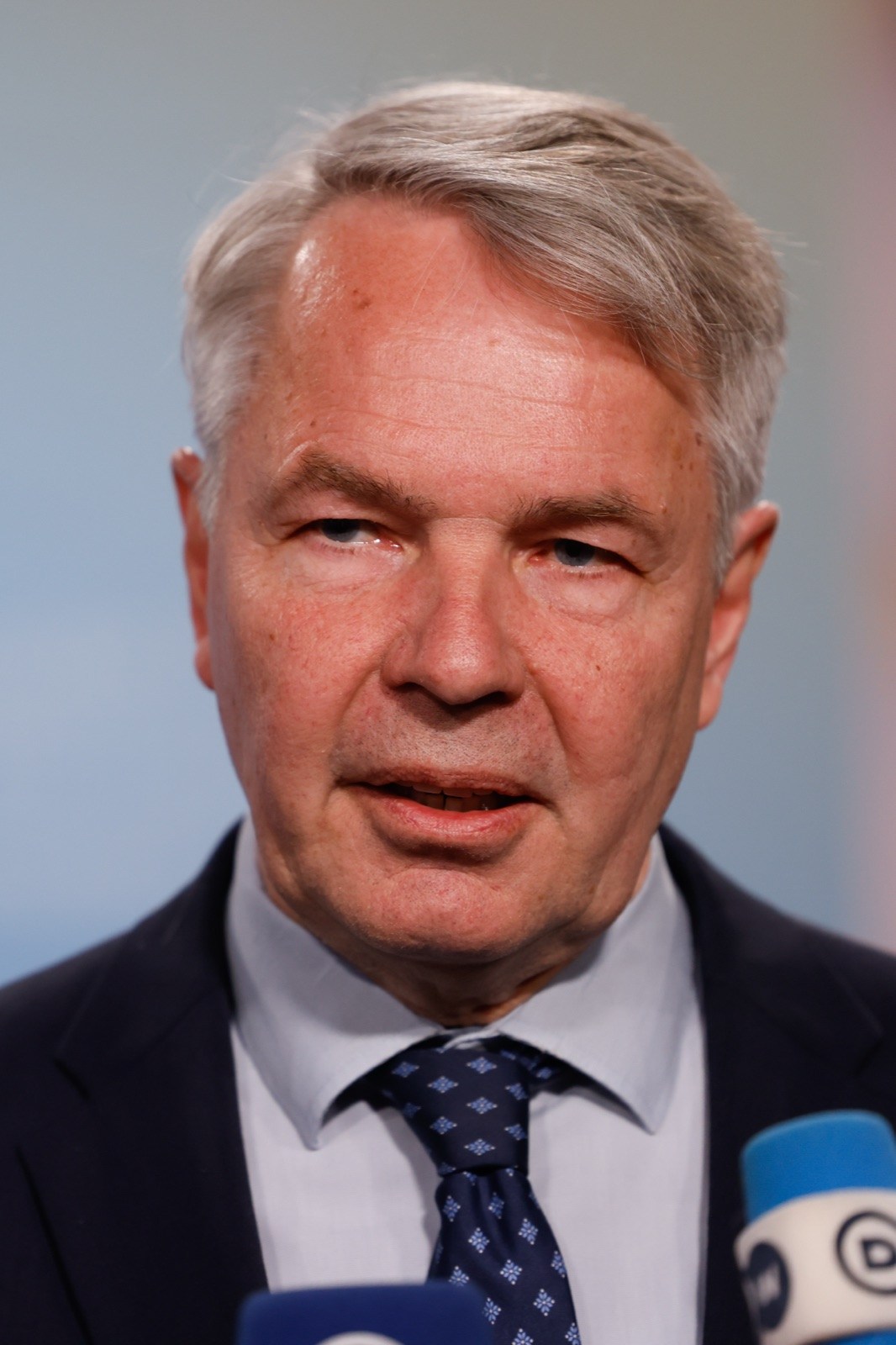
Pekka Haavisto
Pekka Haavisto is Finland's Minister of Foreign Affairs who discusses why the Nordic country abandoned its decades-old policy of neutrality to join NATO.
Episode Summary
Vladimir Putin's efforts to prevent NATO’s expansion suffered a dramatic setback this week as Finland and Sweden were formally invited to join the seventy-three-year-old alliance. Finland's Minister of Foreign Affairs, Pekka Haavisto, joins host Julia MacFarlane on this special edition of One Decision recorded at this week's historic NATO Summit to discuss why the Nordic country decided to abandon its decades old policy of neutrality.
Listen & Subscribe
- Watch on YouTube
- Listen on Apple Podcasts
- Listen on Spotify
Transcript
INTRODUCTION
Lockwood: You're listening to a special episode of One Decision. We are in Madrid for the historic NATO summit, and some of the biggest news coming out this week was Turkey dropping its objection to Finland and Sweden becoming members of NATO after decades of neutrality. Pekka Haavisto is Finland's foreign minister. He sat down with us to give us his take on the historic announcements and what Finland's military will bring to the alliance. Minister Haavisto, first of all, it was just two weeks ago when Turkey was refusing to enter into talks with you and Sweden, accusing both of your countries of being incubators for terrorists. Now you've made quite a breakthrough this week. The memorandum of understanding signed by your three nations shows a raft of new commitments that you have made in order to placate Ankara. You've reaffirmed your commitments to Turkey's security. You've promised not to provide any support to the YPG, or the PYD. You've also promised to address Turkey's pending deportation or extradition requests of terror suspects. First of all, these promises you've made to Turkey in order to have them drop your opposition to your membership of NATO, are they a small price to pay for NATO membership? And what exactly does addressing Turkey's extradition requests mean, and are they likely to be granted?
INTERVIEW
Haavisto: Well, first of all, the document that we prepared with Turkey, it took the final discussions around four hours with President Erdoğan and our President Niinistö and Prime Minister Andersson from Sweden. And we, of course, had a very clear limit from our parliament. We are not going to change our legislation based on any document that is signed here in the Madrid NATO summit. So we said on arms export that we will consider also the membership of the same alliance as one of the arguments that can be used in our arms export. We have a national legislation on arms export where are several different components, including the human rights issues. Secondly, on the deportation, we actually promised to process things without delay and so forth. But of course, again, the legislation that we have on deportation is very clear and including the human rights principles and so forth. And then on the first issue on the terrorism, it's of course, it was complicated discussion because first it was about the PKK. And the PKK issue is such that PKK, as an organization, is forbidden in Finland, Sweden, in the whole European Union. It's very clear that it's looked as a terrorist organization. Then the Turkish request has been to add to this terrorism list some other organizations that they are concerned, including the Gülen organization and including the YPG in the Northeast, Syria and so forth. And we refused, of course, to list these as terrorist organizations. But in the document, described the fact that Finland, Sweden is not supporting these organizations. We are not funding these organizations and so forth. It's actually already an existing fact. Turkey was very pleased with that argument and put that to the document.
Lockwood: But you've promised to process these requests for extradition, you've not promised to grant them and of course Turkey's idea of a terrorist may be a European person's idea of an activist.
Haavisto: Well, when it's we promise to process, then of course we didn't guarantee any outcome of that processing. And of course in that process, different arguments can be very heavy. The human rights arguments and some people might need protection and so forth. But we have, of course, even in the past, deported some of the criminals, ordinary criminals, for example, people who have done some rapes and so forth. Have been deporting those to Turkey, that's clear.
Lockwood: Got it. Finland and Sweden are often described as being among Europe's most sophisticated and powerful militaries on the continent. With NATO membership, you're bringing that firepower right to Russia's doorstep. Previously, you've had a very long history of wartime neutrality and staying away from military alliances like NATO. Before the invasion of Ukraine, your government had previously said you were not worried about the threat from Russia to your country specifically. I even heard a minister on the radio dismissing any threats to Finland despite the fact that you have a massive border with Russia. So why have things changed now and why did they not change back in 2014 when Crimea was annexed or even 2008 when Georgia was annexed? Why is now different?
Haavisto: First of all, we have more than 1,300 kilometer common border with Russia. It has been mostly in the history of peaceful border and we want to remain that border as a peaceful border. It's very important that we have a normal border, cross border cooperation. We are actually still issuing visas to Russian citizens, our border authorities are working normally. And we are, of course, very happy that this is the situation, our border, and we want to bring to NATO a peaceful border also between Finland and Russia. Then those things that has changed the February 24 in our thinking. First of all, have seen the collapse of the European security system. Finland has always been the true believer of the OSCE. And of course, the Helsinki Final Act was signed in Helsinki 1975 and will be actually chairing the OSCE 2025 again during the fifty year celebration. But of course, we also have to admit that the European security architecture has collapsed because it couldn't prevent the war in Europe. The whole security architecture, of course, the main task for that is to prevent the war and we had two Minsk agreements and we had the Budapest agreement on the nuclear weapons and so forth, we still saw a direct attack against Ukraine. Secondly, issue that Russia is behaving more unpredictable way and actually taking more risks also in its own operations. When we compare to Georgia 2008 or to Crimea occupation 2014. These were very calculated or well calculated risks by Russia when they maybe saw that some sanctions are coming, but these were not fundamentally influencing Russia. But to attack country of 40,000,000 people and try to change in a military way, government is quite a step. So it's in other scale than these earlier ones. Then, of course, we have seen that Russia was playing with the idea of a military exercise on the border of Ukraine, but it was bringing 100,000 troops without a general mobilization. So Russia actually showed quite a capacity that they can collect 100,000 soldiers and then suddenly come over the border, aggression against the capital, Kyiv. Then this loose talk about nuclear weapons and chemical weapons is also a new phenomenon. Goes back almost to the Cuban crisis when this kind of language has been used. So these are some of the arguments. And, of course, then finally, the Russian violation of the norms of warfare when we look to Geneva Conventions and how civilians should be treated and how prisoners, war prisoners, should be treated. All these norms are now violated. So these facts, of course, put us to react to the situation very rapidly. And we were thinking that we have a strong traditional military force in Finland. We have almost 300,000 men and women in our reserve. We have a conscription army. We have just ordered 64 new F-35 fighters and so forth. But our people ask that if we are threatened with unconventional weapons, with nuclear weapons, with the chemical weapons, or if we are threatened with these hybrid and cyber threats, these are maybe threats that we cannot face alone. We need some cooperation, and that was one of the arguments.
Lockwood: I see. I see. The declaration signed by NATO today contained a paragraph that essentially equated Russia's actions in Ukraine with terrorism. Would you describe what Russia is doing in Ukraine as terrorism?
Haavisto: Well, of course, this was a NATO document that we didn't participate in formulating it yet. But, of course, what we see now by Russian is, as I said, not only a criminal act of war, which is internationally condemned, but also the issues in Bucha and others where human rights violated, the civilians are violated in this warfare, we are extremely concerned that principles of Geneva Conventions are not followed.
Lockwood: Right. A lot of those crimes were carried out in Syria by Russians. Would you also describe their actions in Syria as terrorism?
Haavisto: Well, in Syria, of course, I don't want to now define with this or that topic, but, of course, in Syria, what we witnessed was also the use of the chemical weapons at some moment and so forth. And this, of course, shows that international rules are not respected in this war situations. And this is a major, major concern in international community.
Lockwood: CNN reported this week, I don't know if you've seen this, that White House officials privately doubt that Ukraine will be able to take back all of its territory that has lost to Russia and be able to go back to the pre February 24 borders. That is even with the heavier weaponry and more sophisticated weaponry that The US and its allies plan to send to Ukraine. What would your thoughts be on that?
Haavisto: Well, first on the defense of Ukraine, of course, Finland has also participated to send lethal material. I think we are now preparing our seventh package of lethal material to Ukraine. And this is, of course, the first time we are sending arms and weapons to military area or in the country that is in the middle of war. And I think this just shows and this is what almost all EU countries are doing actively supporting now Ukraine. And of course, for our purposes to get as good situation as possible for Ukraine prior to possible talks one day on the peace and so forth. And of course, we hope that Ukraine can take back the areas in the East and of course Crimea and so forth. But it's very much up to Ukraine then to decide, of course, when and how any peace talks would be conducted. But prior to that, I think it's very important to support their also them militarily.
Lockwood: What do you think it would take for the Ukrainians to be able to push the Russians back to the pre February 24 borders? Is it just a matter of heavy weaponry, sophisticated weaponry from The US and its allies, or does it need more than that?
Haavisto: Well, difficult to say because this war, of course, depends on the both sides. First, it's about the Russians' own resilience and the resilience of Russia and their capability to renew their military equipment and build maybe have more ammunition and build their military equipment and so forth. I'm not fully aware what are their capabilities. Now, of course, the sanctions are influencing them, for example, in the form that modern technology cannot so much be used. But of course, they seem to use also old fashioned technology and so forth. On the other hand, of course, I know that many countries who are offering capabilities to Ukraine are also putting some limitations, for example, that the materials cannot be used to attack Russian side and so forth.
Lockwood: Is a very difficult plan. But on that, the Russians, they claim the areas that they have taken in the Donbas, they say that this is now Russian territory. So so what happens then?
Haavisto: This is very difficult to say. I think prior to Bucha news, I think there were some peace initiatives or peace talks facilitated also by Turkey where some kind of ceasefire was planned according to the borders of February 24 and so forth. Of course, one element that has been now is obvious is that Russia is also blocking, actually, the sea routes of Ukraine and trying to make Ukraine a landlocked country. And, of course, this, as we know, is influencing to the grain trade and to all economic activities of Ukraine. And one of the solutions, of course, of the war has to be that Ukraine has, again, access to the sea and through their support and probably other ports. This is a very important goal.
Lockwood: The Soviets invaded Finland back in 1939. And amid a very fierce and globally admired Finnish resistance, being hugely outnumbered by the Soviet army. Your country resisted occupation for more than three months. What are the lessons from that invasion? And what would be different about a confrontation with Russia today, taking aside how NATO would respond?
Haavisto: Well, of course, the so called Winter War 1939 was complicated for Finland. Therefore, we were fighting alone, we at that moment couldn't get international help or international support. And of course, that's probably why that is in the memory of many Finns, not only that we lost so many Finns and Finnish soldiers in the war, but also the feeling that what is the feeling when you are fighting alone. And even if press was covering it, global press was covering it as a very heroic battle, of course, for Finns, it was very consuming battle for the reason that we were lack of men and lack of material in the end of the war. And then, of course, had to go also to the peace talks. What it probably showed us is that how important is to have support of your neighbors and allies and so forth. And this has since then, of course, been a topic. And when we joined European Union, for example, the feeling was that, well, never alone. And now, of course, the NATO application is there. And this, I think, the same feeling that never alone is one of the leading principles.
Lockwood: Yeah. But that's interesting because for so long, you've had this position of military neutrality. So how does that square?
Haavisto: That was, of course, since we were losing, of course, the winter war and then the continuation war against Russia, of course, we were in a very narrow path to balance between neutrality or the increased Russian influence to our society. And we, of course, had been witnessing the occupation of the Baltic States. We have been witnessing the whole born of the Cold War divided Europe, and we remained on the right side of the iron curtain that time, but trying to balance in our foreign policy. Of course, also, our military capabilities were limited due to the peace agreements that we had to make with Russia, and that, of course, was also one of the limitations that we had.
Lockwood: What is the best thing that NATO gets out of Finnish membership? Is there an aspect of your defense forces or security that is particularly useful to the NATO alliance? If you were to be singing the praises of your military, what is the top thing that you'd be saying to NATO, come on, you really wanna give us membership because you get this?
Haavisto: Well, I said today in a panel discussion in the NATO summit that with Finland, in one way, people are always thinking that Finland is a very modern country and technologically advanced country, I said that you will get a very old fashioned member because we have a conscription army. We have almost 300,000 men and women in our reserve. We are still building bomb shelters in Finland. It's according to our legislation. You have to protect yourself, of course, from even from the nuclear war and so forth. So in that sense, we are a little bit old fashioned compared how things have been developing in other countries in Europe. But at the same time, of course, we have a technically advanced military. We have ordered 64 new F-35 planes and so forth. And we have been investing, of course, to our military. We are over 2% of our GDP. And we have been taking part to NATO operations in Bosnia, in Kosovo, in Afghanistan and so forth. So we are, of course, having a military that has been used to cooperate with the NATO.
Lockwood: You've mentioned that you want that long border that you have with Russia to remain peaceful. What arena do you find, are you most expecting a potential confrontation with Russia in? Would it be a land invasion, or would it be airspace, maritime, or cyberspace? If Russia were to attack you, how do you think they're most likely to do it?
Haavisto: Well, when we tabled the NATO application, our president, Niinistö, called to Putin and was telling him that now Finland is applying NATO membership. And some of our European friends were asking, why to call? Why to call to Russia? That's very polite. Said, well, we usually call to our neighbors and tell what's how is our life and what we are doing next and so forth. We are used to that. And of course, the answer from Putin was that it's not so good idea, and we are not threatened in any way by Russia and so forth. But of course, for those reasons that I explained, we feel more unsecure now in Europe after the Russian attack against Ukraine. We are prepared, of course, traditionally for all kinds of violations on the land or air or sea and so forth. But, of course, nowadays, the new layer of threats are coming through the hybrid and cyber issues. We have, of course, suffered some of the cyber attacks like almost any country in Europe. And of course, we have to be ready for those as well. But so far, everything has been peaceful.
Lockwood: What's it like being next door to Russia? If you could swap with another European country that doesn't share a land border, would you do so?
Haavisto: Well, I have said that we have we look one hundred year backwards and one hundred years towards the future. And when we look backwards, we have a neighbor where first was a Russian Tsar and then Lenin and Stalin and then Khrushchev, and then Brezhnev, and then Gorbachev, and then Yeltsin, and then Putin. So we have seen it all, actually, and all these changes in our neighborhood. And if we have to foresee the future, actually, we have the same guess that it will be one hundred year, maybe time to time peaceful periods, maybe western oriented periods, and then some other more authoritarian periods. And this is the neighbor we are used to live with. Of course, this time is very exceptional because we have heavy sanctions also against Russia at the moment. It's influencing to our economic context to Russia. Of course, it's also influenced to us in the form that the gas trade was cut. The oil, we don't buy any more oil from Russia or coal from Russia and so forth. So we have to adjust in this new situation. But I think it's a Russia that at some moment will change. Of course, we hope that change then will happen to the better direction.
Lockwood: I think it's nice to end on a positive note, a hopeful note. So thank you so much, Minister. Thank you very much for your time. Thank you. That's it for this special episode from One Decision here at the NATO Summit in Madrid. Stay tuned for our continuing coverage, exclusive interviews with world leaders and NATO ambassadors from this historic gathering at a time of war. From me and the team, thanks for listening, and see you next time.