Episode Info
- Season24
Hosted by Christina Ruffini and Sir Richard Dearlove
Guests
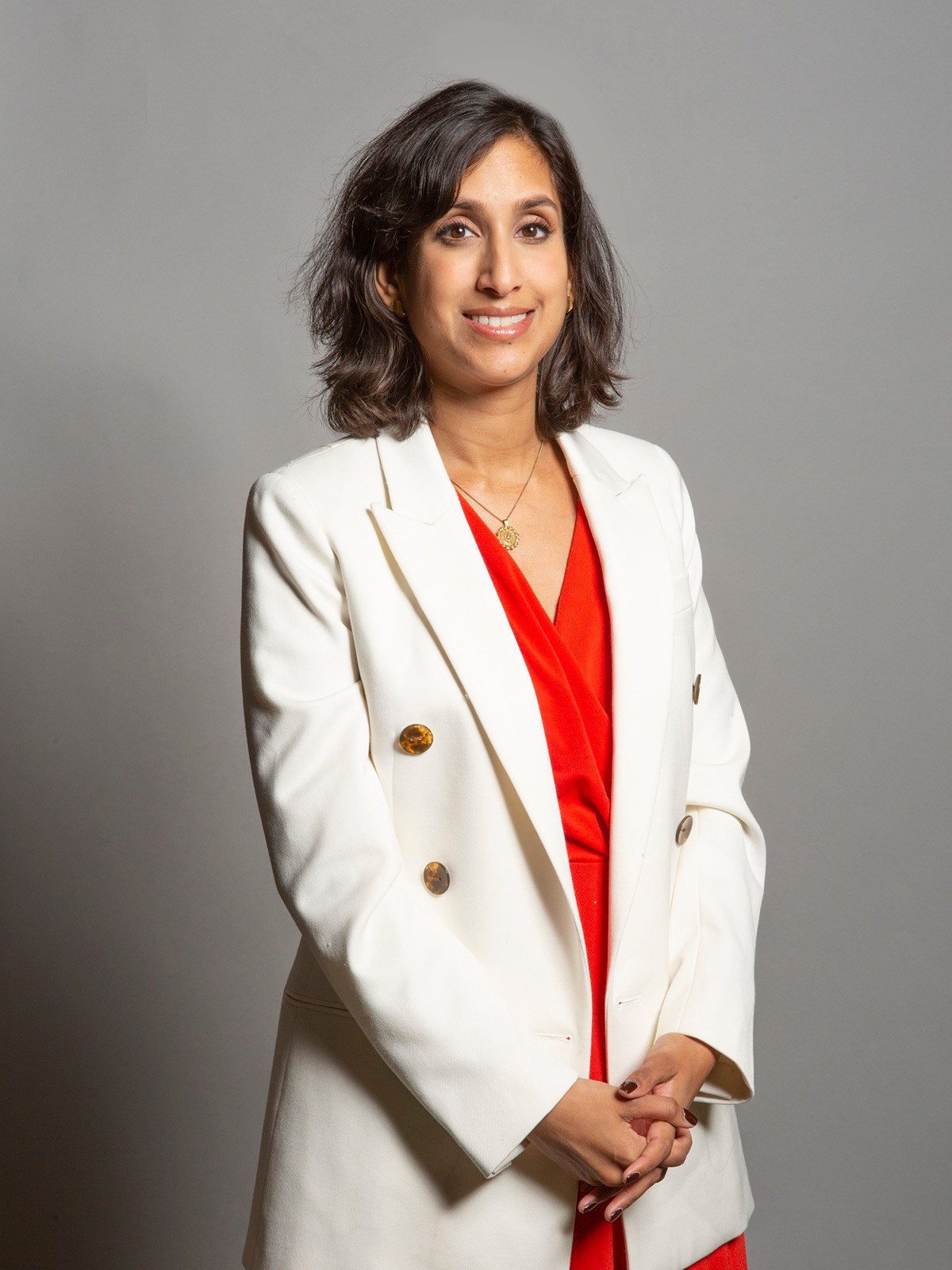
Claire Coutinho
Claire Coutinho is the UK Secretary of State for Energy Security and Net Zero and a rising star first elected in 2019 with the ear of Prime Minister Rishi Sunak as a close advisor.
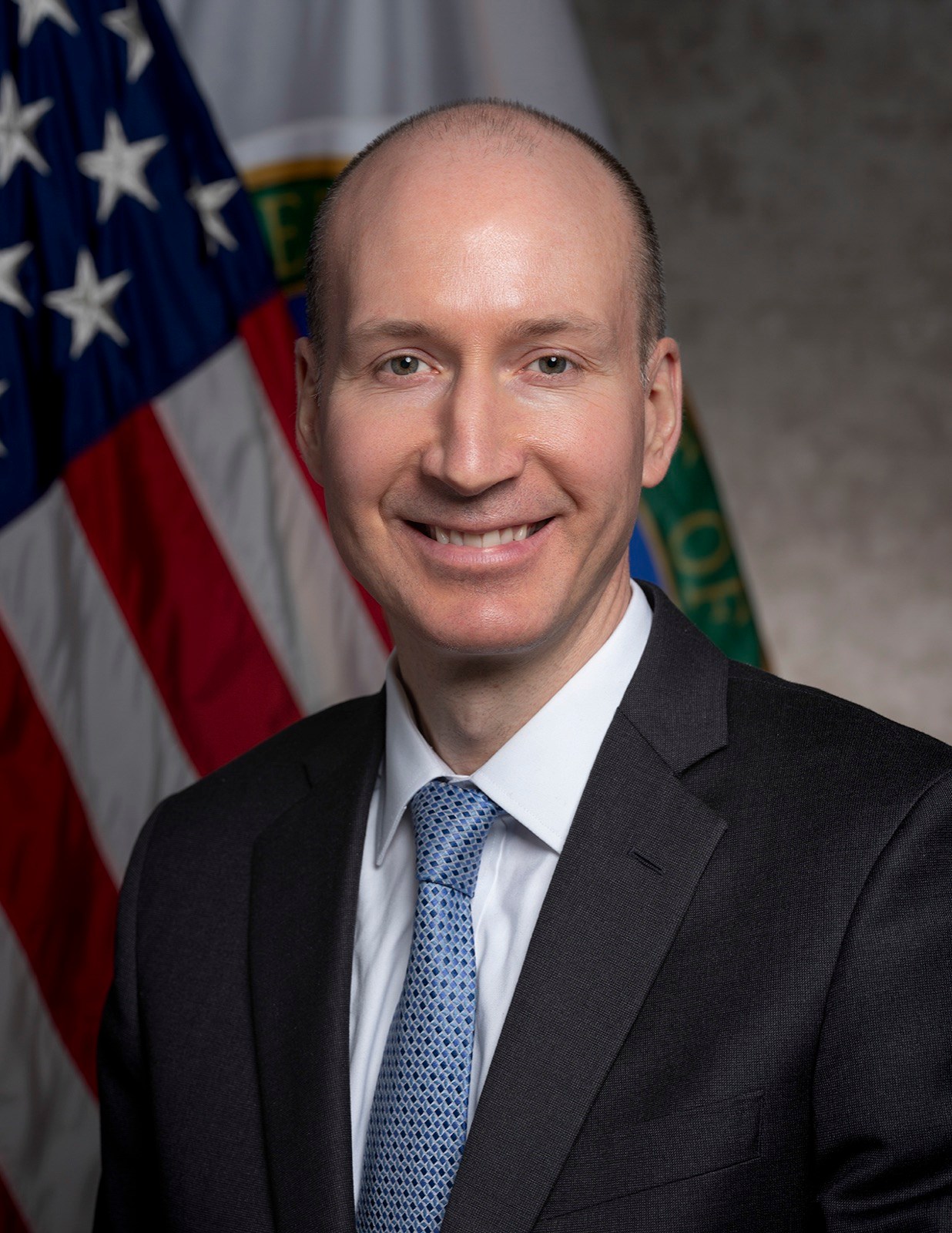
David Turk
David Turk is the United States Deputy Energy Secretary with decades of experience in government including work in President Biden's senate office and as Deputy Executive Director of the International Energy Agency.
Episode Summary
The United Kingdom and the United States are two leading governments working on transitioning to net zero emissions by 2050. Both the Sunak and Biden administrations have set ambitious goals for the next several decades, and in some ways, they are going about it similarly with sweeping legislation—like the Inflation Reduction Act—that is setting new standards. Guest host and journalist Liz Landers spoke with two top officials overseeing this work for their respective countries: UK Secretary of State for Energy Security and Net Zero, Claire Coutinho, and United States Deputy Energy Secretary David Turk. Coutinho's a rising star in the conservative government who was first elected in 2019—and has the ear of Prime Minister Rishi Sunak as a close advisor. We asked her about nuclear power, using oil and gas drilling licenses to stabilize energy sources during the transition, and how the war between Ukraine and Russia has impacted energy policy. Across the pond in the United States, Turk has decades of experience in government, including working in President Biden's senate office, and more recently was the Deputy Executive Director of the International Energy Agency. We spoke with Turk about the implementation of the Inflation Reduction Act, a massive piece of legislation signed in 2022 that invests in clean and domestic energy projects—and why there aren't more electric vehicle charging stations around the country.
Listen & Subscribe
- Watch on YouTube
- Listen on Apple Podcasts
- Listen on Spotify
Transcript
INTRODUCTION
Landers: Welcome to Power Decisions, the energy series that explores the world's energy sources and the politics and power behind the clean transition. I'm journalist and correspondent Liz Landers, and I'll be your host today. As part of our continuing coverage of the net zero transition, we wanted to check in with the two people overseeing these monumental government projects in the United States and in the United Kingdom. Both the Sunak and Biden administrations have set ambitious goals in the next decades and in some ways they're going about it in similar ways with sweeping legislation like the Inflation Reduction Act that is setting new standards. But the two global powers also differ in their reliance on some fossil fuels and how the war between Russia and Ukraine has impacted energy sources. First we spoke with the UK secretary of state for energy security and net zero Claire Coutinho. She's a conservative government rising star who was first elected in 2019 and has the ear of prime minister Rishi Sunak as a close adviser. Here's what she told us about the net zero target that has been set for 2050.
INTERVIEW: CLAIRE COUTINHO
Coutinho: Well, look, the UK has come a long way in this area. So we've always been a country that's produced a huge amount of our energy since the industrial revolution when we had coal, and then we've had the North Sea for oil and gas. And now we've been building an enormous amount of renewable capacity as well because our basin is declining in terms of oil and gas, and we need something to replace it. And obviously we want to have clean energy going forward. So we now have the second highest amount of operational offshore wind farm capacity anywhere in the world. We've got the first, second, third, fourth and fifth largest operational offshore wind farms. And we're doing an enormous amount alongside that as well in terms of nuclear and other areas. So the good news is that we have a market mechanism called the Contracts for Difference, which we brought in in 2014, and that brought prices down by about 70%, which has allowed us to build so much. Also good news is that now about half of our energy in terms of electricity comes from this new clean energy, where when we came into government as conservatives in 2010, it was about 7%. So we've seen an enormous increase in terms of the amount of our electricity we're using that's coming from clean energy. I think there's always going to be elements of your ecosystem who want to challenge you to go further. We're the first country in the G20 to have halved emissions. Even if you look forward, we have the most ambitious targets of any major economy. And every single We have these carbon budgets, which set out how much carbon we're trying to reduce out of our system. Every single carbon budget we've had so far, we've overshot. So, you know, I think we're making amazing progress compared to our peers. And we've done all of that, I might add, whilst growing our economy. So in that same period, we grew the economy by 82%. And we have avoided some of the challenges that we're seeing in other countries in Continental Europe, the riots, the protests, by trying to do that in as thoughtful way as possible, making sure that we're not hitting households and not making our public bear costs that they simply can't at the moment. So I think, look, we're always gonna have parts of our system which challenge us. We're a healthy democracy. That is part of it. But I think we can be very proud of our record and how we're going about it as well.
Landers: So it sounds to me like you're pretty confident that you will hit those net zero emission goals.
Coutinho: This is part of what we do. We set out detailed policy. We can't set out every single policy. Some people say to me, can you tell me exactly what you're doing between now and 2050? But technologies will develop, things will change, global landscape will change. You know, some things might appear that we haven't thought about yet. We need space for innovation as well. There is no economy or business plan that has succeeded by having a rigid, unmoving plan over thirty years because of the pace of change that we see around us, right? So we have set up more detail than, again, virtually any other country, and we're making progress, but we're doing that in a sensible way, thinking through the system, looking at the challenges, but also leaving a little space for brilliance and innovation to develop as well.
Landers: You gave a speech recently that I was reading through. And basically, you talked about how gas plants and gas generation will still be needed going forward to provide backup and, basically, energy security for the UK. Sort of explain that transition and how you see traditional fossil fuels playing into this clean energy transition.
Coutinho: Yes. So for us, it's very simple. You know, at the moment, we get about 70% of our energy consumption from oil and gas. That is gonna markedly decrease because of the work that we're doing. So in 2050, that'll go down to something like 25% based on data analysis from the climate change committee that you just mentioned. But the key fact there is we're still gonna need some oil and gas. You know, as I've said before, it's net zero, not absolute zero. And if you were saying you don't want to use any of our British oil and gas that we can produce, what you're really doing is increasing your reliance on imports from abroad. And even thinking that through, obviously, there's a lot of reasons why you might not wanna do that. It's not great for your economy. There's 200,000 people who work in the oil and gas sector in Britain. But also, just from an emissions perspective, your LNG gas that you might import has four times the emissions of what we domestically produce. So my point about all of these things is, yes, okay, we're gonna be ambitious. Yes, we're gonna do this thing. But we also need to be very rational about it. You know, my background was, you know, I worked in finance. I worked in deprived parts of the country. I was a massive philosopher when I was at university. And I think you have to apply logic, common sense, a sense of sympathy for the people in your country and how, you know, your plans might affect them whilst making the progress that you set out.
Landers: You mentioned LNG imports, liquid natural gas imports. The UK government has a multibillion dollar contract right now with TotalEnergies Gas and Power, which is a subsidiary of a French company that is continuing to import Russian liquefied natural gas. Can you rule out right now that Russian LNG is making its way into the UK supply?
Coutinho: Yes. We've set out very clearly our plans on this. We actually led the way, I think, in making sure that we don't have Russian oil and gas in our system. It's actually something that I talked to my European counterparts about. I mean, for them, some of them more challenging, but actually quite remarkable in terms of what they've achieved since the war in Ukraine started. And look, we're working on all of this together. We increased our gas exports to Europe when they were having the particularly difficult period of weaning themselves off. But we're 100% committed to this. And like I said, we've really been leading the way on that, on sanctions, on supporting Ukraine. It's something which is very, very meaningful to my government and this country.
Landers: So no Russian LNG right now that's being used in the UK?
Coutinho: No. We don't have any Russian oil and gas in our system.
Landers: In the US, the Biden administration announced this pause on future liquid natural gas projects. The EU has said that they're not sure if that will have short term effects, that the supply is still coming from the United States, but that it could have longer term effects. Do you see the US's pause on these projects, which is expected to only last through this year, as having an effect on your ability to get liquid natural gas and potentially your national security if you have to rely again on Russian liquid natural gas?
Coutinho: Well, look, we get 50% of our gas from our domestic production. We then also have pipelines with Norway, and then we have very high quality LNG terminals. So we have actually a very good and secure access to gas in our system. And it's not really for me to comment on another country's democratically chosen path, so I won't do that. But what I will say is, I think it's really important that we, over in Europe, are thinking through how we can maintain this pressure on Putin to make sure that we are thinking through all of our supply chains and removing him from them.
Landers: I've read some stories where you have talked about your attraction to this work, your upbringing, your parents being immigrants, I believe. You're one of the youngest people, I think, to have this role. Talk about your personal attraction to this work. What motivates you to get up and work on energy policy for your country?
Coutinho: There's a lot of things that I care about in terms of my country. And, you know, you should come and see what we're doing here. It's an amazing place. But in the energy space, there's a few things which are just so a chime with what I care about. So one is the economy, making sure we've got a strong economy. And obviously, having cheap, secure energy is a really important part of that. No country can succeed if they don't have access to cheap and reliable energy. Secondly, one of the things I did before politics, and I'm very passionate about, is going to deprived parts of the country and seeing how we can revive their sense of opportunity and aspiration. It was something I spent a fair amount of time doing. And the amazing thing about the energy transition is actually where you're placing these offshore wind farms or your floating offshore wind farms or your nuclear or whatever it might be, often it is going into those areas and creating lots of high quality jobs, which is wonderful because that's the kind of thing I think sort of people like me in government dream of doing. And thirdly, one of the things that I genuinely care a huge amount about is protecting our nature, protecting our environment, making sure that we've got something to pass on to our grandchildren. I have to admit, mine are theoretical at this point. They don't exist yet. But my future potential grandchildren, I want to be able to pass over a beautiful country and a successful planet. So I think all of those things sit in the energy security and net zero space. There is also, I think, the political side, an interesting moment now because we've seen the benefits it can bring, but we can also see where, you know, countries or places are adopting policies which don't work for their publics or don't work for their households, then that consensus can break very easily. So part of my job is also to make sure that we're doing this in a fair way, that we are making sure that we're doing this in a way that's positive for Britain, that's attracting investment, that's attracting businesses, that's helping households where we need to sort of help them transition for their homes, for their cars, for whatever it might be. But we're doing this in a way which is positive for us. So that is a challenge to work out. It's also been something that I've really enjoyed doing in this role.
Landers: How often are you talking to the prime minister about your work? In other words, how much of a priority does he see this job?
Coutinho: It's a huge priority. I mean, we've just been through one of the biggest energy crises that we've seen in many decades. So we created a standalone department in Britain, the Energy Security and Net Zero Department, to specifically focus on this issue. And that was our Prime Minister's decision. So I speak to him very regularly about this. Because like I said, it factors into everything that we're trying to achieve, whether it's on the economy, whether it's leveling up different parts of Britain, whether it's protecting the environment. This is an enormously important part of our policy platform.
Landers: I know people have been watching your work closely also because you're kind of viewed as a rising star in your political party. Would you take on future roles in prime minister Sunak's government? Would you consider being chancellor? I know you've been floated for that role. Is that someplace that you could see yourself having an impact next?
Coutinho: I'm so busy focused on my current role. Like I said, this is an enormous issue for my country in terms of how can I keep people's energy bills down, how can we keep the lights on, how can we make this clean transition at the pace and cost effectiveness that we need to? So I'm very busy in my current role. I know that there's always a thing in politics that people like to speculate about someone might do next, but I'm very focused on my role.
Landers: But chancellor would be an even more prominent position, it sounds like, in the current government. Could you make even more change there, though?
Coutinho: So I'm very lucky in that we have an excellent chancellor at the moment, and he is going to be staying in that role. So, no, look, I think it's always easy to sort of speculate about people. But the truth is, this is an enormously important area. It's something which I've been tasked with because we want to make sure we're gripping it and meeting the challenges that the country has faced. So, look, I've got no plans, no desire to move. I just wanna make sure that I can put the right energy policy in place for this country for the decades to come.
Landers: I understand that you are an amateur chef. You enjoy cooking quite a bit. How do you see food and food waste, agricultural industry factoring into climate change and some of these net zero goals that you guys have set yourselves out for?
Coutinho: I come from, like, a very big Indian Catholic family. So everything in our world is food. You know, if people are happy, we cook. If they're sad, we cook. We're celebrating, commiserating. Everything revolves around a meal. So I've always grown up around a lot of cooking. And me, I've been cooking since I was, like, 10 or 11. I basically just love to feed people. That's my thing. I love to see people happy and fed. I have made some better dishes than others, I should say. So the talent has varied over time, but it is something that I love to do. Now when it comes to food waste, so food waste does account for, I think it's, off the top of my head, it's like about 4% of carbon emissions. And it's something that actually is in all of our control to maybe reduce a little bit of the food waste that we have. We've got some really interesting programs in Britain in terms of sort of circular food waste. So you might get, for example, food waste that would be coming out of a supermarket going into a food club locally for a community, which means that either they can have events and cook together, or it might be alleviating some food poverty, actually. And so instead of the food going to waste, it goes to a family. And all of those things I'm really positive about. I think they just make a lot of common sense. And in terms of agriculture, look, we've just passed this legislation to make sure that our agriculture is working with our desire to protect nature. And actually that as a plan is working for farmers. And I think it's really important that we look after the countryside, but also protect our ability to grow our own food. Because everything that we've seen in the last few years is that the geopolitical situation is differing. You know, we can see that risks are higher in different parts of the world. So whether you're looking at energy security in my brief, food security in our food secretary's brief, economic security, all of these things are really important that we've looked at carefully and made sure that we've got the right plans in place.
Landers: A little earlier, we were talking about nuclear power sources. Sort of talk about how that infrastructure contributes to overall energy sources in the country versus maybe solar or wind, etcetera.
Coutinho: So we have a high amount of renewables, but sometimes the sun doesn't shine, the wind doesn't blow. You need a stable base load that sits underneath that, which for us, one of the big planks is nuclear. So we're expecting by 2050 to get about 25% of our energy from nuclear. And that means, you know, the big gigawatt power plant models that everybody knows about. So we've got one in construction, another on the way, and we are committed to looking at another one after that. But we're also looking at these newer technologies. So we have a small modular reactor competition, which is happening at the moment, the fastest of its kind anywhere in the world. And that will be a smaller, more efficient, cheaper to build form of nuclear, which is something that we think is really interesting and we're backing heavily. The third generation, as it were, is the advanced modular reactors, which obviously produce power and heat. So, very interesting in terms of how they might be able to be used for industry. And there, we've also been taking big bets because one of the areas that there's a supply chain constraint when it comes to Russia is an advanced nuclear fuel. At the moment, they are the only commercial producer. And we, in Britain, have a long history of nuclear fuel capabilities. And so we set out in January plans to make our capability to produce advanced nuclear fuel going forward. And that's being backed by 300 million pounds. So, we're again taking a big bet on it because we think it's really important to not have to rely on Russia and Putin for these really important parts of our energy system.
Landers: Well, thank you very much for joining the One Decision Podcast. We would love to have you on again in the future.
Coutinho: Thanks for having me. It's always nice to talk about energy.
INTERVIEW: DEPUTY ENERGY SECRETARY DAVID TURK
Landers: We also spoke with one of the top energy officials and experts in the United States, Deputy Energy Secretary David Turk. He has decades of experience in government, including working in President Biden's Senate office and more recently was the deputy executive director of the International Energy Agency. Nowadays, his portfolio includes a wide range of energy policies from the Earthshot Initiative to the Inflation Reduction Act.
Turk: Yeah. So I think it's important to just underscore just how big a deal this is, not only here in the United States, but global repercussions and implications of this. The Inflation Reduction Act by itself is the single biggest clean energy climate legislation, not only in US history, but the single biggest piece of legislation in world history, just given the size of our economy, the size of the funding streams, the tax incentives, the grant programs, etcetera. So this is a big, big deal. As someone who's worked on climate clean energy issues for decades, like, this is such an exciting moment to see my government, the United States government, have the tools step up working hand in hand and enabling and encouraging the private sector to do what the private sector can do at scale on a whole range of clean energy technologies. So just to give you a couple numbers, I know sometimes people's eyes glaze over with numbers, but I think it's useful just to underscore how big a deal this is. We got a $100 billion in grant funding in addition to all the tax incentives, in addition to our loan program, in addition to rebates, that we've got a whole suite of tools. In fact, just because this is such a big deal and our department is expected to do so much to implement all this, we had to hire up a thousand people. We have to create whole new offices. We've done very quickly and hired phenomenal talent to work hand in hand with the private sector, other partners, states, local governments, tribes. So I don't think you can overstate just how big a deal this is.
Landers: So you're quite busy then. Is this, you know, 90% of your time?
Turk: So we are incredibly, incredibly busy, but it's a good busy. But I have to say, like, again, for someone who's worked on climate clean energy for us to have these tools, for us to implement that. And just on the climate side of things, we've been reducing our emissions for quite a few years, although there's been some fits and starts in that. We were on a trajectory before this president took over to get down to about a 20% reduction in our overall greenhouse gas emissions off a 2005 base. The Inflation Reduction Act and this president's agenda have brought that down to at least a 40% reduction and very much attainable to get to our 50% reduction by 2030. So to go from 20 to 40 with just this one piece of legislation all we're implementing, that's why I say it's such a big, big deal.
Landers: Sure. You're mentioning some of the progress right now that the US is making towards some of these goals that the president has set forward. What do you see as the biggest challenge though for this clean energy transition if you had to pick one thing that is making it hard?
Turk: Yeah. So there's a number of obstacles, of course, and this is what we spend a lot of time focused on. One I'd point out is, we need to build things. We need to permit. We need to make sure that we're doing right by our environmental rules, our NEPA rules, but other rules as well to make sure we're building things in the right way. But we're not gonna transform our energy economy to a clean energy economy without building manufacturing facility, without building transmission, without building utility scale solar, without building offshore wind farms. We need to build an awful lot of things at the scale and pace commensurate with the challenge that science tells us we need to, from the climate front. The exciting part is that's a lot of jobs. That's huge benefits for communities around our country, but it is a change and it is a transition.
Landers: It's interesting you mentioned the permitting because one of the progress reports that I've seen about the IRA talks about the transition for wind and the increase in wind farms has actually been challenging and the US is maybe not meeting the benchmark for what may be necessary to get to renewable energy sources. Tell me about the permitting process for wind and if that can be expedited in some way? It seems like that is slowing down the ability to build more of these wind farms.
Turk: Yes. Let me talk permitting in general and then the wind in particular. Permitting in general, we have just taken way too long in our country to make decisions. But what happens now is these projects just drag and drag and drag. Transmission is a perfect example. I was at recently a big transmission project that is actually having progress. It's bringing a bunch of hydropower from Canada down to New York City, and it's actually gonna supply 20 plus percent of electricity to New York City. So it's a big project, big deal. And it took, I think, in that instance, fifteen, sixteen years from the start to get to the point where we're actually doing it. Now we can't wait fifteen, sixteen years for every transmission project. This is where we're making a lot of quiet progress on this front. So something that's not gotten as much attention. There's a law from 2005 that actually gives us at the Department of Energy responsibility working with other key agencies in our government to permit quicker for transmission. So there's a shot clock that starts. We're on the hook. If we screw something up, we're accountable. We work with the other agency partners, but we have the responsibility to hold tight to that shot clock. So if we can build, take transmission that would have taken fifteen years down to two years, that is a big, big win for the overall system. Offshore wind, I actually feel like we've made a lot of progress in this administration. The big challenge right now for offshore wind is interest rates have gone up. We've had some supply challenges. So the economics of offshore wind in our country and countries around the world has changed quite a bit just over the last few year period of time. That's what we're working through with the states, especially in the Northeast, but Mid Atlantic in our country, but working with the private sector folks as well. So it's not to say we've fully solved the permitting issues, but we've made a lot of progress there, but we gotta focus on interest rates, supply chains, and make the economics work.
Landers: I guess to kinda put it bluntly, is the US building enough clean electricity projects right now and clean energy projects to hit these 2035, 2050 deadlines that have been set out by the president?
Turk: So we're a bunch of data nerds at the Department of Energy. Like, we have 17 national labs. We track this stuff at an incredibly granular level to reach our clean electricity goals. Those are incredibly ambitious goals. Rightfully so because that's what we need to do, and we need to accelerate the progress going forward. I think we've made remarkable strides, and the Inflation Reduction Act has not been around for that long. We're just on the front end, and it's all about implementation and execution. But we're already starting to see some incredibly impressive data points. The energy side, our emissions went down 4.1%. That is a historic level of reduction of emissions when our GDP was actually quite strong, especially compared to the rest of the world. So our economy is increasing, but our emissions are going down. And I think we'll see those trends continue on the emission reduction side. Our EVs are now at 10%, meaning that one out of every 10 cars sold in our country right now is an electric vehicle. That was lower than 2% when this president took over. But to answer your question directly, Liz, to reach those targets, we're gonna need to do even more and even better. And every year, month in, month out, we're gonna need to make even more progress.
Landers: You mentioned electric vehicles. I know that that is a large part of the IRA and there are a lot of investments towards not just electric vehicles, but also the electric vehicle charging infrastructure. Because this is a consumer facing product, I feel like a lot of people have questions about the electric vehicles. In terms of building out the network, I hear this from friends and family who say, I want to get an EV. I want to move away from having a car that needs gas all the time, but I don't know how to charge it. What is your response to people across this country who want to make the transition but don't see the infrastructure in their communities?
Turk: It's a great question. And what we've seen over the last year, with the Inflation Reduction Act, including because of the tax incentives, right? We've got $7,500 tax incentives for qualifying vehicles. That's taken off at the dealer. So it's not like you have to fill out your tax form and do this or that. It makes it incredibly easy for consumers, and that's part of what's driving our increase to 10%. The numbers will keep going up. It's just a matter of how quickly they go up. So right now, apples to apples, model to model, it's actually cheaper to own an EV when you take into account the fact that it's a lot cheaper to fuel it up with electricity versus fueling it up with gas. So the numbers right now are roughly on average $14 to fill up your EV on electricity right now. The comparable number apples to apples about $45 to fill up your internal combustion car, and then you have less maintenance over time as well because EVs don't have a lot of moving parts. So you have the affordability part. The piece you mentioned in particular, the range anxiety. This is something that, you know, folks are used to just pulling into a gas station. You fill it up. You know where they're at. All that is set. This is where the Inflation Reduction Act, the bipartisan infrastructure legislation, provided us $7.5 billion to build out that charging infrastructure, and that complements all that car companies like Tesla are doing and others to build out that infrastructure. I'll be the first one to say that infrastructure is not where we need it to be right now, especially for the faster chargers on corridors so you can have comfort and confidence that you can take a longer trip and be able to fuel up to charge up your batteries and to do it quickly and reliably. Right now, there's too many chargers that aren't working, that folks pull up to them. They expect it to work, and we're working on that. We're taking it head on. What I will say is over just the last few months, JD Power tracks this and they track the reliability and the consumer experience with chargers. We hit a peak of unreliability just a few months ago and we're turning the curve. Each month it seems like about a percentage point improvement in terms of that experience for folks out there in the real world, what they see when they find what they're pulling up to. There's also a number of apps, including Google Maps, which a lot of us use that are making it a lot more easy to plan the trips and to know, okay, here's where a high speed charger is. Here's where I can hold up on this trip or that trip. But what I think is most remarkable is those of us who are the EV owners, what you see in the consumer survey results and other things is it's a superior product. Some of us are doing it because of climate clean energy, but a lot of folks now are doing it just because it's a superior product. It's a smoother ride. It's got better acceleration, etcetera, etcetera.
Landers: You mentioned the 10% of sales last year, I believe, that accounted for EV sales. You said you thought that would grow. Do you really think that it'll continue to grow?
Turk: Yes. The numbers will definitely grow. There is no doubt that I have talking to our experts. The question is how quickly that'll grow. Right? And, sometimes the media articles are a bit confusing when they say that the speed of growth is slowing down or potentially slowing down. They're not saying we're not increasing from 10% to 12% or 14% or 16%. They're just saying, well, maybe it's not gonna be 16% this year. It's gonna be 15% this year. So it's all about that pace of change and that pace of growth on that. And we've seen that happen in other countries as well. So in Europe right now, their penetration rate for all new cars sold is a mid twenties. So 24% or so. China right now, I'm told, is about two out of every five of their vehicles sold. So about 40% of their vehicles sold are actually EVs. So it's not like we're happening in a vacuum. We've seen other countries increase their numbers significantly in those percentages, increasingly increasing on there. So especially with the price points where they are, with the tax incentives where they are, with more models, including affordable models out there. For instance, the Chevy Volt right now with that tax incentive is actually under $20,000. That is remarkable. That is something that's an eye opener for those of us who are government workers or reporters or others who, you know, don't have a huge fancy salary and still wanna have the benefits of EVs. So a lot's happening. I think this is gonna be a big year on the EV front.
Landers: Some European countries have expressed some real concern about the IRA incentive and some of the subsidies because it is so heavily America first, which is something that the president has touted often when he talks about this law. Is that America first emphasis though in the legislation potentially coming at the expense of some of our global partners, and have they expressed that to you?
Turk: Yeah. So I've worked in the international space a good bit, including having worked for the International Energy Agency, which is based in Europe and had a chance to live there for four or five years as well. And this job has me work with a lot of not only European counterparts, but folks in Japan and Korea. I think what's interesting is the perception of what the IRA is or isn't has changed quite a bit as we're implementing the IRA and as we're having these conversations with our key allies and partners around the world. One point that I think especially with European counterparts is this is our big climate legislation. Now they have a different approach. Right? Ours uses a lot of carrots. For them, it's sticks and some carrots. It's a different approach that causes a little bit of consternation or anxiety. But what I hear is an overwhelming interest from our international partners for us to step up and to take care of our emissions and to really get our act together. Secondly, as we implement the IRA, we're doing that with a whole host of conversations with key partners around the country, both with regard to particular provisions, like how the tax credit works for where we source critical minerals and what countries that critical minerals can source from. We've had a series of conversations and discussions and even some arrangements with the likes of Japan and Europe that it's what I like to say is taken some sandpaper to some of those sharp edges in the Inflation Reduction Act along those lines. And then there's a lot of conversations happening very constructively, very forward looking with these countries that share our values, democracies around the world to make sure we have resilient supply chains, to make sure this is a huge market opportunity for all of us if we're smart and we work together. And so we're talking through those issues and I think making some really, really good progress with key countries around the world.
CLOSING
Landers: Thanks for listening to our special energy series where we explore the world's energy sources and the politics and powers behind the clean transition. I'm Liz Landers. See you next time.