Hosted by Christina Ruffini and Sir Richard Dearlove
Guest
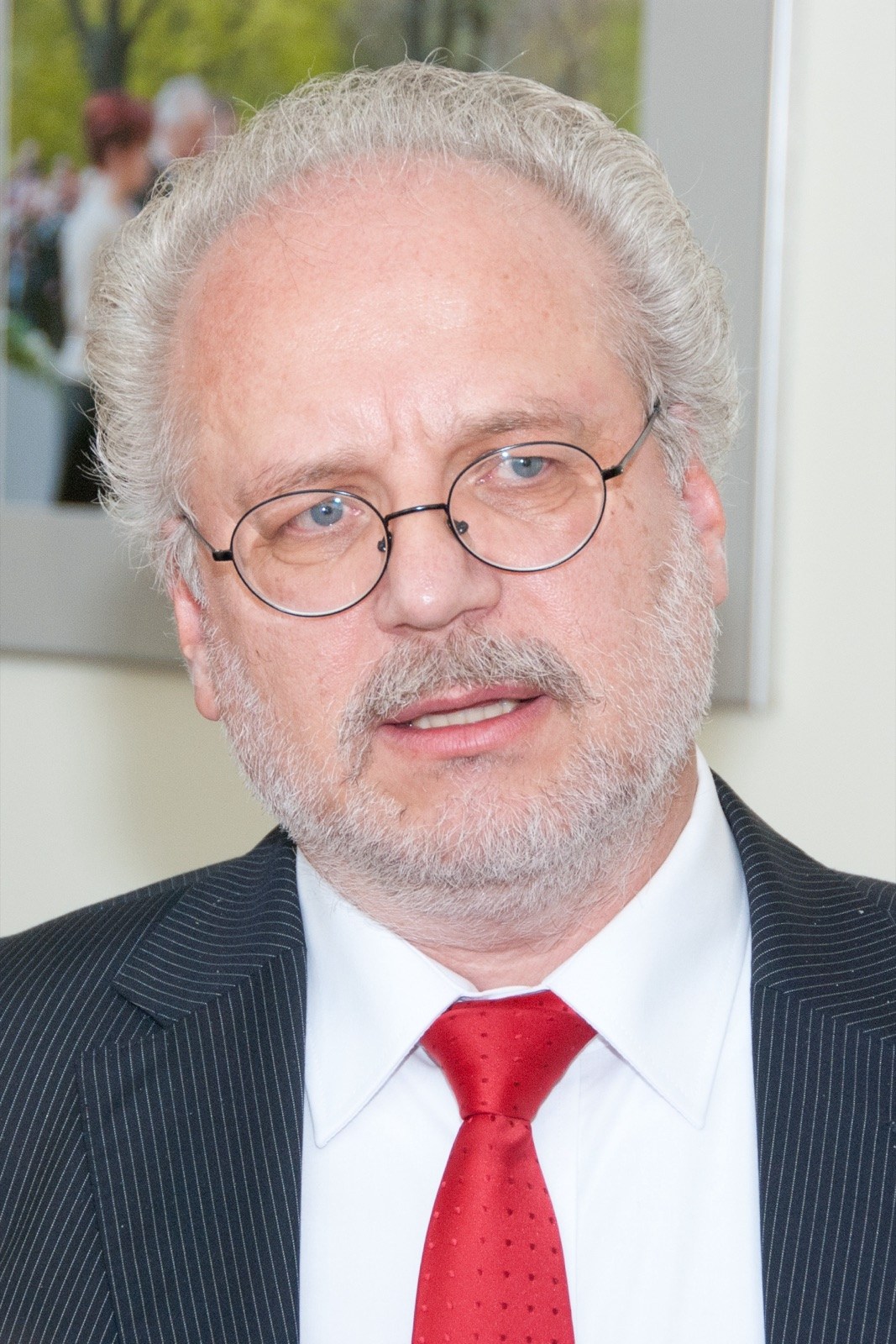
Egils Levits
Egils Levits is President of Latvia discussing Russian expansionism and how Russia responds to weakness rather than strength.
Episode Summary
Latvia, along with its fellow Baltic nations Estonia and Lithuania, has long raised the alarm on Russia’s expansionism. This week in Madrid, NATO heard its call. One Decision gets an exclusive interview with the President of Latvia Egils Levits, who tells us that Russia tends to respond to weakness - not strength.
Listen & Subscribe
- Watch on YouTube
- Listen on Apple Podcasts
- Listen on Spotify
Transcript
INTRODUCTION
Mcfarlane: You're listening to a special edition of One Decision, hosted by me, Julia McFarlane. We're at the NATO Summit in Madrid at a pivotal moment in the alliance's seventy three year history. Leaders from around the world, including several from nations who are not part of NATO but have special interests in the issues that have been discussed here this week. Particular attention is being given to the Baltic states. The three nations of Estonia, Latvia, and Lithuania, formerly occupied by the Soviet Union, have long called for a tougher stance from the West when it comes to Russia. NATO has heard their call with the announcement of a dramatic ramping up of high alert troops, new rotational deployments on Baltic soil, and a new US permanent base in nearby Poland. The addition of Sweden and Finland as new members will also add two of the most sophisticated and powerful armies on the continent to the NATO alliance, doubling the NATO border with Russia. We sat down with the president of Latvia, Egils Levits, to hear his reaction to the news that NATO has decided to beef up its presence on the eastern flank.
INTERVIEW
Mcfarlane: Mister president, thank you so much for talking with us today. I just want to go straight into I wanna ask you, first of all, the NATO secretary general, Jens Stoltenberg, announced ahead of this summit that NATO will significantly increase the number of forces on high alert up to 300,000. That's up from their current levels of 40,000. It's being described as the biggest overhaul to NATO since the Cold War. So give us your reaction to that initial announcement. Obviously, we're expecting more to come. The Baltics have been pushing for more troops, for more defenses. Are you satisfied with that initial news of of a big increase of of troops on high alert. Can you tell us also about the conversations you've had with your fellow leaders if this initial announcement is going down well with you?
Levits: Yeah. Of course. This is an additional boost of NATO presence in the Eastern Flank. Of course, to increase the number of troops from 40,000 to 300,000 is a lot. That means that the time to react for these troops will be considerably shorter and that means also the reaction time is quicker and that will increase security in our region or in the eastern flank of of NATO because, of course, Russia should have also some troops on on the Russian side, and then we can react if Russia is moving their troops somewhere in in eastern flanks, and the reaction time of NATO would be considerably shorter. Also, it is an additional strengthening of the Eastern Flank. But we are also working in a certain time to have also brigades deployed in each of the Baltic countries, also in Estonia, Latvia and Lithuania. We have already a considerable number of allied troops there. The problem is that we need also enablers, air defense and so on, in order to make these troops and also additional troops in order to make them combat ready. I would stress that this NATO presence in eastern flank is a tool to deter Russia, also a tool to keep the peace. And it is always cheaper to keep the peace by deterrence, by the presence of NATO troops and real capabilities as a war. And therefore it is politics in order to keep the peace in Europe and to keep Russia in its borders, I would say.
Mcfarlane: You make the very important point that deterrence and keeping the peace is cheaper in the long run than entering into full out warfare. Tell tell us about the situation in Latvia because we're seeing a lot of countries across Europe that are dealing with what looks to be a very protracted economic crisis. And many members of NATO, including The US and The UK, reportedly do not favor permanent new bases in the Baltics, according to diplomats speaking to Reuters. They say it would cost billions. It would be hard to sustain in the long term. The states may not have enough troops and weaponry, and a permanent presence would also likely be highly provocative to Moscow. Do you find reticence among a lot of other member states to a permanent base in the Eastern flank? Is that what you're asking for, permanent bases and permanent deployments, or do you want escalation of a presence just while this crisis is going on?
Levits: First of all, Russia has an aggressive ideology, long term ideology, and the goal of Russia is to restore the empire and to dominate over the whole of Europe. I would stress to dominate over the whole of Europe. And this is a Russian ideology and accordingly they're acting. And Russia sees that Russia should be the dominated power in in Europe in also so that European Union and and all European states would not have a free democratic choice of their politics should accept the domination of Russia. So and it is not acceptable for free countries, for European Union countries, for NATO countries. So and Russia is not provoked by strength, not provoked by the presence of NATO. Russia is provoked by weakness, by weakness of NATO, by weakness of European allies, by weakness of transatlantic bonds, so on. Then if there is a weak part in on the you know, on on the line between Europe as a whole, from the North to the South, and Russia, then Russia will look for the part of this line and will go further there. Therefore, it is a task to and that means war. I can repeat, war is much more expensive as to keep our military capabilities by this line between NATO and Russia, it is cheaper, I would say. And therefore, this argument is not valid. I would say we should look realistically to Russia and not have moral illusions. It's enough illusions which we had in the last decade. It is clear that Russia is an aggressive neighbor, and our task is to keep Russia within its borders and to to defend our freedom and democracy.
Mcfarlane: I wanna pick you up on two things that you've just said. But firstly, you say that Russia is provoked by weakness and not strength. I think that's arguably the case. Russia is known to to to try to promote fractures in alliances such as NATO and such as the EU. But does it work also then that Russia is is deterred by strength? We may wish that to be true, but can you think of an example where showing strength has actually caused Russia not to escalate, but to pull back? And is that an example that you can use in your case?
Levits: I think there's there's a situation after the Second World War. For example, during the Cold War, it was clear that because NATO shows strength and it was basis for the peace between Russia or previous Soviet Union and and NATO or the West. And then when West is showing weakness, then of course it is a provocation for Russia and Russia is trying to go further. And I think Russia will go so far as we allow it to go. This is the basic assumption. And if we want to keep peace in Europe, if we want to keep our democracy safe, then of course we should show the strength. And strength both, by political unity and demonstration that we are united and we are willing to defend ourselves and also by real military capabilities. And words alone are not enough. The words should be stressed by real military capabilities, and Moscow should know that. So to say, Moscow should be aware of that, of our capabilities. And then, of course, it's the basis for a peace with an aggressive neighbor, with an aggressive neighbor which wants to dominate Europe. If Russia would change their ideologies, then of course we will also change our defense concept, but still Russia has changed its behavior and its ideology, we should react then realistic.
Mcfarlane: It's interesting that you use the Cold War as an example of when adopting a position of strength has caused Russia to pull back on its on its aggression. A lot of people have been making comparisons with the Cold War in this current climate. Do you think then that going back to the Cold War playbook, is that a template that we want to follow? Because if we were to do that, that takes us into a conflict not just between Russia and Ukraine, but Russia and the West. And there are a lot of member states, a lot of European nations, a lot of countries that do not want to make this into a fight between Russia and the West.
Levits: The alternative is to capitulate. Also, I think a lot of people in Europe want to defend their freedom. And of course the alternative is to capitulate, to accept Russian domination, and I think for the majority of Europeans it is not acceptable and this is the price also which we should pay. We should keep the peace, I will stress that. Keep the peace by showing strength. This is a concept.
Mcfarlane: Does but does that then mean if if you if you say there is no alternative other than capitulation, does that mean in your eyes, this is already a conflict, not just between Ukraine and Russia, but the West and Russia? And at what what point do we have to admit that that we are actively maybe not in open warfare against Russia, but we are certainly entering into an active conflict against Russia.
Levits: Of course, we are, as our states, NATO, European Union, are based on certain values. And therefore we are supporting Ukraine because Ukraine is also a democratic country. It is attacked against international law and our commitment is to democracy to international law. We have also to be aware that not the whole world has the same opinion as we. We are not alone in the world and if we wanted to have our values, our European way of life, then of course we should be ready to defend it. Unfortunately, but this is reality and if we close eyes to the reality then of course it is to the detriment of our systems.
Mcfarlane: Does Latvia consider itself as perhaps preparing for a possible state of war against Russia? We've heard recently that the head of the British Army and the defense secretary have both given very strong statements about the need for British troops and and the armed forces to be ready to be in a state of conflict against Russia, to be ready to to be deployed in action on European soil. What does Latvia think at the moment? What what is the mood in your country? Are your is your country readying itself for the possibility that this could get very bad very quickly?
Levits: Yes. Of course. We have also considerably increased our military budget. We are spending since years already over the required 2% of GDP, and we decided now to increase to 2.5% of GDP. It is according to the NATO decision from 2014. I think that we are showing the readiness. That is the basis that Latvia and other NATO states can keep the peace.
Mcfarlane: If your country were to declare a state of war against Russia, would you carry popular opinion back home with you, do you think?
Levits: I think we would not alone do it. It is article five of NATO. If one NATO member state is attacked, it is an attack to other 29 member states too. The unity is also the basis that we can say that NATO is the most powerful defense alliance in the world and the capabilities of NATO are much more higher than of Russia. So, and therefore, to keep this advantage is very very important in order to keep the peace in Europe. I can also repeat that we are doing here, in reality, with an aggressive neighbour which wants to dominate the whole Europe. And I think this is reality and we want to save our way of life, want to save our values, to save democracy and therefore we should invest in more military capabilities in order that there would not be a war in Europe.
Mcfarlane: You mentioned article five of the NATO treaty and the mutual defense clause. It's an interesting clause because in many ways, it can be quite open to interpretation. So I wanted to ask you, what counts as an attack against NATO members? We have seen very recently your Baltic neighbor, Lithuania, says it has come under attack from the Russians in terms of its cyberspace. Would a cyber attack against a NATO member constitute an attack to which NATO may feel forced to act upon and and and trigger Article five?
Levits: So the classical interpretation of Article five is to that one member state is attacked by the troops of an adversary. This, of course, is the main content of Article five. In the last time also there are new other threats like cyber threats, like hybrid threats, and we are discussing in NATO that if cyber threats and cyber attacks and hybrid attacks would reach a certain level, and that could also be a case for Article five. This is discussions in NATO already since a few last years, and I expect that we will, in our decisions tomorrow, will reflect also this new kind of threats for for NATO states.
Mcfarlane: I want to ask you, because you mentioned the need to protect NATO and you mentioned pushing Russia back to its borders. It's recently been making a lot of gains ahead of this summit. The Russians, they've taken over Severodonetsk, which has has been their biggest victory since the fall of Mariupol. Russia has managed to carve out quite a significant slice of the Donbas in Eastern Ukraine and now claims this territory as Russian ground. President Zelenskyy, he's not minded to give part of his country to Vladimir Putin in order for a a ceasefire to take place, and many caution him against doing so because that would essentially reward Putin for his invasion. But what is the current NATO policy of arming Ukraine in its defense? Is it explicitly limited to defensive postures and pushing Russia back from its advance, or is there NATO support for allowing the Ukrainians to advance against Russia to take back their territory that they have taken and back to the conventional Russian borders. Because we've seen recently the Kremlin has indicated that Western weapons striking Russian soil crosses a red line, and, of course, they would likely claim an attack against Russian soil given that they now claim the Donbas is now Russian territory.
Levits: Also, to define the goals of the defense of Ukraine is up to Ukraine. Also, we cannot say to Ukraine, you should give up some territories, and, of course, a politician which is saying that better he can offer a part of his territory, not of Ukraine's territory. Also, this is absolutely unacceptable advice to Ukraine. So our task is to help the Ukraine to win the war, to win the war accordingly to the goals of Ukraine because if Russia will, at the end, gain something, that is, of course, for short time. Russia has shown and declared openly that their goals are much more far reaching and therefore Ukraine is now fighting our fight and we should help Ukraine military to to be strong enough to defend the country.
Mcfarlane: Many NATO allies in Europe and The US support calls for a larger force in principle. But in reality, a lot of them say that allies can only commit to maintaining higher troop levels, prepositioning equipment, weapons and ammo in the region. And that's because many members are dealing with crippling economic situations after the pandemic and amid the energy and supply chain crisis. How badly do you think this economic climate is going to hamper security in Europe? And tell us also about the situation that Latvia faces. After breaking away from the Soviet Union, you were still dependent on Russia for energy. And I believe in 1998, the Russians actually cut off part of your gas supply, citing discrimination against ethnic Russians in in Latvia, very similar to some of the to to the playbook Russia is using against the Ukrainians as well. What's the picture inside that again?
Levits: Latvia is in the same situation as other NATO member states. Of course, our dependence from till now from Russian gas is used from Russia as a tool to influence the politics. But we are not importing Russian gas and we are going to LNG gas. So this dependence is, in principle, not more existing. So we should see what is more important for us: our freedom, our values, our country, or some millions of euros. I think if we would ask Spaniards or Latvians, the answer will be the same. Of course, our country and our freedom is much more valuable as economic gains.
Mcfarlane: A lot of NATO members, particularly Poland, have seen a huge influx of Ukrainian refugees. This is a crisis that requires not military considerations, but also humanitarian ones. Has Latvia offered to take in any Ukrainian refugees? How many people are you seeing take refuge inside your territory? And how have the Latvian people responded to that?
Levits: In Latvia we have 40,000 Ukrainian refugees. They are in principle integrated and welcomed in our society. They are not living in refugee camps. They are living in our society and waiting to go back. We have adapted a special law on Ukrainian war refugees so that they can work and the children can go to school and so on. They are integrated. Of course, it is a huge effort for Latvia and a huge effort for Poland for with more than 4,000,000 of refugees. But we are doing so because we are serious concerning our values and our democracy. And, therefore, we are we are doing so and helping Ukrainian refugees.
Mcfarlane: Among the people who have taken refuge in Latvia include some former Russian state TV journalists. And so I wanted to ask you, Latvia has banned Russian TV until Putin gives in to Ukraine's demands. We've recently spoken to the former prime minister of Estonia, Taavi Rõivas, and we spoke to him just before the Russians invaded Ukraine. And at the time, he said that populations in the Baltic States were very well vaccinated against Russian propaganda. Do you agree with that? And how much of an issue is disinformation in this conflict with regard to shaping opinions in other European nations that have not had the Soviet experience that you and your country and your fellow Baltic nations have?
Levits: I would say the Soviet experience is already over thirty years ago, and there is a new generation which have not this Soviet experience, and they have European experience. And, of course, European values, such are the basis for our value system. So but the Russian propaganda channels were closed down after the Russian invasion in Ukraine for two reasons. Because we are a democratic and free country, and we don't need and don't want to have this war propaganda and this hatred against the Ukrainian nation and against Europe. So it is not covered by the freedom of expression. Hate speech is outside of freedom. And we have done this also in regard with solidarity to Ukraine, because we don't want that in our territory there is hate speech against Ukrainian nation, for example, to say that there is no right to exist for Ukrainian nation. I think this is very strong, and I think democracy should not be helpless.
Mcfarlane: But it's not just hate speech. It's also disinformation. It is it is allegations that, oh, that's not the Russians bombing that hospital. Those are Ukrainian missiles.
Levits: Yeah. Also, such kind of disinformation is also outside the freedom of expression. For example, yesterday, this attack against in in in Ukraine against this shopping center with many people were were killed to to say that it's Ukrainians themselves killed Kremenchuk. Also, it's absolutely rubbish, and we have as people which are serious to democracy, we can can say stop, not more.
Mcfarlane: I mean, those allegations and that disinformation is very frequently dismissed by people in the West, but how dangerous is it because it is convincing large numbers of of of people across the country?
Levits: I think it is more dangerous in Spain or in Germany as in Latvia, because as Estonian prime minister already said, we are exposed over thirty years to such kind of propaganda, open propaganda and hidden propaganda. So and therefore, I see that there is, for example, in some western countries, ideas that we should give up our democracy in order to satisfy Russian expansion or that there is a need for Putin to save the face. I don't care about his face, I would say openly. I am caring about the people who he is killing. This is my opinion.
Mcfarlane: You say, you know, the Soviet Union was thirty years ago. We are in a different era. European nations have the European experience, and they don't have the Soviet experience in their immediate recollection. Do those European nations do you feel that they adequately understand the threat of Russian imperialism and aggression given that they have not had the experiences that you guys have had in the Baltics? And is that frustrating for you? I mean, the Baltics have consistently and for many, many years always advocated for the West to take a stronger stance against Russia. Do you ever find yourself getting frustrated with the Europeans? And do you think they really understand the threat of Russia?
Levits: Of course, this experience of Soviet terror over fifty years is helping to understand the reality. If a country has not this experience, of course it is maybe a little bit, should say, they must have more more efforts. But I think most people in Western Europe have not lived during the Second World War. You have not lived during Franco time. And also, this Franco time and Second World War has also some roots and some footprints in your thinking. And I think we have also a similar experience there, also Second World War. And I think if the civil society is aware of democracy and the principles of democracy, including also historical experiences from generations from previous generations, then, of course, we can rely on democracy. And I think Latvians are relying on on the strengths of democracy.
Mcfarlane: I have one final question to you because we've got two minutes left. Give us your reaction to the reports that have come out recently that apparently EU nations have tried to water down, reportedly, sanctions against Russia, particularly with regard to the exportation of Russian goods from Kaliningrad through to Russia and the Lithuanians who have been blocking those goods in transit. What do you make of these reports that some EU states are trying to water down those sanctions and the fact that Russia has already reacted extremely harshly against Lithuania and have warned of punitive action to follow?
Levits: So sanctions are directed against Russia, of course. But the sanctions have also repercussions to our countries, also for Latvia. And Latvians are, of course, ready to pay this price because we know that our country is more valuable than this losses through the sanctions. And so I would say that also other European states or NATO states here by NATO summit are thinking the same, but of course there are some specific interests of some companies and there are lobbies and they are trying to circumvent it. But the majority is firm in order to keep the sanctions.
Mcfarlane: Is that disappointing, though?
Levits: No. In democracy, you cannot have 100% of unanimity. So to say, there are always people. You have also here some people with non democratic views in Spain, like in other countries, but decisive is a majority is a big majority, I would say.
Mcfarlane: An extremely diplomatic answer. Mister president, thank you so much for spending time with us today.
Levits: Thank you very much, and all the best for you.
Mcfarlane: That's it for this special edition of One Decision. Stay tuned for more NATO coverage released this week. We've got presidents, foreign ministers, diplomats, former secretary generals, and, of course, all the context and analysis on what this all means for the world from my cohost, sir Richard Dearlove. From me and the team, thanks for listening, and see you next time.