Hosted by Christina Ruffini and Sir Richard Dearlove
Guests
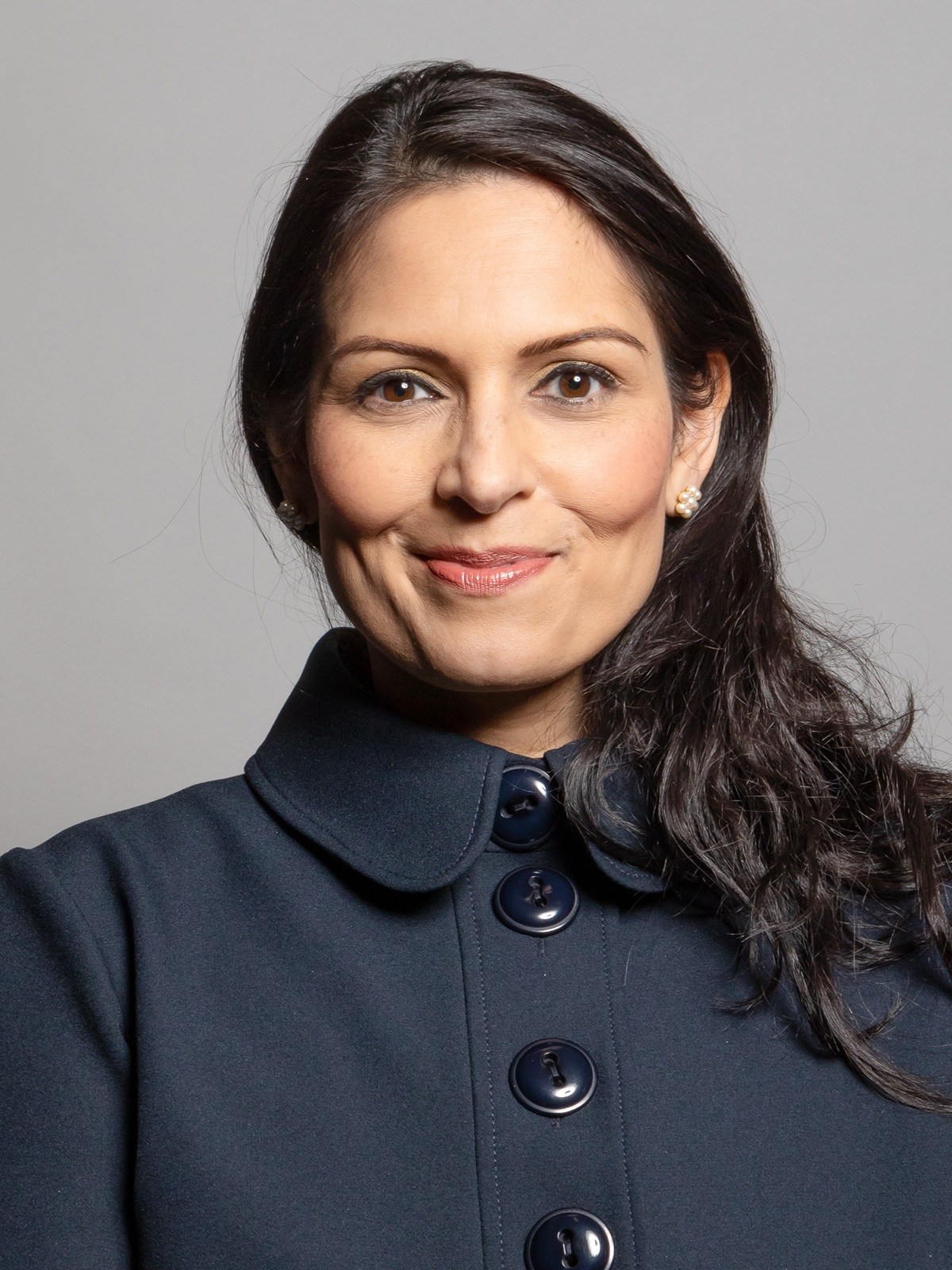
Priti Patel
Priti Patel is the UK Shadow Foreign Secretary.
Arseniy Yatsenyuk
Arseniy Yatsenyuk is a former Ukrainian Prime Minister.
Episode Summary
At the Warsaw Security Forum, former MI6 Chief Sir Richard Dearlove and Christina Ruffini speak with UK Shadow Foreign Secretary Priti Patel and former Ukrainian Prime Minister Arseniy Yatsenyuk about the future of Europe’s security. Patel argues NATO must recognize that “we are all at risk” from Moscow’s grey warfare — while also confronting Europe’s divided approach to refugees and Gaza. Yatsenyuk calls Russian drone incursions a direct test of NATO’s unity, describes how sanctions bite but fall short, and insists Ukraine’s drone technology and battlefield resilience make it indispensable to Europe’s defense.
Full interview with former Ukrainian Prime Minister Arseniy Yatsenyuk: https://youtu.be/IpeGN6QIzl8?si=eNpurxuAk8KX63qq
Episode produced by Situation Room Studios. Original music composed and produced by Leo Sidran.
Listen & Subscribe
- Watch on YouTube
- Listen on Apple Podcasts
- Listen on Spotify
Transcript
INTRODUCTION
Raffini: Hello, and welcome back to One Decision. This week, obviously, Tuesday, we usually do the One Decisions in Brief, which are kind of, you know, more casual chats between me and Sir Richard. This time, we're gonna do something a little different because my co-host, Sir Richard Dearlove, and I just returned from the Warsaw Security Forum and we interviewed so many amazing people including several European and American leaders who'd all gathered there in Poland to talk about many issues but especially the state of war in Ukraine and what security means for Europe in light of a lot of signals from Russia, including flyovers and drone sightings and just whether or not Russia is really posing a current threat, whether they're posing a psychological threat, and how Europe can respond. So since we were there as an official media partner of the summit, we wanted to bring you two of our other really great interviews that we did with leaders from The UK and Ukraine. We're gonna start with the UK shadow foreign secretary, Priti Patel, who sat down with us to talk about all those things and how the UK can take on more of a leadership role, not only in Ukraine, but in what looks to be inching towards maybe possibly a peace negotiation in the Middle East between Israel and Palestine. Now, obviously, we recorded this before Hamas agreed to certain tenets of the Trump proposal, but it's still relevant and timely, and we want you to take a listen. So let's start with Priti Patel.
INTERVIEW: PRITI PATEL
Raffini: Welcome back to One Decision. We are here live at the Warsaw Security Forum. I'm Christina Raffini with my co-host, Richard Dearlove, and our guest this afternoon is Priti Patel. She's the shadow foreign secretary for the UK, but she's had a lot of jobs, a lot of experience, and is one of the people to talk to here. So thank you for taking the time. It really is. What is your first impression? Because we were all just kind of discussing this conference and the fact that there are many of these now, and you're saying maybe there there might be too many because it's getting fractured.
Patel: Pleasure to be here. Thank you for inviting me. So I think look. It's a privilege to be here. It really is. And let's not forget, we are here in Warsaw. Poland on the front line, eastern flank, you know, Russia, Ukraine, a country that has been there from the outset. And I say this as a Brit. When Russia invaded Ukraine, I was on the phone to my counterparts in Poland and the eastern flanks. And actually, I came here literally at the end of that February. I was here the next day. I spent six weeks on the border. Right? On the border. I think we're all at Medyka. So I genuinely think having listened to President Zelensky this morning in his opening remarks and address, he made a really important point, which is we must all be united. We must all work together because, of course, what's Putin doing? He's trying to divide us, isn't he? Trying to divide Europe, trying to divide the response, which basically, I think, is a powerful message to us all. Work together. Step up. That's the joy of being here through the conversations, discussions, the bilaterals I'm having, but also the bilaterals everyone else is having. Right? And I think that's really important. And just one other point on this, I've just met a representative from NATO. You know, I take great heart at this moment in time to the way NATO now feels more united, more stronger, dare I say reinforced, yes, because of America and President Trump, but actually what that means for all of us here and this part of Europe in that collective response to Russia.
Dearlove: Well, I think the thing that's most extraordinary now, if you look at Putin's policies, is that the net result is the strengthening and the unification of NATO. And I mean, these probes, the recent incidents across the Polish border, Estonian airspace, I mean, what do they do? They're, you know, getting NATO's act together. Don't you agree?
Patel: I will say this because I'm pretty direct about most things in life. You know, how dare they? How dare Russia do that to our friends, allies, NATO partners? And that's why I think this is such a pivotal moment. And I do take heart from the fact that NATO is, I don't wanna say stepping up. I think it's beyond stepping up. You know, we're fighting for our sovereignty, our own rule of law effectively, our institutions, our freedoms, value. I think the last time Europe was confronted with such a challenge was decades ago. But that was a fight for freedom, and it was a fight against tyranny. And I genuinely believe we're at that moment. We have been at that moment since Russia invaded Ukraine. But this for us now is that moment of recognition that we're all at risk, and actually, Russia is affecting all of us right now. And I say this as a Brit. Russia affected the UK many years ago. Salisbury poisonings, Novichok, you know, spies at the heart of our systems, all sorts of things, the cyber attacks, you name it. We've been calling this out for a hell of a long time now.
Dearlove: In a state of gray warfare effectively. I think it's more than that. But I mean, you feel it here in Poland. But I think, you know, if you're in the UK, we have to educate our own population to make them realize how serious the situation is.
Patel: So I mean, it's improving. I mean, people are more aware than they were, but we still have a lot of work to do. So, Richard, what I'd say to you, I guess I come with this with the veneer. You know? I was in government, so I've been there and seen the most appalling and atrocious undermining of our own systems, basically, our culture, our values, our norms. What I would say on this, though, is that Britain has a leadership role and a position to effectively not just do more domestically. Yes. Of course. That's something we can talk about in a minute or two. But also how we share our learnings with our friends and allies and with NATO as well as NATO countries to say, we've got a bit of a playbook on this. This is basically what you need to be forewarned on. This is basically how we've tackled this. You guys need to accelerate this urgently right now. And by the way, it also applies to China. It applies to China, which is also gray zone activity, but directly on things such as technology and the cyberspace and all the things that they're outcompeting.
Dearlove: A leadership role in Europe. I mean, this is one of the ironies post-Brexit. They decided or discovered, really, that they can't do without the UK's leadership role. When it comes to intelligence security, let's say defense policy, you know, our sort of strategic conceptions of Europe, where we are absolutely key central player. But, I mean, I hope now that message at this sort of event is understood by, you know, the other European players.
Patel: The Europeans have been there from the outset, and they have all recognized. They're very open in the discussions with me, actually. That is because of Brexit. I think they wanna say that bit quietly, but now they're very open about it. Because of Brexit, we have a different type of dialogue and engagement and respectability because of the leadership that we do play. Ukraine was pivotal to this. Let's be very open and honest about that. You know, what happened back when this conflict started, we were preparing for, I was in government at the time, so I can absolutely recall what it was like. And it was that leadership that conservatives in government gave across Europe and around the world. You know, we were beating at the door of the Americans as well as NATO allies. Look at what we did with establishment of the JEF training, you know, operational in Operation Interflex with Estonia, we leaned in. And, of course, you can't forget that. And since then, obviously, even with wearing back in the day my Five Eyes hat as well, all our national intelligence and security platforms. We were there, and we are still there. And we've got to continuously be there. And this is more than holding hands. This is actually paving the way. In some instances, we've got the paving stones, and we're sort of putting them down. You know, it depends upon what is the line of attack today, what new technologies are we seeing being used against Ukraine, used against us, and we were showing a leadership role there.
Dearlove: Tide is turning in Ukraine's favor. I mean, in the last few weeks, I've really felt maybe there's a beginning of a strategic shift and that the atmosphere is different even as it were the morale in Ukraine is different because they've been through, you know, for obvious reasons, we understand, the tough passage.
Patel: So I sense change with a degree of hope. Now I don't mean that in an overtly optimistic way. I mean that in a directional way, that the direction of travel has changed.
Raffini: And a couple of things to point to is the direction of the rhetoric out of the White House was incredibly significant.
Patel: That's the big point. Right? So, and I'm gonna say all credits to the President and for the way in which, you know, I think he's probably been on a journey here as well. But the macro point here is that coming back to the White House and the President is that collectively everyone's been able to speak very specifically about what they've seen, how their countries have been violated, how sovereignty has been undermined, how even our strong defenses have, you know, shown that actually, yeah, we picked up all this stuff and that's great, but this is where the vulnerabilities are. And by the way, that's vulnerabilities for the United States. This is where we have to do more together. We're gonna be much more on the defense collaborations. We've had those conversations as well. So I think it is the real combined, how to put this? You know, it's the experience of the lived experience as to what's going on. And that has absolutely, I think, helped to change the understanding.
Raffini: Melania too. I think that is also, you know, because she, you know, say what you will about the administration or about, but she's pretty consistent when it comes to children's issues, when it comes to humanitarian issues. And I know this has been a big issue for her because Trump has said it. Right? He said, you know, she's talked to me about this issue.
Patel: All credit to her. All credit to her, honestly. And the human element. So, I mean, the children aspect, you know, 20,000 kidnapped children, just the sheer abhorrence of that. The Yale report came out last week, I think it was, or ten days ago. I mean, going through that, no one can sit back and basically, you know, say, oh my god. You can't be moved by that. We can't ignore that. You gotta do more. I appreciate that's one pillar of all of this alongside the harder security edge, but that's where you can move the needle. And this is really important on the human element, first lady to first lady. I think it's so important since it's significant. So we need to keep pushing all of this. We really do. I think it's just so important. And don't forget, I think this is really important. It's a generational thing. You know, the last time war in Europe happened under such abhorrent, appalling circumstances, the history is well known. And at the same time, people were fleeing for their lives. You know, Europe has opened its arms and its hearts. Our country has done the same as well. That to all of us should be a massive reminder of the sort of fragility around security, defense, our freedoms, what we're all fighting for. And I think more than ever in an unstable world, this is basically that's the glue that is going to bind us together and make sure that we all work together to challenge authoritarianism, to stand up and fight tyranny, and to stand strong when it comes to our values. That's what we're talking about.
Raffini: Speaking of values, why do you think Europe was so ready to welcome Ukrainians fleeing war and has had a much different reaction to migrants from other parts of the world, other countries coming into Europe? Because that was one of the, you know, I was covering the refugee issue as well, and there was a lot of pushback from Syrian communities, from North African communities saying the reason you're welcoming these people is because they look like you. We have children who are at war too. Why do you think that is?
Patel: Let me just ask you. I can say this. I've held that portfolio. So before my time even, before I became home secretary, the United Kingdom had a very clear policy, by the way, under a conservative government, on Syrian refugees and resettlement. So for us, that argument doesn't wash. You know, our country stood up. Germans took quite a lot as well. Germany did. But also on Syria. Let's not forget, as well as the people side, the conflict side, Britain really did stand so firm on Syria, on chemical weapons, the debates in parliament, the actions that we wanted to take, resolutions, I'm afraid, that did not materialize into direct actions, and we all look back now. You know, the hand wringing that took place only prolonged the conflict. So let's be very honest. Countries did step up, and we've all taken responsibility for some of the consequences of that, which have led to a much more conflated debate around migration. The other thing to say now though, and Richard, you might have some views on this. You might wanna come in. I always distinguish between legal migration, so the routes that are genuine and set up through government structures, versus illegal migration. Illegal migration is completely the biggest challenge that, you know, we're facing domestically. Other countries are as well. It's a huge issue. You look at, like, you know, the people we brought in from Hong Kong. BNOs, of course.
Dearlove: Entirely legal dynamic addition to route. And an entirely dynamic addition to the economy. I mean, actually, similarly with the Ukrainians who came in, a lot of them have, you know, made a huge contribution. I mean, it's economic migrants who come in illegally who are not refugees from warfare.
Patel: Who caught that. They bust the rules. Right? So they don't work with our rules. This is the whole thing. I found myself just, I've just shared this with you last week, explaining to someone the Hong Kong BNO route. So BNO, British Nationals Overseas. Right? Thank you for that because American here. Britain and Hong Kong, we had a long standing relationship. So, you know, we are wedded and the National Security Act brought in by China, an authoritarian access state, etcetera. And the whole point about the economic route is that the BNOs that came to the United Kingdom, they were not entitled to claim any welfare or any benefits. These are people that sold their assets and then came to the UK and invested. They bought homes. They've, you know, education, you name it. They're all part of the system. They've been to integrate it.
Dearlove: Negotiated part of the security deal with the Ministry of State Security on Hong Kong, which was the agreement that the Chinese passed.
Patel: Sino declaration. Which now is being virtually torn up. Right? And that's the reason why, obviously, I know we've been speaking about Russia, Ukraine. That's why China, you know, we're absolutely crystal clear about China. You know, that law needs to be completely torn up, that draconian national security law, what it's doing to people, the country, erosion of freedoms, etcetera. And then, of course, you got individuals such as Jimmy Lai, you know, and this awful trial and imprisonment. And then we wanna see an end to all of that. That is not, you know, that's not the Hong Kong we left behind.
Raffini: We're running a little short on time, and I do wanna ask you. There are reports out this morning of this new proposed peace plan for Gaza and Israel coming out of Steve Witkoff, the US negotiator and envoy, has a lot of points. The things you would expect, and there's some more interesting elements. One of them, you know, there's gonna be release of hostages. There's gonna be amnesty for Hamas leaders who agree to lay down their arms or safe passage for those who wanna just not, I guess. But the thing that we wanna talk to you about is there's this clause that says Gaza will be administrated by a temporary transitional government of Palestinian technocrats who will be responsible for providing day to day services for the people of the strip. The committee will be supervised by an international body consulting with Arab and European partners, and it will establish a framework for funding the redevelopment of Gaza until the Palestinian Authority has completed its reform program. That's the first time we've seen the PA mentioned in a US proposal. How significant is that?
Patel: I'm very critical. So I am very critical. Okay? So I am one of the largest critics of recognition. I personally, I think the British government has just fallen into just a complete trap on this. And it's political pressure. Right? So the politics in the UK, we don't need to talk about it right now. Party political. Now Labour backbench MPs are determining British foreign policy. That's an outrage. This approach is not in the interest of my country at all, and it serves no purpose because, quite frankly, it sucks us into a terrible situation. And by the way, the British government, the current Labour British government, have been giving money to the Palestinian Authority. They signed an MOU earlier on in the year without any conditions, by the way. They claimed there were conditions that were about reform, reforming the PA, etcetera. But with conditions, you gotta have some proper conditionality and some proper steps around this. There's no substance. On this, the fundamental question will now be, so what are the checks and balances? Where's the conditionality? Who's putting the money in? I'm gonna also say this, where is the region? Where is the actual region? It's been a consistent issue. Why are we gonna, why should we put money into this? Why should we be funding this? There are too many unanswered open ended questions here. And as much as America is doing the start of a tunnel, the straw man, however you want to describe this, you know, it's fine up to a certain point, but is it realistic? And who are the people who are the operatives that are gonna be delivering this? Because if it's the same Palestinian people that were responsible for the failed state that let Hamas in and that probably took away a lot of the money as well and let people starve and all that kind of stuff, I'm afraid that's not viable. This has to be credible. And you need people that, quite frankly, don't have a vested interest, that, if they're technocrats, how technocratic are they? Can they build institutions? Can they build systems? Can they keep the lights on? Can they give flowing water and bring food in? Because those are the fundamental starting blocks that are absolutely needed. This is going to be a make or break moment.
Dearlove: But if the Egyptians, the Saudis, the Jordanians step up to the plate rather than watching the sidelines, it might be a it might.
Patel: Can we add some other countries to that as well? Saudi. Well, Saudi. Yeah. No. It says Saudi. You know, the GCC at large.
Dearlove: But the key players would be Saudi and Egypt. Those two, really. Well, the Americans will put the money in, no doubt, to enable that.
Patel: But it has to come from them. And I don't think this can just be sort of a western model that is being imposed. And I mean that in the best possible way. You know, this is the Middle East. There has to be some ownership there as well. And I think that's crucial. It's in everybody's interest. And if we want peace and stability and terrorism, no more organic terrorism as well, which I think the Egyptians, the Saudis, the GCC will be super super conscientious of as well.
Dearlove: I'm already hearing from those leaders. They're waiting for the Israelis to rub out. Basically, that's how we see them doing it. Is they have the same political objective, but, you know, because of the fate of the Palestinians, they can't stand up and say anything. Can't say it publicly.
Patel: We understand that. Ironically, it's a tragic situation. And it is tragic because every single day, people are suffering. And that is the most intolerable aspect of all of this and the conflict. And that's why let's go back to the basics. If there is an institution can be created that can feed people, give them water, put roofs over their head, give the electricity, that's gotta be the first premise to all of this. That would be a positive welcome step forward.
Raffini: We have to let you go. Thank you so much for taking the time. You have a great time in Warsaw. That was Priti Patel, UK shadow foreign secretary. Now we wanna turn to our conversation with former Ukrainian prime minister Arseniy Yatsenyuk. We spoke about how Vladimir Putin is testing the NATO alliance, the importance of US collaboration, and Ukrainian domestic politics. He interestingly said he's not a big fan of President Zelensky, but it's important to rally around the president at this time. We talked to him about corruption and what Ukraine needs to do to come into more of a partnership with Europe for its security. Let's take a listen.
INTERVIEW: ARSENIY YATSENYUK
Raffini: Welcome to One Decision. Former prime minister Yatsenyuk, we're so happy to have you here. I just wanna ask, you know, the big thing everyone is talking about, obviously, right now is these incursions from assumed Russian drones, Russian flight spaces. The thing in Denmark was particularly surprising. Do you think NATO has reacted sufficiently to these actions by Russia?
Yatsenyuk: Oh, you are so cautious. You say assumed Russian drones. It's not assumed Russian drones. It's just Russian made drones or Iranian made drones. So there is no doubt that Russia deliberately attacked NATO airspace. This is for the first time, I believe, since not the Cold War, since the Second World War, but at least definitely for the first time since the founding act of the Washington Treaty. I am not a military expert, and I never comment on this stuff I don't really understand. But I was told by a number of folks and pundits who really are good in this military expertise that Russians, in this particular case, made an incursion with one aim is to double check, not just to double check, but to figure out what kind of military protocol NATO member states really have.
Raffini: Do you think that's the point? Is they're testing defenses or do you think they're testing the alliance?
Yatsenyuk: And as a politician, I can elaborate on this. The key message that designated war criminal Putin tries to send to every single nation is that, look, I will send drones. I am ready to send tanks. I am ready to wage the war against you unless you abandon Ukraine. That's the way I read it. The second issue is that he wants to test either article four or article five. Actually, he's testing the NATO resilience and he's testing the NATO unity. Because initially, my beloved President Trump, he was very clear saying that it could be by mistake. But then President Trump has changed his tone, and he said that the NATO has to shut down either it's a missile or drone or the Russian fighter jet.
Raffini: Did that surprise you to hear that from President Trump?
Yatsenyuk: So it is within the article five obligation. And this is the very reason why you guys established NATO seventy six years ago to defend your homeland. And the US have to be committed to this kind of obligation. It's not an MOU. This is a legally binding obligation to defend in case of any kind of incursion or invasion of one member states. And so the second issue is to test both NATO and the third issue is to test every single NATO member state. What is the reaction, for example, of the Polish government? And not only Polish government, but of Denmark, Finland, Sweden. And that's the reason why we discovered new drones in other areas of EU's airspace.
Dearlove: But don't you think there may be another aspect to this? When things are not going exactly as Russia planned, they're very, very good at opening up different issues, different fronts, partly sort of to distract from their own problems. And I've certainly spoken to people who say, perhaps this is also, I mean, I'm not arguing with your points, but I'm adding an additional one, a sign of Russian uncertainty and Russian weakness in that they're actually, you know, trying to sort of distract from what is actually beginning to happen in Ukraine. Would you agree with that, or don't you think that's possible?
Yatsenyuk: It is a piece of the puzzle, and I assure your take. Russia is pursuing a number of aims. And the very thing that you just mentioned is a part of this big game. And there is another part of this game. They want to distract, not just to distract, they want you to redeploy resources from Ukraine to your NATO member states. Okay? And they want to invoke a kind of fear among the NATO member states. Look what's happening for example in the US. They are scarce on the missiles and you are well aware that Pentagon is right now trying to ramp up the production of the missiles starting with the Patriot missiles and then with THAAD missiles. So the idea that Russians have is to sow the chaos everywhere. And they are quite good at this. They're chess players.
Raffini: But do you think NATO has responded sufficiently? I mean, one of the things you just mentioned is one of the problems is as this is happening, different countries are handling it different ways. They're saying they're gonna react different ways. You know, Poland now says they're gonna shoot them down whether over populated areas or not. Germany has this thing where they only have permission to shoot them down if they're over military bases. Otherwise, their police have to do it, they have to fix the legislation. Have these NATO countries, in your mind, reacted sufficiently and reacted in a uniform way? Do you think they will get there, or do you think this is potentially a problem?
Yatsenyuk: Well, that's another wake up call for the NATO member states. You weren't ready to this. Let me put it bluntly. But this very incursion actually drives a comprehensive and joint effort of every member state of every NATO member state just to craft new protocols and to be more interoperable and to gain from the Ukrainian experience. And we are ready, and my president already was very clear saying that, look, we are ready to share this experience. Cheaper, better, and faster. How to shut down Russian drones or Iranian drones.
Raffini: I also wanna ask you about NATO membership because, when we traveled with Secretary Blinken towards the end of Biden's term, we were at the G7 in Italy, and every member there said it wasn't a matter of if, it was when Ukraine would join NATO. That's something we haven't really heard from the President yet despite him seeming to turn course a little bit. Does that still concern you? And to what you were just speaking about, what concrete policy steps would make you feel like the President was backing up this nominal sea change about his opinion about Ukraine?
Yatsenyuk: Let me tell you a story.
Raffini: We're a podcast. We love story.
Yatsenyuk: So in 2008, as the speaker of the Ukrainian house, I welcomed then President of the United States, George Bush in Kiev. And that very year, as a speaker of the house, I cosponsored the letter to the NATO member states with then President and Prime Minister asking NATO to provide a membership action plan for Ukraine.
Raffini: And this is like an official, these are steps you need to take. It's like an entrance to NATO.
Yatsenyuk: Exactly. It was seventeen years ago, and we largely expected that NATO as the super vehicle, how to defend freedoms and liberties and sovereignties all over the world, will be engaged in supporting Ukraine to defend its sovereignty in future. And you know that we failed, but let me put it this way. It's not we, I mean Ukrainians who failed. The West didn't pass the test. At that particular juncture of history, Germany and France actually blocked this bid. And what happened next? Putin was greenlighted with an invasion into Georgia, with an illegal annexation of Crimea, with sending its troops to Donetsk and Luhansk, just to tell your viewers the war that has been waged by Putin. It didn't start in 2022. It started in 2014. And Putin didn't manage to take over Ukraine in more than eleven years. So to put it in a nutshell, I believe that the best way to stop this war was to make Ukraine a NATO member state urgently. The next day, the war started. But there was no guts. There was no political will on the side of my beloved Western friends. And that's what Putin understands really. He doesn't care about any kind of statements, summits, and coalitions of the willing. What he cares about, he cares about the real steps and actions that have to be undertaken.
Raffini: In 2014, you helped kind of break up Russia's gas monopoly. And as you look at the actions that America and the EU have either taken or not taken, do you think sanctions are sufficient? Do you think Putin cares about sanctions? Do you think they matter to the Russian economy? Are they having any kind of effect?
Yatsenyuk: A decade ago, nobody believed that the Ukrainian government is capable of actually winning of the dependence on the Russian, both gas and nuclear fuel. Oh, that's right. I did both. So we, as of now, we are out of the Russian hook, of Russian Gazprom and Rosatom. This is Russian state owned nuclear whatever company. And it's a perfect example for Europeans. And Europeans did a lot because they decreased the Russian gas dependence by 80%. It's a staggering number. But you are still within 20% with this LNG and the rest of the stuff. So whether it's doable, yes. No doubt. And I believe that Americans have an interest in this, both national security interest and economic interest. Because the Russian gas is and could be substituted with the US made LNG.
Raffini: So what more would you like to see? Do you think secondary sanctions are realistic?
Yatsenyuk: Look. In terms of sanctions, whether this is a magic wand or a silver bullet, no. Because look at Iran. Look at North Korea. Look at Cuba. So the miracle didn't happen, and they are still alive.
Raffini: I have a very dim view of sanctions. I've covered them for years, and they, from a reporting standpoint, I'm never convinced they work, but I'm happy to be argued with.
Yatsenyuk: At least look. North Korea is under sanctions since 1949, if I'm not mistaken. I don't remember. And Iran 1974, something like that. And in the end, both of them managed. North Korea is a nuke state and Iran has the capabilities to produce and to launch short and medium range missiles. So whether this is a silver bullet, no. But it has severely limited Russia's ability to attract investments, to get cutting edge technologies, and actually even to sell carbs on a free float. If you look at the Russian budget and if you look at the Russian economy, it is in a dire state. High inflation and look, Russian economy is no longer real economy. It's a big military factory. So Putin put Russian economy on the military footing. And if you look, for example, into the civil sectors of so called Russian economy, they are under and they are nosediving. So Russian economy is completely maintained by the military production.
Raffini: Before I let you go, we're running out of time. But, you know, you were in the government. You know what it's like to lead this country. I was actually there for Zelensky's election. I was an election monitor when he ran against Poroshenko. And, obviously, you haven't been able to have an election since then. With so much going on and with focus on fighting, how is Ukraine doing domestically? How is the government doing? How are people feeling about their government? How are people feeling about Zelensky? Just, you know, give us a sense of what it's like. We hear so much about how you relate to the rest of the world. I wanna know how people inside feel.
Yatsenyuk: Well, I can give you the numbers. Don't offer journalists numbers. I'll take all of them. So I will start with Zelensky. I am not a fan of Zelensky, okay? But we have to rally around the flag because he's the commander in chief. Okay? And even despite the fact that we have different views on a number of issues, I support the institute of the presidency, okay, and commander in chief in times of war. And we have around 60% of Ukrainians who still support the president. This is an unimaginable number for the majority of politicians all over the world.
Raffini: Oh, yeah. That would be a huge approval rating in the US. That would be unheard of. So 60%.
Yatsenyuk: And could you imagine that under the latest poll, 74% of Ukrainians believe in an unconditional victory of Ukraine over the Russia. 74%. Yes. There is some kind of decline. It's not a steep one. And then the reason why I'm telling you this, this is the general mood. We are tired. We are exhausted, but we are not broken.
Raffini: Thank you so much for joining us. Thank you. We really appreciate it. Alright. Thank you. That was Arseniy Yatsenyuk, former prime minister of Ukraine, and Priti Patel, the shadow foreign minister for the UK. If you'd like to listen to the rest of our conversations with both those individuals, check out our YouTube page. And you're also gonna find other exclusive interviews with world leaders, livestream, and more coverage from the forum, including us walking around some very interesting armored vehicles that have been airbrushed enthusiastically and very creatively, and that's not something I can really describe here on audio. So head over to our YouTube page and take a listen. That does it for this week's One Decision in Brief. Please stay tuned to the feed as this Thursday, we're gonna conclude our coverage of the Warsaw Security Forum with our exclusive interview with Pascal Lamy, former director general of the World Trade Organization. I'm Christina Rafini. As always, thanks for listening.