Episode Info
- Season11
Hosted by Christina Ruffini and Sir Richard Dearlove
Guest
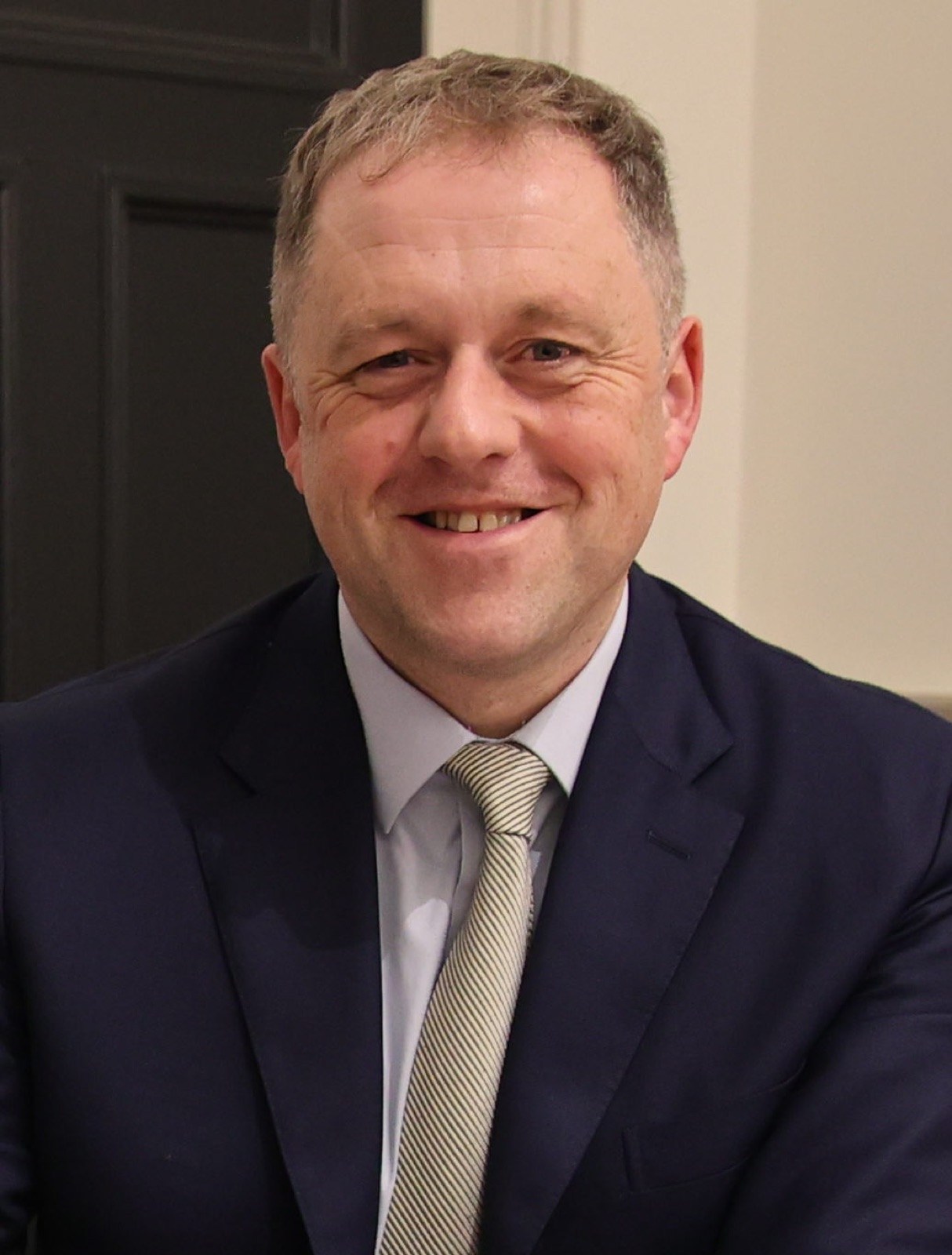
Thomas Byrne
Thomas Byrne is Ireland's Minister of European Affairs discussing Ireland's strategic role in international affairs and its relationship with the US and EU.
Episode Summary
When the United Kingdom decided to leave the European Union just one English-speaking member was left. Irish Minister of European Affairs Thomas Byrne says his small nation is increasingly playing a larger, more strategic role in international affairs. It currently sits on the United Nations Security Council and enjoys a closer relationship with Washington than many of their neighbors. Yet, it’s traditional neutrality has limited the support it provides to Ukraine and questions remain on how it’s border with Northern Ireland will get settled. The Minister provided an update on those backroom negotiations and whether his country is starting to see an economic boom from Brexit.
Listen & Subscribe
- Watch on YouTube
- Listen on Apple Podcasts
- Listen on Spotify
Transcript
INTRODUCTION
Mcfarlane: You're listening to a special episode of One Decision. I'm your host, Julia McFarlane. But today, I'm handing you over to my colleague, Brett Bruen, who's been sitting down with Thomas Byrne, Ireland's Minister for European Affairs. Without any further ado, let's join their conversation on what's been happening on the Emerald Isle at a time of change and challenge for the wider EU.
INTERVIEW
Bruen: To start off, obviously, it's been a pretty tumultuous time in neighboring Great Britain. What's your take on the events of the last several weeks?
Byrne: So they've obviously gone through a difficult few months, some political instability, and quite frankly, it happens to the best of us in various countries as well. But I think it is important always to remember that your economic and social progress really does depend on political stability. And I think that they would do well now to keep things on the right track over the next few months. The relationship between Britain and Ireland is really, really important. We have about 400,000 Irish people there. We've huge economic and trading interdependence, actually reduced a little bit since Brexit and gradually reduced since we joined the European Union. But it's still really, really important. And we've have our gas pipeline comes through Britain as well. So we have a lot of practical reasons and good reasons to stay as close as possible to them. Of course, most importantly of all, being the foundation of the Northern Ireland peace process, that is the British Irish relationship.
Bruen: If I could ask, what are some of the impacts of this political chaos in The United Kingdom on Ireland over the last several weeks and indeed the last several months economically, politically, security wise perhaps?
Byrne: Well, look, on the security front, I think things are okay. There's some instability in Northern Ireland and there's been some random acts of violence, I would say, the last little while, but nothing major. We want nothing, of course, but nothing too serious. What I would say is that the economic relationship between Ireland and Britain has changed dramatically. We were very heavily dependent on Britain in terms of our imports and exports in 1973 when we joined the EU. That gradually changed. And even if you look back to say the eighties or the early nineties, if the Bank of England changed its interest rate or there was some move financially in London, it would have an immediate knock on effect in Ireland even though technically in law, we're completely independent and sovereign state. But actually since we joined the euro and we're part of the European Central Bank, the impact of what was happening in the Bank of England in particular and in the bond markets has really not been a thing at all over the last few weeks. We're very grateful for that, and we always keep an eye on that, of course. We're in a totally different situation to Britain at the moment, thankfully. They were obviously in trouble on the gilt market for borrowing too much or, you know, putting tax cuts out there that were going to be funded by borrowing. The Irish government this year and next year is not projected to borrow anything new at all. We're spending our money based on tax revenues that are coming in. Now we've been in that difficult position before, so I'm not going to start preaching to anybody. But at the moment, things are okay for us on that front. And it just shows you that, you know, that that too much as you described in London hasn't so far had a massive effect, in Ireland.
Bruen: And we certainly hope that it doesn't have an ongoing effect in London either. You're over here in The United States on a visit. What are you hearing as you meet with officials on this side of the pond? How are they seeing both the situation in The United Kingdom, but also more broadly, the state of the Transatlantic relationship?
Byrne: Look, I think interlocutors over here would want the same as what I want for Britain, which is stability in the relationship between Britain and the EU, but also stability in the relationship between America and The UK as well. I will also be meeting some Ukrainian interlocutors as well, they will certainly be absolutely focused, of course, on the war there and the help that Britain is giving them and Britain being a really important part of that effort. But more broadly, I suppose people will be wondering what's going on, hoping that things will improve and that, you know, things do work out. But recognizing as well that we are in a democracy on both sides of the Atlantic, thankfully, and that Britain is very, very important part of that global setup.
Bruen: Well, let's stay here in The United States for just a moment. We have an election on the horizon. It's an important legislative election and obviously one being followed very closely in Dublin and in other capitals around the world. What is it that you're most focused on coming out of this American election? How could potentially a Republican controlled congress impact relations with Ireland and with the European Union more broadly?
Byrne: Well, I think I can speak for Ireland. We've always maintained the best of relationships with whoever's in power at a particular given moment. So we don't take sides of the elections. And what we're really proud of in Ireland as well is that the Good Friday Agreement is seen by the American political class as very much a bipartisan political achievement. So President Clinton was there, but there were lots of Republican congressmen and senators who were involved in the Good Friday Agreement, President Bush subsequently, Obama and Trump as well. And there was always an interest in Northern Ireland, and that continues to an extraordinary degree at the moment. We're very grateful for President Biden's understanding, obviously, as the world's most famous Irishman. He's got a great understanding and sympathy, but we've maintained a bipartisan approach, and we think that's the best way forward. So we let the elections happen, let the American people decide and we'll work with whoever's in power. And we're confident that they'll work with us. I think from an EU point of view, yes, of course, people look at elections. People see what's there. But we understand that while we're all looking at how we do things better ourselves and, you know, making sure that we have the capacity within the EU and I'm presuming the Americans think the same to produce the goods and materials and services that we need. There's also recognition from our side as well that there's an interdependency as well, whether it's on trade, it's on technology. We saw that the vaccine situation, which was a globally interlocking setup. And that's really, really important. So we'll be looking for stability in that. And I would have thought that Republicans in terms of our Democrats as well wanting the best for their country will want a stable relationship with the European Union, whether it's on trade, whether it's on geopolitics, or whatever the issue of the day is.
Bruen: Obviously, there is a certain amount of pressure, this discussion amongst Republicans here in The United States, that we should be giving less aid to Ukraine. We should be doing less internationally. This was obviously a centerpiece of Trump's foreign policy. So there's gotta be some consternation in the halls of power of European capitals then we may be returning to a period of America first, a time where US support internationally was less robust, whether it's on the war in Ukraine or for that matter on other fronts like COVID, economic instability internationally, as well as food insecurity?
Byrne: Well, look, the relationship with America is really, really important on all those fronts. But I think first of all, it would be best if I stayed out of the debate at the moment and not comment on what people are planning to do or not planning to do if they get elected, let the elections happen. But I would say in Europe generally, yes, there is certainly a thinking as to how do we do things better ourselves. And there's a French European term, but I suppose drive from France. The whole concept of strategic autonomy. And that's an important part of the discussion at the moment. And in terms of Ukraine, that would mean how do we look after this issue on our own at the moment? I mean, the involvement of America, whether for NATO countries is absolutely crucial, but also generally in terms of being a country that's out there involved in multilateral bodies pushing democracy, pushing human rights, pushing trade and investment, I suppose, as well. That's really, really important. But certainly Europeans are looking to make sure that we can do more of that ourselves. And when I talk about strategic autonomy from our point of view in Ireland and some other like minded member states, we talk about open strategic autonomy that we like the idea of Europe fending for itself, of Europe doing things itself, producing its own products that we can but we want that to be open as well, open to trade, and open to involvement from other democracies around the world as well.
THE NORTHERN IRELAND PROTOCOL
Bruen: Speaking of big issues, could we focus on the big issue at the moment between Ireland and The United Kingdom, and that being the protocol for Northern Ireland? Where are we at the moment on the status of those negotiations?
Byrne: Well, look, maybe for your listeners, I'll briefly go through what the protocol is. Obviously, The United Kingdom left the European Union, left the single market for goods and the customs union. That left a particular problem in Northern Ireland where we've basically had free trading goods since the Good Friday Agreement, in fact, just before when the European single market came in. So it meant no hard border on the island of Ireland has been the case for decades. And that seemed to be absolutely essential for peace. It's not just essential for peace. It's also essential for industry. If you look at the agriculture industry, you could milk a cow in Northern Ireland, have the milk moved to a processing factory in The Republic Of Ireland and maybe sold then in Northern Ireland or throughout the European Union. That type of interaction didn't happen actually before the Good Friday Agreement to any great degree at all. They were totally separate markets, but that could not happen at the moment without the protocol. So there's no hard border on the island. Northern Ireland is not part of the single market for goods, but has access to the single market for goods. But also it has free access to The UK market as well. The only difficulty is that from Great Britain, sorry, into Northern Ireland, there are checks as well because you're entering an area that has access to the European single market for goods. So the difficulties really are around those checks and the extent of those checks. The first thing I'd say is that there is an international agreement in place between The United Kingdom and the European Union. The idea for that particular agreement and the protocol was actually Boris Johnson's. And it's scared around this really difficult problem. Unionist politicians at various times in the past have acknowledged that the protocol does offer opportunities for Northern Ireland. We, for our part, have acknowledged that it also causes some difficulties. Yes, if you want to bring goods in from Britain into Northern Ireland, there are difficulties. There are checks and some products can't be brought in. So what we're trying to do at the moment, and you mentioned the negotiations, is how within that protocol framework we can best ease the burden on people while also making sure that we protect the EU single market and also protect the benefits that companies get from that as well. So the negotiations at the moment are happening and happening on a very confidential basis. I would say they're highly technical. The problems that arise are not of the type that can lead to overnight solutions. So I expect that the talks would go on for some time. But I'm really glad that we are talking at technical level because there was nothing happening for a number of months, and that leads to uncertainty in Northern Ireland, which we don't want. So they're going to go through the range of issues. The issues are about checks for just ordinary goods coming in, the issues of plant and animal goods coming into Northern Ireland, issues such as energy, these type of things, steel tariffs, etc. These are all part of the agenda. I'm confident that they can be resolved. They can be resolved if the technical people can resolve them at a technical level. But also, I think it needs a political will. The political will needs to be there to make sure that the technical people are mandated to do the work that they need to do. So they're happening. They're probably happening actually as we speak. And that's really, really good. And the commission and The UK, to be fair, are not giving running commentaries to anybody. The member states, the EU get updated on a better weekly basis or so in terms of what's happening at the talks. But there's been very, very little coming out into the public domain to the extent that some people I see have speculated as to whether there's a tunnel or whether there's an end of this process in sight. What I would say to that, I hope there will be an end in sight very soon. But I think the issues are so complex that while I think they can be resolved, they will take time to be resolved.
Bruen: Can you give our listeners a bit of a sense of what those negotiations in the backrooms are really like? I mean, in practical terms, is it over? I'll give you eggs if you give us milk. How do those negotiations on an hour by hour, day by day basis actually happen?
Byrne: One of the issues that has been in the public domain that needs to be resolved is that the British operate checks on goods, well, in conjunction with the European Commission and local authorities in Northern Ireland at two ports, for example, Larne and Belfast in Northern Ireland. So one of the issues is that there's meant to be a full IT system up and running that can sort of show you what goods are coming across. And the EU Commission should have full access to that. Now, there's been a lot of difficulties around that and whatever the British have done, the EU has said they're not satisfied with. But also we know over the past few weeks and months that situation has improved. That's actually one of the key issues because if the EU can see the goods that are going in via this computer system, then a lot of the concerns about single market can be allayed because, well, we can see what's going in and we're okay with that or we can see what's going in and you need to stop that going in. So a lot of it will be highly technical as to how you operate a computer system of that nature that can see what goods are coming in. So it's IT experts that will be doing the negotiations there, I would have thought, but mandated by the technical people above them in the commission and the politicians too. So that's one aspect. The other is that both sides have published their proposals as to how these checks should actually happen. So the British published a command paper. They called it in Parliament and published a set of proposals to almost eliminate all of the checks. I mean, that wouldn't be in compliance with the agreement. The European Commission, though, have published detailed proposals on the reduction of the checks coming in into Northern Ireland. So that's what it's about as to how these checks can actually happen in practice. So the type of people sitting around the table are customs experts, trade experts, tariff experts, all of these sort of people who sit in civil service offices in London and Brussels and don't get enough thanks for all the work they do because we depend on them to make sure that goods can flow as freely as possible within the constraints. You see when Britain left the European Union, they left a single market. So they actually built a wall up that it's harder for them to get goods out of Britain. And that includes into Northern Ireland. And on the Northern Ireland side, just doing our best to reduce those checks. So that's where it's at. That's what it's not. It's not like quotas for goods that, you know, in terms of what you described that you might have at a say US and the EU and The US got together, we'd have a certain amount of beef or a certain amount of cars or whatever it was. It's not quite like that. Although there are some issues in that space as well.
Bruen: And how is it being felt on the ground in The Republic Of Ireland? I mean, goods more difficult to come by on supermarket shelves? Are there delays? I mean, apart obviously from the supply chain issues that all of us are facing, are there ones that are particular to Brexit?
Byrne: Oh, yeah, you better believe it because a lot of our supply chains were joined up together with Britain. So I would say I think IKEA had a joint distribution center for Britain and Ireland in Britain somewhere in Yorkshire. I think the difficulty for us is, for example, so if they bring the goods in through Britain now that Britain has left the European Union, if the good goes straight then to us without being processed in any way or repackaged or put together, it can come in tariff free under the trade agreement that Britain has with the EU. But if there's any processing at all in Britain, the goods can attract tariffs in Ireland. But even if there are no tariffs, you still have customs checks to do coming into Dublin. So it's added a huge cost to business. One example was breakfast cereals, which are manufactured in Spain but are packaged in Britain. I mean, coming into Ireland now, they in theory attract tariffs, plus the bureaucracy of coming from Britain to Ireland. So before Brexit, Ireland and Britain, Ireland and France, France and Britain, full freedom. You could bring anything you wanted really across borders in terms of goods. And we can still do that with France. But now you can't with Britain. You have to have paperwork. There are certain products just can't come in. So is that a big cost to business? And one thing that's happened is that business, of course, has reacted. So before Brexit, we had 11 routes per week going to and from France in terms of shipping routes. Now there are over 40 every week going to France. And what are they doing? They're avoiding those problems that we have identified in Britain. So suppliers are changing their supply routes to avoid Britain and go directly from the continent to Ireland. And our exporters have done that. So businesses have started adjusting their supply chain. So that's really good. And it shows how resilient we are and we've changed to adapt. But we've had to change to adapt because quite frankly, Britain leaving the EU has caused a lot of hassle for us that we've had to ameliorate by moving directly to that European single market, which by the way, is really, really important for the Irish economy. I think of the countries that benefit from the single market and the European Union at that table, we're number two because we're such an open economy. Now, Britain is there. They have put up these barriers. They can't do anything about it. They have these barriers erected. We're avoiding the barriers through Britain by going to France. And I'm not sure that it has fully sort of seeped into the British political system in terms of what effect that this has had on their economy, on the way business operates. But it's had a big effect on us. There's no question about it.
A BREXIT BOOM?
Bruen: And speaking of effects on the economy, have there been increases in certain parts of the Irish economy, international businesses that are moving operations, not just logistical operations, but perhaps headquarters or other manufacturing facilities into your country? What is the sort of current status of economic development as a result of Brexit?
Byrne: Well, look, it's hard to know whether we attribute things to Brexit, to COVID, to whatever else is happening. But the Irish economy is going really, really well at the moment. And every week we see more and more investment coming into the country. And we've always targeted foreign direct investment as nine hundred US firms in Ireland at the moment employing a massive amount of people. We have huge investment. That's really, really important to us. So all the big names like Pfizer, Intel, huge amount of companies from America are in Ireland at the moment. And what we're seeing is with some companies, we've seen some companies recently just completely move into Ireland. And whereas they haven't said it publicly, they've told me privately that they've moved from UK or avoided The UK because they want to be within the European single market for goods, which is very important, services, but also for people, too. So people can move freely between Ireland and the European Union and vice versa. And that's not quite the case with Britain at the moment in terms of the rules that have been put in place since Brexit. So Ireland is much more attractive now even than it was before. And it's always been attractive, as you know, for business. But because of Brexit, because we are English language speakers, I'd say because we're part of the European single market and because we've political stability as well. I think that's really important. And a pro business, pro enterprise environment that our Taoiseach likes to talk about a lot. Businesses are attracted to us and we see that all the time. So we're very welcoming to business. We're open to business. And the businesses that come into Ireland employ people in really good jobs and help create the kind of economy and society that we want in Ireland at the moment.
UKRAINE AND NEUTRALITY
Bruen: Can we shift our gaze for a moment towards the East? Looking out at this situation on the ground in Ukraine, let me start with a difficult question for you. How does this war come to an end?
Byrne: That's a very difficult question. The war has to end when Ukraine is satisfied that it has succeeded. And that's really, really difficult because there is certainly going to be a lot of hardship between now and then. But I think if we want to have stability in the world, if we want to have democracy in the world, Russia has to be stopped in what it's doing. It's incredibly dangerous for all of us. The stakes are really, really high. I get that. But I think that the only way we can end this is that Ukraine is satisfied that it has succeeded and it has repelled Russia because if Russia is not repelled in this particular endeavor, the entire global order for democracy, in my opinion, is under threat. These are difficult questions, of course, for Ukraine more than anybody. They're difficult questions for us too, because traditionally, we're a militarily neutral country. But we said very, very clearly that Ukraine is an independent sovereign country. And under the UN Charter, which we ascribe to and subscribe to and we worked really hard over decades to support, they are entitled to defend themselves. I don't think you can be neutral when a country is defending itself.
Bruen: And that question of neutrality really is being called into greater question these days because, as you say, Ukraine has the right to defend itself. And yet Ireland, unless I missed some update recently, is not actually providing Ukrainians with the means to do so.
Byrne: Well, look, we've done a lot for Ukraine. I mean, we've actually taken part actually contrary to that, we've taken part in the European Peace Facility, where military equipment is given to Ukraine. We've fully gone in on that in terms of our share of it. It's a huge amount of money. The only difference for us and for Austria is that our money goes to non lethal military equipment. So maybe engines or protective equipment that, of course, they still need it. Whereas weapons can be bought with other EU member states' monies. We've gone full in on that. We didn't have to, but we felt that it was the right principle to do so. So that's one thing we've done. We were one of the highest recipients of Ukrainian refugees as well at the moment, which is surprising considering that we're in the Far West with 56,000 Ukrainians in Ireland. It's about 12,000 Ukrainian kids in Irish schools at the moment. So we're very proud of that. I'm very proud as to how the Irish society, the Irish people in general have welcomed Ukrainians. And we're also one of the strongest voices for Ukraine to join the European Union. Our Taoiseach, Micheál Martin, was described by a Ukrainian politician as the unusual suspect because a lot of the Eastern European countries initially were supporting this. Ireland at one point was the only Western European country supporting this. And it showed a bit of leadership, I think, before we did grant that status of accession status to Ukraine. So we feel and Ukrainians have acknowledged that we've done a lot and we'll continue to do that within the confines of our, I suppose, you'd say non membership of military alliances, because we're certainly not neutral on the question of a country defending itself. So I've met Ukrainian interlocutors. The deputy prime minister is my equivalent. I'll be meeting the Ukrainian perm rep here as well in New York. We've had Ukrainian MPs even over at our party conference at Fianna Fáil this year. And they've all said each and every one of them has said they're very grateful to what Ireland is doing. We said that we hope we can do more for them because it's really, really important. And in fact, President Zelensky has discussed with our Taoiseach the possibility of Ireland taking a significant part in the rebuilding of Ukraine. I mean, that's a question for another day, but it's something that we would certainly want to be involved in.
Bruen: But there's a recent report here in The United States that after Joe Biden called up Volodymyr Zelensky and informed him that he was authorizing another billion dollars in military assistance, Zelensky proceeded to then list off other things that Ukraine still needs. And, you know, I have to put it to you that Ireland isn't necessarily making any of those contributions. And for that matter, you have a number of other European countries that are also far behind The United States in providing military assistance that the Ukrainians desperately need right now. Even when it comes to issues like air defenses with Russia bombarding Ukrainian cities on a daily basis. Is there a need to reevaluate the gap between the principles and the people on the ground in Ukraine that are suffering at the hands of these Russian attacks?
Byrne: Well, look, there's always room to reevaluate that in terms of Ireland. I mean, look, we're not going to be in this space of air defenses. I mean, one of the issues that we have at the moment is we don't have that equipment really for ourselves, let alone to be able to give it to anybody else, even a country in trouble like Ukraine. So we've had a big discussion over the last couple of years in terms of defending our own country because we've underspent historically on our defense forces. So we have to build up our own military. So while that's happening and while we haven't done that, we simply don't have this equipment to give. But we have given financial support through the EU mechanism. So that is clearly a question that we have to address for ourselves, but it's not going to be solved over the next few weeks. Now, the discussions in general about military support for Ukraine, I think, would more likely be happening at the NATO level as well as the EU level as well. And other countries would obviously be much bigger than ours, are much stronger. Militaries much have greater availability of material to provide. But we're just not in that space, and that's simply a fact. And that's why we've tried to do as much as we can in other areas.
RUSSIAN INFLUENCE
Bruen: And we've seen talk of how Russia is looking to retaliate against the European Union, against The United States, and others that have been providing support. What have you seen in terms of aggressive steps that Russia has taken against the West and particularly against Ireland when it comes to those retaliatory measures, cyber attacks or other efforts at manipulating the public debate, internal debate in your country?
Byrne: Well, I mean, look, we've never studied, I think properly, publicly at least what influence Russia has had in the Irish democracy over the last ten years. So I can't really talk about that, in the sense that we've nothing on the record or nothing published. Britain, the House of Lords, I think has done a report in Britain. They've had massive influence over the last ten years in different spheres. But what we have seen in this conflict, though, is that the Russian ambassador, I think quite foolishly, took to Irish television and radio, particularly in the early stages. There was interaction, if you remember, with the Irish fishermen as well, which, you know, the Russians were planning this naval exercise in our exclusive economic zone in the Atlantic Ocean. And I think there was an attempt to humiliate the Irish government there by the Russian ambassador. It didn't work to negotiate directly with these fishermen who obviously didn't want, none of us wanted the Russians in. But the ambassador tried. It was a bit of a trick really to make the Irish government look ineffective. I thought at that particular time. So there's been a bit of that, but nothing I would say in terms of direct influence. We certainly have. Yeah, that's probably about as much as I can say at the moment on the record.
Bruen: And what are those exchanges like? I mean, you hear them reported sort of in general terms in the news media, but sitting across the table from someone who is clearly trying to put your country in a difficult spot, even a very dangerous spot. What's that like? What do you do in that moment to counter such efforts?
Byrne: Well, I mean, I could probably tell you more tomorrow after I sit at the Security Council and Russia's at the table as well. I've been thinking about that a lot, actually, as to what I don't expect to have any interaction with the Russian ambassador there, but we still sit around the table in terms of Security Council. And that's what we do. And that's not something that I relish. At the European Union level, quite frankly, there's a huge sense of collegiality there and that our unity is our strength and everybody really works hard for that unity. There were difficult moments, though, and it's before the Ukraine crisis. I mean, I think the Ukraine war has brought us even more together, which is really, really good. But there were difficult moments when, for example, the Hungarian government brought in legislation that we would see as anti LGBT, which brought really tense moments around that European Union table. Similarly with Poland on the issue of judges as well, that was certainly the case. They're not the sort of moments that we want. We want everybody working together. And the one particular moment I remember would be very unusual in the sense that there was real division on that Hungarian issue. But what I'd say as well is that say in the run up to maybe the EU recovery plan and the run up to the EU energy plan, a huge amount of newspaper discussion about divisions, about splits, about not being able to agree things. I think what we should be able to do in our democracy is explain to people that democracy can be complex, that when you have a democracy such as the European Union countries coming together, that there's no automatic or guaranteed answer at the outset at the start of a problem. But that if we work together, we can come to solutions. But during that process of working together, we will have our differences. And I think sometimes the media, of course, likes to play up those differences that it's some kind of major fault line in the EU. I've seen that so many times. But in reality, it's countries protecting their own interests while working together with everybody else to try and achieve a common interest and a common solution. And we've achieved that. We achieved it with vaccines. We achieved it with the EU Recovery Fund, and we are achieving it now with the EU response to the energy crisis. And of course, we've achieved it well so far in terms of our unity, at least we've achieved unity on the Ukraine situation to give as much help as possible. But we won't claim any credit or victories there until this war is over and Ukraine itself has succeeded.
LOOKING AHEAD
Bruen: Where will we be a year from now? If you could paint a picture, will we be looking at a world that is, as some project, suffering from great economic hardship, food security crisis having taken hold in many parts of the developing world? Or will it be a more encouraging picture from where you sit right now in New York at The United Nations meeting with other world leaders? What are you hearing and what are you hoping?
Byrne: Well, look, I think we can never predict the future. So I'm looking to do that this time last year. Who would have predicted? I mean, it was only coming into the autumn last year that we were seeing this buildup of Russian troops. And even until the very last moment, people are saying this wouldn't happen, except, of course, on the American side that they seem to get it right at the time. So I think predicting is a problem. But I think that what we have to do is we have to work together to protect our democracies all across the democratic world. It's a major problem. And if we don't do that, then we will have problems. But I'm absolutely convinced that if we work together, if we sit around those tables at the UN, at the OECD, at the OSCE, at the EU for us, we can achieve great things for our people. And one of the things that I really like about this administration, Joe Biden's administration, is that senior people in the administration are key actors in multilateral organizations. So you will see Antony Blinken at an OSCE meeting or an OECD meeting. You will see senior political figures, all these things. And this is really, really important that America and that the EU and other democracies and particularly in the Western sphere of influence are working together. I think that's really, really important. So I think that if we do that, we can solve our problems. But I can't predict the future. Food security is obviously a huge one. We're going to have to work really, really hard to make sure that we can keep getting that grain and sunflower oil or whatever it is out of Ukraine in particular. And there's no impediments that we see Russia this week put an impediment on that. That's a major problem. I would have to work really, really hard on that. Energy security is really important, too, particularly for the European Union. I think we're okay for this particular winter because we have filled up our gas reserves. But those gas reserves on the European continent have been filled up with a lot of Russian gas that will not be available for the winter of next year, this time next year. So we've got to urgently look for more gas supplies, which we're working on, but also to diversify our energy supply as well. So we've got to work really hard to get around that.
Bruen: Minister Thomas Byrne, thank you for taking time to join us here on One Decision.
OUTRO
Mcfarlane: This has been a special episode of One Decision. If you enjoyed this conversation, why not subscribe to us so you won't miss our full episodes on the big geopolitical decisions of the day with analysis from my cohost, Sir Richard Dearlove, the former chief of MI6. We drop full episodes every Thursday. Thank you for listening. We hope you join us again soon.