Hosted by Christina Ruffini and Sir Richard Dearlove
Guest
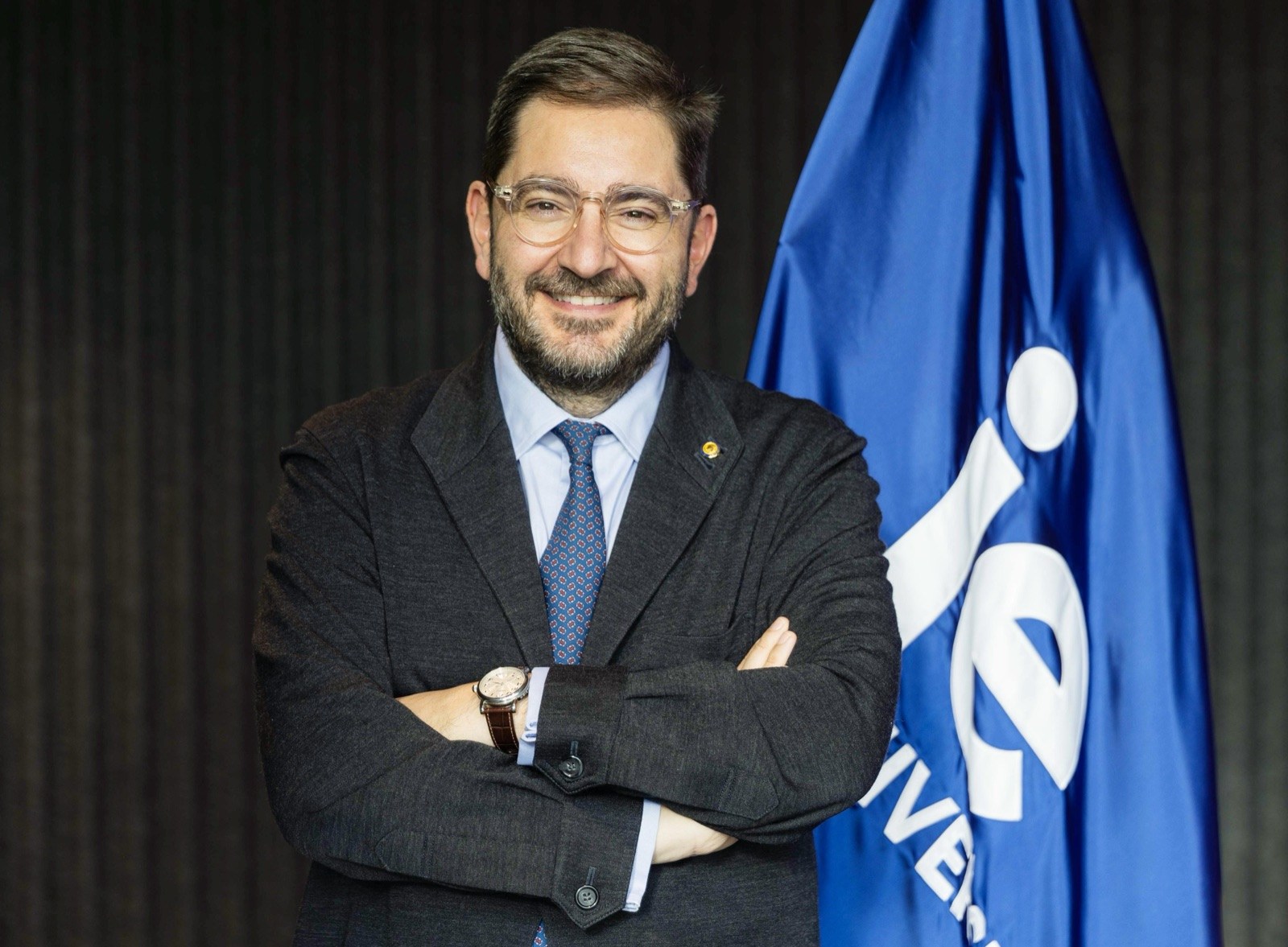
Dr. Manuel Muñiz
Dr. Manuel Muñiz is Spain's former Secretary of State for Foreign Affairs discussing how the Ukraine war will accelerate deglobalization and divide the world between democracies and authoritarian states.
Episode Summary
Russia and China are undertaking an unprecedented assault on the international order. Meanwhile, serious questions linger about America's willingness to exert leadership across Europe, Asia, and Latin America. Spain's former Secretary of State for Foreign Affairs Dr. Manuel Muñiz discusses why the war in Ukraine is likely to drag out for years and how it will accelerate a process of deglobalization. In his view, the world will divide across two main blocs, democracies and authoritarian states. The consequences of this tectonic transition will be considerable for countries, companies, and consumers. Yet, he believes in this scary scenario, there are still some reasons for optimism and new opportunities, if we are ready to seize them.
Listen & Subscribe
- Watch on YouTube
- Listen on Apple Podcasts
- Listen on Spotify
Transcript
INTRODUCTION
Mcfarlane: I'm Julia McFarlane, cohost of the One Decision Podcast. We're coming up on a significant milestone. It's our one year anniversary of bringing you in-depth analysis of the critical decisions shaping our world. To celebrate the occasion, cohost and former head of MI6, Sir Richard Dearlove, and myself, will answer questions submitted by you, the listeners. Spies are usually pretty tight lipped, so don't miss the chance to write in. Your question might even make it onto the podcast. For more information, head over to 1decisionpodcast.com. I'm Julia McFarlane, and you're listening to a special episode of One Decision, the podcast that looks at the choices made that have shaped the world. This week, One Decision's Brett Bruin sits down with Spain's Doctor Manuel Muniz, the former secretary of global affairs, a senior diplomatic post at the foreign ministry. Brett met with Doctor Muniz at the recent NATO summit in Spain to discuss the response to Russia's attack on Ukraine, decoupling from the Russian economy, and China's global ambitions and the risks that those ambitions may pose for Europe.
INTERVIEW
Muniz: So I think that we've moved beyond the phase of a very radical globalization. I mean, globalization in the strictest of senses. So we've lived a period since the end of the Cold War where everybody, and by everybody I mean governments, corporations, universities, everybody, was in the process of very rapid integration. We were looking at operating across borders, integrating partners, international students in our classrooms, etcetera, etcetera. I think that that moment has now passed. This is an unfortunate development because that was a process that on the whole generated more diverse societies, more efficient economies, better prices for our consumers. So I'm a big believer in the benefits of global trade. But we're now in this new phase where we're going to have to decide how deeply we integrate economically and otherwise with one another. And I think that here you're going to see the world splitting at the very least into two blocks. I think integration will continue and deepen within the sort of liberal democratic world. Reliable partners, reliable countries will continue to see cooperation, integration, cross border trade, investments, and others. I think you're going to see a lot more reluctance, in fact, proactive efforts to diversify across the blocks with the other block being made up of authoritarian states, states that are considered unreliable. This is not going to be perfect or clean-cut. You're going to see businesses and institutions that still do business across these two blocks. I think there's going to be lots of actors, lots of countries that are going to be very reluctant to fall into any of these two categories, and they're going to try to straddle both — a number of countries in Africa and Latin America. Possibly major, major economic actors like India that seems to be very aligned geopolitically, but on the economics is still reluctant to fall into any of these two camps. So there's going to be some gray areas. But this is already a completely different paradigm to the one that we've lived under since the end of the Second World War. I think it's, in effect — let me end where I started, which is this is unfortunate because it's going to be a less integrated, less diverse, and less efficient global economy, and that's going to mean higher prices, inflation, and things of the like for our consumers and others. But that's where we're headed. It's a more geopolitical world and one that is more complex to navigate for economic actors and others.
Bruin: There's another element to this that was looming over IFEMA where the NATO summit took place. That is questions about US leadership, questions even about British leadership and other countries that are facing their own populist sentiment, divisions, breakdown of ideals, institutions. How is that, particularly the American challenge at the moment, being seen here? Is Europe preparing plan B?
Muniz: Well, I'm not sure there is a plan B for a liberal order in which The US is not present. Let me be very blunt about this. I think having lived in The US, knowing The US well, having some knowledge of international affairs, I still think that The US is indispensable to many of the fundamental elements of that order, whether it's international law, the international multilateral architecture, the provision of international public goods, including security, security of sea lanes, and many others. So I mean, if you ask me, this is the biggest question right now is what is the future of US domestic politics? And with it, what is the future of US foreign policy? And also, what is the future of US democracy? Right? And from Europe, we watch this with great concern. And we are suffering a similar process to the one that you see in The US. Perhaps it's not as intense, but we're headed in a very similar direction, which is a growing polarization of our politics to the extent that, you know, this is leading not just to a politics of harsh language, but it's leading to a politics of institutional legitimacy erosion. Right? We now have people within our societies and we have political movements and political leadership that questions not just the capacity and the adequacy of certain political leaders in office, but they question the legitimacy of the institutional architecture. Whether it's the legitimacy of the presidency or the electoral process or the electoral college or the function of Congress or the role of the judiciary. We have this also here. It's been a move in Spain and in European countries that has been forwarded by our populist parties, of which we have a few. And it simply leads to the hollowing of our institutions. And, you know, the assault on the capitol in The US, but other instances that we've seen in Europe are a manifestation of this. They're a manifestation of the growing fragility of our institutions, which is a consequence of this process, deep process of polarization and of shift in our political discourse. So I think that this is an enormous question that we face. I think the US administration and the Biden administration have gotten something right because if you ask me what is the driver of this? What is the cause of this? Right? If at the end of the day, we face this huge challenge as societies, it's not external. It's endogenous. Right? It's internal. It's about the implosion of the liberal order from within. What is the driver? I mean, if I could summarize it in one phrase, I would say, I think it's economic. I think it has a lot to do with the hollowing out of our middle class. And I think the hollowing out of our middle class is leading to the hollowing out of the middle of our political spectrum. I think these tendencies are correlated. So we need to get our social contract right. We need to get the equity and justice of our economies right. If we are to keep the totality of the edifice that is built on that healthy and alive.
Bruin: But can I ask, is the response that we're seeing to this erosion in institutions, to these threats, whether it's the war in Ukraine, whether it's back at home with our democratic institutions, do you feel as though the plan, whether it's that Biden is putting forward or that European leaders have put forward, is up to the task? Because we've seen a lot of statements. We've seen some of the largely sort of superficial steps, but yet to articulate how do we actually push Putin back from Ukrainian territory, yet to articulate how do we repair institutions that have been so badly damaged?
Muniz: So let me — I have a positive response, optimistic, to this, and I'll structure it in two spaces. So the picture we're drawing has two dimensions. So there's an external growth in illiberalism. So the international order is becoming more illiberal, a more revisionist Russia, an illiberal anti-democratic China rising and others. And then there's this internal process of implosion, and it's the convergence of these two processes that is leading to the fragility of the international liberal order. Now, how are we responding to both? So on the Russia front, I think we've responded well to an unprecedented challenge. We have implemented the broadest and deepest battery of sanctions against a major state in history. We've excluded them from SWIFT. We've frozen the central bank assets around the world. We've imposed enormous restrictions to trade. We're in fact now unplugging from supply of Russian energy, both oil and gas, with great pain, by the way, for many, many European countries. I don't think Putin expected that. We've supplied Ukraine with vital weapons. Countries like Sweden, historically neutral countries, have supplied the Ukrainians with weapons, lethal weapons. Sweden and Finland have now joined NATO. Russia failed in its initial strategy, openly failed to take over Kyiv to topple the government. So the West exists. If, you know, we do — it exists and it has responded. I think wisely and with strength, and it could have been very different. It could have been very, very different. Right? I mean, we could now be drawing conclusions from the inability of the Europeans to come together on this, to implement sanctions because of discrepancies within the EU, and that's not the case. Now, on the internal front, which is the one that actually worries me the most because it's the most corrosive and it's the most unique. I mean, we've never faced this moment because the international liberal order always faced challenges from outside. Right? I mean, some people claim these values, democracy, multilateralism were universal, but that was not the case. But the implosion is unique, that we're growingly illiberal within democratic countries. Now, there I think we've now finally drawn the right conclusions. We all know that this is a problem, and by we, I mean the World Bank, the IMF, the European Commission, the US government, the German government. And the response we've implemented to this is extraordinary. If you look at the budgetary response to COVID, immense stimulus targeted at the middle class through furlough schemes, credit and loan guarantees, tax deferrals. It's completely different from the 2007, 2008 response to the financial crisis, which was very top down through the financial sector. So we've tried to make the response to this much more equitable. We've made vaccines freely available. I mean, we've tried to avoid a response that would increase the sense of social fracture. Because I think we all knew if we exit this crisis, like we did the 07/08, with a lot of people feeling left behind, then our politics are going to break even further. Right? And in Europe, on top of the national stimulus packages, we've created this enormous European plan of reconstruction. And Spain is going to be the beneficiary of about 140,000,000,000 worth of Euros from that, from the European plans. Just to give you a sense of scale for the people listening to this. So when Spain was the biggest beneficiary of EU funding in the nineties, convergence and cohesion funds that were sent, we were the biggest beneficiary. We got about €67,000,000,000 net a year. This is 140 in the next three, four years. So I mean, we've clearly understood that we need to address the equity and justice issue. And I think the Biden administration has done that as well in The US through tax reform, through public spending and others. So we have a window now to get this right.
Bruin: Turn to the implications of this for another region of the world. Latin America. Yes. We've seen over the course of the last several years and just in the last several weeks, those countries that were some of the strongest allies to The United States — Mexico, Chile, Colombia — that are now taking a pretty radical relationship recalibration. What does, one, that mean for Latin America? But two, is there a role for Spain in helping to manage a region that is also very vulnerable to China, to Russia, to Iran, other influences that have been present? That certainly with some of these new governments see an opportunity, Lula returned to the presidency in Brazil, an opportunity to further destabilize the situation both in the region and to create a major headache for The United States?
Muniz: Okay. So let me begin by saying, sort of like a framing reflection. We believe, and I think that this is fair to say in Spain, this has been our policy stance for a very long time, that Latin America is part of the West. Right? It's part of the West culturally, institutionally, and from the point of view of its foreign affairs and security and defense projection. Right? So the Atlantic community doesn't end in Florida. The Atlantic goes all the way down, and it includes Latin America. And this has been a policy stance of ours, we call it Iberoamerica, you know, the Iberoamerican community. And that includes all of the countries in Latin America, Spain, Portugal, and Andorra, but also, we think, North. So we should treat it as such. And we should understand that in this new international order, we should all want for Latin America to be on the side of liberal democracies and open democracies like the rest of us. Now, on the politics of the region, Latin America tends to swing politically every now and then. I think the results of the elections in Chile, in Colombia, and in Mexico point to a process not dissimilar from the one that I've described is occurring in the West, you know. When these societies have enormously high levels of inequality, of discrimination, in some cases, there's an ethnic or racial dimension to this because you have the original populations of these places being particularly disadvantaged, disenfranchised, disconnected from opportunity and others. You know, they shift politically. But I would give these governments a chance, particularly the new government in Colombia and the government in Chile, to implement an inclusion and social justice agenda. Because that's what the Colombians and the Chileans have voted. And we need to trust also their wisdom in what they've chosen. And these countries face major challenges when it comes to inclusion and to equity and to access to public services and lots of other things that these leaders are going to face head on when they take office. I think Lula would do the same in Brazil, and Brazil is in need of something like that. A final comment on Russia and China in the region, particularly China plays a pivotal economic role. Chile, for example, almost close to 40% of Chilean exports now go to China. I think we need to be clever and smart, and we need to be active in the region, and we should approve the Mercosur EU trade agreement. It would build the largest free trade community in the world, and it would be a clear sign that we take this seriously. So there's a lot that we can do through our trade policy and foreign policy to foster that vision of an integrated Atlantic in the Western world.
Bruin: Last question to you. A year from now, we're sitting here looking at a NATO summit — what does the world look like at that stage? What has happened in terms of what NATO, what Europe has done over the next year?
Muniz: You know, my PhD supervisor in The UK once told me that as an academic, you should never predict things because that's where academic careers die. But let me predict some things because it's always interesting, and we'll see where we stand in a year. But I think the conflict in Ukraine is going to be protracted. I think tactically, the battleground is very stable, unfortunately. So there's, you know, I don't see the prospect of peace anytime soon. I think it would be a big mistake, in fact, to bargain for peace in an arrangement that would entail giving up Ukrainian territory in exchange for peace, territory acquired through utterly illegitimate means of aggression and invasion. So I think that that's going to be a protracted conflict. I think peace is somewhat far away. I think relations with Russia will not normalize, not in a year, not in two. I think we're into a new phase of our relationship with Russia. It's going to be more dialectic, more contentious for a very long time. It's very hard to imagine any normalization after the Russian government has been accused of committing war crimes, etcetera, etcetera. So I mean, I think Vladimir Putin is still not yet in the category of Bashar al-Assad, but he's quickly approaching that category, and that makes it very difficult for anybody to imagine a peace process with him leading it on the Russian side. I think we will know more about China's stance on this. If the Chinese align more closely with the Russians, then in a year's time, we will be much closer to a world of blocks. And a much faster process of de-globalization. I think NATO unity will remain in place in a year's time. I think the Swedes and the Finns will be fully integrated and well integrated into the alliance. I think we will all have taken good notes about the outcome of the midterms in The US, and we'll be looking into the presidential elections wondering what the outcome of that will be. But for the time being, in twelve months, there's still going to be a lot of transatlantic unity on these and other things. So relatively optimistic scenario from my end.
Bruin: Appreciate the optimism. Thank you very much. Thank you. Thank you.
CLOSING
Mcfarlane: That's all for this episode of One Decision. But before we go, coming up on the podcast, we are marking one year of bringing you in-depth analysis of the critical decisions shaping our world. To celebrate this milestone, we're taking your questions to the former head of MI6, Sir Richard, and myself. Spies are usually pretty tight lipped, so don't miss the chance to write in. Your question might even make it onto the podcast. For more information, head over to 1decisionpodcast.com. We drop new episodes every Thursday. Don't forget to subscribe so you never miss an episode. From me and the team, thanks for listening, and see you next time.