Hosted by Christina Ruffini and Sir Richard Dearlove
Guest
Elina Kalkku
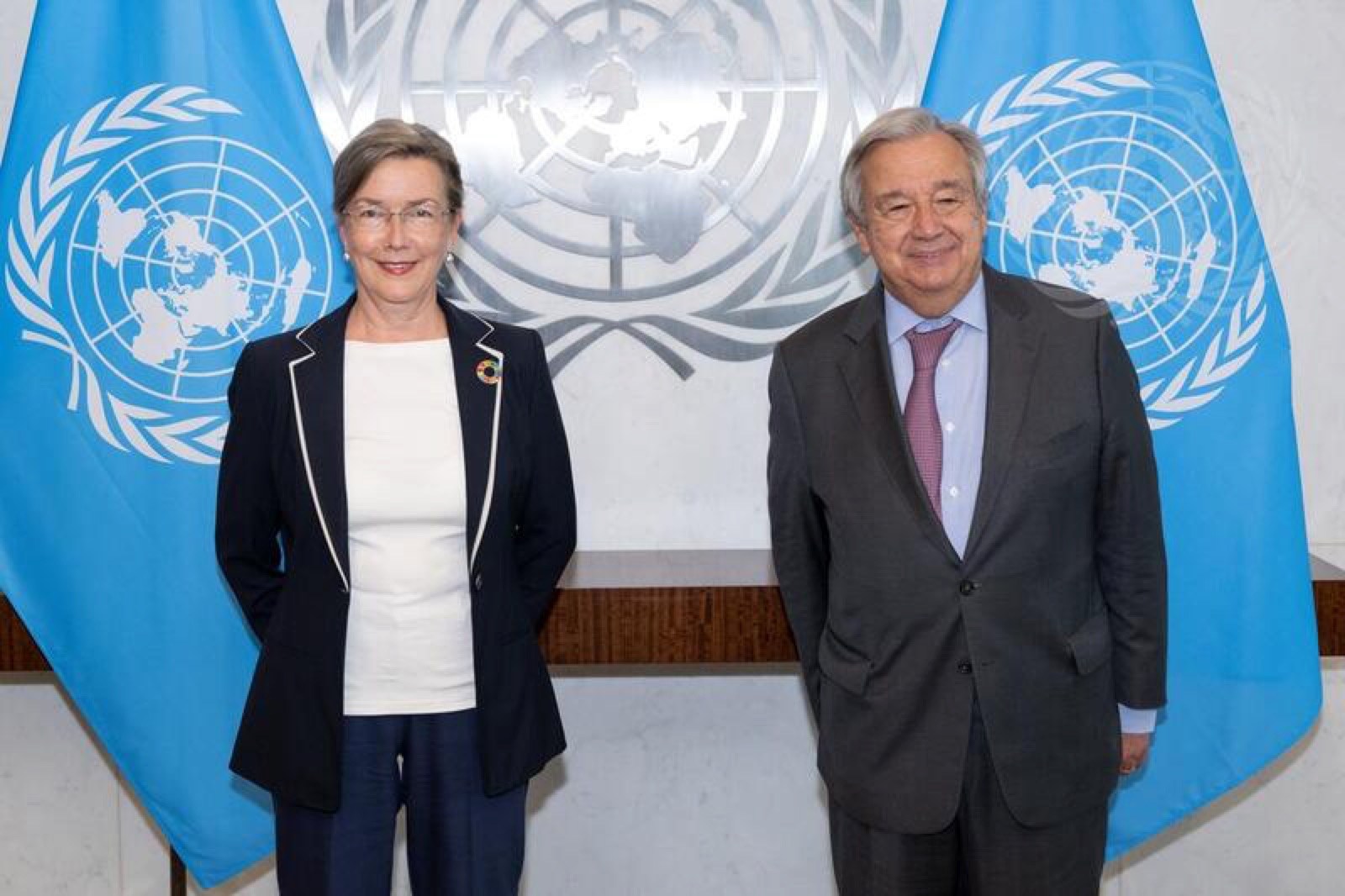
Elina Kalkku is Finland's Ambassador discussing the influx of Russians fleeing Putin's mobilization plans and Finland's relationship with Moscow.
Episode Summary
Thousands of desperate young men are trying to escape Russia after Vladamir Putin announced a plan to mobilize 300,000 reservists to fight in Ukraine. His forces have recently suffered a string of embarrassing military defeats. Some Russians are already seeking to escape by crossing the long border into neighboring Finland. On the margins of the United Nations General Assembly in New York, we sat down with Finnish Ambassador Elina Kalkku to discuss the recent influx of Russians frantically trying to avoid Putin's plans for them to fight in Ukraine. She takes us into her country's complex relationship with Moscow and how they are coping with the constant threat of an imminent Russian attack, especially following President Putin's recent threat to launch nuclear weapons.
Listen & Subscribe
- Watch on YouTube
- Listen on Apple Podcasts
- Listen on Spotify
Transcript
INTRODUCTION
Mcfarlane: I'm Julia McFarlane, cohost of the One Decision Podcast. We're coming up on a significant milestone. It's our one year anniversary of bringing you in-depth analysis of the critical decisions shaping our world. To celebrate the occasion, cohost and former head of MI6, Sir Richard Dearlove, and myself, will answer questions submitted by you, the listeners. Spies are usually pretty tight lipped, so don't miss the chance to write in. Your question might even make it onto the podcast. For more information, head over to 1decisionpodcast.com. You're listening to a special episode of One Decision brought to you from New York. The United Nations General Assembly brought the world's leaders to town just as Vladimir Putin announced a partial mobilization of forces to join his war in Ukraine. The news took the global community somewhat by surprise. The Russians have been pushed back in key parts of Ukraine in the last month, but opening up more Russian citizens to the war effort is likely to be costly for Putin, both politically and economically. Some signs of that began to emerge as reports of flights leaving Russia for its nearest visa free neighbors began selling out, and social media became awash with rumors and claims that Russian men were fleeing the country by any means possible. Some claimed that the queues to leave Russia by its long border with Finland were exaggerated according to the Finnish border guard, though they now admit there are plenty of Russians trying to leave. Prime Minister Sanna Marin has announced that Finland is now to ban Russian tourists from entering the country in the next few days following similar moves by other EU nations bordering Russia. Finland has a long history with Russia, and memories of the Winter War in 1939 have shaped Finland's defense policy ever since. We got an update on the situation on the border and Finland's growing concerns about Russia from their ambassador to the UN, Ambassador Elina Kallo.
INTERVIEW
Mcfarlane: Obviously, you and Russia have a long history. It goes back quite a long time. I found it very, very interesting a few months ago at the NATO conference speaking to your foreign minister, Minister Haavisto. He explained that you have a long working relationship with Russia as neighbors, and that when Finland made the historic announcement that it would seek accession to NATO, your president phoned up Putin to give him the heads up that that's what Finland was going to do, and that he had quite a pleasant conversation with Vladimir Putin. So firstly, what is the reaction to Vladimir Putin's announcement that he was announcing a partial mobilization of forces to deploy to Ukraine?
Kallo: Well, we think it's a wrong decision, definitely. There's a danger for escalation. It is obviously done because he's not doing too well with his war efforts. The Ukrainians have been bravely defending their country and also retaking some of the territory. So the reason for this mobilization must be his plan to do better in the war he's initiated himself. We think it's a wrong decision. We think the attack was the wrong decision. We condemn it. It is amazing to see in 2022 that there's actually a major country, a developed country with a population which is well educated, which has great prospects for their future, into a war, attack a neighbor to grab territory and annex territory. So whatever has happened since the beginning of this year is a disaster. And we do hope that Mr. Putin would understand that this is the wrong path he's following, and the war would stop. And the sovereignty of Ukraine and the territorial integrity of Ukraine would the territories lost would be definitely returned to Ukraine. It's admirable how they've been defending themselves.
Mcfarlane: Absolutely, absolutely. The situation with the border and the reports that have been of the situation with the traffic of Russians going into Finland and crossing the border. Now, there has been some confusion as to what the accuracy of those reports are, but what we do know is that there have been flights leaving Russia selling out, that there are Russians trying to leave from a number of different entry points. Your Prime Minister, Sanna Marin, that the situation vis a vis Russian travel and tourism into Finland needs to be reassessed after Putin's announcement of the mobilization. What can you tell us about the true figures of the numbers of Russians coming into Finland? Is there a lot of people flying over the border? Are you expecting more Russians to try to leave and enter through Finland?
Kallo: Well, overall, it's a long border. We've had over 10 crossings the past. There's been over 10, well over 10,000,000 border crossings across that border. And this was before COVID-19 hit everybody. Then COVID-19, of course, cut off the traffic simply because of the health restrictions also on the Russian side. We've had a growing number of crossings since the COVID restrictions were cut off. And part of that is tourism from Russia, tourists coming. I think also in the public opinion, people have felt it uncomfortable that a country that is attacking and the war goes on in Ukraine. At the same time, people from Russia travel back and forth to Europe for tourism. And since we have the land border, obviously, we are one of the crossings where the Russians can cross the land frontier. Flights we don't have anymore from Russia or into Russia. There's been a flow of some thousands of people coming over. And the first information our border guard gave was that since the mobilization announcement, there was no immediate increase. But actually, there is now an increase in the crossings. But the numbers are not huge in comparison with the past. I think we've had less than 2,000 people or more coming into Finland the past days.
Mcfarlane: That's interesting. And Russians don't need a visa to They need a visa.
Kallo: They do need a visa. They do need a visa, and we are part of the Schengen area. So there's many Russians who actually pass Finland to get into different European destinations. And that's why we see it would be extremely important that the EU and the Schengen area, Schengen members of European Union, would have an agreed policy and mechanism on how to deal with this situation.
Mcfarlane: Right, right. So the changing of opinion that has been articulated about looking again at Russian visas, your Prime Minister has mentioned it, your Foreign Minister has mentioned it, reports that Finland is preparing to block Russian tourism. How are you able to unilaterally refuse to grant visas to Russian tourists? Or do you need the EU to get involved in that? Or can you take steps on your own unilaterally?
Kallo: Well, we already took the step that the amount of the volume of visas was cut off into 10% in the beginning of September. So the numbers were cut short when it comes tourists. Of course there's other people who can cross, many have family ties across the border, many work on either side of the border. So there's a certain number of individuals that will continue crossing the border also. So we're looking at the tourists, which can be a huge number of people, of course, in principle. And we cut that into 10% of the amount of tourist visas that were granted before. And now we're looking at different options. We're also looking this from the legal point of view on cutting off tourism altogether. It can be done in various ways, but it needs to be prepared well.
Mcfarlane: So you're looking at the legal ways of doing that without getting the EU involved and the amount of time that that
Kallo: Well, would we look, of course, also at the EU options, but we also look at national options.
Mcfarlane: Okay. That's really interesting. I want to ask you to consider that. Do you agree in principle that, given Putin is waging his war in Ukraine, it is one that not necessarily the public he has a public support with? The fact that he announced this mobilization and immediately thousands of Russians made efforts to try and leave the country. Is that a good idea? Should we stop Russians who want to abandon Putin's war efforts, who want to leave the country? Do you think it's a good idea for us to not aid them in that effort and not to let them out of their country?
Kallo: Well, think it's a fair question to ask. But we will of course keep the asylum. We deal with asylum seekers in the normal way. So if there's people in need of asylum, is of course going to be there also in the future. But for the rest, the options are being looked at right now. So we're still working on what to do and how to do it. So I don't have an immediate answer what will be the outcome, because this is under discussion in Helsinki.
Mcfarlane: Interesting. Russians who would maybe describe themselves as conscientious objectors, don't want any part in Putin's war, who maybe want to leave, you would advise them to claim asylum as a way of leaving Russia?
Kallo: Well, we don't advise people who want to leave their country, we deal individuals who come on an individual basis.
Mcfarlane: Got it. Finland has quite an interesting relationship with Russia. Obviously, there was the Winter War in the early twentieth century, relations have changed a lot from that. But Finland has often been accused of being soft on Russia. Obviously, you have a very pragmatic need to cooperate with Russia and to maintain good relations. And earlier this year, during the buildup of Russian forces on the border with Ukraine, when there was speculation that they may go into Ukraine, there were Finnish ministers speaking to the media saying that they weren't worried about any kind of incursion, they weren't worried Finland's security when it came to Russian aggression. But the decision to launch an invasion into Ukraine changed all of that, and as a result, Finland and Sweden decided to change their historic policy of neutrality and apply for membership to NATO. Have you seen any retaliation for that decision so far? And has there been a need to reassess the potential threat to your country from Russian invasion? Given what you say, it's amazing in this day and age that a developed country, as you say, could go so far as invading its neighbor and trying to take sovereign territory by force.
Kallo: I think the statements that you heard after the attack, and also the statements that you're hearing today, have to do with the situation close to our borders. So we don't feel any immediate military threat at the moment. Of course, when the attack to Ukraine happened, people watched TV in Finland, they read newspapers, followed social media of course, and saw what was going on. And the population started supporting NATO membership in big numbers. We went well over 70% in the polls. And I think it shows people were worried about the future of Finland, and people wanted to have a security guarantee and be part of a defense alliance. I don't think at any point in this year there's been an immediate threat at our borders. We have been sometimes said to be soft with Russia. I think with the Soviet Union you have to remember what kind of a world it was. Finland wanted and kept its democracy intact even throughout the Second World War. We were a market open society, market economy. Our geographic position was complicated. There's no question about it. On the other hand, we kept throughout the Cold War years, but also since the Cold War, we kept our defense capabilities in good shape. We have a conscription army, so basically all male population and voluntary females can join the army and have military training. We have kept a large land army. We have taken good care of our defense capabilities throughout the years when others didn't consider that important. There's also another aspect in it. We have always been prepared for a crisis situation. If you look at the map, Finland is having a long border, over 1,300 kilometers border with Russia. We had that border with the Soviet Union, and we are surrounded by sea. So we have also always had to think through how the emergency supplies would work if Finland would be cut off from transports to Europe. So we have a very extensive emergency supply system. We store lots of foodstuffs, lots of energy to be able to be resilient even in the time of crisis. And this we've kept throughout these years. So we've always known what the risks might be, and I think that has been a very responsible way to handle the situation vis a vis the Finnish population, the people.
Mcfarlane: Right, that's so fascinating to hear. What a comprehensive sort of level of preparedness that your country has been carrying out incredibly diligent, not the same case for many other countries in the EU, I think it's fair to say. I know you are the ambassador to the UN, but may I ask you a question about NATO? How is the NATO accession going? How is the process going? And your foreign minister this week said that Hungary, which there had been a lot of questions of, had indicated that it was open to signing the protocols and paving the way. But however, Turkey and President Erdogan has repeatedly said he reserves the right to veto Finland joining NATO and still the question of those extradition requests from Turkey. But how is the process going so far in terms of joining NATO?
Kallo: Well, the process have gone fast if we count the ratifications. I mean, there's 27 of them at the moment. We have had discussions with Turkey. We have explained our policies and our legislation to Turkey. And we contact the contacts. And we certainly hope that Turkey will proceed with the ratification. President Erdogan has also said that it is, of course, the parliament of Turkey that will deal with the ratification.
Mcfarlane: Got it. Got it. Got it. Finland has taken actions to sanction an oligarch close to Putin called Boris Rotenberg. There's also another Russian oligarch who has Finnish nationality. He's called Gennady Timchenko, and he's described as, I think, the sixth richest Russian oligarch and a very, very close member of Putin's inner circle. He still enjoys Finnish citizenship. He has not yet been sanctioned. Do you think it's time for Finland to take a stronger stance on members of Putin's crony regime who have Finnish citizenship?
Kallo: Well, first of all, I'm not quite sure where this being soft on Russia comes from, really, because we've been part of the sanctions all the time. And we've always been straightforward when it comes to the discussions. We always say what we think and listen to what they have to say. So I don't quite recognize the softness, actually. We have, of course, lots of practical issues to handle, simply because of the long border and the neighborly links. But the softness, I quite recognize. We're not dealing here in New York with the sanctioned individuals, so this question you would need to ask from my colleagues in Helsinki.
Mcfarlane: But personally, do you think maybe Finland should take action against members of Putin's inner circle who have Finnish citizenship?
Kallo: Well, we are part of the EU sanctions policy. So within the EU, we also negotiate always on the sanction lists. We're part of that discussion always.
Mcfarlane: Very, very diplomatic answer. Do you think a permanent member of the Security Council should be allowed to keep its position if it continues to flagrantly violate the principles of the UN Charter?
Kallo: Well, we have been thinking about Security Council reform for a very long time, and it has been certainly on the agenda of the UN for a very long time. We feel there's a need to reform the council, and we would be very ready expand the membership. Also expand the membership when it comes to the permanent members, however, without more veto rights. We've seen what kind of problems we have with veto rights in the council. So we'd prefer expansion without veto rights. I think the UN Security Council and the membership should work and make sure that this war ends, that Russia follows the rules of the international law. There was a pre dissent for United Nations, which was the League of Nations. And it was at the time when the Soviet Union attacked Finland. The Soviet Union was expelled, or it left. There was a decision to expel the Soviet Union from League of Nations, and the League of Nations didn't exist anymore.
Mcfarlane: Yeah. But the UN is a successor to the League of Nations, right?
Kallo: UN is much larger, of course. In modern times, much more extensive when it comes to its work around the world. I mean UN is present almost everywhere. It has a huge machinery to support humanitarian needs, to support developmental needs, to tackle different crisis situations. I wouldn't be worried that the UN would fail in many of the areas where it's operating, but it definitely would need to be successful in the major issue it is created for.
Mcfarlane: That's it for this special episode of One Decision from New York and the seventy seventh UN General Assembly. If you're enjoying our podcasts, we would love it if you could spread the word. Maybe leave us a positive review. We drop new episodes exploring geopolitics and national security every Thursday with analysis from my cohost, Sir Richard Dearlove, the former chief of MI6. From me and the team, thanks for listening and see you next time.