Episode Info
- Season19
Hosted by Christina Ruffini and Sir Richard Dearlove
Guest
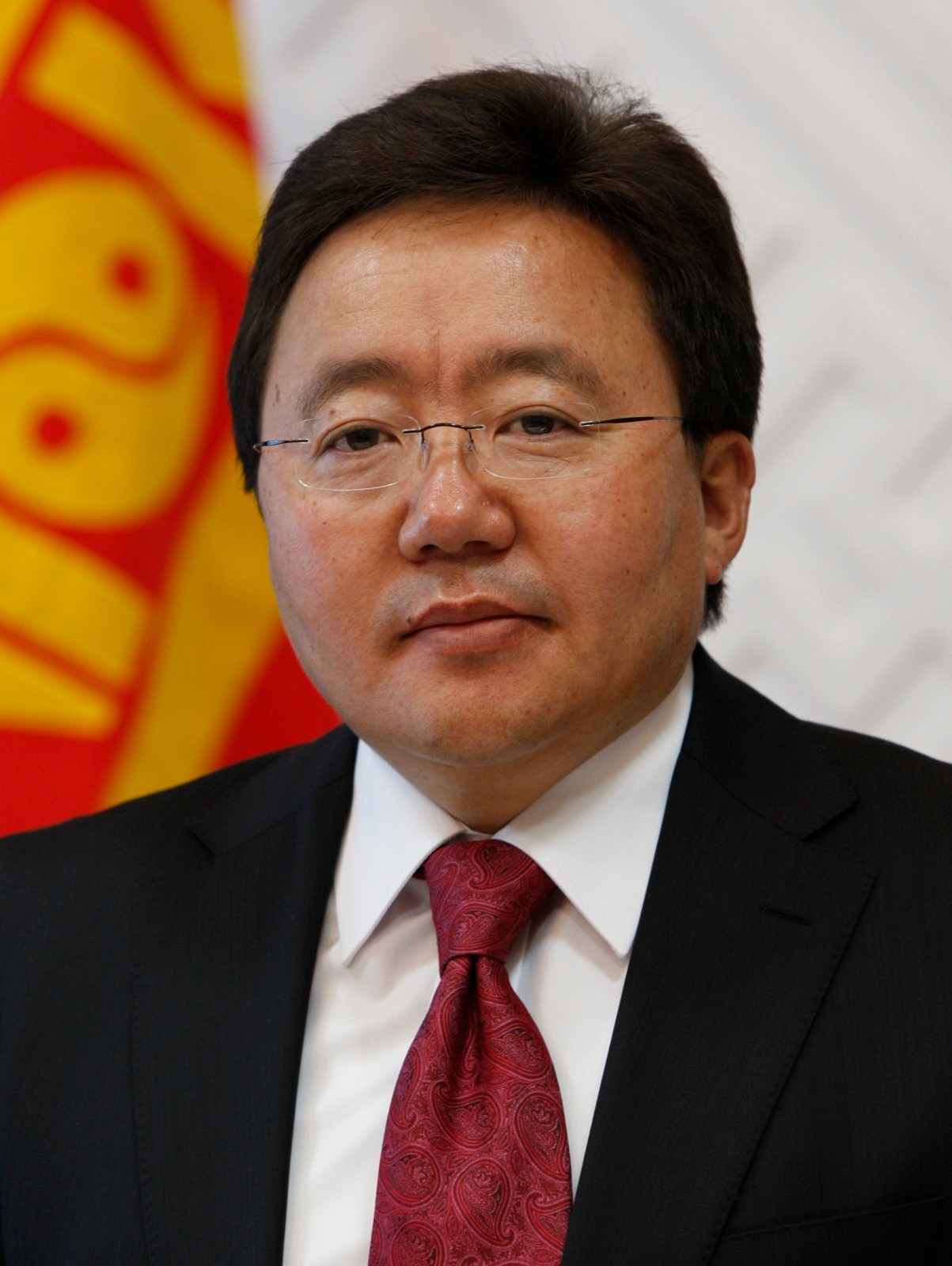
Elbegdorj Tsakhia
Elbegdorj Tsakhia is Mongolia's former President and Prime Minister who led Mongolia's transition to democracy after the fall of the Soviet Union.
Episode Summary
No country quite understands what it’s like to live next to a major power to the extent Mongolia does because it lives between two. For decades, the government had to balance its relations and goals against the actions and ambitions of its neighbors— except one, Russia is now a pariah, and Mongolia is almost entirely dependent on the other—China for trade. In this week's bonus episode, guest host, journalist and Senior Editor at Semafor, Prashant Rao, sits down with Mongolia's former President and Prime Minister, Elbegdorj Tsakhia, who led his country’s transition to democracy after the fall of the Soviet Union. They discuss the relationship that Mongolia has built with China and Russia, what he learned from his interactions with Vladimir Putin and Xi Jinping, how he navigated pressure from Beijing during the Dalai Lama's visits to Mongolia, and what the United States should understand about China.
Listen & Subscribe
- Watch on YouTube
- Listen on Apple Podcasts
- Listen on Spotify
Transcript
INTRODUCTION
Mcfarlane: I'm Julia McFarlane, host of One Decision, the podcast that looks at the choices made that shape our world. Together with my cohost, the former chief of the British Secret Intelligence Service, Sir Richard Dearlove, we unpack the key decisions, past, present, and future, that matter to us all. We drop new episodes every Thursday. But today, we're bringing you one more decision, a brief analysis of developing news and wider trends around the world with Prashant Rao, former editor at The Atlantic and The New York Times, now currently senior editor at new startup Semafor. Prashant caught up with the former president of Mongolia on the sidelines of the UN General Assembly recently in New York City. As nations around the world gathered, many to discuss what to do about the rising challenge from China, we thought it was important to hear the view from one of its next door neighbors. Here's Prashant with more. Thanks, Julia.
INTERVIEW
Rao: Few people grasp the issues or the stakes better than our guest today on the podcast, Elbegdorj Tsakhia, who's among the main leaders of Mongolia's 1990 democratic revolution, ending seventy years of status as a Soviet satellite and an architect of the country's 1992 constitution. I caught up with him for a brief conversation in a hotel in Midtown Manhattan during the UN General Assembly's high level meetings to talk about the relationship that Mongolia has built with China and with Russia. So you will have, you know, interacted with Vladimir Putin on many occasions. Can you walk us through how that relationship began? How did it evolve? Because you were prime minister for a period. I mean, basically, you were in office from about 2004 to 2017 with a small interruption. In that period, how he was viewed in the sort of West, it changed dramatically. Did you see that? How did you feel? How did you deal with him? How did those interactions go?
Elbegdorj: I think he was quite sensitive because of Mongolia's democracy. And also we have parliamentary democracy a little bit different. You know, CEO is in Mongolia, our prime minister, and president is more symbolic. And I was in both chairs. And I was two times as prime minister of Mongolia and two terms as president. But when I left my office, all those things, I think putting a real test for President Putin, it started with the start of the invasion of Ukraine.
Rao: And now I think he seems — you mean the 2014 invasion?
Elbegdorj: Yeah, 2014. Right. And also, yeah, 2022 invasion. Yeah. Last one was really turned out badly for President Putin.
Rao: Do you think that Western leaders — famously, George W. Bush said that he saw into Putin's soul. Obama thought that there was the potential for relationship there. Were those leaders mistaken or did Putin change over the course of his presidency?
Elbegdorj: I think Putin didn't change maybe, but circumstances changed. But Putin miscalculated, I think. Yeah. International approach and what will happen if you go full scale war against Ukraine, and that was really bad miscalculation. Sometimes, you know, politicians do that miscalculation.
Rao: Yeah. And to some extent, you know, a mainstream interpretation of why the miscalculation happened is over time, he surrounded himself with yes men, people who would only agree with his assessment, who never shared with him bad news. Was this something you saw over the time as Mongolia had relations with Russia that actually Russia was making, I don't know, stranger decisions, decisions that seem to be driven largely by the fact that Vladimir Putin's assessment of the landscape was mistaken?
Elbegdorj: I think only one topic when I talk about the our people's choice towards democracy, Putin had some kind of negative view. When we talk about the economic relations, trade relations, he was quite explained, you know, all those reasons behind his decision. If he refusing to our proposals, he explained us. If he are accepting our proposals, also he was explaining. But one thing, always I say, you know, democracy and that's the our people's choice. I cannot negotiate that, you know. Freedom is non negotiable for Mongolia, but there are many plenty of issues we can talk about with Russia. And also Russia Mongolia relations before 1990, you know Mongolia was satellite, so it's satellite country. All most of our economic relations, 90% of our economic relations, foreign relations was with Soviet Union. But after the collapse of the Soviet Union, after we introduced the democratic way of life in Mongolia, after we transitioned from communism to democracy, that changed. Now most of our relations, economic relations with China, and those things changed a lot.
Rao: Yeah. You know, Vladimir Putin famously has said that he thought the fall of the Soviet Union was one of the great tragedies of the twentieth century. Clearly, believes and has said this and written this. Ukraine is not truly a nation state and should be incorporated into Russia. All these kinds of things means the driving force of his war. Did you ever sense, because as you said, Mongolia was a Soviet satellite and he obviously has some measure of harkening back to the Soviet era, that he did not regard you as an equal or Mongolia was an inferior state? How did the diplomacy work in a bilateral sense? Did you feel like he was treating you as an equal?
Elbegdorj: Maybe he didn't treat us equal, you know, like a younger brother or something like that, a smaller country. But I approached to President Putin like a equal. You know? There are some interests usually meet, and Putin knows whom he deals. You know? I was one of the leaders of the democratic revolution. And from my young age, I like democracy. I like freedom in my heart, and democracy means you have to respect those differences. And because of that, maybe sometimes it was easier to handle, you know, to approach, to talk with Putin, and he knows who I am. I know who he is.
Rao: That's really interesting. And were there instances where you felt like, okay, there's no point talking about politics here. We should just stay on issues, for example, like trade or things like that. Were there red lines in the conversation where you thought it was just a waste of time to broach these issues with Putin?
Elbegdorj: You know, every time you have to employ some kind of tactics. When you raise, you know, there are some time frame, only thirty minutes, twenty minutes, one hour. You know? Sometimes you have a longer dinner or longer meeting, and every time you employ different tactics when you approach to Putin.
Rao: Can you walk me through that a little more? That's really interesting. You know, when you had more time with him, how did you behave differently than when you had, say, thirty minutes with him?
Elbegdorj: One thing I noticed that Putin always wanted to explain his motives. For example, 2014, when he, yeah, cut Crimea and, yeah, joined Crimea to Russia. When I wanted to talk with Putin, I usually ask an issue related with Crimea, and he explained me for thirty minutes. After that, I can go to other issues. Crimea was one of the favorite issues, you know. He tried to explain why that happened. That was some starting point. I'm also sharing his concern or something like that. Also, I expressed my point of view very clearly.
Rao: And you found sort of letting him speak in this way would kind of pave the way for an easier conversation on that? And, you know, just thinking about, obviously, now that this has happened, the 2022 invasion — the 2014, you know, you were in office as president when the 2014 annexation of Crimea happened. At that point, you know, Russia was well on its way to becoming an international pariah. It was sort of evicted from the G8, sanctions were imposed, all of these kinds of things. Mongolia had, of course, a difficult choice to make to some degree of, you know, do you sort of issue statements condemning what happened in Crimea? Do you, you know, side with Russia? Do you remain silent? How do you begin to manage that? Because, obviously, Russia's a huge power on your doorstep. I guess you can't risk angering Putin to a great degree. When you were in that, obviously, as you said, the presidency was something more of a ceremonial role, but you were a sort of a big figure in Mongolian politics, so you had some say. How did the Mongolian political class and yourself deal with that kind of crisis?
Elbegdorj: First, you know, that 2014 issue was like a — and I asked just to explain, you know, Putin's point of view on those issues, and he was very happy to explain, to share his views, and I was very happy to listen to that, and we switched to different topics. But in full invasion in Ukraine, I think everything has changed.
Rao: Oh, yeah. So it is just an order of magnitude difference now. It is very different. Yeah. Most sort of many people here in New York and elsewhere would certainly agree with that. How does that change the politics of a country? Let's say, not just Mongolia, but there are several countries that have, you know, made active decisions not to condemn Russia. You know, Mongolia has abstained from General Assembly votes — to the extent that you're comfortable talking about Mongolia's decision, but also just generally, countries that want to maintain relations with Russia that, you know, for whatever reason, don't want to condemn it.
Elbegdorj: Officially, yeah, in a political level, I think many people understand that our situation, that's quite precarious situation. And but Mongolia is open country, and Mongolia is a democratic country. There are many voices, you know, even myself from the first day of a Ukraine invasion. I actually that should not happen, you know, against the independent country, and Ukraine has a right to exist and its invasion is bad. Very interesting innovations in terms of that invasion. You know, when Soviet Union was invaded by Germany in nineteen forties, Mongolia actually condemned Germany and Mongolia became the very close ally of Soviet Union. But when now Russia is invaded Ukraine, in Mongolia, public sentiment actually was blaming Russia. That's wrong. Russia is doing wrong thing, and that's very different. I think we in Mongolia, we usually clearly differentiate policy of Kremlin and people of Russia.
ON CHINA AND XI JINPING
Rao: You know, in some ways, the more interesting and complicated relationship is the one with China. You know, you talked about how Mongolia was economically enormously dependent on Soviet Union, that has now transitioned to being it's dependent on China, you know, not just for the exports of coal, but also for all the imports that come largely through China. So the trade route is two ways and dependent in both ways, quite aside from the political kind of complexity of dealing with a country like China. Can you walk me through first? You know, you said you met Putin 30 odd times. You've also met Xi Jinping 30 odd times. And, again, your time in office overlapped with him for, I think, the first three, four years of his time in office. What was interacting with him like? Was he more formal than Putin? Was he quite formal? Did he speak off sort of a script? Did he speak off the cuff? Did he get more comfortable? Can you walk me through how that relationship began and how it evolved?
Elbegdorj: Chinese leaders usually follow the rules, and it's quite predictable, you know, Chinese policy, and we know. And but Russian leaders, little bit bullying, you know, but Chinese are quite different. And, also, they respect, you know, good neighborly relations with Mongolia, and they treat us as equals. One thing very different when you have deal with the Putin or Xi Jinping, and Xi Jinping usually treats all those leaders. Leaders from smaller country or bigger country, he treats them as equals. That's a very important approach. And China tend to be, you know, problem solver, and that's also one thing. But they express their ideas, their values, their interest very clearly. When it comes, you know, to Taiwan issue or to Dalai Lama issue or to other issues, you know, we usually say that Mongolia has a policy, one China policy. It's our policy. But when it comes to other issue, for example, relations with the Dalai Lama, it's very different. And I visited China with a state visit and President Xi Jinping come to Mongolia with a state visit. When we faced face to face, only two of us, I talked about, well, for example, there are five issues. I cannot talk maybe openly, but I want to talk with you, and I would like to explain my approach and my understanding those issues. And President Xi Jinping was quite listening.
Rao: So as you say, China has very strong opinions about Taiwan, but in your case, the most relevant one was really the Dalai Lama. And I'd love to dig into a particular incident that, you know, you've talked about a little bit in the past, but I find it fascinating. The Dalai Lama's November 2016 visit to Ulaanbaatar, you know, there was huge crowds that came out to see him, and I think your presidency in the country really tried to frame that as not a political visit, but as a religious visit. That, you know, it didn't seem like Beijing cared broadly. And what seems to have happened was they immediately imposed tariffs on coal imports. They cut off all bilateral meetings, and then effectively, the Mongolian government had to declare that the Dalai Lama was no longer welcome to come back. Was it a crisis? Was Beijing explicit about the fact that you did this, we are cutting off contact, or was it sort of more subtle?
Elbegdorj: You know, Dalai Lama visited two times when I was president in 2011 and 2016. That was a very different political environment. Maybe in Beijing 2011, Hu Jintao was president. In 2016, Xi Jinping was there. And that was two different things, two different scenarios we saw. But the one thing, I even our political decision makers, our government was quite reluctant. You know? They felt that pressure first. And usually, our decision makers say that Mongolia is an independent country. We have to make decision and whom we accept, whom we invite, who should visit Mongolia. That's our issue and that's our policy. And also, Dalai Lama, his holiness visit one issue that many countries — you know Mongolia is not exposed by the media or other people. They don't know about Mongolia much. When Dalai Lama visits Mongolia, usually people sense that, ah, Mongolia has its own government. Mongolia is an independent country. Mongolia is no longer satellite, Soviet satellite or Russian satellite or Chinese satellite country. You know, 70% of our people is still pursuing, you know, Buddhism, and many religion in Mongolia is Buddhism and Dalai Lama is a regarded head of that religion.
Rao: But at the same time, you know, the Dalai Lama hasn't gone back to Mongolia since then. And so I'm curious, you know, you are right, of course, from a legalistic point of view that Mongolia is an independent state and makes its own decisions. But the pressure that China can exert — and, you know, Mongolia offers a really interesting example for countries in the South China Sea and all these countries that are economically closely tied to Beijing that have otherwise fairly reasonable relations. But when push comes to shove, China can exert a huge amount of pressure on a country like Mongolia. I mean, did you feel that in that second visit in 2016? Did you and the sort of politicians in the government start to question, are we an independent country? Can we actually do this?
Elbegdorj: You know, I think president is in Mongolia, president is a head of state, and we knew that there are gonna be some pressure from China, from Beijing, but there should be someone should take that hit. And during those two visits, I took that hit. But, of course, those relations and cutting bilateral visits and other things, imposing their will in Beijing, all those things felt first, you know, government. But now it seems we manage things in our own way.
Rao: After that visit, you left office the following year. Did you meet Xi Jinping again after the Dalai Lama visit? And if you did, did you discuss it?
Elbegdorj: I just expressed my stance, my policy clearly, but we will not discuss political issues with Dalai Lama. Dalai Lama will come as a religious leader to Mongolia. I made it very clear to President Xi Jinping.
Rao: And did he accept that? Was that sufficient for him?
Elbegdorj: He was strongly opposing that in one thing. If you discuss political issues with him, we are going to not accept that. Okay. But we didn't.
Rao: I guess that I bring up that example because it raises such a difficult tension for countries like Mongolia, not just Mongolia, but again, as I say, countries in the South China Sea, is China's economic development has helped a lot of countries develop and become richer. Right? China's purchase of Mongolian coal. At one point, Mongolia was the fastest growing economy in the world, in large part because of China's economy growing as fast as it did. And so there's a mutually beneficial economic relationship happening here, but one in which China is a much more powerful country. Is there ever a conversation worth having? Is it just a false choice to suggest that Mongolia should think about reducing its dependence on China, or is that just not possible? It's not worth discussing because so many Mongolians have a better quality of life now compared to twenty years ago.
Elbegdorj: You know, one of the main issue related with economy is diversification of our economy. And we want to have more value added products in Mongolia, not only exporting those raw mining products to China and we want to make it more evaluated inside of Mongolia. And that's one challenge and China actually buying those things. And also, China is bringing, for example, to Oyu Tolgoi, as you know, one of the main products we export to China is copper. And I'm always asking, advocating we need to more value added products, not only exporting those raw materials to China. We need more factory, processing factory in Mongolia, and that's kind of conflict interest is still existing there.
Rao: It is difficult because the pure geography of it means that, to some extent, it will be almost impossible to wean Mongolia off China and to diversify too much just because of where Mongolia sits and where China sits, and that's never gonna change. You talk often in this conversation and in other conversations about the democratic ideals that Mongolia represents, the sort of free society, and yet, you know, this enormous autocratic country next door can exact a price on a free society in this way. When you were in office, and now, I imagine the perspectives are a little different because you were constrained while you were in office. Is that compromise worth it?
Elbegdorj: Maybe in China, there is more prosperity, more stability, but in Mongolia is different. And I urge my government and my people and my president, my prime minister also to express that Mongolian way of life, Mongolian people's choice is quite different. You have to accept that. Don't mess with that, you know. Don't link with that choice, you know, those economic relations or trade relations, tariff relations or infrastructure, all those things. And also we respect Chinese people's choice, Chinese way of life, Chinese political decision making way of things. We respect it. We also ask same thing for ourselves.
Rao: We're in New York on the sidelines of the UN General Assembly, and obviously, a huge topic of discussion in New York and Washington is relations with China. You know better than almost anyone in a position of power in the United States, what it's like to deal with China very up close. What do you think that the United States does not understand well about China or should understand better about China that you feel like Mongolia offers an insight into?
Elbegdorj: One thing, China will be there for long time. And also other thing, this kind of the political structure establishment will be there. And if you think that one country, if you think that that's enemy or adversary, they will be enemy. There will be adversary. If you treat them as equals, if you treat them, you know, with their interest, if you talk to them, if you have dialogue with them, they will speak. Means that more engagement is good for the United States, for any other country.
CLOSING
Rao: That's it for this week's episode of One Decision. We drop new episodes every Thursday. Like and subscribe so you never miss an episode.
Mcfarlane: Drop us a line. Tell us your thoughts. What decisions have impacted you and where you live? You can write to us. Our email is 1decision@1decisionpodcast.com. From me and the team, thank you for listening, and see you next time.