Episode Info
- Season18
Hosted by Christina Ruffini and Sir Richard Dearlove
Guest
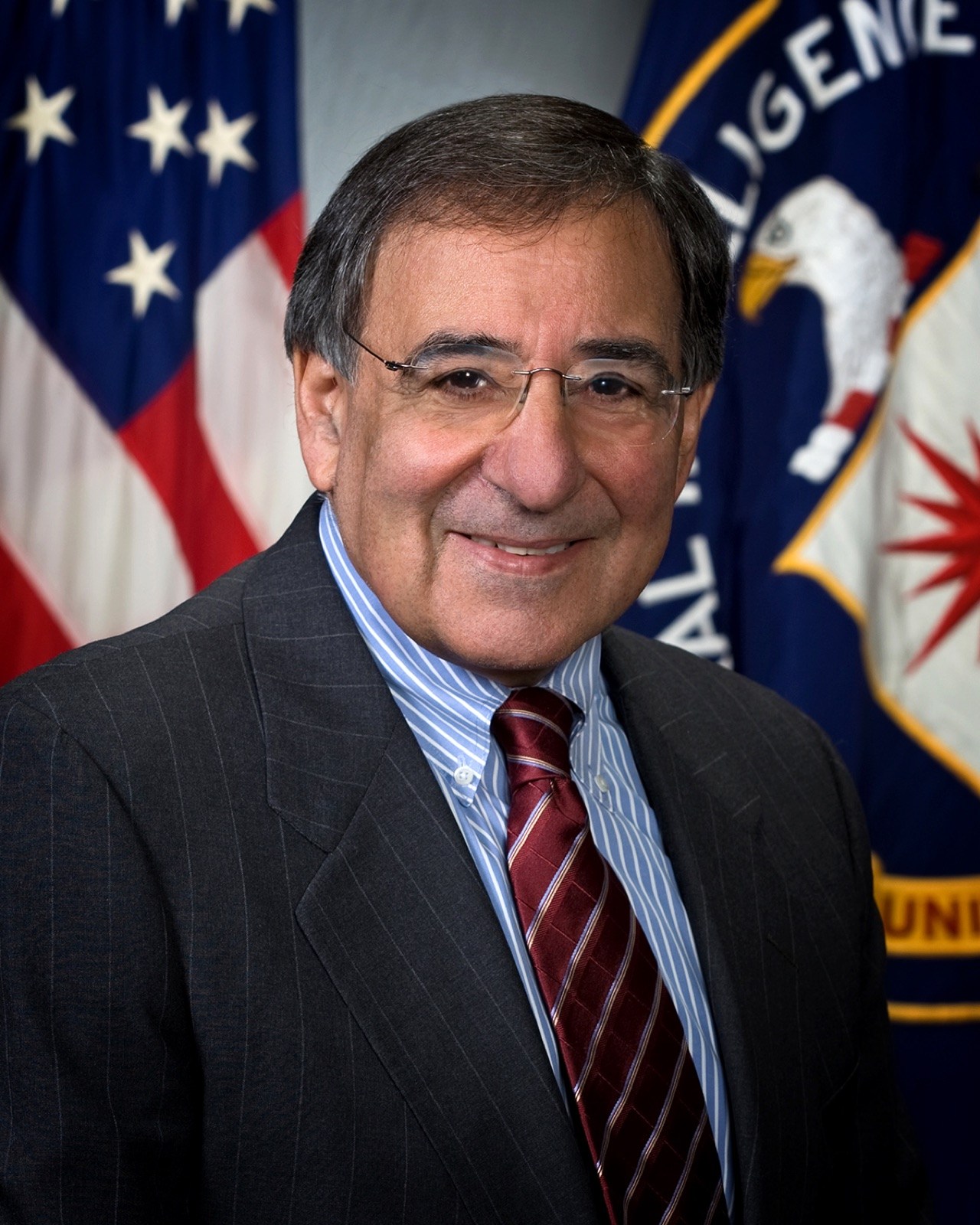
Leon Panetta
Leon Panetta is a former head of the CIA discussing the apparent assassination of Wagner boss Yevgeny Prigozhin and its implications for Putin's position and the Ukraine war.
Episode Summary
In this week's bonus episode, Julia Macfarlane leads a discussion on the apparent assassination of Wagner boss Yevgeny Prigozhin with ex-intelligence chiefs Sir Richard Dearlove, who led MI6, and Leon Panetta, the former head of the CIA. They discuss what this dramatic development tells us about Putin's position of authority in Moscow— only recently challenged by Prigozhin, who led a mutiny against the Kremlin—the impact on the war effort in Ukraine and the Wagner Mercenary Group's future in Africa.
Listen & Subscribe
- Watch on YouTube
- Listen on Apple Podcasts
- Listen on Spotify
Transcript
INTRODUCTION
Mcfarlane: You're listening to One More Decision, a short update from the team that brings you One Decision, the podcast that looks at the big choices shaping our world. I'm your host, Julia McFarlane, journalist and broadcaster. And I'm joined today by my cohost, Sir Richard Dearlove, the former chief of Britain's secret intelligence service. I'm delighted to say we're also joined today by Secretary Leon Panetta, the former secretary of defense and CIA director under President Obama. Now it is a great thing that we have both gentlemen on the podcast today because there's been quite a lot of news coming out of Russia. Late on Wednesday night, it seemed that Yevgeny Prigozhin, the head of the Wagner mercenary group and leader of the failed mutiny against Putin earlier this year, has appeared to have finally run out of luck. Reports that he was on the passenger list of a private jet that exploded in the air somewhere between Moscow and Saint Petersburg. Now there's been a lot of news dribbling out in the last day, but the big news we've heard is that Putin has finally broken his silence, releasing a video statement earlier. He says, I knew Prigozhin for a long time from the early nineteen nineties. He had a difficult path and made some serious mistakes in his life, but he got results for himself and when I asked him. Putin also went on to send condolences to Prigozhin's family for their loss. I started the discussion with our two esteemed former spy chiefs today by asking Secretary Panetta, first of all, to rate on a scale of one to 10 how sincere he thought Putin was being in those tributes to Yevgeny Prigozhin, his old protege.
INTERVIEW
Panetta: Well, for those of us, Sir Richard and I, who come out of the intelligence world, this pretty much follows Putin's playbook for most of his life. This is, Putin is a former KGB agent. His basic approach is that if he's crossed, you know, you'll pay with your life, either by poisonings or people throwing out windows or other means. And so I think one way or another, I mean, we don't have all the facts, obviously, at this point. But there's no question in my mind that Putin was responsible for what happened here. And therefore, if I'm right, when he takes to the airwaves to deliver condolences to the family, etcetera, he's only doing that because he knows that Prigozhin and the Wagner Group had a lot of support in Russia. And I think he's trying to see what he can do to try to modify that kind of support, sympathize with it, and indicate that somehow he was not responsible for something that I think without question he was responsible for.
Mcfarlane: Richard, Secretary Panetta has brought up something really, really important, which is the difficult line that Putin now has to tread now this has happened, and I wanna ask about that. But before we do, I just want to go on to what we know about what exactly, what physically has happened, and there are conflicting reports. The Russians are carrying out an investigation on this now, but in the initial hours after the attack, we saw on Wagner affiliate Telegram channels claiming that there were sounds of two explosions, some thought that it was perhaps a surface to air missile, and some speculation on this because the plane's trajectory apparently went close to a residence of President Putin's, where he is known to have air defenses around. However, there are also reports that surfaced the next day, which seemed to involve a possible bomb being smuggled on board, apparently in a crate of wine. That's not confirmed, but that is something that is going around certain Russian circles. Those are rumors that are being spread worldwide. No matter how the plane was brought down, whether by missile or a bomb on board, either way, this was a very public assassination. This wasn't a poisoning in the stomach. This wasn't a drug that mimicked the symptoms of a heart attack. These are methods that we know the Russians have the capability to do so. This was a very, very public explosion in the sky. So what do you think, first of all, that that tells us?
Dearlove: Well, it doesn't tell us much more than it tells us, and sorry, that's a rather banal answer. What I would say is that I very much doubt that the aircraft was shot down by, as it were, a missile defense system, because there has to be an element of deniability in an assassination. And you know, that little bit of doubt, I mean, you know, we all conclude that Putin planned this and did it. But if it's a bomb on the plane, then you know, that requires an investigation. And you know, there'll be an element of doubt as to who was responsible, someone can allege another of Prigozhin's enemies. So there are all sorts of alternatives. So I would almost bet on the fact that it was a bomb on the aircraft rather than a missile defense system. That's the first thing I would say. Of course, the other issue is if you blow up the plane, I mean, there were other important Wagner individuals on the aircraft, so you get rid of the whole lot in one go. So that's pretty definitive too. And the third thing I would say is that, you know, if you look at this in a historical context, Russian leaders or rulers going way back, but let's not go back further than the communist revolution of 1917, have always bumped off, you know, their serious opponents one way or another. Go back, you know, what did Lenin do to Trotsky? And in a way, one has not dissimilar situation here. And there's a whole history of Russian leaders murdering or assassinating their opponents. I mean, Russians tend to do it to other Russians more than they do it to foreigners. But the history of the twentieth century of Russia is littered with assassinations. So this sits right in the center of the traditions of brutal leadership and rulership, whether it's Soviet Russia or post-Soviet Russia or Putin's Russia. And you know, there have been a string of suspicious deaths in Putin's time. I mean, there are 13 unexplained Russian oligarchs who passed away in inverted commas in strange circumstances in London, you know, which have not allegedly all been thoroughly investigated, because some of them looked as though they may have been natural causes. So I don't think we should be surprised at all by what's happened. And I think there is another point to make, you know, almost certainly Prigozhin is dead, but we don't know that 100%. I think the evidence is pointing in that direction, but are we all being misled? You know, many, many questions arise.
Mcfarlane: Yeah, I mean, I think you're right that the most likely explanation is a bomb on board. Operationally, that's far easier to carry out, particularly on a small plane departure that's on Russian soil. I mean, the US government's preliminary assessments are that it's most likely that it was a bomb exploding on the aircraft rather than some kind of anti aircraft missile being fired off mid flight. Secretary Panetta, Putin was clearly sending a message, and we do know that he does not take traitors lightly. But of course this comes a few months after Prigozhin led this failed mutiny and challenged his authority directly. Why didn't Putin respond back then? I mean, surely the real strength would have been to crush Prigozhin when his authority was being directly challenged. Instead, Putin sort of shook hands with Prigozhin, they sort of ended that mutiny amicably, and for revenge to have been served cold as it were a few months later when Prigozhin was on an aircraft, that doesn't really scream power, does it? I mean, if Putin was really in control, he would have squished him like a fly in the midst of the mutiny, would he not?
Panetta: There's no question that I think, standing back and looking at the events of the last two months — and by the way, it was two months exactly to the date that the coup took place, which is, Putin always pays attention to his anniversaries of one kind or another. The fact that there was the coup and Prigozhin was within a 120 miles of Moscow threatening Putin. And the fact that Putin probably faced the most serious threat to his power in the twenty three years that he's been in office, and the fact that Putin called him treasonous at the time, it was clearly a sign of weakness at the time that somebody had to negotiate a resolution to this in Belarus and that Putin did not take direct action. On the other hand, when you think about it, Prigozhin is popular. Prigozhin was being very critical of the Russians and what they were doing, particularly in the Ukraine. And there's no question in my mind that there was support for Prigozhin among some of the right wing circles in Moscow. And for that reason, I think Putin decided in some ways he had to tread lightly here because if he moved quickly, that it might reverberate against him, and he might face even more problems in Moscow. So I think he kind of deliberately took the approach of standing back and catering to Prigozhin and trying to get him to get comfortable and basically not put him in a position where he felt that perhaps he had avoided the kind of immediate assassination that's taken place in the past, as Sir Richard has defined. So there are two things here. One, Putin was weakened by what happened. Putin was nervous about what had taken place. Thirdly, he wanted to be careful not to create greater problems for himself. And fourthly, he does, as a matter of course, as this former KGB agent, always wants to have people get comfortable and not feel like they're threatened. Otherwise, would be taking steps to try to avoid any kind of assassination, which I'm probably sure he was trying to do anyway. But this all fits the pattern that we've seen from the coup. He took his time. Prigozhin did get more comfortable. He was meeting with Putin, and ultimately, Putin took advantage of that in order to assassinate him and the other leaders of Wagner.
Mcfarlane: Yeah. I mean, but he was in the Kremlin recently. He was shaking hands with African leaders just a few weeks ago in the Kremlin. I mean, if he wasn't sort of off his guard then when he'd literally in Putin's house — I mean, I do think this is being assassinated in a plane in the sky. There is a public drama there that does send an unmistakable message. This question is for either of you gents. The other thing that has changed since the mutiny — well, two things. First of all, the Rosgvardia, the Russian National Guard, which is around 200,000 personnel strong, and it was created by Putin in 2016. It's headed by his former bodyguard, and their purpose is really to protect the Russian leadership. They have been given heavy weaponry, and they have been strengthened in the weeks since the mutiny. The other thing that has happened is Sergei Surovikin, who was an old army chief, he who appeared to potentially side or show support with Prigozhin, he was sacked on Wednesday, the same day that Prigozhin's plane exploded in the sky, but he's also been sort of missing from public view ever since the mutiny. So those are two key things that have happened since the mutiny and so could potentially be relevant to the timing of all this. What's the relevance of those two events? The beefing up of the Rosgvardia, the sacking of Surovikin, this is Putin clearly trying to shore up his position. Does that mean that the security of his position is one that is very clearly in question?
Dearlove: Well, I think that one of the lessons of the mutiny is it was clear at the time that the Russian military didn't really oppose the Wagner Group in the initial stages of them, you know, mounting this extraordinary action. And there's no question that there was sympathy within bits of the military leadership, that shot of Prigozhin when he was in the South sitting down with the two leading generals chatting with them amicably. And there's no question when the Wagner sort of column left the war theater and headed north towards Moscow, it's pretty clear from what I've heard that the road to Moscow was not defended, that the cupboard in Moscow was pretty bare. Putin panicked and made that extraordinary speech on television and things, you know, were going very, very badly. And I think almost proof of this is that Surovikin is one of the decent generals that the Russian military had, and who is actually I think responsible for having built this defensive line along the division between, you know, Russian and Ukrainian troops, which is proving so difficult for the Ukrainians to break, has now been booted out. Although it looks as though he's been sacked. So I mean, things are difficult for Putin at the moment. And I mean, you know, remember, he's assassinated someone from his inner circle. When they start killing each other, you know that they've got real problems. And although you could say this is a reassertion of Putin's authority, on the other hand, I would say it's indicative of the weakness of his position as well. It cuts both ways. And I think he has got some serious problems in terms of trust of the military. This Russian National Guard sort of protection like a Praetorian Guard, it's not a very large organization and it's no match for the Russian military. So the questions, you know, in Putin's mind must be, you know, his vulnerabilities, I think. And this is a pretty desperate measure, but one that we all expected, you know, where he rubs out Prigozhin. I'm sure that Leon's got observations on that as well.
Mcfarlane: Secretary Panetta, where does this leave the war in Ukraine? Because this now leaves it very much firmly in the hands of Valery Gerasimov and Sergei Shoigu running the operation, whereas Prigozhin was commanding some of the key areas, spearheading with his mercenaries some of the key battlegrounds, and was doing very well. It was Wagner mercenaries who finally took Bakhmut who were responsible for some of the key advancements. Valery Gerasimov and Sergei Shoigu, they're kind of the two Ronnies, really, of the Russian army. Actually, I don't know if over in America you'll get that reference, that these two almost comedic sort of buffoons who are really quite incompetent blundering around. What do you think Prigozhin's absence and the demoralization perhaps on the troops will have on the Russian war effort, given that he was well respected by a lot of soldiers in the Russian army, not just among mercenaries?
Panetta: All of this reflects, I think, on what Sir Richard concluded, which is a Putin who is in trouble. He's been weakened, weakened by the decision to go into the Ukraine, weakened by the way the Russian military has handled that offensive, that invasion, weakened by the fact that there are so many deaths that have taken place and so many wounded. There's no question that there's a tremendous amount of demoralization within Moscow about what's happening in the Ukraine, and Prigozhin made it his credo that of criticizing what was happening, what was happening to the Russians, what was happening with regards to their failure. And I think that right now, because Putin has to focus on all of these weaknesses that are occurring and the fact that — I would not be surprised, very frankly — this Wagner Group was very loyal to Prigozhin, extremely loyal. In addition, there were right wing supporters in Moscow who are very close to Prigozhin that I think Putin has to worry a great deal about his own personal safety at this point. Imagine having the kind of loyalty that Prigozhin demanded, and suddenly he gets killed in this kind of assassination, there's no question that there are elements of the Wagner Group that are not gonna take lightly to this. And I think Putin has to worry, which means that it's gonna detract from his focus on whatever's happening, or not happening, in the Ukraine. I think this is probably a moment in time, if I were in the Ukraine, where I would take advantage of the kind of disruption that has just occurred.
Mcfarlane: Right. The Russians have been primarily concentrated the last sort of six, seven months on defense, on strengthening their defenses, on mining the heck out of the places they currently hold. This assassination is really not going to favor the Russian war effort because now Putin has to sort of have one eye on securing his position at home as well as one eye on Ukraine. I mean, the Ukrainians this week have been sort of — I don't know if celebrating is the right word. Prigozhin is a sort of — he's really an evil man towards them. He is responsible for some really brutal executions of Russian defectors who've been handed back to Russia in prisoner swaps. He's been commanding troops who've been accused of crimes against humanity on the ground. They are sort of celebrating his death, but Zelensky, he said something was quite amusing. He's quite witty at times. He said, when we've been asking the West for planes, this isn't quite what we meant. But he then went on to say, no, no, no. This wasn't anything to do with us, even if it is something that is quite good. And also interesting that, you know, you said that Putin pays attention to anniversaries. It's also Ukraine's National Independence Day today. I don't know what relevance that happens to be. But certainly, the Ukrainians are pleased that he's gone, and they must think that this is something that is in their favor.
Dearlove: Yeah. Bear in mind also in the Wagner Group that, you know, they were one of the agencies that Putin could use to conduct, you know, gray warfare more broadly. And the role of the Wagner group in the Sahel region in Africa, where you've got, you know, Mali, Burkina Faso, now Niger, inclining towards the Russians rather than, you know, their former Western allies. I mean, it's possible, given, you know, Prigozhin's disappearance that without leadership, you know, this option is not going to be as easily exploited by Putin as has been in the past. In my view, what's happening in Niger at the moment, which is relevant, it was a very significant way for, you know, Russia to get at Macron and destabilize French interests in a broader venue. So there are all sorts of dimensions, some of which are internal to Russia, as Leon's prescribed, but it goes more broadly than that. And I think it does indicate that there's some really profound problems inside the Kremlin now. It's not just this Putin's the original mutiny. There's a lot which is, let's say, fragile. It's very brittle, in my opinion. You know, things could snap and things could change pretty rapidly looking ahead.
Panetta: I think it's really important for everyone to remember that Putin created this monster. He's the one who empowered Prigozhin. He's the one who empowered the Wagner Group. He's the one who supported the Wagner Group and their different exploits. And there's no question that Prigozhin in many way was a thug and a war criminal along with the Wagner Group. And now it's come back to basically threaten Putin himself, but he created a monster that now has threatened him. And so the message that went out is a message that, you know, Putin has made clear that he is gonna take action against those who would threaten him. That's the message. I mean, after all, I think it was the Russian media, the Russian authorities who first announced what had happened here, and they almost did it with almost a semblance of comfort that it had happened. So it was clearly something the Russians wanted to take some pride in that, in fact, Putin had taken vengeance against his provocation. And that's a message that, obviously, Putin can send out, but it can also backfire against him as well.
Mcfarlane: I wanna just quickly go back to something Richard said, which was what Wagner had been doing in Africa. And I think it's important because there's billions, billions, and billions of dollars at stake. Wagner was making some serious money, not just — they weren't just doing well in Ukraine and spreading their tentacles everywhere. They were actually making serious money in Africa, partnering with a lot of states, running a lot of mines, taking very lucrative cuts from a lot of this going on in a number of countries in Africa. Now with Prigozhin gone, how are those operations likely to continue? Because, you know, he managed this extraordinarily well. He was running a very successful business empire. His mercs were very loyal to him. He paid them very well. You can't say that the same thing about Russian conscripts. And this was a very lucrative stream for the Russians at a time when the ruble is really flatlining and in trouble. We've seen the Russian central bank making moves to try and shore up the Russian economy. So not only is there a lot of sort of visual optics and brass politics at stake for Putin and a semblance of being in control, there is also hard cash at stake as well at a time when his economy is not doing so well.
Panetta: Again, I think that Putin used Prigozhin and the Wagner Group to extend his influence into Africa and to be able to support those autocrats in Africa who were asserting their own control and making money out of the deal, getting diamonds, getting gold, getting other things that they felt they were entitled to. Now the Wagner Group is there. I think the Russians will try to assert control over the Wagner fighters. Whether they're successful or not is a question, because these people have just lost a leader that they were very loyal to and that they felt was providing the kind of leadership they needed in order to do their mission. To have the Russians now try to take control of that group is not gonna be easy. And so what's gonna happen here is — and I agree with Sir Richard. I was worried about what was happening in Niger. I was worried about what was happening in some of these other countries, as Russia was trying to expand its influence. I think this is a moment in time, very frankly, where the allies, the United States and others, need to take advantage of this moment to make sure that Russia does not fully exploit, taking advantage of what's happened. Both China and Russia are trying to take advantage of this moment in Africa. I think it's a moment, frankly, where we're gonna have to organize ourself and our allies to make sure that we are providing a counterforce there that can try to move them in a better direction.
Dearlove: Yeah. I agree with Leon on that in particular. I mean, Niger is turning into something of a test case for the West. You could say it's not a particularly important country, but you know, sometimes these issues crystallize around one crisis. And you know, Niger is important because there's a large French military contingent there. It's important to the US as a base for fighting Islamist extremism in the area, and there's a significant US contingent there. It's clearly a huge concern to the African Union and ECOWAS, and all of these interests can join. And I mean, if the Wagner Group are leaderless, if their sort of fat paychecks are threatened by a massive decrease in income, I think this could be quite a trigger. But the point is you need a unified clear response from the West. And it's not clear to me yet what's going to happen in Niger, whether the Nigeriens really are going to become an agency for forcing the sort of ECOWAS to intervene militarily. But you know, it just might be the moment when this is appropriate, because to lose control of Niger, I think is going to be a rather crucial development in that part of Africa. And of course, it's not unconnected with sort of what's happening in the Ukraine war. It's absolutely clear to me that there is a direct link.
Mcfarlane: Well, with regard to this assassination or this potential assassination of Yevgeny Prigozhin, I'm actually less interested in the response from the West than I am with the response from China. Richard, what do you think President Xi Jinping might be thinking as Putin becomes more and more unabashedly the leader of a mafia state with these kinds of mob tactics? Now President Xi Jinping, he is no stranger to snuffing out his political allies, but he does them with a little more sort of etiquette. You know, with Bo Xilai, there was a corruption case, he's in jail, he didn't sort of blow him up in the sky like this. He at least tries to appear to play it a little more straight laced by the rules. He is someone who is very publicly concerned with corruption. He's someone who's very publicly concerned with, you know, territorial sovereignty. What do you think he makes of what is going on in Moscow? He's obviously tied himself to Putin, but do you think he, at any point, in all of this disarray, is gonna start getting buyer's remorse? Is he gonna feel like Putin is such a loose cannonball that it's actually less in his interest to be affiliated with such a gangster for a president?
Dearlove: Well, I think my interpretation is that Xi Jinping is supping with a lengthening spoon, and he's not too keen to be over closely associated with Putin. Obviously, you know, we haven't seen a clear break between the two countries. We're not going to see that. But I think we're going to see nuances in Chinese policy, which betrays the sort of concern on China's part about the contamination that Putin's regime will create for China if the relationship is seen to be too close and too integrated. And there's no question that, okay, we all know that Xi Jinping can behave in the most autocratic, repressive fashion. But on the other hand, since the twentieth Party Congress, there are some signs that diplomatically they've been inclined to behave with a little more decorum and restraint on issues like asserting their claims in the South China Sea. And I mean, for example, the British Foreign Secretary cleverly has just been or is in Beijing or just been to Beijing, I don't think we've had any reports on that yet. I don't think that would have taken place without some signal from China that, let's say, they're maybe moderating their expressions of support for Putin and being pretty cautious and pretty careful. And I mean, the other thing which I think is key for Xi Jinping, the Chinese economy, as we've now discovered over the last two or three months, is in one hell of a mess. And Chinese, as it were, development depends very heavily on its success in global trade. And I think that Xi Jinping right at the moment needs to worry about China's image as an international trader more than as an ally of Putin. So there are all sorts of reasons why he might be treading very much more carefully, but I'm sure Leon has got views on that too.
Panetta: I think Sir Richard is correct that Xi is being very cautious about ties with Russia. He saw how the war has gone. He saw the impact on Putin of the coup that took place. And very frankly, he knows that he's gotta keep a hands off approach to Russia. He doesn't want Putin to come down. He doesn't wanna create greater instability there. But at the same time, he also doesn't want to create the same enemies that Putin has created. And therefore, I think, you know, for the West, it's important, obviously, to try to see if we can take advantage of opportunities for dialogue, try to see if we can work a little more with China, and try to prevent China from becoming another threat to Taiwan and to the South China Sea and become, in a way, the destabilizing force that Russia became in Ukraine. I think Xi wants to avoid that right now.
SIGN-OFF
Mcfarlane: That's it for this week's episode of One Decision. We drop new episodes every Thursday. Like and subscribe so you never miss an episode. Drop us a line. Tell us your thoughts. What decisions have impacted you and where you live. You can write to us. Our email is 1decision@1decisionpodcast.com. From me and the team, thank you for listening, and see you next time.