Episode Info
- Season13
Hosted by Christina Ruffini and Sir Richard Dearlove
Guest
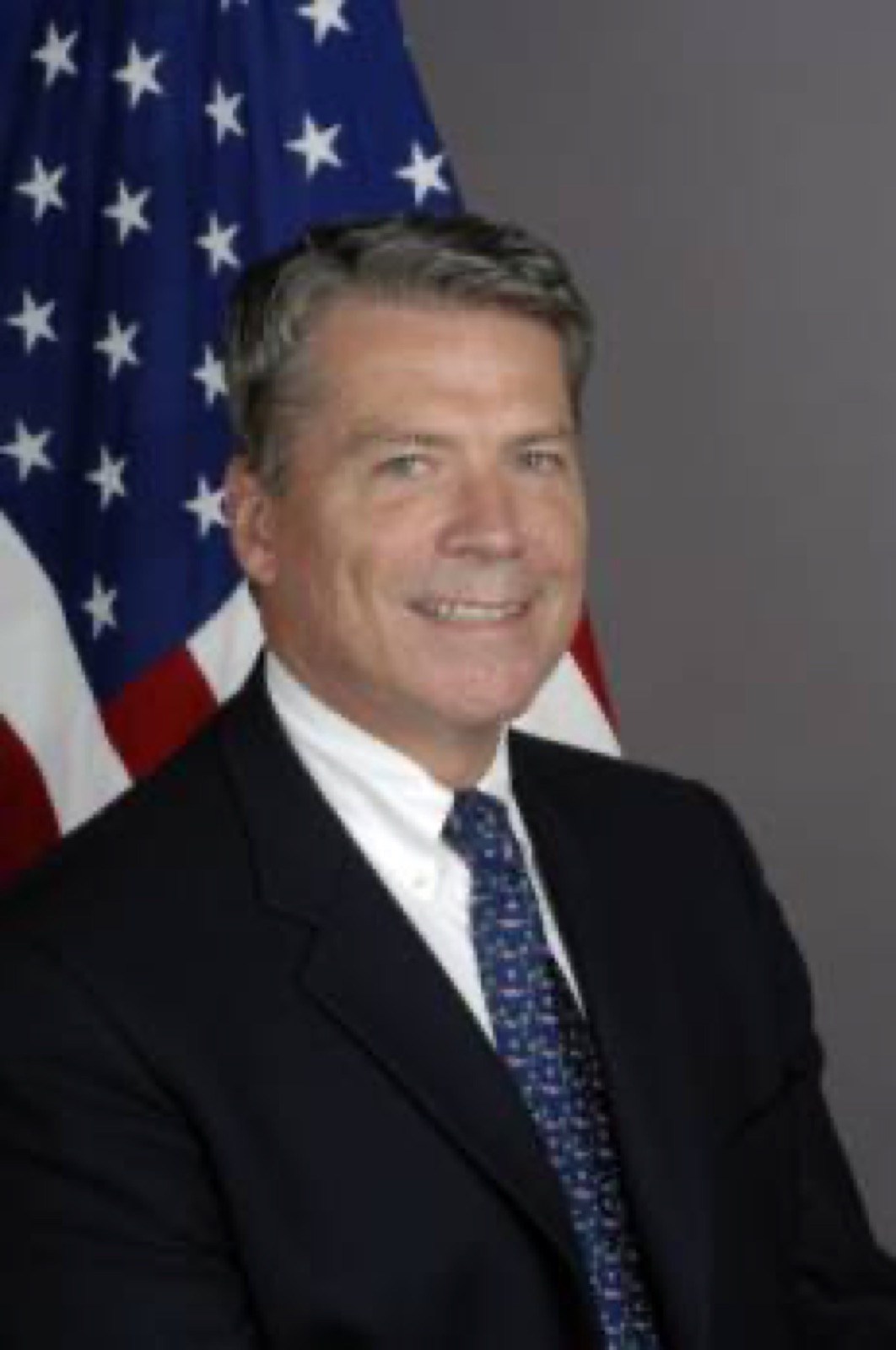
Ambassador Cameron Hume
Ambassador Cameron Hume ran the U.S. Embassy in Khartoum and provides an inside take on foreign influence in the Sudan conflict and whether sanctions would make a difference.
Episode Summary
Former Director of Global Engagement in the Obama White House Brett Bruen joins to host our weekly special One More Decision to provide analysis on the violent clashes between the Sudanese army and the paramilitary group, Rapid Support Force (RSF). Brett speaks with Ambassador Cameron Hume who ran the U.S. Embassy in Khartoum for his inside take on foreign influence in the conflict, whether sanctions would make a difference, and the logistics behind evacuating thousands of people amid intense fighting between Sudan's warring factions.
Listen & Subscribe
- Watch on YouTube
- Listen on Apple Podcasts
- Listen on Spotify
Transcript
INTRODUCTION
Mcfarlane: I'm Julia McFarlane, host of One Decision, the podcast that looks at the choices made that shape our world. Together with my cohost, the former chief of British intelligence, Sir Richard Dearlove, we unpack the key decisions, past, present, and future, that matter to us all. We drop new episodes every Thursday. But today, we're bringing you One More Decision, smart analysis of the latest breaking news around the world with Global Situation Room president Brett Bruen, who served as the White House director of global engagement during the Obama administration. Over to you, Brett.
INTERVIEW
Bruen: We have Ambassador Cameron Hume who led the US embassy in Khartoum for a number of years. Listeners will remember that Ambassador Hume joined us earlier in the year to discuss his work alongside Ambassador Bill Richardson, securing the release of WNBA star Brittney Griner from a Russian jail. He's been involved in a number of other similar cases of Americans detained overseas. But today, we focus on the situation, the concerning security situation in the East African country of Sudan. Ambassador Hume, thank you for once again joining us on One Decision. You ran the US embassy in Khartoum and would welcome your observations of what you see happening right now, and then particularly would like to understand how the involvement of foreign powers is playing out in this conflict.
Hume: Sudan's a huge country, and the way it's been run throughout its independent history is essentially four or five tribes in Khartoum dominate the central government and try to rule the entire country, and that's led to splits and difficulties. So what's the role of the United States at this point? Well, I think we could go back a generation and we've had bad relations, limited relations with Khartoum because we've attempted to get them to shift some of their policies. First, this was because Khartoum was seen as supporting the bomb attacks against US embassies in Kenya and Tanzania. And then after that, there was the challenge of the fighting in Darfur, which is really a background to today because Hemedti, one of the two contestants — there are two contestants for power and they both said only one of us will survive. That's the situation you have today. One is the head of the regular army, the other is the head of the Rapid Support Forces and that comes out of the Darfur conflict. This paramilitary force was built up during the Darfur conflict, and we, that is the US government, worked during the Darfur conflict and genocide, which we did. I have to say it was a messy sloppy piece, but the two sides accepted it for the time being. These splits and as a Sudanese society continues. So today, you fast forward another twelve years and what you're looking at is two rival forces contending, and so what is your ability to deal with, to convince people, to persuade people that you've refused to talk to, a new sanction for a generation. I would say it's pretty minimal. So it's hard to see how US diplomatic involvement can quote solve the problem now. But in the end, you have to have a government which is supported widely by the people, and they don't have that either. And we can't overnight, all of a sudden, become the key power to bring these people together. Very difficult.
Bruen: And yet you see statements from Secretary of State Anthony Blinken, as well as other American officials that talk about in that sort of traditional hubris of Washington that we, you know, will work actively to bring hostilities to a close, that we're considering sanctions. And what I'm hearing you say is that we have very little leverage over these two warring factions. And the question, I guess, then becomes who does have leverage and how can the likes of whether it's the Egyptian government, obviously, plays a role in supporting the army as well as I understand Khalifa Haftar, the Libyan general who has been supportive of the RSF. So do they have to ultimately come to an agreement, and what pressure needs to be applied elsewhere beyond Sudan?
Hume: Right. Well, we we always talk about sanctions. I think they're hardly a recipe for success. They didn't work against Iraq. They haven't worked against Cuba. And I think the idea that they did work automatically in Sudan is something I'd have to really be convinced of. It's just unlikely. You're right. There is outside support. And just say, what happened is there's an attempt at a coup d'etat, and usually, you're either successful or you're not, and you know that within forty eight hours. Well, they're beyond that now. As the conflict goes on, the two sides will become more beholden to outside powers because of their need for weapons and supplies. So the RSF has been deployed in Yemen and paid by the United Arab Emirates and the Saudis. They were granted gold mines, and they've been trading the gold in conjunction with Russians in the Gulf. The regular military had more connections with the Egyptians. So, yeah, it's a mess.
Bruen: A mess that is likely to get messier. You and I have both spent time at American embassies in Africa, including those that had to, in what we would say in diplomatic terms, draw down. There is discussion now of drawing down the official US presence as well as trying to get out 19,000 or so American citizens from the country. How does that actually happen?
Hume: Well, arranging departure for 19,000 people is, I think it's not practical in the current circumstances. Most of them would have to quote sort of go to ground. A lot of them would be dual citizens and so they would have some family resources in the country, and they'd have to rely on that initially. How do you get people out? Well, normally you would arrange for flights, safe passage, but the airports are closed right now. And the logistics of it would be very, very difficult in any case. And I would imagine if you have 19,000 citizens in Sudan, maybe 500 are people who work for NGOs. We provide a great amount of food aid to the Sudanese, or who work at the embassy. We're talking 500 people maybe. And then the other 18,500 would be people who have their own family ties in Sudan. So those would be two different groups of people. But even moving 500 people when there's war taking place is not an easy task. They should be cautious. They should avoid jumping to conclusions and putting people at risk moving through a huge city. Khartoum is huge with no protection. They should be very cautious.
Bruen: Ambassador Cameron Hume, former head of the US embassy in Khartoum, Sudan, thank you for your perspective here on One More Decision.
Mcfarlane: That's it from this world update from the One Decision podcast. If you enjoyed this little conversation, why not check out our channel for our main offerings, which drop every Thursday? Just search One Decision wherever you find your podcasts. From me and the team, thank you for listening, and see you next time.