Episode Info
- Season9
- Episode3
Hosted by Christina Ruffini and Sir Richard Dearlove
Guests
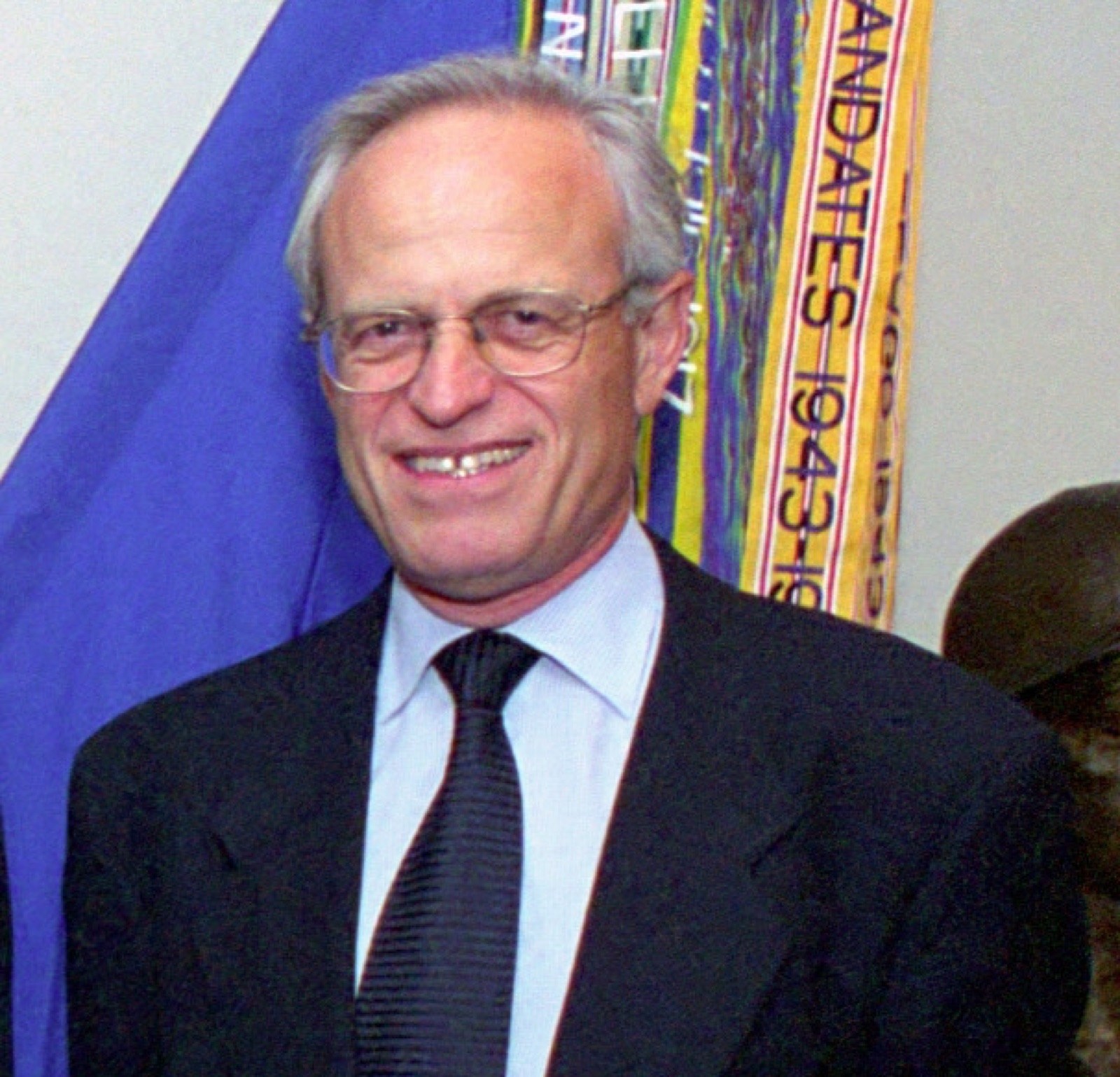
Martin Indyk
Martin Indyk is a former U.S. Ambassador to Israel examining the implications of Biden's controversial Saudi Arabia trip.
Hans Nichols
Hans Nichols is Axios' political reporter analyzing what really happened on Biden's trip and its global implications.
Sarah Yager
Sarah Yager is Director of Human Rights Watch in Washington DC discussing human rights concerns related to Saudi Arabia.
Episode Summary
US President Joe Biden promised to make a “pariah” out of Saudi Arabia and its Crown Prince Mohammed Bin Salman, who is widely held responsible overseas for the death of journalist Jamal Khashoggi, the brutal war in Yemen, a rise in mass executions and other human rights abuses in the Kingdom. But at a time when inflation is soaring, global oil prices are surging and China is courting the Gulf - can Biden and the US afford to isolate Saudi Arabia and ignore the Middle East? One Decision's Julia Macfarlane and former head of Britain's MI6, Sir Richard Dearlove, sit down with former U.S. Ambassador to Israel Martin Indyk, Axios’ political reporter Hans Nichols, and Washington DC’s Director of Human Rights Watch, Sarah Yager, to unpack what really happened on Biden’s trip and its global implications.
Listen & Subscribe
- Watch on YouTube
- Listen on Apple Podcasts
- Listen on Spotify
Transcript
INTRODUCTION
Mcfarlane: Welcome to One Decision, the podcast that looks at the choices made in the past or still to come that affect us all. I'm your host, Julia McFarlane. US president Joe Biden pledged to make Saudi Arabia a pariah for its human rights abuses when he ran for highest office back in 2020. But that was before a crippling and growing global financial crisis, the war in Ukraine, and mounting pressure on Democrats who hope to keep a hold of Congress come the midterms later this year. By many accounts, he's had to go cap in hand back to the Middle East after both he and his Democratic predecessor, Barack Obama, have tried to pivot to Asia. Saudi Arabia has been a key US ally since the time of President Franklin D. Roosevelt. The kingdom provided a reliable source of oil, and America provided Saudi Arabia with unparalleled military defense. That mutual partnership has come under strain with the arrival of crown prince Mohammed bin Salman, who has waged a brutal war in Yemen, presided over mass executions, a regime of torture, and by many accounts, was personally responsible for the kidnap, murder, and dismemberment of Washington Post journalist Jamal Khashoggi, accusations the crown prince denies. Washington has grown uneasy with its old friend in The Gulf. Former president Trump's friendship with the Saudi leadership hasn't trickled down to the rest of Washington. A congress pretty much divided on everything else found rare unity blocking arms sales to Saudi Arabia. So when Axios' Hans Nichols broke the news that the president was weighing up a trip to Saudi to try and convince them to pump more oil, experts and foreign policy watchers largely agreed that Biden had a job on his hands to try and patch the fractured relationship. The trip to Saudi was preceded by a short visit to Israel to meet the very new prime minister Yair Lapid. How long he will remain in office is uncertain as Israelis are, once again, to head into a general election later this year. I am delighted to have a wonderful panel of guests with us today. We have Martin Indyk, a former Middle East diplomat for presidents Bill Clinton and Barack Obama. We have Hans Nichols, political reporter at Axios, who has had previous stints covering the Pentagon and as international correspondent. We have Sarah Jager, the Washington director at Human Rights Watch. And we have, of course, my regular partner in crime, Sir Richard Dearlove, former chief of MI6, Britain's Secret Intelligence Service. Thank you all of us for joining One Decision today. We have a lot to get through, so we're gonna go straight into it. Let's see where we currently are with The US Gulf relations. We have a US president who made it a campaign pledge to make Saudi Arabia a pariah following the brutal murder of journalist Jamal Khashoggi, as well as his policy to reenter talks with Iran over its nuclear program after president Trump pulled The US out of the 2015 nuclear deal. He's made it perfectly clear that he wants to refocus US policy away from the Middle East. We recently had on the podcast former secretary of defense, Bob Gates, and he noticed how furious The UAE was with the Biden administration after Houthis launched missile attacks against his country, and The US did essentially nothing. They didn't even call to express condolences or sympathy. Something that has alienated Mohammed bin Zayed, who has been a long time US ally. And after that, he refused to take calls from the secretary of state, Tony Blinken, because he was, and I quote Bob Gates, afraid he would say something that would have permanent consequences. Now all of that was before the Russian invasion in Ukraine, before record rates of inflation and spiraling energy costs around the world. Now it seems the Biden administration really can't afford to ignore the Middle East any longer, given the region's importance to the global oil market. Now news that Biden was planning to visit Saudi Arabia trickled out a couple months ago. From then, Biden has been at pains to stress that he wasn't going to meet directly with the crown prince. He was consistently trying to downplay it. He even wrote this op-ed in the Washington Post defending his trip before even taking part in it. Martin, the trip to Saudi Arabia, was that essentially a course correction in Biden's treatment of his allies in The Gulf? Or is it just unfortunate that global crises have forced him to once again seek useful friends in strategic places run by dictators?
INTERVIEW
Indyk: Well, it was both. It was certainly intended as a course correction, at least in the perceptions that our allies and friends in The Middle East had, that The United States was turning its back on the Middle East. And that was a perception that was first perceived during the Obama administration and reinforced by the policy of the Trump administration, and then by Biden himself with the shambolic evacuation from Afghanistan. But this combination of a decade of policies from the pivot to Asia, to Trump's failure to respond to the Abqaiq attack by Iran and the Houthis on Saudi oil facilities. And then as I say, the Afghanistan withdrawal left a real sense on the part of Arab states and Israel that we are no longer reliable, The United States are no longer reliable and not much interested. I think that Biden wanted to correct that impression, wanted to make clear that even though The United States faces an aggressive Russia in Europe and a rising China in Asia that are necessarily our priorities in foreign policy, we're still going to engage in The Middle East and still going to protect our interests, which includes standing by our allies and partners there, the GCC in particular and Israel as well. So that was, I think, the primary purpose of the trip. And I wanted to make clear that even though The United States is going to be preoccupied in other areas, it's not going to come at the expense of The Middle East. It's just that The United States is going to engage in a different way, no longer trying to dominate the region, will be acting to support our allies and partners, including Saudi Arabia and including The UAE. I think that notwithstanding your description of what Bob Gates said some time ago, I think that that relationship has been significantly repaired to the point where they're now negotiating a strategic framework agreement that would provide for an American security assurance to The UAE.
Mcfarlane: Richard, I wanna turn to you now. Martin mentioned that the Afghan withdrawal left a sense in Arab states and Israel that The US is no longer a reliable partner, and Biden really wanted to correct that impression. Would you agree with that? Was part of his trip patching up the calamitous withdrawal from Afghanistan, and how difficult has that withdrawal made it for The US to present itself as a reliable partner, particularly when it was already on the back foot following the Trump administration? The impression that they so desperately wanted to give the world was America is back. America is your friend. And then we had that calamitous withdrawal in the summer of 2021.
Dearlove: Well, I think the optics of that event were absolutely appalling. There's no question that it was very damaging for the reputation internationally of The United States, you know, as a reliable partner and ally. And, I mean, in my view, although, you know, a withdrawal over time was inevitable in terms of, you know, the politics in The United States of the continuation of that commitment, it could have been handled in a very different way, and it could have been, as it were, managed over time. We didn't need to see that catastrophic collapse. And, you know, it was very poor management of an international, an important international decision. So yes, it was very damaging to The States in terms of its reputation. But on the other hand, I mean, political memories are pretty short, and it's amazing, you know, the speed at which geopolitics have changed. And, of course, I'm talking primarily about the Russian invasion of Ukraine and the surprisingly rapid strategic response of The United States to that event. I think it's done quite a lot to recoup The US's reputation. Obviously, you have the residue of a bad decision, and that will take a long time to disappear. But on the other hand, I think people always have a tendency to exaggerate, particularly the media, the impact of these events reputationally. And, you know, The United States is The United States. It's the world's superpower. And it makes good decisions, it makes bad decisions, and one appallingly bad decision doesn't necessarily undermine its sort of global significance. And, you know, we've now seen a counterbalance to that with Ukraine. So that would be my general commentary on, you know, the extraordinary events of the last six, eight, ten months.
Mcfarlane: Hans, I wanna talk to you about some of the domestic pressures that Joe Biden is facing. We often see foreign policy decisions that may be a little born out of domestic issues. We'll never know, for example, if The UK would have had such an enthusiastic supporter of Ukraine in Boris Johnson, had he been having an easier time at home with UK politics than he has these last few months, for example. But the gas price hikes, inflation rises, and other domestic issues are putting the Democrats under pressure, and it is, of course, an election year. We have the midterms later in the autumn. Was this trip more about securing an easier terrain for Democrats to campaign on in the fall? And tell me, how badly do you think the optics of that MBS fist bump and reverse ferret on Saudi's pariah status makes it seem as though Biden may have had to compromise his principles a little for this diplomacy?
Nichols: I don't suspect it's going to have a huge impact in some of these tight congressional races. I could be wrong and it's unknowable, but foreign policy and US domestic elections doesn't usually play a starring role. So on that, I suspect it's on the borders. From the White House's domestic political consideration, this trip wasn't that complicated, especially the Saudi visit. It was about oil. The world needs more oil. Saudi has more of it. Now none of us on this call know how much more they have in it. What's their theoretical limit? Do they have 13,000,000 barrels a day? Fourteen fifty? We don't know that. But we know that they can amp it up a little bit. And so when we first broke this story that, you know, the White House was considering going, I wanna say it was back in March. We actually sat on the story for a while to give the State Department and the NSC some time to sort of fully either deny it or let some things get into place. But the conversations, you know, private conversations I was having with senior officials all kinda came down to one word, oil, and the world needs more of it. So it isn't that complicated. They're under an enormous amount of pressure for, you know, gas prices is one aspect of inflation, but inflation is killing them politically. Everyone understands that. It is hurting the most sort of vulnerable people in society. Inflation has an inordinate amount of impact on those who are less wealthy, and they know they need to do something about it. Again, this wasn't like three-dimensional chess they're applying here. They need to make a decision. They made one. They knew they'd get dinged on it from the human rights front, but they know that they needed to repair these relationships in a post-invasion world and convince the Saudis and other OPEC plus countries to produce more oil.
Mcfarlane: That is totally fair. I'm speaking to you guys from The UK where I believe gas prices are currently around three times what they are per comparative unit in The UK than they are in The US. We are likely to be in what is an extremely painful global economic crisis coming. And I think to reframe the Saudi and US relationship from what it was at the beginning of when they first announced ties back in Roosevelt's time, The United States wanted a regular and stable supply of oil. Saudi Arabia wanted American security assurances. It was quite a transactional partnership. It wasn't an ideological partnership. It's one based on mutual tangible benefits. And so one thing that I'm curious about is how that mutual reliance has maybe somewhat dissipated recently since The US has managed to exploit its own huge shale production and has turned from being an oil importer to an oil exporter. Is the partnership running to the end of its course? The Saudis do provide the biggest oil exports to The US, but it's still only around 6%. So how important is securing Saudi's oil supply for the domestic US market? Or is it more about securing global energy security given Russia's war in Ukraine and the effect that that is having on the global oil market?
Nichols: Yeah. I hate to cop out on this, but it's both because oil markets are international. And so, you know, there's obviously gonna be a spread between the price of Brent and the London exchange and WTI and Cushing, Oklahoma. But ultimately, you know, you can't run from high global oil prices. And so on the broader question of how long will this relationship be transactional, I don't think any of us know the answer to that. I mean, I don't think the Saudis know how much longer they're going. Do the Saudis have two, three, four generations left of just printing money when they pull it out of the ground? And until sort of half of America's driving EVs and they're all fully renewable or whatever the goals are, I suspect that whatever marginal increase the Saudis can offer on international oil markets will make that relationship important. And you can neglect that relationship. Presidents can, and they can decide that they're going to focus more on human rights. But I suspect in times of crisis, we saw this in 2007, 2008 when none other than Dick Cheney was there when we thought the big problem with the global economy was high oil prices when it was, like, a $180 a barrel. And Cheney and Bush, you know, asked for the Saudis to open the spigots a little bit more. So, you know, how long that relationship remains that way? I mean, I would suggest that transactional relationships are sort of a norm in international affairs and sort of glossing over this with nice rhetoric on human rights is somewhat of a relatively recent concept. But again, I've already made one, you know, fifteenth, sixteenth century reference, so I won't go back further, but I'm gonna toss it over to Martin and say, you know, I don't know. Since the Treaty of Westphalia, countries have acted in their own national interests, not out of, you know, any highfalutin moral standards. So Martin, with that, correct me where I'm wrong.
Indyk: May I, Julia?
Mcfarlane: Please. And just on that, I just want to say that the Saudis say that they have agreed to boost oil production up to now 13,000,000 barrels a day that they're going to be producing, which isn't really going to touch the sides for the oil crisis. And also, I don't even know if the world has the refinery capacity to take on all this extra crude and refine it for use anytime soon.
Indyk: They're currently producing around 10,200,000 barrels a day. They could go to 12,000,000 barrels a day in terms of their current abilities, but they are saying that they would have difficulty sustaining that. If they were to increase by around 1,500,000 barrels a day, that is to take it up to 12,000,000 barrels a day, that would make a significant difference to the oil market because it will also be joined by another 500,000 barrels a day from The UAE. So that gets us to 2,000,000 barrels a day. And the expectation that that's going to come on the market will, I think, further drive down the price of oil, which has already been decreasing recently. However, it's not clear. I mean, the Saudis are basically playing with the numbers here. They did not want to announce what they're going to do while Biden was there. And it surprised me that the administration accepted that arrangement because as Hans said, and I agree with him completely, everybody that fills their car up in The United States will understand why Biden went to Saudi Arabia if it brings the price of gas down. But the president didn't want to present it in that way and the Saudis didn't want to present it in that way. So that transactional deal that you speak of, Julia, was one that everybody is trying to obfuscate here for reasons that I find very hard to understand. But the Saudis have an agreement with their OPEC producers and the Russians, it's called an OPEC plus agreement. That agreement expires at, I believe, the end of August. At that point, I think we will see them increase production by anywhere from, as the Saudis say, 400 to 750 to other people's 1.5. And that together with increased UAE production should have some effect on the market.
Mcfarlane: That's interesting that you say that Biden didn't want to announce any increase in oil production because was that not the purpose of his trip? He did want to announce it. The Saudis didn't want to announce it. He did come out afterwards and say—
Indyk: —that they did business. They reached an understanding there will be an increase in production. But they agreed not to say anything about how much.
Mcfarlane: Right. But that isn't a win for Biden, was it? I mean, that made him look kind of weak, did it not? Because he stood up in his remarks that he gave in Jeddah, and was not able to say, yes, I got a promise of x amount of more million barrels a day produced by the Saudis. What we did get from that trip was we got Saudi airspace now being opened up to Israeli flight. We've got US troops going to leave a tiny island that's administered by Egypt, and they've been there since the Camp David Accords forty years ago. We've got Saudi Arabians announcing they're going to invest in technological partnerships being led by The US. And as far as The US is concerned, Biden's remarks said that there are just being discussions with the kingdom on ensuring Saudi Arabia's security guarantees. Does it not look like the Saudis are holding back what the Americans want from them? Because they want more commitment from The US the next time that one of their oil installations or any part of their territory gets hit by Houthi missiles if the Yemen ceasefire doesn't continue to hold?
Indyk: No, I think they basically have an understanding about the security issues. I don't think that's the explanation. I think it has more to do with Saudi Arabia's commitments to Russia and the other OPEC oil producers. They have a quota agreement which the Saudis will have to renegotiate when it expires in August. They're going to, I believe they're committed to increasing their oil production. They'll have to reach agreement on giving up the amount that they're all going to supply. And they want to keep the Russians in the tent on that agreement as well. So I guess it's complicated for them. And that's why we don't have this straight out announcement. But it makes, I agree with you, it makes it look like, you know, Biden ate crow, let Mohammed bin Salman, the Crown Prince of Saudi Arabia, out of the penalty box and didn't get the oil that was the whole purpose of doing that. I think he will over time, but it's not clear that he got it done and that leads to the perception that he sold his kingdom for a horse, as Richard Dearlove would say.
Mcfarlane: Well, what do you make of that, Richard? I mean, given those somewhat paltry gains out of that press conference at the end of his trip that Biden was able to announce at the time, do you think the trip was a success overall? And do you think it was a success for the Saudis because ever since Biden became president, he's refused to speak to the crown prince. And the White House will say it's because he only speaks to his counterpart. His counterpart is King Salman. It's not the crown prince. But the Saudis have been trying to work on MBS' reentrance into the global community, reestablishing his credibility after all of those attacks and condemnations of the Saudis following the murder of Jamal Khashoggi. MBS says that he was not personally responsible for that. A lot of people don't buy it. Do you think the Saudis got what they wanted? Are they happy? And what do you think this has cost Joe Biden in terms of the optics?
Dearlove: Well, I guess what I'd say is, look, this is hardcore geopolitics for the US administration. And Biden, having previously taken a strong moral stand on Saudi Arabia, you know, discovered that that position was going to be largely untenable. So he's got to maneuver himself out of it. I mean, my view is, you know, that moral foreign policy is a dangerous position always to take because you could find yourself stranded on issues which geopolitically are not important. It might be morally important. And, obviously, the geopolitics overrule. And, you know, we've observed the US administration putting itself into that sort of a bind. And, I mean, personally, I've always taken the view that, you know, to make foreign policy out of individual human rights cases is really a dangerous and not very pragmatic approach to the realities of the world. I think, you know, Salman is an objectionable partner. He's there. The US still need him. The whole issue of Iran and Saudi Arabia at the moment, you know, dominates thinking in The Middle East, that strategic competition. And, of course, one's got the whole business of the renegotiation of the JCPOA. So, you know, there are a lot of moving parts in this. I mean, Biden's partially successful. You know, the Saudis will be reluctant to give him everything, but I think Martin's right over time. The US will probably get what it wants out of this relationship. It's transactional. It's needed in both directions strategically in security terms. In my view, the Saudis cannot manage without a strategic partnership with The US. So, you know, we've had these interventions and interruptions. Ukraine has changed all of that. It's as simple as that.
Mcfarlane: Sarah, as part of your work for Human Rights Watch, you must have a lot of conversations with lawmakers and legislators. You must do a lot of work trying to promote human rights and principles of freedom, democracies, civil liberties abroad, and a US foreign policy that reflects and enshrines those. I think what Hans said probably is the reality on the ground, that optics and bad optics as that fist bump, as it undoubtedly was seen as, makes for bad headlines. But shortly after their reporting, they don't tend to linger in the mind of an electorate or international partners, or of anyone really, besides people in the media and activists such as yourself. Do you think that's right? And how difficult is it for you to keep an agenda of promoting human rights and accountability in countries like Saudi Arabia, with the case of Jamal Khashoggi, in Israel with the shooting of Shireen Abu Akleh? How difficult is it for legislators to stick to their words, to value promoting human rights abroad, given that a lot of our partnerships, a lot of our relationships with other countries are transactional? And very often, sometimes, we need to swallow those principles in order to get economic gain, trade gain, energy security gain, all of the above.
Jager: Yeah. I mean, I will say those things are not at odds with human rights. And what makes it more difficult, yes, these things are very difficult to keep attention on. And it's not just about individual cases like Shireen's case. It's about structural repression in places like Egypt and Saudi Arabia. These are authoritarians. And so the case that we've been making is like, look, throughout the past twenty years, we've had some success. And in fact, the Obama administration agreed with us that human rights and democratic values are not separate from national security and economic interests. They are part and parcel of that. Because when you undermine human rights, when you repress your populations, you get popular uprisings. You get political unrest. You actually get regional instability. And so these leaders who are steeped in human rights abuses are actually not reliable partners. Yes, there is a truce in Yemen right now. The fact is MBS is not a reliable partner because he is an authoritarian and what he's going to do is just turn that operation back on if he wants to. And what will be the consequences? What The United States has shown is that in fact, there are not consequences. And so, you know, we're talking about human rights as if it's this thing that just gets added on top of, you know, as a nice to do on top of US foreign policy when in fact many people, including President Obama, including President Biden have said, no, actually this is a strategic and vital US interest. Speaking transactionally, fine. If we're gonna have a transactional foreign policy, get something on human rights. Make it transactional. But don't completely leave it to the side. And what I've seen throughout this whole process in which we were getting a bunch of different information from the White House about, you know, this trip is about oil. No, this trip is about normalization with Israel. No, this trip is about civilian airspace. No, this trip is about countering China. None of it was, hey, in order to have this trip, we're going to negotiate a couple of human rights things. And not just a few political prisoners here and there. Because when you look at what MBS did, when Biden came in, he began to reform because he was worried, especially given what Biden said on the campaign trail. So he began to enact reforms on women, on civil society. And then when he saw that actually The United States wasn't going to do anything about Khashoggi's killing, about a couple of other massive human rights abuses, including civilian casualties in Yemen, it began to be a repressive society again in ways that are even more significant than over the past decade. And so you see that this kind of impunity on behalf of The United States is actually causing empowerment to these authoritarians. And I want to be clear that there are losers from this trip. So let's say that Biden got everything he wanted. There are losers. And those losers are human rights defenders all around the world because it is people in The Philippines and Uganda who are looking at their leaders and saying, guess who's going to be empowered by this? Because when The United States needs something from these countries, they're going to overlook what these leaders are doing to their own people. And right now, we are waiting for, and human rights defenders all over The Middle East are waiting for the crackdown to come. Because now MBS is empowered, President Sisi is empowered, nothing is going to happen to them. And so why not close off civil society? Why not imprison all of your political opposition? Why not take rights away from women? Those are the losers from this reengagement. And I'm not opposed to engagement, but at least get something for it and consider that democratic values and human rights are part of US interests. That's what Biden said on the campaign trail. That's what Biden said when he came into office.
Indyk: Let me just say, I agree with Sarah. I don't agree fully with her characterization of the way things unfolded in Saudi Arabia. But I do think that given President Biden's insistence on putting values back into American foreign policy, that we do need to have that conversation with the Crown Prince of Saudi Arabia. And that if we don't, the transactional relationship won't be sustainable over time. Because if MBS conducts another egregious action like the murder of Khashoggi, the Congress is going to take that up and block all arm supplies and we'll be back where we were before the trip. So I hope that was discussed more than just the President raising it at the top of the meeting, as he says he did. But rather there's an understanding that as part of rebuilding the relationship and The United States providing security assurances to Saudi Arabia and the other Gulf partners of ours, that there is an expectation about the way that he will treat his people. On the one hand, he's treating them well in terms of women's rights that he has granted them, that's a huge shift from previous policies of previous rulers in Saudi Arabia. But on the other hand, he's beheading 81 dissenters. That kind of thing is just, it's not the basis for a sustainable relationship with The United States.
Mcfarlane: That's my point. Right. So Martin, part of Biden's trip was trying to edge out China from occupying the vacuum that The US has left behind in the region. And he mentioned it a couple of times in his closing remarks in Jeddah. It's notable that only last year, Beijing encouraged Saudi Arabia into becoming a dialogue partner with its Shanghai Cooperation Organization, which is a diplomatic and economic grouping that includes Russia, India, Pakistan, and a few other countries in Central Asia. Is it too late for the Americans to woo back the Saudis and the Gulf States, given how badly ties had sunk before this trip? And what happens if we see a change in administration in 2024?
Indyk: China does not represent an alternative security partner to The United States, for Saudi Arabia or any of the other Gulf states for that matter. They know that, so Richard just referred to that. They've played around with China, they've played around with Russia, they've tried to hedge, but they understand that they are vulnerable, they face a significant threat from Iran and its proxies in the region around them, in their neighborhood, and they know that there's no alternative to The United States when it comes down to it. And so that's why they are asking The United States for security assurances. Saudi Arabia is doing it, The UAE is doing it, and once that's known everybody else is going to start to ask for it. So we have an opportunity to recast the relationship when they now have come to understand that they don't have an alternative to The United States. On the one hand we have to be willing to be present there in the region and committed there. But on the other hand, our expectations when it comes to their behavior in the security area, but also in the area of human rights is something that they need to take into account. And that's the kind of conversation that I think we need to have with them going forward.
Mcfarlane: Right. Richard, I'd like you to come back on that. And also, if I may, given the previous hat that you wore, I just wanna get from you, what exactly does Saudi Arabia need American guarantees of security for? I mean, obviously, the most obvious threat is from Iran and its proxies. But why does the world's richest oil nation not have the capacity for self reliance on its own defense? Or is this solely to do with the issue of an Iranian nuclear arsenal? And if that's the case, is The US in practical terms really able to occupy a position where it is de facto guarantor of Saudi Arabia's security and at the same time, be an active participant in diplomatic talks with Iran on potentially lifting sanctions against it for winding down its nuclear program?
Dearlove: Wow. That's a huge question to conclude the discussion on, and a really difficult one. I think that there's a consciousness amongst the Saudi leadership that sort of questions their ability to look after themselves in a dangerous region. Obviously, the main threat comes from that division between Shi'a and Sunni Islam. Obviously, Iran is the major problem, and that problem has escalated given the nature of the Iranian regime and its pursuit of nuclear weapons technology. In practice, what that issue has done is rearranged the parts of the Middle East strategically. The issue of Palestine and Israel has moved out of the center of people's concerns. It's still there. I mean, you've got to look at these issues a bit like a bar chart. And at various times, bits of the bar are much, much higher on certain issues than at other times. And at the moment, the whole question of world energy markets, you know, is a very strong bar on the chart. The human rights bar is there, and I'm very sympathetic to what Sarah has argued and is saying, but, you know, it's at the moment diminished because on human rights, you know, both parties have to agree. And in the current climate, Salman, given his character and the way that he sees these issues, is gonna say, well, you know, fine. That's your view. Mine's different. Let's focus on what's important to both of us. And those bars will go up and down depending on the global situation and, you know, how it's perceived by both parties. I mean, my own view of Saudi Arabia, if you've been there a lot and you've seen the Saudis close-up, is that they, despite their massive expenditure on arms and all the rest of it, they're not very capable when it comes to military and security capability. They need assistance, and they need that, you know, massive sort of input of steel that The US relationship will give to them. And they're very conscious of that, and that's the sort of weighted position that they have, which gives the human rights argument power when it comes to the crunch of the Saudis, but that's not all the time. It's variable. I mean, look, the issues you raise are like another four podcasts almost, and I'm only sort of biting at it. And, you know, that's my sort of preliminary discussion. If you sit down with the Saudis face to face and talk to the regime, you understand the substantial weaknesses within their system and the fact that in certain areas, they need massive help and massive support. Interestingly, that situation isn't replicated in Iran. Iran, in my view, is a much stronger polity for all sorts of historic reasons and cultural reasons, which the Saudis do not replicate. I'm not saying that the Saudis are hopeless. Well, they have nothing to rival the IRGC. Saudi Arabia is a totally different sort of construct and monarchy. You know, it's a tribal society with all the weaknesses of a tribal society. And they are our allies whether we like it or not, and at the moment Iran is not. I mean, The Middle East has worked as a polity when both Iran and Saudi Arabia were allied with The United States. We can look back, you know, on that as a sort of desirable situation. Until there's a fundamental political shift in Iran, that's not gonna happen again.
Mcfarlane: That's it for this week's episode of One Decision. We drop new episodes every Thursday. Like and subscribe so you never miss an episode. Drop us a line. Tell us your thoughts. What decisions have impacted you and where you live? You can write to us. Our email is 1decision@1decisionpodcast.com. From me and the team, thank you for listening, and see you next time.