Episode Info
- Season19
- Episode6
Hosted by Christina Ruffini and Sir Richard Dearlove
Guest
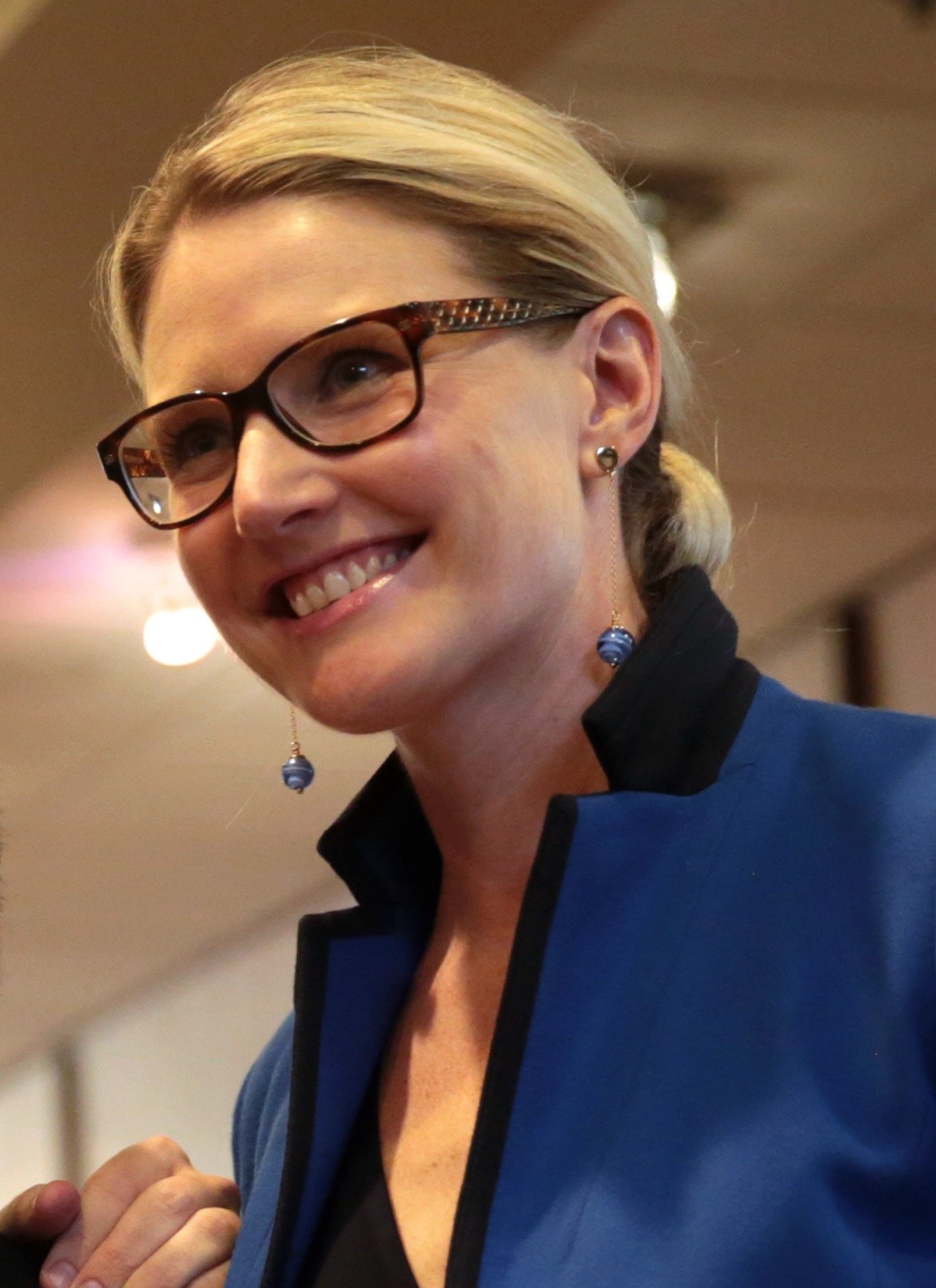
Marie Harf
Marie Harf is a former State Department official and CIA Middle East Analyst who was in office during the intense Israel-Hamas war of 2014.
Episode Summary
After the divisive and controversial storm surrounding an explosion at a hospital in Gaza, President Joe Biden flew on Wednesday to meet with Israeli Prime Minister Benjamin Netanyahu, his Cabinet, and families touched by the October 7th massacre last week. As protests and riots spread like wildfire around not just Arab and Muslim capitals and cities worldwide, but in London, Paris, New York, and Berlin—the diplomatic stakes could not be higher. A four-way summit Biden planned to attend with Egypt's President Abdel Fattah al-Sisi, Palestinian Authority President Mahmoud Abbas, and King Abdullah II of Jordan was abruptly called off. However, all was not lost—before returning to the United States, Biden announced that Israel had agreed to allow humanitarian aid into Gaza and Egypt acceded to let the convoys across the Rafah crossing. Gaza has been without electricity, food, water, and medicine for nearly a week. One Decision speaks to former State Department official and CIA Middle East Analyst Marie Harf, who was in office during the intense Israel-Hamas war of 2014.
Listen & Subscribe
- Watch on YouTube
- Listen on Apple Podcasts
- Listen on Spotify
Transcript
COLD OPEN
Biden: You're not alone. You are not alone. As long as United States stands and we will stand forever, we'll not let you ever be alone. You can't look at what has happened here to your mothers, fathers, your grandparents, sons, daughters, children, even babies and not scream out for justice. Justice must be done. But I caution this while you feel that rage, don't be consumed by it. After 9/11, we were enraged in The United States. While we sought justice and got justice, we also made mistakes.
INTRODUCTION
Mcfarlane: You're listening to One Decision, the podcast that looks at the choices made that shape our world. I'm your host, Julia McFarlane. You just heard president Biden addressing the people of Israel after his whirlwind visit this week following the October seventh attack. Just hours after reports emerged that a hospital in Gaza was bombed. It was initially blamed on an Israeli airstrike. Twenty four hours later, both Israel and The US say that data and evidence indicates an errant Palestinian missile was to blame. The confusion and controversy caused a global backlash and speculation that it may have derailed Biden's trip. It did not. Flying into an active war zone, Biden staked, as the whole world was watching, American influence with Israel as the region once again reaches a dangerous precipice. Despite some Israeli politicians calling for vengeance, and after we saw airstrikes on Rafah, the southern Gaza border with Egypt, Biden somehow managed to get Netanyahu to agree to allow humanitarian aid into Gaza through Rafah from Egypt. It was undoubtedly a win, but his trip had some costs. A four way summit with Arab leaders was called off. The king of Jordan and the Palestinian authority president canceled their meetings. Biden returned to The US shortly after his announcement of a $100,000,000 aid package for affected Palestinians in Gaza and the West Bank. My cohost, sir Richard Dearlove, the former chief of Britain's MI6, gave his verdict on Biden's gamble in the Middle East this week.
ANALYSIS WITH SIR RICHARD DEARLOVE
Dearlove: Well, I think, primarily, the visit is almost symbolic. I mean, it's very, very unusual, as you've already said, for US president to fly into a war zone. So the presence of the president rather than the presence of Biden, and I would make a distinction between the two, is hugely influential. I mean, influential in Israel. And who else, as it were, can be a message carrier when the Israelis are bent on, you know, taking revenge, as it were, for this attack other than than The United States as represented, you know, by the head of state. So that's the first thing I would say. I mean, the second is clearly, I think that the visit had probably been agreed with a rather different set of priorities than the ones that are going to be carried out. And of course, it's the attack or the horrendous incident at this hospital, which immediately has caused Biden's Arab interlocutors, primarily the King of Jordan, I think was the most important to counsel. So as it were, the diplomatic side of the visit looks to me as though it's will be minimal unless there's a change of mind, change of plan during the visit. And I think the third aspect of the visit, is pretty clear cut, is it's a signal to Iran in particular, and Hezbollah specifically, not to escalate the conflict. And of course, you've got a very, very powerful US carrier group now in the Eastern Mediterranean, which is a signal to the Iranians that, you know, if they did try to escalate an attack on the northern border using Hezbollah, they're going to get hit pretty hard. And the implication seems to be
Mcfarlane: Israel might even in those circumstances have American military support. Yeah. I mean, UK has also sent some surveillance ships to The Middle East to show support for Israel. Rishi Sunak also, last night, taking part in a vigil to remember the victims of the explosion in the hospital in Gaza City. I mean, there's still a lot we don't know about that incident. We don't know how many people died when the news reports first emerged that there had been something dreadful happening at this Baptist hospital that's funded by the Anglican church. Despite that, it seems that the wider Arab world does not buy Israel's version of events. We have seen protests across the Arab and the Muslim world. We are seeing anger boiling over not just in the Arab street, but also president Biden was supposed to be going to Jordan to visit your friend, king Abdullah, the king of Jordan, who was going to be hosting a sort of a four way summit with Egypt's president Al Sisi, the Palestinian authority leader Mahmoud Abbas, Palestinian leader, and himself, king Abdullah. And on Tuesday, he called off that summit. The act of calling off this summit, canceling talks, Mahmoud Abbas was also supposed to have a bilat with president Biden. He's also called that off, damaging president Biden's authority and credibility and the impression that he has much influence. Does it not, Richard?
Dearlove: Well, one has to take account of is the potency of I think one ought to almost call it the Muslim street rather than the Arab street. I mean, the Arab street and the Muslim street together because it goes far wider than the Arab world. I mean, if you go back to the origins of the conflict, I mean, the Israelis have almost lost the media battle before the current sort of military conflict even started. And I don't really see that they have a way out of that at the moment. It's so challenging and it's so difficult for them because the ability for the Muslim world to think rationally about this because they will just go back and say, well, the Israelis have only themselves to blame because of the way they treated the Palestinians in Gaza. And I think what's happened here is exactly what Hamas wanted. The scale of the attack, the inevitable massive Israeli response has thrown the whole thing into chaos, and I think it had a very specific objective. The Hamas attack was specifically designed to stop the Saudis opening diplomatic relations with Israel. And of course, you know, the influence of Saudi Arabia across the Arab world is relatively speaking massive. You know, its economic and its financial leverage are massive. And, you know, this would have been a huge step forward, but in fact, it's been brought to a grinding halt.
Mcfarlane: I want to read to you the Iranian president Raisi. He was speaking earlier this week at a packed square in Tehran in front of a very large pro Palestinian crowd that were protesting. He says, with the attack on the hospital in Gaza, the end of the Zionist regime will begin. Normalization process has faded. A severe revenge by Muslim nations awaits Israel. But it's interesting that he mentions, normalization with Israel has been back. It is interesting when there has been international speculation that, you know, the Hamas attack was timed perhaps to put a spanner in the works with Israel and Saudi normalization. But he's also issuing a threat. He is warning that retribution for how Israel is waging its operation in Gaza and its operation to try and neutralize Hamas. He is threatening that there will be something awaiting Israel. Do you think that's bluster? Do you think there is now a renewed issue for Israel? We've seen some cross border activity with Lebanon and, of course, Hezbollah. If Iran were to attack Israel, it is most likely they would do so through Hezbollah, through their puppets in Lebanon, and perhaps the Northern front is a new front that could open up where Israel is increasingly vulnerable given that they have redeployed so many of their own forces to the South where Gaza is.
Dearlove: Well, I think it's largely the rhetoric that one would expect in a crisis. I'm a bit reluctant to call it bluster because there is a genuine threat there. But what would be a significant shift or change is if those moderate Arab states, I'm thinking primarily of Egypt and Jordan, went back towards being much more aggressive to Israel themselves. Frankly, I don't see that happening. And I don't see, you know, the Egyptians who are playing their cards with massive care clearly. And I mean, bear in mind, you've got two countries there, Jordan and Egypt, who are also economically hugely dependent on their relationship with The United States. They receive a lot of cash. So The US has a vast amount of leverage with both countries. So I think the key here in terms of escalation is what Hezbollah does. And if there were a general Hezbollah attack, then I think you are looking mainly at a scenario which could rapidly deteriorate across a broader front than just the Northern front of Israel. I mean, what I mean is that there would be huge pressure across the Arab world for a step change and a fundamental deterioration. I mean, I think the main message that the Americans are trying to communicate is to the Iranians saying, don't do it. And, you know, why else would you send two massive naval task forces into the Mediterranean? And that isn't to say that there won't be incidents. There have already been Hezbollah incidents on the northern border, but they haven't yet escalated into something more serious. And, of course, the Israelis have done the sensible thing. A lot of the local population that live along that border on the Israeli side have already been withdrawn and have moved out of the area in case it does deteriorate. I mean, my guess is that there will be an effort on the American part to, as it were, control the extent of the Israeli response to Hamas militarily. So that there isn't, as it were, carnage. I mean, I had a very interesting interview today. I think it was probably on CNN with a very interesting professor from the Hebrew University. And he was saying there was a suggestion amongst Israelis themselves that they should allow women and children in Gaza into camps on the Israeli side of the border. And it may well be that there could be some initiative like that, which the Americans could sponsor. You can see what I'm driving at, you know, which would, to an extent, be a de escalation. I mean, what is certainly gonna happen? And this is why I think we're all in a state of tension, is Israel is gonna go in and try and decapitate Hamas. It's gonna try and destroy the leadership of Hamas so that this sort of thing will not happen again. I mean, I'm not gonna guarantee that that's the result. But I think one of the best comments I've had generally made by experts who are commenting about, and I think the Americans will be saying this to Israel, you have to align your military and your political objectives. There's no point in having a military objective without understanding where it's going to get you politically and what's going to happen afterwards. And at the moment, a full throated assault on Gaza is going to be counterproductive for Israel internationally and politically.
Mcfarlane: We're in a difficult position of dealing with the most extremist nationalist Israeli government in Israel's history, and there has been a war cabinet. There have been figures from the opposition who've been incorporated. But I mean, Benny Gantz, who's come in to join it, you know, he's a former chief defense staff. I think, you know, he'll be not a moderating voice,
Dearlove: but he will be a voice of sense. So I think there has been, let's say, a definite political initiative in Israel to move away from this extremist identity. Obviously, it'll fall apart after the military engagement is over, and I it'll probably you know, one will be witnessing some sort of new election in this realm.
Mcfarlane: I do actually have one last question for you, which is Putin is currently meeting with Xi Jinping at the exact same time that Biden is meeting with Netanyahu. I wanna ask you about that. But, actually, what did you make about the disclosure of that Israeli SIGINT that the leaked Hamas phone call where two Hamas militants appear to be talking to each other about the hospital strike that shocked the world, where they admit with each other, that they discuss amongst each other that it wasn't the Israelis, that it was from their side. And one of them said, yes, the missile was launched from a cemetery but beside the hospital and it misfired. The Israelis, obviously, they are desperately trying to convince everyone to put out what they have from their assessments. They were not responsible for this particular atrocious incident in Gaza. And, of course, you know, the Israelis are doing everything they can. They are disclosing things like this extraordinary phone call. I mean, what did you make of that? Are they burning any sources? It's clearly means a lot to them that they're trying to show their hand with that intelligence disclosure.
Dearlove: Well, Hamas will not be surprised that some of their communications are subject to intercept. I mean, it would depend how they communicated and what equipment they'd be using and whether it was ciphered or not. And I don't know. You can't go into detail. But I think this will be to the Israelis very important because although it won't cut any ice in the Arab street, it will cut ice diplomatically. And it may be that, you know, in their conversations with Sisi in Egypt, with Abdullah in Jordan, with Salman in Saudi Arabia, you know, there will be a tacit admission on the part of those leaders who will say, yeah, well, we understand what happened, and we understand how Hamas, and Islamic Jihad, you know, who let's face it, huge opponents of those regimes operate, and they operate in a way which puts the civilian population massively at risk. I mean, their operations are planned to use civilians as a shield. And, you know, this is what puts Israel in such a difficult and dangerous place. But the one last thing, I think, to say, and you mentioned Putin and Xi. I mean, there is a straight line through these events for me, which leads, you know, from Hamas to Iran to Putin and, you know, to an extent to China as well. And I think it's pretty shocking to see the way that Xi Jinping has treated Putin as his most honored guest during this Belt and Road conference that's going on in Beijing.
Mcfarlane: This ten year anniversary of the Belt and Road initiative that's happening in Beijing at the moment. Yeah. Yeah. So,
Dearlove: you know, we need to think hard in the West about what we're up against geopolitically, taking a larger view of these events.
Mcfarlane: The Chinese, interestingly, at the start of the week, they also waded in on the war between Israel and Hamas. They called for a ceasefire to halt the bloodshed, and they suggested that the world powers should work with Sergei Lavrov. The Russians put forward this proposal of peace, which was smacked down by the other voting members in the Security Council. But, you know, it's interesting, the Chinese and the Russians trying to wade in on this conflict diplomatically. But, I mean, Putin must be absolutely laughing. The world is not talking about Ukraine. The world is not talking about the, you know, the hospitals in Ukraine that he's bombing. And to add to all that, there is now increasing pressure and debate in The US that aid to Ukraine should be diverted to Israel.
Dearlove: Yep. And, you know, that's why I think you have to see that there's some interconnection between these events, which and that that's worrying. The only good news is that the Ukrainians now have ATACMS and have just used them successfully, and that clearly has shaken the Russians rigid.
Mcfarlane: Do you think there is a lasting impact that, of course, you know, we're still in the early days of this possibly, I mean, God knows we're all hoping for de escalation, but shy of that, if there is not de escalation, if this is only the beginning of a much more protracted conflict in The Middle East again, do you think this is going to degrade attention, aid, support for the Ukrainians who are still, as this is all going on, they're continuing to fight for their freedom.
Dearlove: Of course, it could do that. But I think the other worrying thing is if this were to escalate, it could send the price of crude back towards $200. I mean, if it really did escalate, and who does that benefit? It benefits the Russians. So it would be a win win for Russia at a time, you know, when they're rather beleaguered. Anyway, we haven't reached that point, and let's hope that we don't.
INTERVIEW
Mcfarlane: My cohost, Sir Richard Dearlove, with his thoughts there. Someone who we really wanted to talk to this week is a former US official who has had experience of representing US interests at a time of war between Israel and Hamas, and that is Marie Harf. She was the deputy spokeswoman at the state department under secretary Kerry in the Obama administration. She was also a Middle East analyst at the CIA. We rang her up to ask what she made of Biden's whirlwind trip to Israel and what challenges lay ahead.
Haf: Well, you know, I think you're right that this was a win, that one of the things the administration has been most focused on is getting humanitarian assistance into Gaza. They themselves announced just yesterday a huge sum of money that The United States will be providing for humanitarian assistance for the Palestinians. But, you know, the Biden team Joe Biden is very clearly of a certain generation and kind of pro Israel Democrat. And, you know, even last week when he made those remarks and he referenced when he had first gone to Israel before the seventy three war, had met with Golda Meir. Right? He is of a generation that remembers the whole history, certainly, you know, of of decades of peace processes starting and failing of intifadas, of conflict, of course. So he has a long historical memory for this. And you can tell that against that backdrop, this feels different to him. You could see that in his comments last week. I think you could see that in his comments in Israel yesterday, that Hamas' attack felt different and that that's why he has responded the way he has. As the days since the initial terrorist attack by Hamas have gone on, it is clear that The United States needs to use its leverage with the Israelis to help the Palestinians. And that while we tell the Israelis that they should defend themselves, they should, hold those responsible accountable for these horrible terrorist attacks. We are also saying that civilized nations, democracies behave a certain way in war. Now, obviously, not being a party to the conflict on the ground in a direct way gives us, The United States, with limited leverage, but we have a lot. And I think that president Biden wanted to go to Israel. He got a win from it, and he showed to Israelis, to Americans, including American voters. We can't forget we are in an election season that he is standing squarely by Israel, and I think that was their goal. I mean, he was in Israel only a few hours.
Mcfarlane: He didn't stay overnight. He did manage to meet a lot of the victims of the October seventh attack. He met with a lot of the relatives of people who have been taken into Gaza as hostages held by Hamas. He gave what I think was a very moving speech, a very moving on camera statement, and I think it was a very clear message that I think must have kind of betrayed actually that there were tough conversations being had with Israel behind closed doors. I mean, he referenced 9/11, and he said after 9/11, we were enraged in The United States. While we sought justice and got justice, we also made mistakes. I mean, he was essentially saying, we made mistakes when this happened to us. We don't want you to make those same sort of mistakes. I mean, I think in the immediate aftermath of this attack, a lot of American politicians, officials, president Biden himself, the first thing they do is they rush to say, of course, Israel has a right to defend itself. But in the days that have passed since, we have seen extremely heavy bombardment on the Gaza Strip. And clearly, I think Biden is increasingly concerned with a mounting civilian death toll and trying to protect Israel from also increasing international hostility and losing the goodwill that Israel had with the solidarity from people around the world, given the horrendous things that happened to them on October 7. He knows that Israel may be walking into a trap here. How can at a moment like this when the Israeli people, you know, and of course the Jewish diaspora around the world who are very connected with the people of Israel at a time when they have been so brutally attacked and have faced the most horrific events since the Holocaust. How easy is it for America to say you have a right to defend yourself, but you must do it proportionally?
Haf: Well, there's a lot to unpack there. I think first, you're right that there are people arguing that Hamas' goal was in fact to get Israel to overreach. And some of those same people argued that Al Qaeda's goal in 2001 was to get The United States to overreach, which I think many, if not most, foreign policy analysts of post 9/11 American foreign policy would agree happened, particularly in Iraq. So there are people who say, look. You know, let's learn the lessons of 9/11. Let's learn those lessons and not play into Hamas' hands. I think it is also very difficult to say that right now. And, you know, I remember 9/11. There were not a lot of people urging caution. Right? People are angry, and people believed that from a strategic perspective, if you didn't hit back, if you didn't try and prevent the next attack, the next attacks would keep coming. So, you know, president Biden does believe this in his bones. I mean, you can tell this. So does Tony Blinken, by the way, secretary of state. You saw the coverage of his visit to Israel talking to these survivors. They feel this very deeply. But they are, as you said, behind the scenes, having tough conversations about how to have tough conversations with the Israelis in the context of a universe that feels very different today than it did ten days ago and two weeks ago. And the other thing that Hamas has done, you mentioned the Jewish diaspora, they have brought together a lot of the Jewish diaspora and Israeli society in large part behind Israel doing something at a time when they were quite divided. I mean, prime minister Netanyahu's political situation in Israel before the attacks, you know, Israeli society was deeply divided in a way they haven't been in decades. The Jewish diaspora deeply divided about Israeli behavior. And a lot of that changed overnight. The sense of unity that we saw. Now the further we get away from those terrorist attacks and the more Israel responds, that gets harder. Right? Those coalitions fracture. We've seen this time and time and time again. So I do think the Biden team is quietly trying to tell the Israelis that they need to be tough and firm, but cautious isn't the right word, but thoughtful in how they do this. Not because anyone cares about Hamas, but for their own sake, for international support. I mean, Israel had lost a lot of international support over prime minister Netanyahu's behavior, his quote reforms, and they have a moment right now where they have a lot of support. And I don't think they want them to lose that.
Mcfarlane: This awful explosion at this Baptist hospital, and we still don't know what the death toll was. These reports that came out yesterday just before president Biden when he was still on the ground in The US, these reports emerged. Hamas claiming that an Israeli airstrike had blown up this hospital and five hundred people had been killed. And that allegation sent shockwaves around the world. And I think the media, the mainstream media has had an absolute hammering about this because at a time when there are a small number of journalists who are actually inside Gaza, the vast majority of the media reporting on this are locked outside. And so there is an extent of having to rely a bit on Hamas controlled streams of information. It has emerged when the sun came up the following day that things were perhaps not as Hamas had claimed, that it appeared to be a smaller explosion caused by rockets misfiring. There wasn't a very obvious sort of tell tale crater, which you usually see with Israeli airstrikes. And then the Israelis did something really interesting. They declassified SIGINT, which appeared to show two Hamas militants talking to each other saying that the hospital was hit not by an Israeli airstrike, but Palestinian Islamic Jihad. It is something that could have really thrown a spanner into the works ahead of Biden's trip, but the interesting thing is that large parts of the world have not bought Israel's narrative on this. They have not accepted Israel's version of events. How damaging do you think that is? Or do you think perhaps a lot of these diplomats and these world leaders are perhaps more reading into the protests on their own streets, the crowds of people who are currently outside at US embassies all over the world with their slogans and their protests protesting against the Israeli bombardment of Gaza.
Haf: Well, and hordes of protesters on college campuses here in The United States. Right? There's been hordes of protesters in The United States Capitol that we saw yesterday. So, you know, I think one of the big challenges with this conflict, misinformation is always a challenge in wartime. The fog of war is real. That is without a doubt. This war, for a couple reasons, is even harder, when it comes to misinformation and who people believe. Right? I mean, if you think about when I was in government in the Obama administration, the first term, the second term, Twitter wasn't really a thing. It kind of was in the second term. Right? But it did not the social media universe did not look like it does now. And so I think there are a number of reasons. Like, people tend to believe what they believe even when confronted with data that shows them demonstrably that they are incorrect. And in this conflict, I think that is true times a thousand. And, you know, I think The US is trying to put out more information about who they believe was responsible for this attack. But at the end of the day, I don't wanna say it doesn't matter because it does matter who did it. In terms of the narrative, right, I study narrative. I focus on public narrative a lot when it comes to conflict. People will have made up their minds, and they have will have made up their minds fitting into preexisting notions they have about each side of this conflict. And I think it's on the onus of the international community, the UN, The United States, the EU, other countries to be clear about what we know and what we don't. And that may not matter to the 21 year old college student protesting on campus, but I think we have to be very clear, declassify as much as possible. You know, The US started doing this a lot in the lead up to Russia's invasion of Ukraine, putting out a lot of intel publicly. This is something we haven't done a lot. Certainly, when I was at the CIA, we did not do that. And I think that's important here, but I think it has its limits because the flood of propaganda and misinformation and disinformation, given that there are very few journalists actually in Gaza, is crushing. And I think it's just going to continue to be really crushing.
Mcfarlane: And can I ask you to respond to the fact that president Biden was supposed to be flying on from Israel to Jordan to meet with king Abdullah, and he was also meant to be meeting Mahmoud Abbas, who's the leader of the Palestinian authority, as well as Egypt's president Al Sisi? That summit has been canceled. Mahmoud Abbas has canceled his bilat with Biden. The UAE, which is, you know, tries to be seen as being quite neutral and talking to everyone in this kind of thing, you know, they condemned the Israeli airstrike on the hospital and they haven't changed that narrative. They released statements on Twitter which they have not corrected to reflect Israel's intelligence and the data that, you know, really does seem to indicate that it actually wasn't an IAF airstrike that caused that. I mean, was Biden snubbed when those leaders pulled out?
Haf: I don't think that Biden was snubbed. I think first, it's important to have, quote, independent intelligence. A lot of people will never rely on the Israelis. That's why I think The United States should be as open as we can about what we know as should other countries. I think every one of these leaders has their own sort of small p politics, their own diplomatic efforts, their own place in this conflict that they need to take care of. And I'm not saying this is all posturing, but posturing and symbols like canceling summits are a part of this. And, you know, the Arab states, particularly the ones that were part of the Abraham Accords, are in a tough position right now. All of these Arab leaders have their constituencies at home. They may not be democracies, but they have publics that deeply care about this issue. Many of them have signed peace accords with Israel in the past few years that may or may not be popular among their own people. And I think there's a lot of posturing going on here. And the Abraham Accords, on balance, I think, were a good thing. Many people felt like they left out the Palestinians and were moving forward without the Palestinians. And, you know, there's a long history of the Arab states making comments and support publicly for the Palestinians and not doing a whole lot to actually help them, whether it's in the peace process with humanitarian aid, refugees, or the like. So, I don't think Biden was snubbed. I think he understands the politics of the region. But if these Arab states want to have a relationship with Israel, they need to figure out how they're going to talk about things like Hamas terrorist attacks. And if they cannot call them terrorist attacks, I think that's a problem for the relationship.
Mcfarlane: That potentially possibly answers what was my next question to you, which is given that secretary Blinken is due to travel to Jordan, to Qatar, to Bahrain, to Saudi Arabia, to The UAE, and to Egypt, poor busy guy, but God, he must have so many air miles at this. Right? What do you think will be the number one priority for him?
Haf: You know, it's interesting. We also, when I was at the state department, talked a lot about pay a little less attention to what people are saying publicly and what they're actually doing. And so, you know, Tony Blinken has been doing an extraordinary amount of shuttle diplomacy trying to get these Arab states to, I think, do a number of things, right, to support the Palestinians, particularly with the humanitarian situation. Those who have a relationship with Israel, you know, they don't want the Abraham Accords to be discarded. Now they were very bullish on the Saudi Israel Abraham Accord. I think the Biden administration was, and, obviously, that has been totally thrown into some sort of chaos situation. And at the end of the day, cracking down on Hamas and look. A lot of the Hamas leaders aren't in Gaza. A lot of them are in Doha. Where does Hamas get its money? I also think they want to form a unified coalition against Iran, against Hezbollah. Right? So there are other regional players that I think the administration is trying to shore up against those others. Right? To say, okay. This is complicated. It would be much worse if Hezbollah got involved. If Iran, you know, was more active, even more active than they are. So these are complicated partnerships with these Arab countries, but they have a role to play with the bully pulpit and with their actual actions. And I think that Blinken has a lot on his plate here. This is a hard trip. These are hard conversations.
Mcfarlane: I wanna ask you to take us back to when you were working for the State Department. And it was 2014, and it was the Israeli operation pillar of defense in response to again, you know, it was incidents on both sides. There was a killing of Israelis by Palestinians. There was the beating up of a Palestinian kid by Jewish settlers, and then there was Hamas rocket fire, then there was airstrikes, and then the whole thing blew up into what was incredibly intense war that lasted a little over a month. How difficult was it for you guys then, you know, dealing with the Israelis, trying to talk to them, trying to pull them off from the ledge, trying to get them to temper their response? There was a ceasefire that was brokered and that eventually led to a quieter period after that and the ending of that particular military operation of the Israelis. Just talk to me about how things were back then.
Haf: Well, I would actually take you back a year and a half earlier. My first trip I took with secretary Kerry was in June 2013, and it was when he was trying to restart the peace process between the Israelis and the Palestinians. If you remember with Tzipi Livni and Saeb Erekat. And we actually did get a direct negotiation restarted again in 2013. And it felt like the last time that was even possible. And it all broke down. I mean, a lot of folks know the history. It broke down spectacularly. I think the secretary deeply felt like we had a responsibility to try, that there was a moment when we could try, certainly. But when it broke down, the twenty fourteen Gaza conflict that you talked about was certainly a part of that, but there were so many things that made it very difficult for the state department. Number one, setting aside how Israel should respond to attacks from Gaza. Every single day that we were in that administration, more settlements got built. The idea of two states and any sort of Palestinian state got dimmer and dimmer every single day. And secretary Kerry, who's an incredibly, you know, strong supporter of Israel, would have these conversations with prime minister Netanyahu. You know, you are making two states impossible by the facts on the ground. And we ended the administration abstaining from a UN Security Council resolution very publicly to make a point that we are very, very close to there being absolutely no two state solution. And what we saw in 2014 was an outgrowth of that. Right? I mean, the Palestinians, I think, see what's happening on the ground. Doesn't excuse terrorist attacks. Doesn't excuse rocket firing into Israel. None of that excuses it, of course. I mean, that would be the last thing I would say. But in the Obama years, we felt like on the one hand, prime minister Netanyahu and the Israelis were saying we're still committed to a two state solution. And we would say, okay, so are we. We'll support you as you, you know, defend yourself. We created Iron Dome. We gave them the largest military assistance package in history. And they kept saying, we're committed to a two state solution and everything on the ground felt otherwise, looked otherwise. And I just don't I think we ended the administration not knowing what their long game was, that, you know, we were so supportive of them. And that's a hard conversation when you're trying to tell them, don't overreact. Don't do things that will give your enemies fodder to use against you. You know, friends can be honest with each other. You need to be responsible here. That's a tough conversation to have.
Mcfarlane: Right. But why do you think Netanyahu was able to game The US relationship to extract so many millions, tens of millions, hundreds of millions of dollars of aid and support and still not actually have to make good on his side of the deal? I mean, do you think he is a realistic partner for peace?
Haf: Well, those are two different questions. I think The United States has a strategic imperative to support Israel's security for a number of reasons. A number of reasons. And I think regardless of who is prime minister of Israel, that is in The United States national interest to help Israel defend itself by itself, ideally, right, with things we give them, make for them, sell them, all of the above. I think that is important, morally, sort of historically, and strategically for The United States regardless of who's president. I would say that's a true statement. On the other hand, I think there are deep questions about prime minister Netanyahu's desire or willingness to have two states and to have a peace process. And that feels weird to talk about in this moment because Israel just experienced the most horrific attack on them, and we are in the midst of a hot war where a lot of Palestinians are being and Israelis are being killed. It feels odd to talk about a peace process, but in some ways, that's why we should. It is so depressing to think that the last time these partners really talked was 2013. And if Hamas' goal was a Palestinian state, which I actually don't think it is, I think Hamas' goal is the destruction of Israel, for everybody who believes in a Palestinian state and two states, Hamas' terrorist attacks set that goal back more than anything else I can think of in decades. And that emboldens people who maybe aren't committed to two states, I would argue.
Mcfarlane: Lastly, we sort of briefly touched upon this with looking ahead to Biden's shuttle diplomacy in the days and weeks to come. But just more broadly speaking with regard to The US role and the wider international community, what is coming next? Do you think that a ground incursion is something that the Israelis just can't back out of now? Do you think that is something that is going to go ahead? And what do you think Biden is going to be trying to achieve in all of his forthcoming phone calls with Netanyahu and with other leaders?
Haf: First, we have to remember there are still a lot of hostages, hopefully still alive in Gaza. And I know that that has to be affecting the calculation of if and when to go in with a ground invasion. It has to be. And until there's more clarity on that situation, I think we're in a bit of a holding pattern. It's probably too late not to do some kind of ground incursion if you're the Israelis, if you're judging, you know, how can you pull back at this point. You've heard Biden though and other members of his team talk about, you know, don't overreach. I mean, you quoted one of the quotes earlier. Fighting in Gaza is going to be awful if there's a ground incursion. It will be horrific for everyone. It is a complicated combat environment. It is going to be a very complicated place to actually do a ground incursion. Israel knows this. Right? They've done some of this in the past. And so I hope that they are, a, trying to figure out how to get the hostages freed, determining how a ground invasion could fit into their strategic goal of crushing Hamas, and keeping in mind the risks of combat in a place like Gaza. I think it probably will happen. I think there will be some kind of incursion, limited or otherwise. But it is much easier to start wars or to start ground invasions than it is to end them. And we saw that. The United States has seen that many times.
Mcfarlane: That's it for this week's episode of One Decision. We drop new episodes every Thursday. Like and subscribe so you never miss an episode. Drop us a line. Tell us your thoughts. What decisions have impacted you and where you live? You can write to us. Our email is 1decision@1decisionpodcast.com. From me and the team, thank you for listening, and see you next time.