Hosted by Christina Ruffini and Sir Richard Dearlove
Guest
Ben Wallace
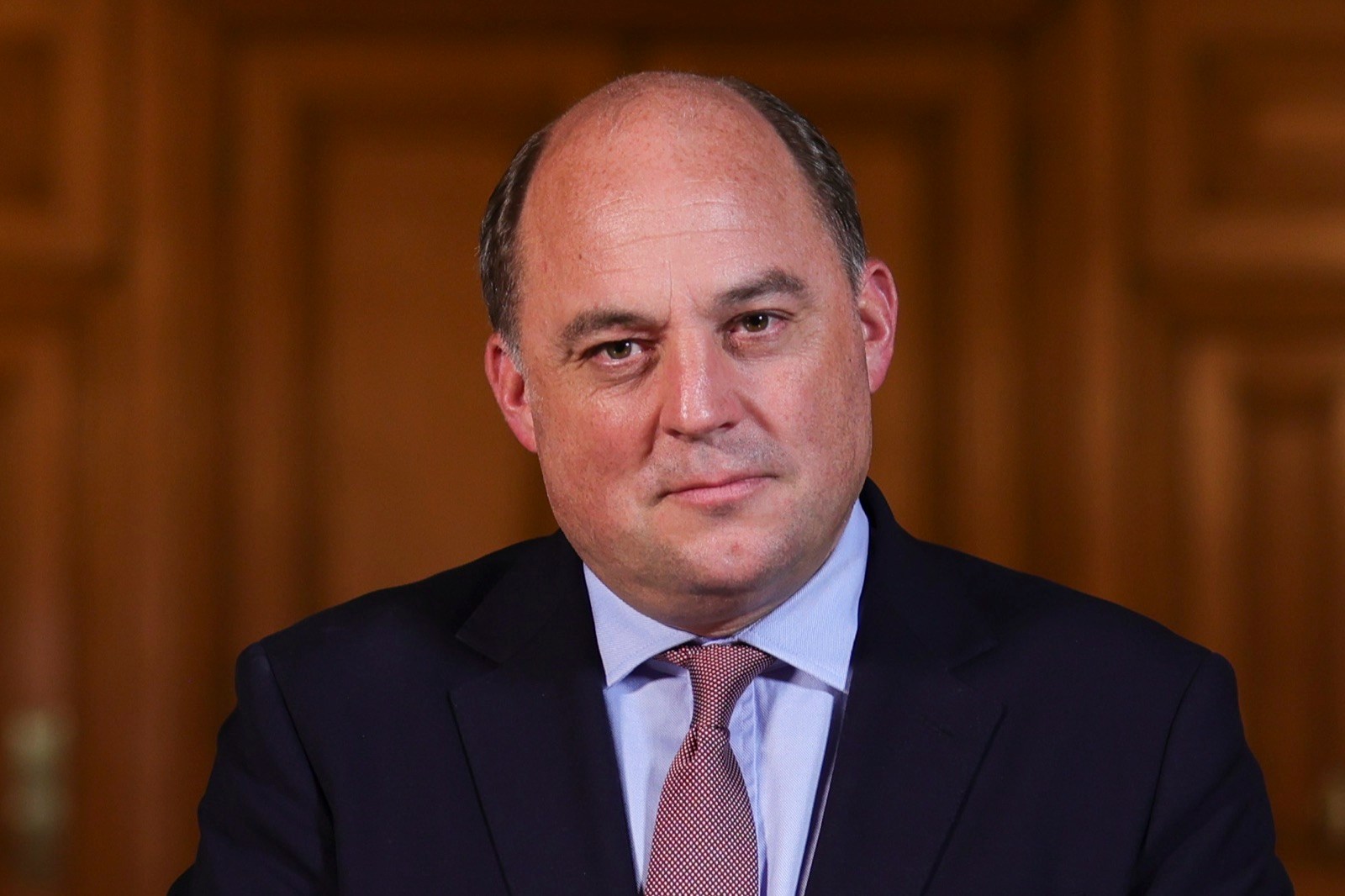
Ben Wallace is one of the longest-serving Conservative defence secretaries in the United Kingdom since Sir Winston Churchill. Ben Wallace discusses President Donald Trump's role in global politics and Britain's trade deal with America.
Episode Summary
In this week's episode, hosts Kate McCann and Sir Richard Dearlove, former head of Britain's MI6, sit down with Sir Ben Wallace, one of the longest-serving Conservative defence secretaries in the United Kingdom since Sir Winston Churchill. They discuss President Donald Trump's role in global politics, whether his style has changed diplomacy, and Britain's trade deal with America. They also explore the United Kingdom and the European Union's defence needs, the ongoing conflict in Ukraine, and what's next for Israel and Gaza. Plus, Sir Ben shares some of the biggest decisions of his career.
Episode produced by Situation Room Studios. Original music composed and produced by Leo Sidran.
Listen & Subscribe
- Watch on YouTube
- Listen on Apple Podcasts
- Listen on Spotify
Transcript
COLD OPEN
Wallace: Even if Trump had secretly said to himself, I'm not gonna give them any more. If he turned up on day one and said, I'm not abandoning Ukraine. I'm never letting this happen. That would have had an effect on Putin.
INTRODUCTION
Mccann: Hello, and welcome to One Decision. I'm Kate McCann here with my co-host Sir Richard Dearlove. Our guest today is the former UK Defence Secretary Sir Ben Wallace. He's one of the longest serving Conservative UK Defence Secretaries since Sir Winston Churchill. He was also the longest serving Security Minister. He joins us today to discuss how Donald Trump has shaken up global politics, what the future looks like for Ukraine, and whether the UK can really provide troops to patrol the border if a deal with Russia is agreed. I want to start by asking you broadly for your thoughts on Donald Trump. It's obviously his second time around. What do you think he's changed about global affairs this time?
INTERVIEW
Wallace: I think, first of all, his politics isn't new. He's a grievance politician. Sowing grievance and then harvesting it for popularity is not a new trait. It's been around centuries. So I don't think he's some sort of revolutionary new type of politician. I think he has mobilized nationalism over patriotism. It's that lovely definition that a patriot loves his country and nationalists hates their neighbors. He's mobilized that, right? He's said to America, your lot is awful because of everybody else's fault. Now, he's always conducted himself that way in business, and I think he's just carried that on. So it's not America's lack of investment in skills by numerous Republican and Democrat administrations that lost the car industry. Oh no, Europe stole America's cars. Japan stole America's car jobs. And that's why you should have massive tariffs instead of getting on and fixing it. So I think at one level, he hasn't really changed politics. He's just brought back a world of popularity driven out of grievance without really any solutions. I think he delivers raw American power. I suppose that is new in the sense of, you know, if you look at the 2% GDP target for spending on defense, Obama asked nicely in 2014, and we all of us in Europe probably did nothing about it. I mean, there's a bit of a fudge and quite a lot of fudging going on, but ultimately, we didn't really listen. We didn't listen to the long running American view that we're spending billions of dollars and you are getting a free ride. Obama asked nicely. Trump, as ever, doesn't ask very nicely. So it's just a different way of putting it, and that's put some people on the back foot. And he is, at one level, ruthlessly determined to pursue what he thinks is in America's national interest on behalf of his voters. And I think slightly on behalf of himself and his inner circle, the range of real estate moguls that happen to hang around with him on foreign trips is an odd sign. But fundamentally, I think that's what he's done differently.
Mccann: What do you think he really wants out of this second time around? If we're looking at him and thinking about the way that he makes moves in global affairs, yes, but also in what he does as a leader of America, what do you think his sole aim is?
Wallace: Oh, that is to prove everyone else wrong and to prove that he is the best American president in history.
Mccann: And make money while he's doing it?
Wallace: I think money is always part of Donald Trump's DNA. You go back to his whole history in business. I had lunch with him, me and the foreign secretary once here in the UK at a NATO summit, someone said to me, what was he like? And he was like a hustler, right? He was trying to flog things. We spent ten minutes talking about geopolitics and an hour about his golf courses. That was what he did. He walked in, and I remember he signed the menu card, and he said to the, I think the prime minister of Lithuania, sent it a Baltic state, You can sell that on eBay tonight. That's what he said. And I think, good on the prime minister, he pretty much walked out. So he's a hustler, right? He is a salesman, but I think ultimately he wants to show that he is the very best. And I remember a former US ambassador coming to visit me once when I'd said, Look, we can't take for granted, we can't rely on America. What I meant was we've taken them for granted, we need to not. And he said to me, Who's the best president you've ever known? Who is the best president? I went, Well, my book is Ronald Reagan. And he nearly fell over. He couldn't believe that I couldn't identify Donald Trump as the best American president. And I think that's what Donald Trump wants.
Mccann: How do we as a country take advantage of that then? Because you obviously, you've been inside government for quite some time. You're watching Keir Starmer and John Healey, the UK Defence Secretary, do that job now. How do we take advantage of Donald Trump? How do we play him to our advantage?
Wallace: Well, I think you can overanalyze these things about playing the person across the table. Think, first of all, do your research, try and understand who it is, but ultimately be true to yourself, have some belief in ourselves. I mean, Britain is a fantastically capable country. It is not the case that we are subservient in intelligence gathering and intelligence to the United States in the way that some people would portray, assert ourselves a bit more and be prepared to cover all the bases. I think that's the key. A lot of our intelligence, certainly our signals intelligence, and a lot of America's signals intelligence relies on British geography. It might be their machines wearing away or it might be whatever. Without some of our geography around the globe, America would not have so much data as it needs. And I'm not saying that you deliberately pick fights, but just assert yourself. Don't be pushed around. Trump does respect that. We've got things that he wants. He just had a state visit.
Mccann: You think we haven't been assertive enough as a country?
Wallace: I think our deal was pathetic the other week. Donald Trump slaps on us a 10% tariff, even though we're one of the countries with a capital goods deficit with the United States. So it's not like we're stealing his jobs. He turns out, Keir Starmer, with all the balloons and the fanfare, like his rubbish EU deal this week, pretending it's some great, amazing deal. And we, of course, learned very quickly from the Americans, like we learned on the Indian deal, that we have dropped our average tariff from about 5% down to 1.3%. Trump's dropped it by precisely 0%. Before we went for the deal, it was 10%. It's now 10%. And it's like, okay, so all we got was a concession around steel. Starmer chose, as the prime minister, he chose steel workers over farmers, over everything else. That's what he chose. By the way, they still haven't actually dropped the steel tariff. You know, I saw that again in the EU deal last week. We seem to have given away one concrete thing to the other side, fishing right access. And at the moment, as long as we accept their food conditions, we've got a little more access to that market. But all the rest is just spin. It's not a trade deal. We've still got 10%. We didn't have 10% in February or January. We didn't have 10%. We've got it now.
Dearlove: But isn't it more noise than outcomes at this stage? I mean, we're not sure where we're going to end up. The only thing I would say in relation to Trump's impact is a genuine wish, not necessarily personally on his part, but on the part of the administration to reset the relationship with China, which is frankly a big deal.
Wallace: Well, I think we're slightly unsure, aren't we, where he sits with China. Because on one side, I wouldn't put it past him, if he could, to do a deal over Taiwan's heads and just suddenly have a rapprochement with China in whatever way, right? Because it's all about the art of the deal, apparently. And it flatters him to stand with President Xi and say, We're the two big guys who run the world and we can do it. But on the other hand, every other word is standing up to China. Massive tariffs, we're not going to take this anymore. So I think the challenge is that Donald Trump's message from Trump won was, we don't really have the resolve. We're not resolved to see things through in foreign policy. We don't see through Afghanistan. We're not going to stick around. And even now in Trump two, you hear it all the time, We're going to walk away. We can't fix Ukraine. We can't fix this. One of the aftertastes of the Trump administration is that he doesn't have the resolve. Right? So to take on China, you're gonna need resolve, real resolve, but you're also gonna need allies. And in that space, he's burning allies, not creating them. And I think it's gonna be interesting where he ends up because if you really wanna face down China, you need an international community alongside you.
Dearlove: Isn't it clear that there is a certain nervousness in China? I mean, if you slap tariffs on China, you get a social blowback in the manufacturing areas of China very fast. And that to the Communist Party leadership is the sort of anxiety that the regime sits there worrying about. This massive country which has huge social tensions which are generally suppressed and controlled very successfully, suddenly the situation breaks out and changes. Who else other than Trump? I mean I agree with a lot of what you're saying but he did bring the Chinese very fast to the negotiating table. Just he brought the Europeans to their senses in terms of spending more money on defense.
Wallace: When it comes to, you know, the deal with China, whatever that's gonna be, let's see. My worry is that totalitarian leaders such as Xi usually can inflict greater suffering on their own population than the American citizen who's got agency. So if I was Xi and I was sitting there with my calculator, I'd be going, Well, two can play at the chicken game, you know, two cars coming straight towards each other, I'll last longer than him, and I will.
Dearlove: Actually, I'm not sure I agree with that. Look, China is brittle politically. It's got no change mechanism. If it's heading for a crisis, it doesn't have an immediate answer because there's no way for handling change in the Chinese system, particularly social and political change. The one thing about the States and about the UK is that we're not going to be threatened by that sort of issue. Okay, we may have lots of unfortunate consequences, but the political system is going to flex. It's going to accommodate all of these issues eventually in one way or another. China hits a wall very quickly when things go wrong.
Mccann: But China has control over its economics in a way that countries like America and the UK don't necessarily. It can junk its own currency. It has quite a lot of control over its investments in America. It can hold that over the head of Donald Trump in a way that the UK and the US can't do.
Dearlove: But look what happened at the end of lockdown in China. There was a massive amount of demonstrations, the biggest demonstrations since Tiananmen Square. Within ten days to two weeks, Xi extraordinarily had changed the policy, which is a sort of reflection of their sensitivity and nervousness when there's social dislocation. I mean, when things go wrong politically in the States, there isn't social dislocation.
Wallace: No, but while the voters have agency, they have it in lots of ways, so do consumers. What we do see in the West is people will put before their principles the cost of the next iPhone. They will put some of these things like, Mr. Trump, it's very well having a tariff. I saw someone calculated that the cost of making an iPhone in America tomorrow, not like in ten years' time, $28,000 would be the cost of an iPhone, right? Because of the skill shortage, the ability for people to actually make all those iPhones, you can't substitute that overnight, right? So I think the American consumer is incredibly powerful. Let's not call them voters, let's call them the American consumer. Apple, for all of China being put in that corner of the baddie, the red under the bed, Apple's still making its stuff in China as we speak, right? I mean, they haven't switched out. And the reason they can't switch out is, till recently, there hasn't been the skill based alternative. And what I'm not seeing from Donald Trump, and I think President Xi sees this as well, is if he was really serious about a long term shift, Donald Trump would be investing in skill bases in the United States so that you can bring onshore those jobs. I don't see any sign of that. I see high end recruitment of foreigners. I mean, Palo Alto and San Francisco is not going to be populated with homegrown Americans. He's going to be headhunting around the world. President Xi has just been around the Pacific saying, I'm the champion of free trade. He'd be seeing the American consumer starting to get a bit edgy about inflation and can't get my iPhone, can't get my products. He'd start to see that in order to catch up with China and some of the manufacturing, that's going to be a five year lead time, ten year. I mean, you have to train these people, educate people. I think Xi would probably think right now he's holding more cards than Trump, and that we also know that Trump is always available for a deal and open to flattery. So I would be interested. I think the wait and see is the right answer for now, because we don't know how it's going to play.
Mccann: I suppose step back a little bit. What you've articulated there is that leaders like Xi in China and Putin in Russia, they think about these problems in terms of decades and twenty years, thirty years, forty years. The West, America, the UK, Europe can't even think about a defence settlement for five years, ten years. We're thinking in one year cycles. Is it possible for us to counter the type of threat that China and Russia poses, think specifically Russia, when we can't organize ourselves over the same type of a period?
Wallace: I don't think it's not organized. We can organize ourselves. It's just we don't want to. I mean, I want to. The Gray report that came out under the last Labour government recommended a ten year defence budget with more flexibility between capital purchases and revenues. That's the way to run an organization like that.
Mccann: So why didn't that happen? You were defence secretary for a long time. Why didn't you?
Wallace: Because the Treasury doesn't want it to happen. And they love, if they can, one year. All the power goes to a Treasury when you have a one year settlement. They can bully everyone on a one year settlement. They can even undermine the prime minister's power. I had the same. I still have the same. I don't anymore. It's not my job. But replacing Trident in the nuclear weapon program. The government of the day said this is the number one priority. We are still a nuclear deterrent power. We're going to replace it. That was the political decision, not how much. Then the Treasury says, Well, how much is that going to be? Well, the reality is, who knows? Because there's not a Tesco for nuclear weapons and submarines. So you pick a figure, the Treasury carries on cutting your defence budgets, and wow, what a surprise, you're not coming in on budget. So the Treasury loves one year, hates ten years, and would give every excuse under the sun.
Mccann: So, the chancellor in your time when you were Defence Secretary, did you feel undermined?
Wallace: No, because Boris Johnson supported me. Boris Johnson gave me the defence budget I needed, and nearly at every occasion I got what I was required. What he didn't have the ability to do or didn't want to do was root and branch change the Treasury and how it functions. One of Tony Blair's regrets is he didn't either. Ultimately, if we're going to change Britain and other countries in the world, we need to look at reforming our treasuries because without those type of things we won't compete with someone who's got a one hundred year plan.
Dearlove: We used to have what we called an anti tank group in my organization to deal specifically with arguments with the Treasury about our budget. And the trouble is that you take some of your best people, not to do the job that you're doing, but to argue with the Treasury.
Wallace: I mean, if I had had a ten year defence budget, I'd have actually produced more for less. I would have been more productive in our defence budget and our delivery and our output than I was under a three year and a one year plan. I would have been able to buy things with capital and think ahead about the running costs in years to come.
Dearlove: I've just come back from Germany and Pistorius in Germany, the defence minister who survived from the Scholz administration, has just announced supposedly this 5% expenditure in Germany, the largest conventional forces, well certainly in Europe, probably in the world if they really went through. I mean do you think this is a realistic prospect now for Germany? Or how would you sort of interpret this announcement? Because these announcements do need to be understood as to what they actually mean.
Wallace: Well, I think the first thing is you've got to look at the timeline. And the timeline in defence of other departments who will be worried in Germany that their money is going to be taken off them to fund it, is that by 2035, by 2040? And you have to look at the timelines, because also in defence of the Treasury, dare I say, of the day, if I was given £20,000,000,000 tomorrow morning, I couldn't spend it in a year. I don't have the people to spend it. I don't have the size of the armed forces to spend it. And tank manufacturers and airplane manufacturers don't work on one year cycles. They take twenty years, ten years, fifteen years, whatever, to make the ship. So you have to be clear, crystal clear about how that money is scheduled and what's its split between capital and running cost money, which includes salaries and pension. And I think what Germany and Britain and France, if they were honest, should tell you is that even 3% might not touch the sides in filling in the holes of the existing hollowed forces. If I got 3% scheduled by 2030, don't expect a new armor brigade or a new division. You'd simply be trying to get the ammunition stocks, the training levels up, the modernization, the upgrades, all of those in place. You might replace some fleets of vehicles, but you're not going to expand your army to be 1968 British Army with four divisions or whatever it was in Germany. That's up at the 5.5%, 6% issues.
Mccann: Can we fulfil our commitments at the moment as a NATO country? I've spoken to foreign ministers, defence ministers in other European nations who say the UK can't send the full compliment of troops that were supposed to on exercise.
Wallace: What the enemy flushed, what Russia flushed knew is that apart from the United States and some of the much smaller sort of countries, it was the emperor's new clothes. I mean, I used to have arguments with the officials in NATO and the Foreign Office and these other people about every few years you submit to NATO the forces you're offering up. And I said publicly, Well, it's not true we can deploy a division. We haven't been able to deploy a division for years. Stop pretending we can. In the first Gulf War, when I was serving in the army, we didn't actually send an armored division to the first Gulf War. We sent two armored brigades, and I think the commando brigade or another brigade. We had to hollow out two divisions just to send two brigades. Part of, I think, the American frustration has been they know. And it's not just Britain, though, because every year there's a report card that goes around in NATO where sort of peer group tests on what you can do. If you read others, it's not great either.
Mccann: How should we feel when our political leaders go to these big meetings with others, other European nations and promise, yeah, don't worry Ukraine, we'll protect you if it comes down to it. We'll put troops in Ukraine. We'll send 10,000 troops. We can't do that, can we?
Wallace: Part of being a secretary of state is to be a bit belligerent. I learned from both Ken Clarke and Jack Straw in my time in politics that secretary of states run departments, not prime ministers. And I used to say to Number 10 often, no, you're not having it. And they said, what do you mean? I said, unless you fund it, we're not going there. And they'd all want to pounce around and pose and, you know, go to these G8s or whatever it or G7s and tell everyone how marvelous they are, yes, we can go to the North Atlantic or the Pacific. And I'd say no. My job is often being Mr. Miserable. You'd say we're not doing it, or give me the money to, and I will.
Mccann: But the specific question is really important in the context that we're discussing, because we've agreed that those leaders like Putin think in decades, and we think much shorter. They also know the state of our armed forces, don't they? So when we promise Ukraine we'll protect you if there is a deal, we'll put troops there along with France and others, we can't live up to that promise, can we?
Wallace: Well, it does depend how much you want to burn elsewhere, right? If Britain wants to withdraw from its presence in its exercising in Africa and its exercising in Oman and the Middle East, and it wants to draw in its horns and entirely focus on Ukraine, we could pull together some pretty aggressive, capable formations. Could we be there for five years? I doubt that at all. But we could, right? And this is the point. This is the test. Do we really want to do it, and are we resolved to do it? And, you know, it really upset me because the people who were also let down are men and women of the armed forces. They know. They live in a tank that doesn't work. They're on a ship that can't go to sea. They know the truth as well. So the Russians know, the Americans know, and the men and women of the armed forces know. One of the things the Treasury does is we'd like you to defer it, and Number 10 does. So one of the things about being belligerent, I would say to Number 10, no, I'm not deferring it. Let's say I was going to buy some new warships next year, and that was in the plan. The Treasury might say, Well, money's a bit tight, actually. Can you put it off from buying it? Instead of buying it in 2026, can you buy it in 2028 and run these older warships on a bit longer? And by deferring it, there's no unhappy political news. You're not announcing to the good people who govern that you're no longer going to build their ships there for the next two years. You're not making Number 10 face difficult political decisions. But deferring it means I have to run old equipment on much longer, and that costs hundreds of millions. Not to forget that also the project you were about to commission, the time you go back to it in two years' time, inflation, it would have gone up again. So suddenly, the sort of cheap politics of deferral drives increases in black holes, and that's often how you get black holes. Secondly, not thinking about running costs ten years down the line. I can get the kudos of announcing new ships or new aircraft, good jobs for Lancashire and good jobs for Glasgow. It'll be someone else's problem in five years' time when they don't have the crews to run it or they don't have the spare parts because we didn't factor in running costs.
UKRAINE AND RUSSIA
Mccann: We've talked about Russia and Putin a little bit. I want to get your take because you as Defence Secretary were very, very involved in the early stages of the Ukraine effort this time around and arming Ukraine. And you are often credited with making sure that Ukraine got a lot of the things it needed very early or earlier than it perhaps would have done. Where do you see this going now? I mean, the Trump administration seems to be teetering on the edge of pulling back completely from trying to negotiate between Ukraine and Russia. Putin seems to be stringing everybody along, as has always been the case. And Zelensky seems to be saying he will do anything he can, knowing that there really is nothing he can do.
Wallace: If you look at the pure numerical losses, basically Ukraine has destroyed it three times over. They have become the teachers now. So first of all, let us not underestimate the resourcefulness and the toughness of the Ukrainians. Someone once described it to me as the Ukrainians are ex-Soviets with Western equipment and an Israeli attitude. Right? And that's it. So I first of all think, if they want to, there is plenty more cost they can extract from the Russians, plenty more in lives and equipment. Secondly, Russia is not in the strong state that it might tell itself. If you tell yourselves that the economy is doing just right in Russia when it isn't, if you end up on your ego sending hundreds of thousands of people to their death from your own country because of your ego as Putin has done, and you tell yourself it's all the great patriotic war, yes, there's an element of Russian culture that's very different from Britain. I think Russia is much more delicate. And secondly, remember, they have lost over 20,000 armored vehicles. You cannot rustle up those things in a week or two. The saddest bit of all of this, it shows the cruelty of Putin, is the only thing I believe, and I've always believed this, that Putin actually understands is dead bodies. The only thing he will understand is that eventually when the wives and the girlfriends of all of those, so if you go in the history of the Afghan war, the Afghan war in the late '80s, there's an amazing book written by a Belarusian journalist, and it was called The Boys in Zinc. And I read it before the invasion. The Boys in Zinc was a collection of interviews of mothers and girlfriends whose family had died in the Afghan war. And they called it The Boys in Zinc because the zinc was the coffins that they came back in. And eventually, it broke. It eventually broke the back of Russian public opinion as such. So don't underestimate that Russia is not as strong as he thinks it is. He's been given hope, Putin, by Trump. My biggest regret about Donald Trump beginning is he let everyone know that he thought he was going to walk away, and he gave Putin hope. And I think, remember in war and in security, there's always a shadow game before the actual game, before the actual fight. And if you give people hope, people will stand firm. If you say we're behind you, you have friends, you're not alone. Those messaging matters. And I'm afraid Putin would have gone, I can hear Mr. Trump. Mr. Trump's off. I just need to keep on killing people for another five months, and I get what I want. And, you know, even if Trump had secretly said to himself, I'm not gonna give them any more, if he turned up on day one and said, I am not abandoning Ukraine, I'm never letting this happen, that would have had an effect on Putin.
Mccann: What does Putin want? What is the endgame for Putin?
Wallace: He wrote an article in June 2021 called The Historic Relationship Between Russia and Ukraine, and he wrote most of it. He genuinely wrote most of it from his sort of isolation in COVID. And when you print it off, in 19 pages, NATO's mentioned in one paragraph, one paragraph. So this great sort of public line that NATO's about to come and get us, 6%, before the invasion, 6% of Russia's border had a NATO country on it. 6%, right? Because Finland and Sweden were neutral. So Norway, Estonia, some of the Baltics, only 6%, not exactly surrounded, you ask me. He's obviously got more now because Finland and Sweden have joined. He's lost any freedom of navigation, really, through the Baltic, through the sea, because both sides are controlled. And if you read it, it's about ethnic nationalism. It's about his sort of slight fantasy that there is the ancient people of Rus', as he calls it, that Ukraine was always part of the greater Russia, that Belarus is, by the way, in that. Also in that calculation is the Baltics. Also in that calculation is part of Finland and also part of Czechoslovakia. And when you read it, and I said publicly at the time, it's like reading Mein Kampf, it's that type of ethnic nationalism evoking justification. I have a right to unify the Russian speakers of the world. These all belong together.
Mccann: But if you read that and you took that as a much further reach into something bigger, a national identity, a much bigger question for President Putin, why has Europe not heard that message? Because there are still countries in Europe that are not spending even 2% on their defense. There are still countries that are in NATO that are not spending 2% on defense. We're not listening. It's written down. We're not listening, are we?
Dearlove: Well, it's Italy and Spain primarily, and they are quite a long distance from the problem.
Mccann: Well, are we arguably?
Dearlove: Yes, but historically our trajectory has been completely different from theirs. So every major European conflict, the UK, well England or however you like to characterize it historically, we've been a significant player eventually. But I think that if you go to Italy now, there's a, you know, Meloni is definitely changing the mentality. Spain's rather a long way behind the curve because Pedro Sánchez doesn't think like that.
Wallace: Italy has been a supporter of Ukraine and has provided weapons to Ukraine and has been pretty clear about it. I think Spain and Italy are not spending what they should spend on defense. That's true. But also, I think, as Sir Richard said, our history is different. We're traders, we're navies, we're seaborne, former empire. We know that eventually the shark turns to your beach, right? And one of the best ways to keep the shark away from your beach is to tackle it out at sea, right? If you don't, you know, Poland was a long way away from us in 1939, but we went to war over Poland because eventually we knew, as it turned out in the first phase of the war, there was the shark sitting in Calais looking at us through binoculars. It does wash up on your shores one way or the other. And you know, Russia is busy trying to control the Northern passage and the Arctic and claims it's not really a freedom of navigation or tries to force you. It's trying to claim that part of the world. And if you look at its shipping and its nuclear weapons, it all comes past the United Kingdom. So ultimately, whether we like it or not, it is very, very important to us. And if the very strong principle that we don't change borders by force, sovereign borders by force, is broken and appeased, then where next?
ISRAEL AND THE MIDDLE EAST
Mccann: It's a question that takes us on to a conversation about Israel, and it's a very live issue. There is a changing of the UK's attitude, the government's attitude towards Israel, towards Benjamin Netanyahu, towards what he is pursuing in Gaza. And there is a sense that a line has been crossed. I think it's fair to say that there's a sense from the American administration too, that there is an impatience with what's happening, that there's a frustration. You're making a face. You don't think so. You think America is still fully supportive of Israel and what it's doing.
Wallace: It's odd, and I'm interested in Sir Richard's views, because one of the jobs of a politician and intelligence service is to try and discover the real intentions of the people on the other side of the table. What is Israel's true intention? Well, not Israel. What is a Likud party Netanyahu and his coalition? What are their true intentions as opposed to the sort of phase by phase action that they take? What is Putin's true intention and Xi's true? And, you know, that's why we have intelligence. A lot of intelligence is not about they've changed the wheel on this type of tank. I mean, that's military intelligence, but needing to understand what's behind it. You know, the big debate that we had in the lead up to the war with Ukraine was, is he really going to do it? And there were people who doubted it entirely. And in the end, you have to use judgment. Judgment is what you're paid for. It's ultimately a judgment call, because there is no such thing as 110% intelligence. You can get close, but you don't really know. We've all been avoiding the question for a long time, which is, well, what do we think Netanyahu's real intention is? What do we think his party's real intention is? Is his real intention to occupy Gaza in the same way, I think it's 700,000 illegal settlers now occupy the West Bank? Is that his real intention? I totally support his original intention of responding to a horrendous terrorist attack on his soil that killed and occupied, whatever you wanna call it, but on his soil, where Israelis were murdered at a concert by Hamas, which, by the way, is an organization that I would equate with Al Qaeda when you look at its constitution. Right? So I wouldn't be sitting here evoking a ceasefire with Hamas really ever. I mean, you read its constitution and it's like Al Qaeda. But we're also trying to deal with a conflict where the ultimate response will be a political decision. And the solution has to be, what is your political solution, Israel, to make sure it doesn't happen in fifty years for all of us? We heard the finance minister of Israel say, hopefully, they'll all be pushed to the edge of the coast, then they'll be taken to third countries. So that finance minister's intention is clear. One state called Israel. Not two states.
Mccann: Not that, that's a war crime, isn't it, essentially?
Wallace: It's not a war crime to respond to an imminent threat or an attack against you by a terrorist organization. That's true. You're entitled in international law to respond to that. And under mutual self defense, another part of international law, you can request allies help you on a legal thing. Our help to Ukraine and many others is based on mutual self defence. But removing people from a territory, that is illegal. Look, I call the settlements in the West Bank illegal settlements. They are not under any international law recognized. You can't put hundreds of thousands of people in somebody else's territory. Now, I think the simple reality is Netanyahu has gone for broke. Right? I think Netanyahu said, I don't care. Everyone hates us. We don't care. We're going to do this. We're going to finish it. Now, the problem with that, I would say, is I heard that in 2000, when the prime minister at the time, when Islamic Jihad killed some Israelis on the eve of potentially a big peace deal, he said, Right, now we're going to have to get rid of all the terrorists. Well, they're still there. It's very hard to entirely wipe out a terrorist organization without a political solution. You have to have a bit of both. So I think what's happened is people are sort of thinking that Netanyahu has just said, well, I'm going to go for broke now, right? I'm going to occupy Gaza.
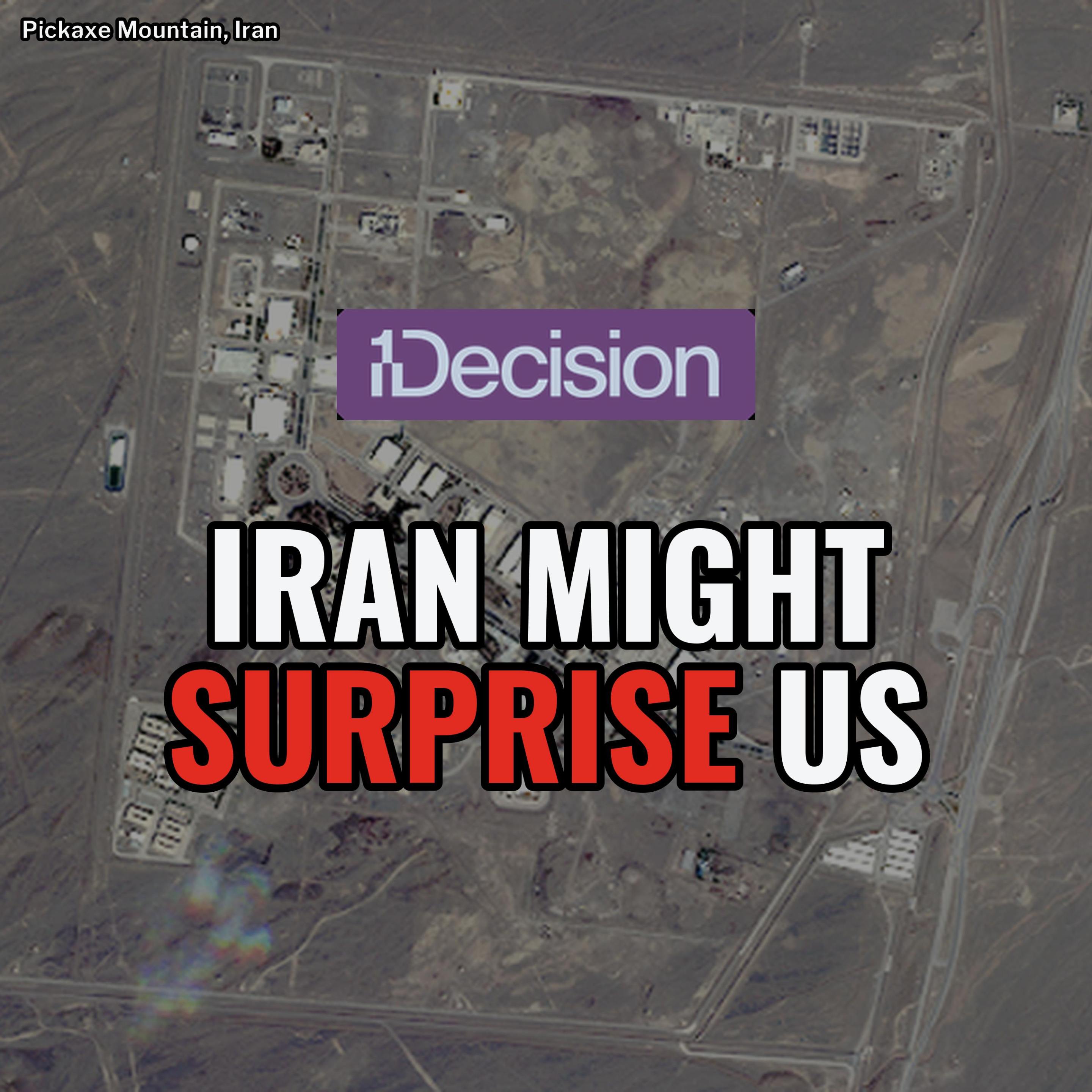
Dearlove: I mean, I think what's happened is that because of the original attack on Israel, the consequences of that is that tectonic plates in the Middle East have all started moving in a way that probably no one expected that the consequences of this would be so far reaching. So you've had the disappearance of the regime in Syria. You have the axis of resistance supported by Iran dissolving in front of your eyes and I think the Israelis now think well, those states that identify themselves by saying that their purpose is the destruction of Israel has to go. And I think that you've got an extreme government in Israel who are locked on to this objective and they're not going to back off. They look as though they're a good way down the road to achieving it. I mean, the key really is what's gonna happen with Iran now. And in the last few days, I think what's so interesting about the Trump negotiations is that the Trump negotiators are beginning to say Iran has to totally give up its nuclear program, not compromise on it. And if it doesn't, it's gonna be attacked. And we did a podcast recently with Republican Congressman Lawler from the New York district. He was very, very specific about this. So I think that, as it were, they've got the bit between their teeth, they're not going to back down and they don't care about international condemnation.
Wallace: I mean, I'd agree with Richard's point, you know, that I think that's where Netanyahu is taking himself. And, you know, it goes back to this point about short term versus long term. Militarily, he can achieve all of that. I'm also conscious that terrorists need a recruiting sergeant. They need oppression. Radicalization always follows oppression. So while I think Sir Richard's right, he may well get to the stage where he goes, they'll thank me in a hundred years, which is, I think, a really dangerous thing for any politician to be into. I think Putin's view of Ukraine is, I don't care how many of my own people I sacrifice. The great Russian people will thank me and my memory in a hundred. Right? And I think there's an element running through the Israeli government that's a bit like that, which is so what? Everyone hates us now. You will thank us in twenty five years or fifty years. My problem is every day that goes past, you are also radicalizing a new generation. It's not about Hezbollah now or even Iran at the moment, but you are radicalizing people across the world, and you're radicalizing people in Britain who will see this as anti-Muslim. Their recruiting sergeants will be out there right now. Al Qaeda's, ISIS's recruiting sergeants will be in our mosques, in our communities, saying, you see, the West doesn't really care. It doesn't do anything about Israel. It likes to see you persecuted. And no matter how much of their recruitment will be false, it will work on some people. And so we'll pay the consequence, right? We just have to deal with it. But ultimately, I'm keen there is a solution for my grandchildren. I don't want us to be sitting around a table, a podcast table, another ten years talking about Israel Gaza, because there is no solution.
ONE DECISION
Mccann: So Ben, this is a podcast called One Decision. I want to know before we let you go, what's the one decision you regret? There must have been a difficult decision that you had to make, either within government.
Wallace: I suppose leaving Defence Secretary about a year earlier than I needed to, and that's not because I didn't want to let go, but I also felt I wasn't going to fight the next election. Rishi Sunak deserved to have a secretary of state that would be fighting it with them, not like one of my colleagues said, I'm off six weeks before from the Cabinet. I don't think that's fair to him. Longevity matters in reforming something. And I did it the longest of any Tory ever defence secretary. But you've got to see it through. You can't, you never actually get all the time you want. I wasn't going to get ten years or eight years or whatever. Every year matters. And maybe if I had a little bit longer, I could have carried on the cultural change. But I didn't really do regrets very much.
Mccann: What about the one decision you wish you could have made?
Wallace: Well, I made it, which was we're going to stand by Ukraine against all odds. And I was pleased to have done that. I think that's the biggest, the most important. Well, I think real decisions in life are ones where you don't know the outcomes. Whether I wear a blue shirt or white shirt this morning isn't really a decision. Do I get married to that person? Do I have children? Do I change jobs halfway through a career? Those are decisions. We don't actually know the outcome. We can't guarantee the outcome. It's a big jump. You gather your judgment, you look at what you can, and then you make a decision. And when we backed Ukraine, I didn't know how it was going to turn out. There was no one who said, This is what it will look like. But I used judgment, and I was very lucky to be supported by very, very fine people in our intelligence services and our armed forces who also understand one of the last sectors, really, where you don't hide. You have to make judgments. If you're spying on people or taking danger or taking risk or putting people out in the field, there's no guarantees. So, those are services of judgment. And I think modern politics seeks to blame everybody else for their own judgment. It's all about how can you mitigate the judgment? How can you pretend it was somebody else's fault? It's all about those sort of lines, or everyone's a winner, no one loses. Just stand out and make a judgment and justify it to yourself and publicly, and then get on with it.
Mccann: Good answer. Excellent answer. Thank you very much for your time on the podcast.
Wallace: Thank you. Great to have you.
Mccann: That is it for this week's One Decision. A special thank you to Sir Ben Wallace for joining us. And if you enjoyed this conversation, be sure to check out any of our previous episodes, particularly the one with the former US Secretary of Defense, Robert Gates.
Dearlove: I think the United States and our allies are facing a global challenge and a global security environment that is more perilous than we've probably faced since World War.
Mccann: Of course, you can check us out on our social media and subscribe to our YouTube channel for exclusive content such as our explainers and lots more interviews with world leaders. I'm Kate McCann. Thanks very much for listening.