Hosted by Christina Ruffini and Sir Richard Dearlove
Guest
Chris Coons
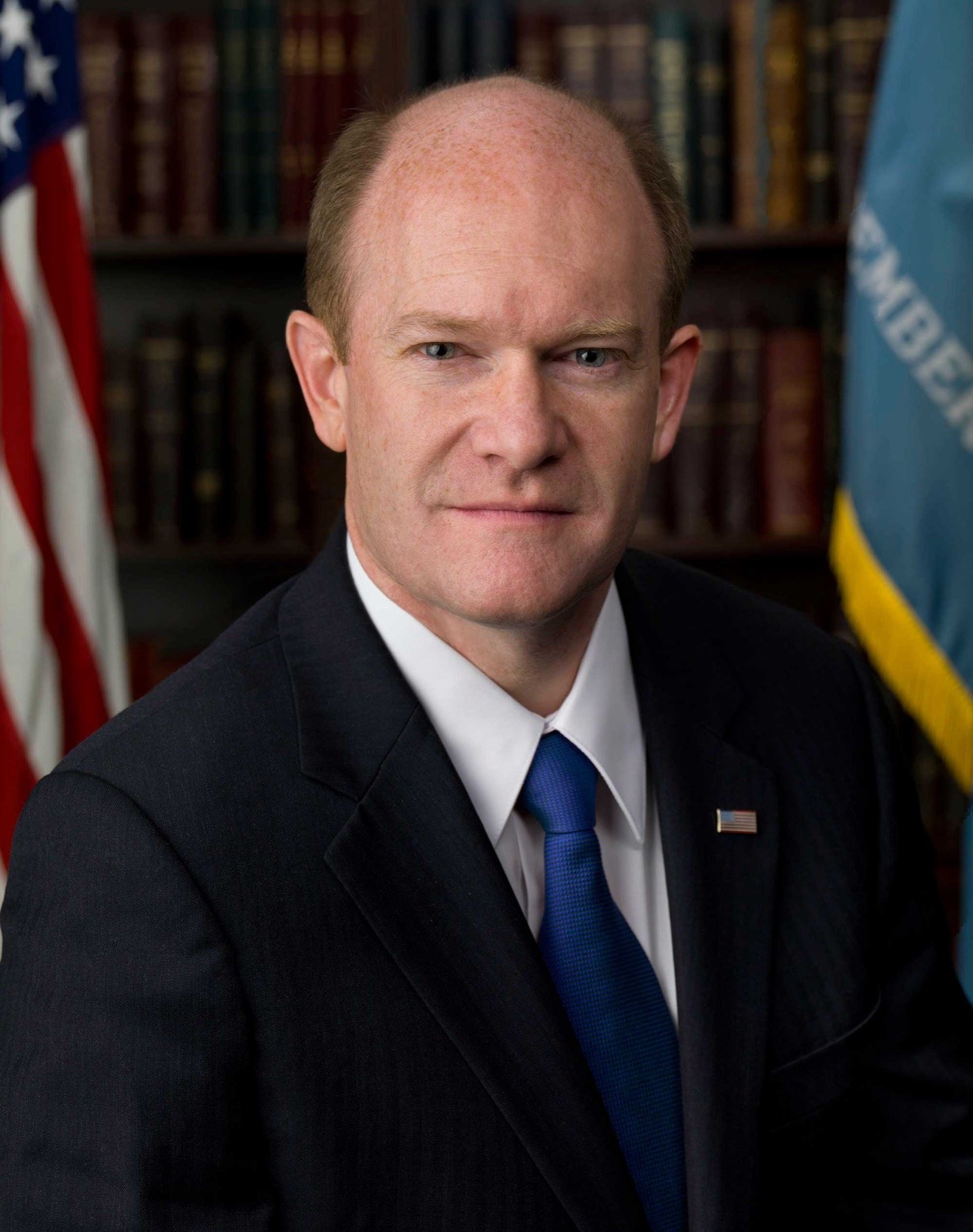
Chris Coons is a U.S. Senator and leading member of the Senate Foreign Relations Committee who discusses talks among NATO members for increased defense budgets and the Israel-Iran ceasefire.
Episode Summary
In this bonus episode, hosts Kate McCann and Sir Richard Dearlove are on the ground in The Hague, Netherlands where they're reporting from the NATO Summit. Kate and Sir Richard sit down with U.S. Senator Chris Coons, a leading member of the Senate Foreign Relations Committee, to discuss the latest from the summit including talks among NATO members for increased defense budgets, President Trump's unique social media presence and how it shapes his foreign policy, and his role in the Israel-Iran ceasefire. Later, Kate and Sir Richard catch up to explore the regional ramifications of the Israel-Iran conflict in the Middle East and compare notes on what to expect from Israel.
Episode produced by Situation Room Studios. Original music composed and produced by Leo Sidran.
Listen & Subscribe
- Watch on YouTube
- Listen on Apple Podcasts
- Listen on Spotify
Transcript
INTRODUCTION
Mccann: Well, welcome to One Decision, and particularly welcome senator Chris Coons to this recording of the One Decision podcast. I'm joined, as I always am, by sir Richard Dearlove.
Coons: Chris, very nice to be with you.
Dearlove: Good to be with you, Sir Richard. Really lovely to have you on the podcast today.
Mccann: I almost don't know where to start. We're here at the NATO Summit. There is so much news that it's impossible to pick a place. But let's start, shall we, with what the most important thing about this NATO conference is to you.
INTERVIEW
Coons: So look, we earlier today, the congressional delegation I'm a part of met with secretary general Rutte, with president Zelensky, we just met with Ursula von der Leyen, and Europe and NATO in particular seem more united, more committed to their defense, more committed to an enduring partnership with The United States than I've seen in recent years. In a way that I think matters. There have been some real questions and concerns. The first time president Trump was in office, there was a great deal of tension with NATO, with the EU. His statements before becoming president and in his first few weeks led to grave concern about whether he would sustain support for NATO and support for Ukraine. Both of those seem to be moving in a positive direction. The critical minerals agreement was ultimately signed despite a very tumultuous and difficult meeting in the Oval Office between Trump and Zelensky some months ago. And we seem set for an announcement tomorrow by all 32 NATO member states to get to a 5% target. Look, there's been significant progress in recent years in terms of how much NATO members are spending on their defense. This is not just to satisfy the demands of an American president. This is based on a very real threat from Russia. Chancellor Merz was in the capital, I think, a week or two ago sharing his assessment, and we've heard the same now in several meetings here that Russia is rearming and building up its military far beyond what is required for their continued aggression against Ukraine. They are preparing for war with NATO, and I think that is mobilizing and focusing the minds of all the folks I've talked to here.
Mccann: Do you think that 5% commitment is enough though? Because it's 3.5% on hard defense spending. Right. 1.5% on other things, including infrastructure spending and maybe border security. It's pretty broad. Now some people say that that is part of defense nowadays. But if you're talking in the context of a potential Russian aggression against a NATO ally, is that really enough?
Coons: It may not be, but we have to start moving in that direction. If it's not well coordinated, if we don't streamline, modernize, make more innovative our sclerotic and bureaucratic and antiquated procurement procedures, no amount of money will be enough. If we don't spend this money wisely, we'll simply dramatically increase our costs. We in The United States have between four and five sort of major defense manufacturing companies. They've really captured the markets. There's very few companies that make nuclear submarines, jet fighters, aircraft carriers. We are in the midst of trying to bring in private sector innovative technology focused companies as we tackle with the consequences of the Ukraine conflict, drones, electronic warfare, counter drone systems, but we have to accelerate it. We need European partners in doing this. We need to be less concerned about restricting each other from manufacturing and competing and more open to being the kinds of partners we were decades ago as NATO began, the kinds of partners we were under the very imminent pressure of Nazi aggression.
Dearlove: You put your finger on something. I think that's really important. I mean, okay, we are all talking about an increase in proportion of GDP, but actually, how do you spend it? Right. And it's very easy to talk about an increase. It's a much, much more complicated question. We've just had the Strategic Defence Review in The UK, which actually contains a lot of sense, but it doesn't really express what programs you're going to focus on. And I mean, like in The United States, you know, we have built these very expensive long term procurement programs, great sophistication. But, you know, ten, fifteen year programs, we can't do that any longer. Now how do we get over this problem?
Coons: So first, we have to really look hard at and learn the lessons of Ukraine. The lessons of Ukraine are that they have managed to survive and to fight hard by what we call MacGyvering. That's the name of a popular television show in The United States. I mean, think about it. They've received dozens of different platforms. You know, there isn't one tank. There isn't one armored personnel carrier. There isn't one howitzer. They've got dozens of different types, and yet they've managed to, without these complex supply chains and OEM contracts, they've managed to get them into the fight, service them, repair them, upgrade them. They've proved to be remarkably agile and innovative because they have to be. We have to have the same urgency. We lack urgency. We lack a sense that China might move on Taiwan in two years, that Russia might move on NATO in two years. And if we were acting like that — Why is that? Because we are seeing it. A lack of focus. We are incredibly distracted. I mean, social media is driving not just mental health challenges in our children and division in our electorates and our societies, but is distracting us from critical strategic focus. And no disrespect to president Trump, but a president who was elected by his mastery of Twitter, social media platform, is probably the most short attention span president I've ever seen. Now he does still have some successes through that, you know, through his combative, unpredictable style. But bluntly, the lack of a sustained critical focus on strategic issues is the biggest threat to our sort of western shared values. And we don't just need to get better and smarter at procuring things like tanks and howitzers and armored personnel carriers. China believes they will leapfrog our advantages through artificial intelligence, scraping data from the world, and then winning in quantum computing, precision biology, and a half dozen other applications of AI. So we have to get faster, smarter, and more innovative today, not tomorrow.
Dearlove: In The States, you've got all the high-tech. I mean, okay, the Chinese regard this as the front line in achieving their strategic objectives. And they're written down very clearly in the document. They're not hiding them at all. And they actually express it in short sentences that are clearly understood. But you have this fantastic tradition of innovation in The States. How do you divert that, let's say, away? I've just been at the tech conference in California. Everyone's talking about AI, but in a context which isn't really related so much to defense spending if you're there with the entrepreneurs.
Coons: Well, now I'm gonna comment in a way quite critical of our current administration. They are doing exactly the things that one would do if you were intent on destroying our advantage in competition and creativity, dramatically restraining immigration, going after major research universities, blocking foreign students from coming to participate, defunding the National Science Foundation, defunding the R&D arm of so many of our different federal institutions. I mean, I think it's an own goal. We are really hurting ourselves by how we are taking away several of the key things that have made Silicon Valley so successful. So it's my hope that we can change direction on that front. It was president Trump who, during the campaign, said foreign students who come to The United States to study all the hard sciences critical to AI should get a green card with their diploma. Now he's doing the exact opposite. He's literally rounding people up in the streets and deporting folks who came to The United States as students. So we have to get smarter. We have to re-embrace the things that actually made us a global leader in innovation, but we have to partner and not be so frightened about sharing inventions and innovations with our European allies.
Mccann: We can't go two minutes at this conference without talking about Donald Trump. It's impossible. And I'm really interested in something you said about social media distraction because he has posted diplomacy in real time throughout the last twenty four hours on Iran and Israel, but he's also posting WhatsApp messages he gets from world leaders, including Mark Rutte. He's posted a full WhatsApp message from Mark Rutte ahead of this conference. Is that a good way for a president to behave? How can you trust that any communication you have with him will stay private?
Coons: So at the end of the day, NATO is built on trust. Article five, the whole architecture of NATO is built on we pledge ourselves to each other. That's what collective security means. And our intelligence services, our research into critical technology areas, our shared commitment to security rests on trust. So conduct that undermines trust and that suggests that what should be private communications can be public at any time at the whim of any particular leader degrades trust. And so I think it's harmful to do things that would lead the secretary general of NATO to now have to answer hours of awkward and difficult questions. My hope is that we will all still pull in the same direction, and we'll all still see the overriding importance of NATO unity. But that particular move, I think, was not — it may have been to his own reputational advantage for a short period, but we have to trust each other. And if we don't, we're gonna have a hard time holding together in the face of an increasing convergence between Russia, DPRK, Iran, and The PRC. We need each other more than we ever have. We need to not be distracted by short term turf fights, by disagreements internally or amongst each other. So bluntly, my hope is that we'll transcend any particular social media moment and be reminded that we have a deep history together. I had a chance to meet with a number of Dutch leaders yesterday, and reminded them that it was in part the Dutch that settled my part of The United States, the state of Delaware, and that there's more than 8,000 American service members in a battlefield cemetery here in Holland. We have worked together, fought for each other, served in the common purpose of becoming a more and more just and inclusive society, and we are facing an increasing alignment between those who oppose that effort. We need to not take ourselves out of this fight by doing things that undermine our mutual trust.
Dearlove: Can I ask you another question which is sort of connected with the Trump phenomenon? It's not a criticism of him, but it's an observation. For example, you know, I personally, professionally, have been dealing with the nuclear problem in Iran many years ago, and we have reached a pretty critical point, possibly a resolution of the problem, but maybe it's too early to say that. What I don't understand about the Trump administration is the way that they sort of separate foreign policy issues. So you've got, you know, Taiwan over here. You've got Iran here. You've got Ukraine here. And there isn't a holistic approach to looking at this as a single security issue. And for example, you know, as a former professional, what worries me is the way that Ukraine is sort of separated out as a separate problem, and I think this is extremely worrying for European security.
Coons: So I just was on a bipartisan trip to The Philippines and Taiwan a couple of weeks ago. It is unmistakable in my view and the view of many of my fellow senators that what happens in Ukraine will have a profound influence on what happens with Taiwan. What happens with Iran will have a profound influence with what happens in a half dozen other states that may or may not decide that their security requires their having a nuclear weapon. It all connects. And to the extent that The United States builds trust, builds a global system, and invests in partnerships and alliances, I think we're stronger and safer. But there's clearly a very different view from some in politics in The United States and certainly from his campaign. That's what president Trump said. You know, we're gonna separate these things. We're gonna deal with them one at a time. We're not gonna deal with them all together. I think a failure to see Putin clearly as the aggressor he is and as the malign force he is in Europe and for world security is a great failing on the part of our president. And it's my hope that as he's become more and more frustrated and begins to realize Putin's been playing him all along, and hopefully begins to realize that Putin will come to China's aid if there is any kinetic event in The Pacific. I'm hoping that they'll begin to see these things in concert, not in isolation.
Mccann: Senator, I know you have to leave us, and we really appreciate having you on the podcast. Thank you for joining us here on One Decision.
Coons: Thank you very much. Look forward to being on again.
Mccann: Please do come whenever you feel like it. You're always welcome. Thank you. Fascinating. Good to see you. Thank you.
ANALYSIS WITH SIR RICHARD DEARLOVE
Mccann: Also, Richard, the senator may have to leave, but we are still here. You are my captive now. You're not going anywhere. I found that discussion really interesting, particularly on this question of distraction because it is concerning, isn't it? We are all here. NATO is here. All the allies are here in one place, and it's very difficult to keep people thinking about Ukraine and about Russia. There are those defense ministers and those who are really embedded in it who constantly fight for that to be the main narrative. But we would be lying if we said Donald Trump and his diplomacy online, Israel, Iran isn't dominating here.
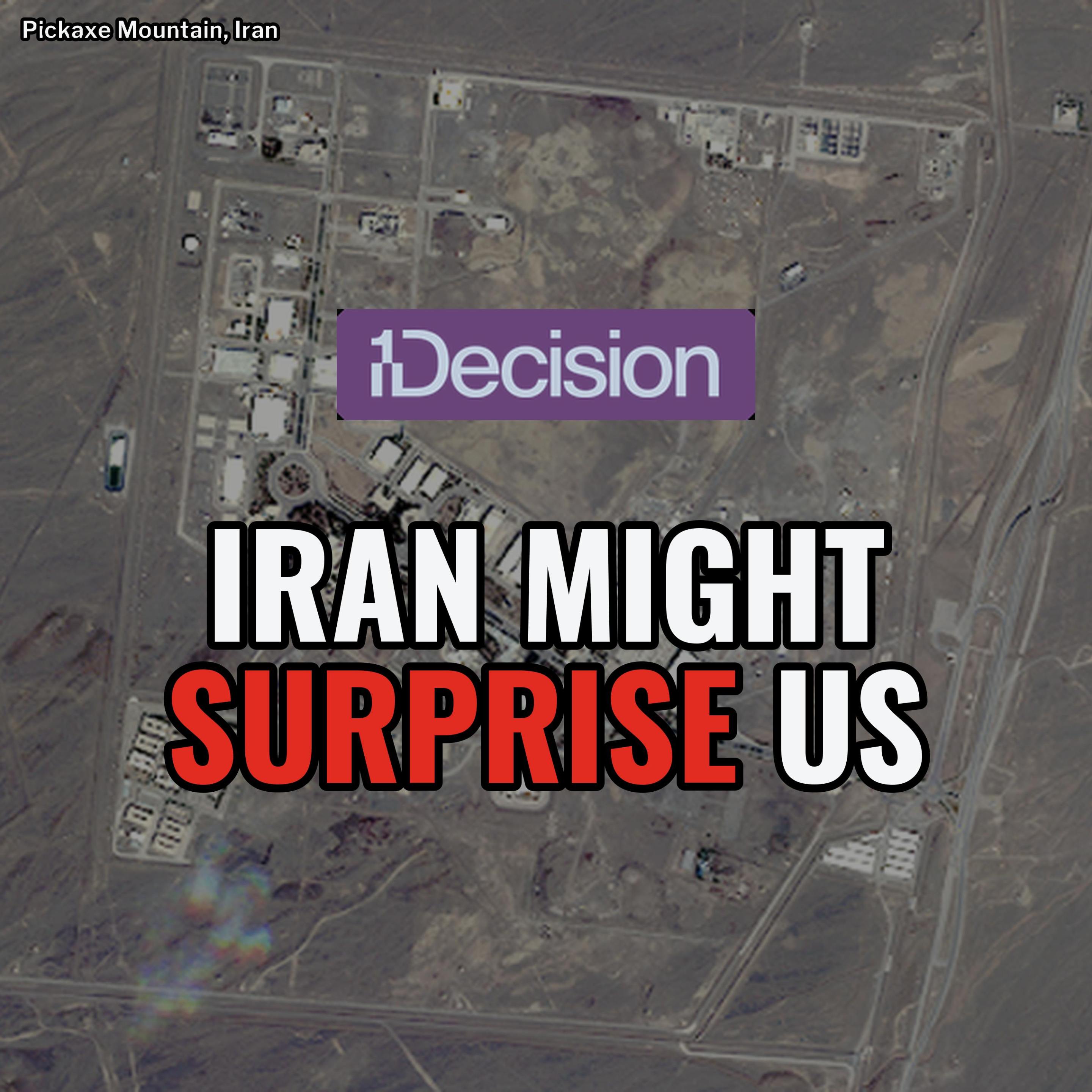
Dearlove: Well, of course, it's dominating because it's so extraordinary. And what's happened — I mean that really very striking that, you know, you could have a flight of, you know, seven B-2 bombers that fly over Iran and attack the main. Although, for those of us who've known about this problem, it wasn't entirely unexpected. But it diverts attention because the tectonic plates in The Middle East are all beginning to shift. You take the last six, eight, ten weeks, look what's happened. It's quite extraordinary. And you have this demonstration of absolutely raw Israeli power, which has proved to be irresistible in a way that I don't think any of Israel's opponents in The Middle East had imagined. So, you know, what now are the political consequences of these huge changes? And the war in Ukraine has been running for three years. We've almost treated it, I wouldn't say as a routine event. It's a dreadful event for the Ukrainians. It isn't routine at all. But you know, it's been on our geopolitical menu for so long as such a big problem. Inevitably, when something big happens, you're gonna look away and not forget about it, but not pay maybe the attention it's due.
Mccann: Israel's planning of what's happened with Iran, it seems to me, has been happening over a really long period of time. This is not something that Benjamin Netanyahu was struck on overnight or in the last couple of months. This is a long term ambition. Some people say it's almost the thing that he can't see around. The issue of Iran is the issue that defines him in his own role. What do you think happens now if there is a ceasefire between these two countries, if there is a new nuclear agreement, what next for Israel?
Dearlove: Well, what next for Israel is probably more of the same with a dip. There is an end to the immediate confrontation, I think. And for example, there is an end in Syria because you have a different type of regime which has been disarmed. Syria no longer is a nodal point of opposition for Israel. You have a fundamental change in Lebanon because instead of Lebanon being hollowed out and ruled by Hezbollah, maybe you're going to have actually a Lebanese government which will have power to implement its decisions, which it didn't do in the past. And, of course, you know, the key to all of this is now what happens in Iran, which is you only got to look at the map. It's a massive country. It's three times bigger than France.
Mccann: Is that right? Yeah. Population of 90,000,000. I think 90. Yeah.
Dearlove: And the key question is, can the theocratic government survive this crisis? Because let's face it, his contribution to the, let's say, rebirth or reconstruction of NATO means that he can have a reasonably positive feeling about achievements. He hasn't pulled the rug. And as the senator just told us, there is a positive aspect now to his attitude towards NATO, and the worst hasn't happened. Okay, there are still problems, but nowhere near things have happened in terms of the dire predictions as to the sort of undermining of NATO, the collapse of NATO. NATO is going in the opposite direction. It's getting much, much stronger. So that's a positive. And I think that since that terrible confrontation in the White House with Zelensky, actually there have been evidence of an improvement in that relationship. So maybe there will be a better outcome. And let's face it, the use of B-2s to attack the Iranian nuclear installations in the way that it was conducted was an extraordinary demonstration of the power and the reach of The United States in defense and security terms, that must have an impact on everyone watching. And you think, my god, you know, no other country in the world could even begin to think of attempting that. Come close to attempting that.
Mccann: I was looking on my phone because I was trying to find a post that Donald Trump had put on Truth Social. He has posted a WhatsApp message from Mark Rutte. So I gather, but I haven't actually seen it yet. Well, he seems to have posted it in full, and it is a message that essentially says, you know, great for you to be heading to the summit, mister president. You have succeeded in bringing everybody together. This is your victory. You are the only American president that could have done this. Is that the right tone, do you think, to be taking with Donald Trump? Because it strikes me that that's quite a, if not patronizing, it's certainly a very deferential tone.
Dearlove: Yeah. It is deferential. And maybe one could do it differently. But given Trump's character, why not? I think we get very caught up in the dramatic — in the sort of drama of the exchanges with Trump. But what's important about dealing with Trump is the essence of the outcome and not really to be fazed by the language, by the swearing, by the rudeness. And, I mean, I do find it confusing myself when one has to actually acknowledge that Trump has achieved the reconstruction of NATO or, you know, in the process by insisting on, you know, this massive increase.
Mccann: Do you think — because this increase is an interesting question. It's a 5% GDP increase in theory. And as you pointed out rightly before when we were talking to the senator, it's not just about the GDP. It's not the numbers. It's how you spend it. But 1.5% of that is going to come from things like building bridges over roads, maybe even Internet connectivity. It could also be border security. Is that really defense?
Dearlove: Well, yes, no is the problem. It's a bit of a fudge, isn't it? It is a bit of a fudge, but it's still even 3.5% is a huge increase. So you know, if the German economy really switches on its power and they spend 3.5%, that's almost transformative for NATO in its own right. And the strengthening of bridges, being able to land planes on motorways, having good satellite communications, I mean, these things actually are highly defense and relevant, proper railheads, the way you can unload tanks and all of that sort of thing. Yes, that is. So it is a fudge. But on the other hand, it's important. And so Trump's achieved that. He's also, in my opinion, reset relations with China or in the process of resetting relations with China. And the other huge problem in The Middle East was the Iranian nuclear program.
Mccann: So give him a peace prize?
Dearlove: Well, I'm not sure I'd go that far yet. But which recent American president? I mean, if you take Obama's foreign policy, I would be highly critical of it personally, in spite of his achievements as a US president domestically. But his foreign policy, a lot of us were very unhappy with. And I'm very unhappy with Trump's style. But when I sit back, I have to say, well, hang on a moment. He really has made a difference in areas which could have very positive and important outcome. We don't know yet, but it could have for international security. And, you know, I've already expressed the view in the podcast that I'm worried about his lack of connecting Ukraine directly to these other problems and treating it separately. And I think that's a rather ill informed and naive approach to international security.
Mccann: We are here for a couple of days. It's the first day today. There is a big dinner tonight with all of the leaders. We are sadly not invited. What will you be doing tonight at NATO? Going out, partying, karaoke? What's your plan?
Dearlove: I'll be getting a good night's sleep in preparation for tomorrow's podcast.
Mccann: Well, it's probably good advice to all of us. So, Richard, great to speak to you. And we will bring you all the latest from day two of the NATO Summit here in The Hague, of course, on the One Decision podcast tomorrow.