Episode Info
- Season12
- Episode3
Hosted by Christina Ruffini and Sir Richard Dearlove
Guest
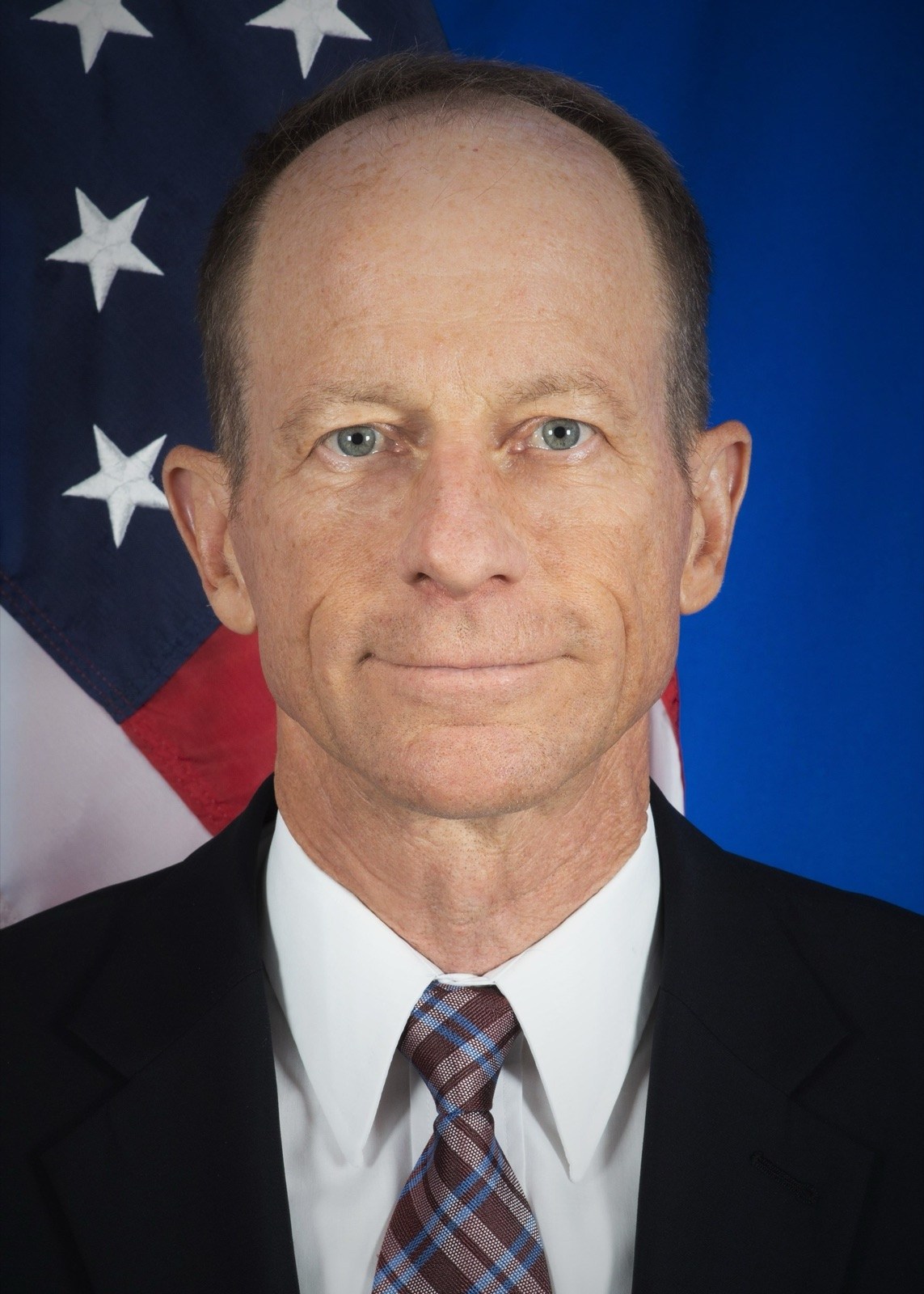
Brig. Gen. David Stilwell
Brig. Gen. David Stilwell is a former American Assistant Secretary of State for East Asian and Pacific Affairs and Air Force veteran of 35 years who is fluent in Chinese and Korean and served as Defense Attaché at the US Embassy in Beijing.
Episode Summary
For our third installment on China at a crossroads, we look at where President Xi Jinping is positioning China in the world order and what his politics means for Chinese expansionism, influence, and aggression in the wider region. Is he likely to make a move on Taiwan? Will the contested areas in the seas around China be a new arena for hostilities? Will the US and China eventually be forced to go head-to-head, or is there too much financial incentive to cooperate? Brig. Gen. David Stilwell was the American Assistant Secretary of State for East Asian and Pacific Affairs and an Air Force veteran of 35 years. A fluent Chinese and Korean speaker, he also served as Defense Attache at the US Embassy in Beijing and has been a close watcher of Chinese politics ever since. He sits down with One Decision for a look at China's place in the world at the beginning of Xi's third term, with our Sir Richard Dearlove, the former head of MI6, providing exclusive analysis on what he thinks the world should do in response.
Listen & Subscribe
- Watch on YouTube
- Listen on Apple Podcasts
- Listen on Spotify
Transcript
INTRODUCTION
Mcfarlane: You're listening to One Decision. I'm your host, Julia McFarlane. Every week, we look at the key decisions and choices made that have international impact and shape our world. For the last three weeks, we've taken a close look at China, now at a crossroads at the start of President Xi Jinping's unprecedented third term in office. A man who began his career in the Chinese Communist Party as an outsider, the son of a traitor, banished from his city. He eventually rose through the ranks to become the most powerful man in China since Chairman Mao. Throughout this three part series, we decided to dedicate one episode to a different aspect of China's current day challenges that have consequences for the international community. First, we looked at President Xi, his backstory, and how it may shape how he responds to some of his current domestic political challenges, opposition to his strict COVID lockdowns and the increasingly domineering politics of his party. Secondly, we looked at China's economy and some of the massive structural problems that are threatening its growth, something the world has relied upon for decades and could prove catastrophic if its bubble were to burst. This week for our third and final installment of our series, we zoom out to the bigger picture, where China sees itself in the world, its geostrategic priorities, and how its key relationships and its adversaries currently stand. We've enlisted the help of Brigadier General David Stilwell, the former assistant secretary of state for East Asian and Pacific affairs. A fluent Chinese and Korean speaker, Stilwell has served as defense attaché at the US embassy in Beijing. My cohost, Sir Richard Dearlove, the former chief of MI6, will also stop by for his thoughts on China and how the international community will need to respond to its inevitable rise. Let's get straight to the discussion, and we began with something that's high on the international agenda, China and its complicated relationship with the Russian Federation. A lot of pundits have suggested recently that China is seeking to distance itself slightly from Moscow due to Putin's calamitous war in Ukraine. Some interesting things, we first of all saw Chinese banks complying with international sanctions on Russia earlier this year. I think two of China's biggest banks had some trouble putting restrictions on financial transactions that were used to purchase Russian commodities. And that was in order to not be found on the wrong side of international sanctions. And there was another interesting thing, a huge Chinese bank card company shut down what was going to be a Russian venture for fear that it would also be caught up in sanctions. All of this, despite the fact that Chinese financial bosses have said publicly that the country does not approve of and will not join sanctions against Russia. And then we then saw some really extraordinary scenes again at that Shanghai Cooperation Organization Summit in Uzbekistan. So many interesting things happened in that one summit, where something clearly happened behind the scenes that compelled Vladimir Putin to outright publicly reference the fact that China had, quote, questions and concerns about the war in Ukraine. China and Russia, they are quite, they're old adversaries who have come together in recent decades, but there's, it's clearly not a perfect union. There's still some differences and even some tensions in some areas. So my question to you is, how is the war in Ukraine complicated where they both stand with each other? And how do you see that playing out the longer this war continues and continues badly for Putin?
INTERVIEW WITH DAVID STILWELL
Stilwell: So first off, it's a marriage of convenience. And the thing I point to on this is the Treaty of Nerchinsk in 1689, a weak Russia ceded a large chunk of Eastern Siberia to the Chinese. Right? The strong Qing dynasty demanded a big chunk of Siberia. And as you know, the Russians, one thing they really fear is the Chinese hordes invading and taking over their territory. Well, then you flip that to the Treaty of Peking from 1860, what the Chinese call the first of the unequal treaties in the beginning of the century of humiliation. And the only two countries or three parties, the only two you ever hear about is the British and the French. The third party was the Russians. And a strong Russia took back from China in 1860 all of those territories that they gave up in 1689, to include Vladivostok. Vladivostok is a Chinese name. It's Haishenwei. It was Chinese territory for a long time, and it gave the PRC and the military access to the Sea of Japan, which it doesn't have anymore after the Treaty of Peking. So let's talk about the fact that the century of humiliation began when its relationship with Russia went south. Then let's talk about the 1969 war on their shared border, the Ussuri River, open tank battles. And let's talk about the fact that they got long shared borders with much of that territory is in dispute. An objective look at the relation between Russia and China says that the two are not natural allies, friends. In fact, they are, you know, in most ways enemies. The Comintern, you know, in the beginning of the communist era supported the Kuomintang. They didn't support the CCP. They thought the KMT was a much better partner for communist thing, which Mao resented greatly over time. 1950, the Korean War. It was Kim Il-sung and Stalin that pushed Mao into supporting a war that they really didn't wanna get involved in, which, of course, is the Resist America, Aid Korea war in Chinese. Right? Like, all these things, if you take a big step back and look at the relationship in total, there is no common ground with the Russians and Chinese. So what we have is a marriage of convenience. Now how that works in China's favor?
Stilwell: In 2014 with the first invasion of Crimea and Ukraine, the PRC abstained from that vote, right, from that motion to criticize or condemn that. Right? The Chinese chose not to vote in favor of their friend, the Russians. This is their normal behavior because what they saw happening in Ukraine and Crimea is exactly what happened to them during the century of humiliation.
Stilwell: What happened 02/24/2022, the PRC then found its voice and decided it would throw in with Russia because they assumed Ukraine was gonna turn out in 2022 the way it turned out 2014, green lighting Taiwan. If the Russians can go in there, right, the Russian military model that they follow can go into Ukraine like they did before and just sort of walk in there and take over, why can't we go into Taiwan? Yeah. There's a 100 miles of water, but we've got that sorted out. That was the thinking, I believe. Well, then they bogged down and now Putin's position as the head of this government is more and more precarious, there is absolutely that, I mean, you wanna talk about appetite suppressant for invasion or an attack on Taiwan? And, I mean, this has, I think, set their plans back by ten years. There's no way they would do this. When you, if that happens to the CCP, the whole adventure is over. And their mindset is what's the cost of waiting versus the cost of acting? The cost of waiting is very low. The cost of acting could be very, very high. At the same time, they still continue even now to win in the economic battles, the information battles, the diplomatic, and all the rest. So in general, their idea of political warfare is working, and they don't need to throw down the military card just yet. And then finally, if you saw, they abstained again in this most recent vote in the UN criticizing the Russian invasion. So they went from supporting in February '22 or whatever it was, March, to now abstaining. And you mentioned the cracks we saw in the Shanghai Cooperation Organization. Those cracks are legit. And, you know, given the history I described, make perfect sense. So here's the way we manage this is we highlight the differences in the two in the information space, in media outlets like this, and we show that there is no real relationship here to speak of. And I'll point to you. If the Russians were concerned about NATO and Ukraine getting closer and that was their excuse to start the war. Imagine how they feel about the Central Asian Republics, the stans, and China getting closer, which is happening. They're driving, you know, economic bargains through there. They're driving roads through there. This is the traditional Russian sphere of influence. One they went to war over in Afghanistan in the eighties to try to preserve, you know, and keep out threats coming from their south. And so here comes the PRC. Their supposed, you know, no limits partner is vomiting all over those concerns with the One Belt One Road. And you have to imagine the Kremlin is greatly annoyed. Last thing, if you put this up, there's a great Economist cover that shows a giant Chinese panda with a little tiny Russian Putin bear sitting in its lap. That message absolutely annoys the heck out of Putin and the Russians, but that's the reality.
Mcfarlane: Yeah. Putin is not one to take any kind of emasculation lightly as it seems. Russia is and has demonstrably been working to destabilize the world order. It sows chaos, it fractures and exploits fault lines in societies across the EU, this country, the UK, the United States, of course, with its troll farms, its misinformation campaigns, its influence ops and meddling in other countries' democracies and national dialogues. It seems to me that China does not seem to do exactly the same sort of thing. They've got a slightly different approach. Yes, they employ agents of influence. There was that mysterious Christine Lee figure who was recently unveiled in this country by MI5 as one such operative. But the Chinese, they seem to work towards shaping, influencing the narrative abroad about China. They want to counteract the work of investigative journalists from the BBC and CNN and others, who do things like reporting on the Uyghur camps and other human rights violations inside China. And they want to promote a positive impression of China abroad. And that seems to me to be essentially the keystone strategy behind the Belt and Road Initiative. So the Chinese seem to be more in favor of preserving the system and changing it from within, whereas the Russians seem to want to tear it all down, in my opinion. Does that mean that these two countries are essentially at odds with each other? And does that mean that their cooperative relationship has its limits and even its expiry dates?
Stilwell: I do think their approaches are different, but I think we agree that the Russian version is more brute force, blunt, and like you say, just destructive, just using social media just for the chaos it could create. But I agree that the Chinese system is there to definitely put forward the Chinese view as superior, the Chinese, you know, socialism with Chinese characteristics is a better way and all that. So I, yeah, I agree with you. They approach it differently, but the effect is the same. And now I'm not a cyber guy. I work next to Juan. I could ask him, you know, are the techniques that much different? Because troll farms are troll farms. Right? You just get in there and your job is to create mayhem and anger and to force two sides of an argument to diverge. So there is never any way of solving that argument. And that's what we've seen. By the way, my solution to that, if I was in charge, is I would mandate critical thinking education in K through 12 education to make sure our kids, when they're online, realize that you have to be skeptical about everything. Never take anything at face value, and then forget what your criteria is for actually believing something. And it can't be a single report because you can believe nothing you read anymore, which is just unbelievably sad that, you know, the trust has gone away in just about everything. But this is how democracies are gonna have to defend themselves is by, at one, helping, you know, the Homeland Security here in the US, which has a cyber defense capability. We have the National Security Agency, Cyber Command, all those things. I mean, we can screen the big stuff before it gets into our networks. But then there is this really pernicious recent trend of Twitter, Facebook, and others determining what's real and what isn't, and that is extremely disturbing. I hope we get away from that and let, because the only answer is you're gonna have to let individuals decide for themselves. And they can only do that if they do it with the tools provided in the education system, which is, again, how to divine what is real. And if it makes you react emotionally, you can pretty much guarantee it's not right. It was designed to generate an emotional, not a cognitive reaction. There are those who call this whole concept cognitive security. I really like that framing, because we think of national security, and that's, you know, what I used to do with military hardware and things blowing up. We have to defend our own cognitive process as well. We have to be careful what we let in. But that's something I think the government is not well suited to and private industry definitely not suited to. It's gonna have to devolve to the individual. Last thing, though, when the first One Belt One Road conference happened, and I think that was around 2013 or so, this was Xi Jinping's signature personal event, and he described it as One Belt One Road is China's gift to the world. And so the first conference, everybody's coming for this free Chinese money. We're gonna build infrastructure. Well, when they did the second one, a very low level effort on the part of the US government and others questioned the benefit of One Belt One Road. This is when the bad loans started, you know, the narrative on that started. And so if you look at the message from the second One Belt One Road conference was, hey, One Belt One Road isn't so bad. I mean, that's victory in my mind, is we put them on their heels and made them explain that, you know, all this bad stuff you're seeing really isn't that bad. Well, I think since then, that's been almost ten years, we've actually advanced that narrative as well where people are immediately suspect of anything that comes out that's clearly from the Chinese government. But the problem is they disguise themselves quite well. They use bots. They use trolls. They use any number of things. And that's something we have to figure out how to deal with. So, yes, they wanna improve their reputation abroad, and that effort is clearly failing, and it definitely should. We should hear more from the African countries who are just swamped in debt, and they got nothing out of the deal. Pakistan was one of the first examples of they're going to the IMF for relief. Right? What a bad idea. What you're getting is you're taking IMF money, you're passing it through Pakistan, it's going right into the One Belt One Road conference. And so smartly, the IMF said, okay, we will do this thing, but you have to open up the books and show us what this agreement actually was. What is the One Belt One Road or in this case, China Pakistan Economic Corridor agreement? And the PRC wouldn't allow that. So guess what? No IMF money. This is how we have to go about this. You have to expose these bad loans and all the badness that went in there, and the PRC won't buy that, and they're gonna have to figure out some way to square up these loans.
Mcfarlane: I think that's absolutely fascinating. And I did wanna ask you about the Belt and Road because, you know, part of that and part of China lending out this cheap money to a lot of developing and emerging nations around the world is kind of backfiring against China. I read recently that nearly 60% of China's overseas loans are now held by countries considered to be in financial distress. China has reportedly had to start working with other creditors in order to resolve the current quagmires of debt that it's now dealing with. What's your, do you think that Belt and Road is now sort of blowing up in Xi's face? What do you think the significance of that is?
Stilwell: It's definitely done. I mean, even the PRC, One Belt One Road activity. Belt Road Initiative is a beautiful piece of information warfare, by the way, because that sounds good to the Western ear. One Belt One Road, very, sounds much like China. One Belt One Road. This is all about us. So that, just as an aside, that gives you an idea of how well they manage the message sometimes. But let's go back to COVID. Because of COVID, we, the US and others, the Paris Club saw that the ability to service debt, and a lot of it was One Belt One Road debt, was really going to suffer because all these economies were shut down. So if you remember, there was this debt service suspension initiative that came out of the Paris Club that was going to actually join forces with China and make China at least suspend the interest payments and all this, if not walk away from these loans altogether. Well, that would be devastating. I mean, trillions of dollars of Chinese loans are out there right now to build these in many ways, you know, unsustainable and, you know, very poorly built One Belt One Road projects. And so we had them cornered actually. This was actually gonna work out except we couldn't get this thing across the finish line. I raise that because it's still on the table. We the world, we the Paris Club could still drive the debt service suspension initiative through, and the PRC would, I think, have to play ball. Now that means they're gonna walk away from all of that debt. They're gonna eat that in addition to the massive debt bomb that's about to go off inside the PRC. Imagine if you are one of the 600,000,000 Chinese citizens who still lives well below the poverty line. They brag about bringing 800,000,000 out of poverty. Well, that means there's still 600,000,000, twice the American population, still living in poverty in China. And we have this One Belt One Road project, which in Soviet terms was described as adventurism and harebrained schemes as they criticized Khrushchev. It is a good model, an example of adventurism and harebrained schemes. You've taken all that money and investment that should have gone into the Chinese domestic land to bring 100% of Chinese people out of poverty, the same way that South Korea and Taiwan and all these other Asian tigers did using free market and democracy, and yet they failed to do that. Instead, they're pushing all this money out of China, and those people are gonna live without electricity, without phone service, all that, and they will continue to do that. If I was one of those 600,000,000 people, I'd be a little upset. In fact, I would probably say something about that. So it's having an international impact on China's reputation, but domestically, it's having an even greater impact. And the more we can talk about this, the more that information will get into China. I know 600,000,000 people ask hard questions like, why would you do this? This is Xi Jinping's signature program, and look what it's done for his people.
Mcfarlane: It's actually made them poor. It's a really, really good point. I wanna ask you about the recently passed CHIPS Act, which President Biden signed into law earlier this summer. It got broad support both sides of Congress, and it involves a major arena for West China competitiveness, that is semiconductors. I wanna ask you about the technological competition sphere with China, and there is growing competition over resources such as these semiconductors, which govern our lives in so many ways. If not competition of influence, if not two rising powers going head to head and struggling to win over global influence, they're certainly competing against resources. What do you think the future is gonna bring, and do you think that competition is going to come to a head?
Stilwell: Yes, it will. It definitely has already. Keith Krach was the undersecretary of state for economics when I was at State Department. A fantastic guy, big brain, understands both strategy and marketing. And CHIPS is part of this marketing activity to get TSMC, Taiwan Semiconductor Manufacturing Corporation, and others to move their foundries to the US or anywhere but China. Remember, they were gonna actually build this new five nanometer activity in China, and this we cannot abide. And so that was where the CHIPS Act initially sought to help TSMC offset the cost of manufacturing in the US initially, not forever. And then, again, now we have an attractive area in Arizona where now Samsung, Intel, and others have sought to also be part of this larger new Silicon Valley idea. So absolutely, CHIPS is a great thing. It's unfortunate in our current democratic process that CHIPS then got lots of other pork and other interests added to it, making passage difficult. I mean, I wish the Congress could get back to a point where we pass an act on chips that deals with chips only and not, you know, partisan issues, which was why CHIPS took so long to get through. I mean, if we're serious about national defense, we're gonna have to get serious about the way we legislate and fund these things. But in the end, it got through. In the end, it will do what it was designed to do, and it will help reassure a lot of this activity that globalization and these other ideas managed to hurt us. Last thing is the idea of innovation in the PRC is dangerous. At one point, we have special economic zones. The one time the PRC attempted a special information zone in Chongqing where they were actually gonna let the people have full access to the Internet, and that quickly got shut down. The Chinese people are infinitely capable of competing with the US, right, in terms of innovation. These are brilliant people. These people who brought you May 35th when the censors in China said you couldn't say June 4, Tiananmen, anymore. Right? They're Winnie the Pooh. I mean, it's amazing watching how these guys dodge the censors. But innovation and innovative ideas and creative thinking are all a threat to the Chinese Communist Party, and there are constant examples of people who stepped, Jack Ma, who stepped a little bit outside the boundaries and got slapped for it. So what is the Chinese innovation strategy? The PRC innovation strategy is theft, is intellectual property theft. That's the basis of it, to get access to what others are doing and then claim it for their own. Well, given where the world has gone today and the narrative on dealing with PRC, that capability has gone away, which is a good thing. They're gonna have to innovate on their own. They're finding that difficult, as you can imagine. And we, the West, are gonna rightfully retain and regain our position in the world as the engines of innovation, creativity, and development. So these things are all working. They're slow, but these processes are working in the right direction.
Mcfarlane: Right. You didn't quite answer my question, which is given that a lot of these resources and particularly some of the precious metals on earth that these semiconductors need, they are finite resources. Is the fact that these resources, which are finite, are in demand by both the Chinese and the West, is that an area where we could potentially see conflict?
Stilwell: Yeah, I think so. But if we're smart, the CHIPS Act is a good example of the government incentivizing industry to do things that are otherwise not fiscally viable. What the PRC did is they used their SOEs and their massive economic clout to corner the market on rare earth metals, on chip development, on all these things. I mean, how about pharmaceuticals? We discovered this during the pandemic that they had cornered the market on the basis of pretty much all things like insulin and the rest. Right? This was a deliberate effort. Free market economies don't allow this, but we, the US, are gonna have to figure out a way that we get the government more involved in getting these things back. Vietnam, for instance, is the second largest repository for rare earth metals on earth. It's this area in Northeast Vietnam. We can work with Vietnam, but then there's a processing cost, right, because it's very polluting. But we can do this if we get enough support, and it's gonna take government support because industry is not gonna put that money up, its own capital up, for a recovery in ten years. They need to make money sooner than that. So the government's gonna have to get involved.
Mcfarlane: Now we talk about confrontation in the East China Seas and in the Pacific and all sorts of other areas where China is contesting US influence. Do you think the bigger area of concern is things like resources? Or do you think that the areas of competing strategic interest is perhaps, while it may have gotten a lot of attention over recent years, it's actually more the simple things. Both China and the US want a lot of the same things, and we don't necessarily have to be distracted by the fact that China's contesting areas where the US wants influence.
Stilwell: I think the geopolitical aspect is the most dangerous because all these others, you know, to use the word fungible, there are other options. It's not this dichotomy where either China owns all the rare earth minerals or the US controls them. There's many options in between. So as far as access to things, minerals production, those things are all manageable. I think they're more manageable over time than these geopolitical issues. And the one thing working in our favor on this, and one thing we have to get out of the habit of is making these things a purely bilateral US versus China event. And the Japanese have done a great job of coming up and stepping up and saying that any activity that would, you know, affect Taiwan would affect the Senkakus, which would affect our direct interests, which would then bring in a US response as well. We have said multiple times the Senkakus are part of our Article five commitment with the Japanese. And so no matter what happens with Taiwan, our Japanese partners are in, which means we're in. This is an advantage we have the Chinese don't have. We have allies and partners. And we've had the Australians come in and say it would be inconceivable that they wouldn't be involved in defending, you know, a world order that does not allow the PRC to take over Taiwan by force. The Philippines have said some things like that, and others have, and then Europe has been very supportive in this as well. We have allies and partners. They don't. And anytime we've approached one of these problems from a multilateral posture, the PRC's backed down. In my experience, they've always backed down when confronted by more than one. Bilaterally, they can handle just about anybody. Multilaterally, they realize they cannot. They're gonna have to seek peace,
Mcfarlane: delay a little bit longer, which is really low cost or no cost. And they're smart on this. They're calculating. They get it. That was Brigadier General David Stilwell there. Now let's go to my cohost, Sir Richard Dearlove, for his thoughts on China at a crossroads.
ANALYSIS WITH SIR RICHARD DEARLOVE
Mcfarlane: I hope you liked the conversation with David Stilwell. I thought he had some really, really interesting insights about China. I wanna start off with just asking you, you know, what you thought about the part of the interview where we were talking about the relationship with China and Russia, and how it's gone up and down a little bit this year, starting from that period just ahead of the Winter Olympics, where they had that press conference, and they had this sort of friendship without limits announcement. And then you fast forward to the recent Shanghai Cooperation Organization in Uzbekistan. And in the whole public view of the world, it seemed that the relationship with China was not exactly on cloud nine. And he referenced that China had communicated concerns about the war in Ukraine, and there was also a similar situation with India. But China Russia relations are interesting and they're complicated and I thought it was really interesting that David Stilwell mentioned, and of course you'll appreciate this as a student of history yourself. He talked about the Treaty of Nerchinsk which I hadn't heard of. The 1689, where Russia ceded quite a large chunk of Siberia to the Chinese. And that actually, that there is some Russian anxiety about its borders between Siberia and China. And, you know, and of course Vladivostok very famously, it was Chinese territory for a long time, and that was another really interesting sort of historical angle to the relationship. I mean, alliance is a funny word to describe the Chinese Russian relationship. But he said that even the Russians, they have concerns about NATO and Ukraine getting closer together, but they also have concerns about the Central Asian republics getting close to China. And Central Asia, that's the traditional Russian sphere of influence. So what did you make of that part of the conversation?
Dearlove: Well, I think he's quite right to highlight the sensitivity, but the sensitivity judged in historical terms of the relationship between Russia and China. I mean it's been problematic, looked at over a long period of time. I think isn't it the longest land border or one of the longest land borders in the world? And you know bits of it as recently as the 1960s, have been fought over. And there's huge suspicion on both sides as to what the intentions of the other side is. When you get into the local areas, I mean, Colin Thubron wrote his latest book. He travels along that river, along the frontier, and he's written a really extraordinary book about it, which I recommend, because it gives you a sort of local insight into what the conditions are like on the ground. I mean China and Russia are, I think I would describe them as at the moment allies of convenience. This is not historically a close relationship. It's a relationship which has blown sort of warm and cold at various times. And very convenient for the Russians at the moment, very convenient indeed to have the Chinese there sort of on their side. But even then now I think Xi is showing signs of caution about getting too close to the Russians. And the mere fact that he took such a public and high profile role at the G20 meeting, I think was indicative of the fact that you know other relationships globally are as important to China, if not much more important to China like the United States, than the relationship with Russia. So I would have thought that Putin, you know, must be feeling, we were always talking about the symbolism of foreign policy but I think he must be feeling pretty uncertain of Xi, having seen the way that Xi and Biden glad-handed each other, and avoided, you know, talking about controversial topics. Oh, I'm sure maybe in private things came up. But I, you know, I don't see this at all as a close relationship. I think Stilwell's comments about it were historically very well based and very accurate.
Mcfarlane: It was interesting that the Kyiv bombardment by the Russians came, you know, almost at the same time as that Biden Xi meeting. I mean, do you think, are we reading too much into how smiley and how sort of that cooperative tone that they both struck in that meeting in Indonesia? Do you think he's starting to get buyer's remorse when it comes to Putin? Or do you think he perhaps realizes, you know, particularly as his economy is really starting to run into trouble, he realizes that he actually needs to work with the Americans rather than working against them?
Dearlove: Well, if you put your finger on it economically, China's relationship with the United States is far more important to China in the medium term than China's relationship with Russia. There's absolutely no question about that at all, and maybe buyer's remorse is quite a good way to express it. I'm sure that, I mean, there is this big question, did Putin at that bilateral meeting with Xi tell Xi that he was going to invade Ukraine. I think what he probably said to Xi was, look, we're going to go and fix the Ukrainian government, don't you worry about that because it'll take us a week to ten days. And by the time the international community woke up to what's happened, it'll all be over. That's probably what he said to Xi. He didn't say to Xi, we're going to be involved in a military conflict which will go disastrously wrong and you know the Russian military will be shown to be inefficient and unable to fight a sophisticated motivated enemy. I'm sure that Xi probably was thoroughly misled, is probably deeply concerned about what's going on, and is now anxious to distance himself. He's not going to abandon Russia, but he's not going to be seen to be too close to them either.
Mcfarlane: The conversation with David Stilwell, focusing on China's place in both regional geopolitics and wider geopolitics, I think for many years has sort of been encapsulated by the situation in the East China Sea. The Senkaku, which of course the Japanese and Taiwan are concerned about. And we have seen the US position change or sort of maybe flip flop between maintaining strategic ambiguity vis-à-vis Taiwan. But it's something that I think a lot of America's allies in the region are becoming increasingly concerned about. I mean, we've just touched on how the Chinese are sort of realizing that the relationship with the US, brass tacks, is really quite important. How do you think that is sort of affecting America's security allies in East and Southeast Asia? And, you know, obviously Taiwan was the big thing that everyone was watching out for in Xi's speech at the recent twentieth party congress. Would he make any kind of hints that the Chinese were thinking about doing something about Taiwan and, you know, there has been the comparison with how badly Russia's invasion of Ukraine has been. Has that maybe been something that has given the Chinese pause for thought? Given that Xi is facing a lot of domestic crises, a lot of economic crises, do you think Taiwan and the Senkaku and some of the other sort of areas disputed in East Asia, do you think those are geostrategic issues and concerns that we can perhaps shelve? Or do you think the issue over Taiwan is now more present than ever, given how Beijing essentially moved into Hong Kong?
Dearlove: Yeah. Well, my friends who are Chinese speakers and read carefully these articles that come out of so-called Chinese think tanks say to me that there are signs that China thinks, or there's a view in China that Xi overplayed his hand in terms of sort of aggressive foreign policy moves. Okay, China might not see them like that, particularly Hong Kong because they were regarded as a domestic issue. But I think that one maybe is beginning to see the evidence of China perhaps trying to, I wouldn't say de-escalate, but step back slightly from a really aggressive foreign policy. I thought one of the interesting things that Stilwell said is that China's patience on international relations issues is a low cost policy, which doesn't sort of threaten to the extent that these aggressive moves have done in the recent past. So I think if I was asked to make a judgment, I would say that there are signs that China is being a bit more careful. I mean, bearing in mind that China's aggressive stance has made the United States totally rejig its policy towards China, which is much, much more hardline and more realistic than it's been in living memory, frankly. And similarly, you know, you've got Japan changing its stance. I mean, Japan is a hugely significant player. And given Japan's sophistication, industrial wealth, I mean, Japan is now building up its armed forces. You've got the AUKUS agreement, you've got the role of India. I mean, I think China is looking at its place in the world. And I think Xi is probably thinking, right, if there is going to be a new international sort of security system, it's obviously going to be very much a balance between Chinese and American regional interests. And I think the cost to China now of invading Taiwan would be so high and so detrimental that my prediction is, I wouldn't say it's gone off the agenda, but it's gone down the agenda quite significantly. And the only thing I think which would change that is if Xi domestically, and I've said this to you before, gets into very, very deep water economically. So if the Chinese economy really is in trouble, and they can't get out of trouble, then I think we might see, you know, a sort of typical reaction to that is to be more aggressive in foreign policy issues to distract attention from what's going on domestically.
Mcfarlane: You plucked the words out of my mouth. That was gonna be my next question for you. I mean, Xi is obviously extremely careful, and he has made careful choices with his strategic interests. And, you know, there was that really interesting security agreement that the Chinese signed this year with the Solomon Islands that panicked a lot of people in Asia and in the Pacific. We spoke to the former president of Kiribati earlier this year who hinted that the Kiribatis might do something similar to the Solomon Islands. I mean, the Japanese, they've recently signed a new declaration on security cooperation with the Australians, because they're clearly feeling concerned about what the Chinese are doing. You're totally right to point out that Xi has these domestic issues, and you know, straight out of the dictator's playbook, is the move to externalize the threat, you know, to distract. And yet, going to war or starting escalation or, you know, getting involved, anything like that, is a costly venture. I suppose it's hard to predict what Xi is likely to do. I mean, moving into Hong Kong so aggressively, although a lot of that was done by Chinese influence via the Hong Kong authorities, but how they handled Hong Kong paid off. And, you know, one might argue that if Ukraine perhaps didn't happen, that maybe Taiwan would be more of an attractive bull's eye for them to do something similar. Now, of course, Taiwan is totally different. It's an island. It's physically difficult for the Chinese to get to.
Dearlove: Well, I think you know my answer to that is if the Chinese economy has got significant problems, the last thing that Xi will want to do is to alienate, you know, the global community in terms of, you know, China's position as a trading partner. I mean, I think at the moment, in a way, we're slightly distracted by the Taiwan issue because of Ukraine. I think in terms of Taiwan, more of the same is my prediction. And that means, you know, the sort of political pressure that they exercise without, you know, direct intervention. And that will escalate.
Mcfarlane: As we've spoken on this podcast this year, they don't have to physically take Taiwan in order to reassert dominance and control over the island territory. And there are a number of ways that Beijing could do so, if they wanted to, and certain moves that would make it very difficult for Taiwan's allies to do much about, given asymmetric retaliation? And how does the US respond to economic pressures on Taiwan, for example, as opposed to physical provocations?
Dearlove: Stilwell made the point, and I made the point I think in the previous podcast we did, that the Chinese Communist Party's legitimacy is based on its ability to make the Chinese population better off. If they now begin to behave in such a manner that they, as it were, add to their economic problems by increasing isolation globally. I think we're at a very interesting phase, because you could say, after the twentieth Party Congress, you can see signs of China beginning to sort of reside on itself and begin to close its economy off to the West. Now you see Xi at the G20 behaving in a very different fashion. I think in Chinese minds, they have some very, very difficult choices to make. But ultimately, I think the key choice that the Chinese leadership will face is that China's continued economic development will be the key to, as it were, the Communist Party remaining the dominant political entity in China. And that means China still having, you know, access to Western economies or developing economies. And let's see how this stance that Xi's taken at the G20 develops over the coming months. I think what we're seeing is the Chinese dilemma about China's future and their really deep concerns about what's happened or is happening to the economy, which may be only a temporary blip, but it looks quite serious.
Mcfarlane: That's it for this episode of One Decision and our special series looking at China at a crossroads. If you missed the earlier two looking at China's domestic politics and the current economic challenges, check them out on Apple Podcasts, Spotify, or wherever you find your podcasts. From me and the team, thank you for joining us, and see you next time.