Episode Info
- Season27
- Episode3
Hosted by Christina Ruffini and Sir Richard Dearlove
Guest
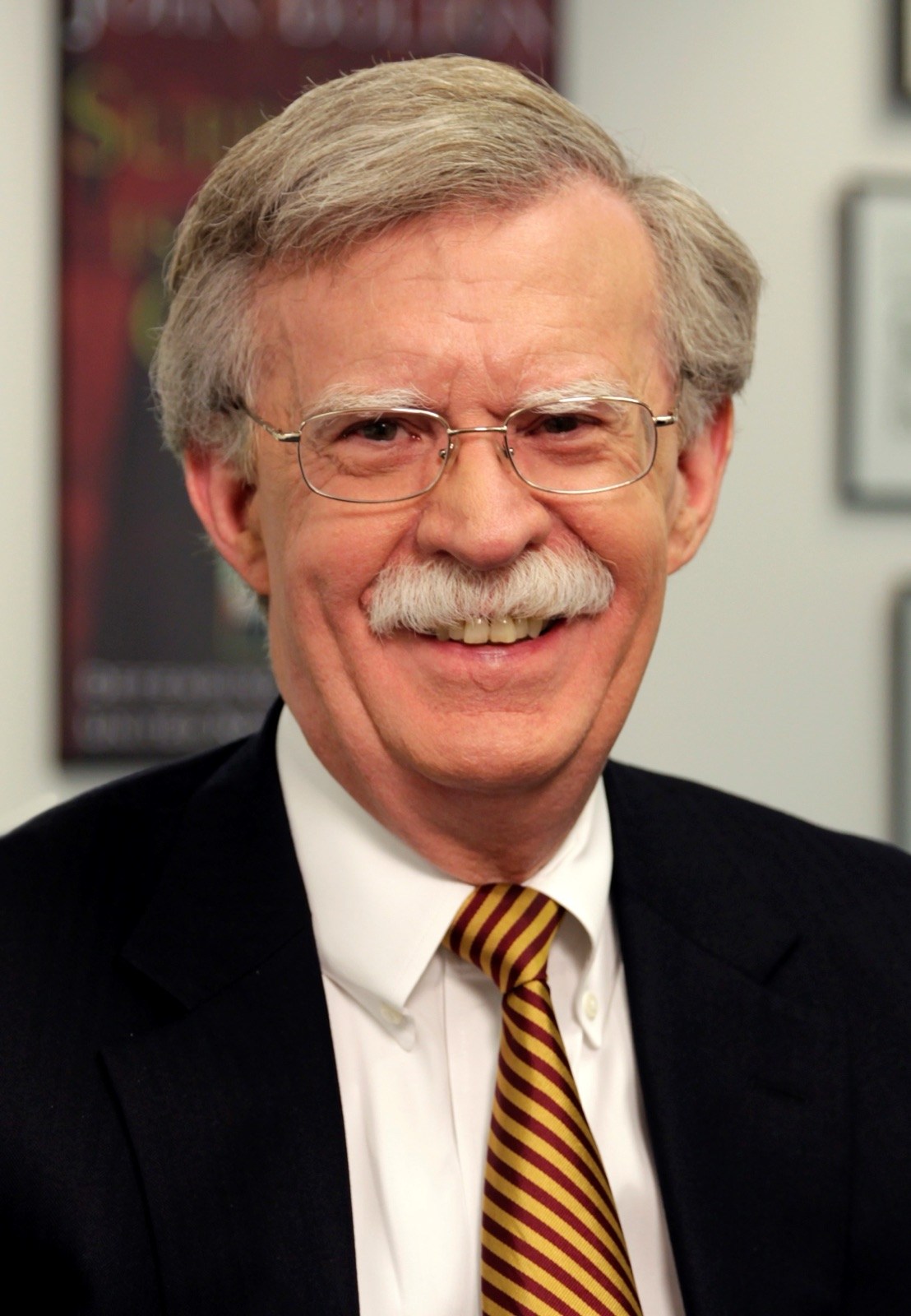
Ambassador John Bolton
Ambassador John Bolton is a former White House national security adviser discussing the conflict in the Middle East and the status of the cease-fire deal.
Episode Summary
Former White House national security adviser Ambassador John Bolton sits down with One Decision's Christina Ruffini and former MI6 Chief Sir Richard Dearlove to discuss the conflict in the Middle East and the current status of the elusive cease-fire deal. Ambassador Bolton also discusses the recent Ukrainian incursion and notes that it represents a significant win for the country. The former Trump national security adviser also looks at how efforts may be mounted to challenge the U.S. election results should Harris come up on top. Plus, the group shares the worst meal that they have ever been served on a diplomatic trip.
Listen & Subscribe
- Watch on YouTube
- Listen on Apple Podcasts
- Listen on Spotify
Transcript
COLD OPEN
Bolton: If Trump wins in November, I think American aid to Ukraine is very much in question. And I think the Ukrainians look at our calendar and say, this may be the moment to take the chance, the risk of this operation.
INTRODUCTION
Raffini: That was Ambassador John Bolton discussing possible geopolitical consequences of a second Trump term. It's one of the many topics we talked to him about. We discussed Iran, Russia, as well as the worst meal he was ever served as a diplomat. You're listening to One Decision, the podcast that looks at the choices that shape our lives. I'm your host, correspondent Christina Raffini, and I'm also here with former MI6 chief Sir Richard Dearlove. And stick around for after the conversation where Sir Richard and I dig into some of the issues and also talk a bit more about the upcoming election. Ambassador Bolton, thank you so much for joining us. I know we're a little short on time today, but we've got obviously a ton to talk about because it is never, never a dull day in this current news cycle. I think we want to start with Iran. There's some reports out today and yesterday saying it's looking now like Tehran might hold back on its retaliatory strike against Israel for the assassination within its borders. What's your take on that? Do you think that's accurate? And why do you think we haven't seen a strike from them yet?
INTERVIEW
Bolton: Well, I think it's actually advantageous to Iran in this moment to have an excuse not to make a decision exactly how to respond, that this ceasefire negotiation, which I ultimately don't think is gonna go anywhere, gives them time to try and solve a very difficult problem, which I would frame this way. The assassination of Ismail Haniyeh by the Israelis was a humiliation for Iran, a real blow to their credibility. I mean, here's a senior leader of one of their terrorist proxies killed in Tehran, their capital, in a secure compound by a bomb apparently planted two months before he was killed. And that is a signal by Israel, which hasn't taken responsibility, but which everybody thinks is responsible. That's a sign by Israel that they can get anybody in Iran they want, up to and including the supreme leader. So in order to restore credibility and their capacity to constrain Israel, I think Iran has to conclude this time that they need a very strong blow against Israel. The attack in April with the 320 drones and missiles for a variety of reasons didn't cause much damage.
Raffini: But do you think that was strategic? I mean, it struck me as kind of a formality. They had to respond, but they didn't quite wanna tip the scales with that attack in April. Was that a serious attack, or was that a show?
Bolton: Well, there are a lot of different opinions on that. There's reporting in the Wall Street Journal and CBS at the time that of the 120 ballistic missiles that Iran fired, half never made it close enough to Israel to get shot down. They either blew up on the launch pad or crashed before getting there. Now if that's true, that means Israel is very lucky. If there had been 120 ballistic missiles, not just 60 in the air over Israel, the damage would have been different. But in any event, whether it was staged or it just failed, the April attack didn't accomplish much. So this time, I think the pressure is on Iran to really take a strong vote. On the other hand, they have to be very worried that in the current circumstances, Netanyahu and the Israelis faced with a second attack might be resistant to American pressure not to respond vigorously themselves. And they would have to worry that this time, Netanyahu might finally say, I'm going after the nuclear program or I'm going after the oil terminals on the Persian Gulf, some very, very serious targets. So Iran has a real dilemma, I think, on its hands. And getting a little bit more time to try and figure out what to do, I think, helps them out.
Dearlove: Yeah, I agree with your analysis, John. But do we really believe that this was a bomb planted two months in advance? I mean, given the complexity of organizing that as an operation, the mind boggles. It seems to be much more likely it was a strike, but I don't know. I mean, I read that and I just, a professional with my background, to do that is incredible, absolutely incredible.
Bolton: It's a great story, and you know people think the Mossad is ten feet tall, and if they think they're ten feet tall, they might as well be. Yeah, they're not.
Dearlove: But, you know, they have all the skills and faults of humankind.
Raffini: Back to what you were saying about Netanyahu not possibly being able to be restrained by The US again if there's another Iran strike. I wonder, you know, does he really have a reason not to do what he's kind of always wanted to do and go after those nuclear sites? Because if you think about it, you know, the relationship with The US is strained. You know, he's kind of losing allies. It doesn't seem like he's going to restrain necessarily, is going to benefit him anymore. Is that the calculation you think he's working on, that I might as well do what I want because at this point, you know, he might be going it alone?
Bolton: Well, it's a factor. That's for sure. And, you know, we tend to overemphasize this in The States, but I think our election in November is very much on his mind. Netanyahu hopes that if Trump wins, he'll have somebody more willing to allow Israel to take stronger action. Biden, by definition, only has a few months left, but we've seen in Kamala Harris, I think, a likely more pro Palestinian, less pro Israeli position than the Biden administration. So if he takes strong steps in the next few months and Harris is elected president, he has to worry about the start of a new relationship with a new American president. So I think he's got to keep that in mind. But I think on balance, given that we're coming up, hard to believe we're coming up close to a year since the Hamas attack on October 7, that at some point, Netanyahu is going to take the risk because of this existential threat that the Iran nuclear program poses for Israel.
Dearlove: Why does Blinken keep saying, John, that they're close to some deal? Because it seems to me, in terms of the evidence, that the gap is as big as ever, that there's really no significant progress, and that Hamas are still making completely unreasonable demands around the circumstances for a ceasefire. And yet, you know, the administration's sort of claiming that one is close. It seems to me so misleading.
Bolton: Yes. I think that's right. I think it's part of their information warfare really within The United States. They've wanted to get The Middle East and Ukraine off the front pages of American newspapers because the ongoing wars there show that the world is not a terribly safe and secure place. And that interferes with the campaign against somebody like Trump. But, you know, events in the rest of the world proceed no matter what our campaign dynamics are. But I think this latest effort when they say, well, The US, Egypt and Qatar put up a bridging proposal, Israel's agreed. Now we just get Hamas to agree. Blinken said in his visit to Cairo that once the bridging proposal is agreed to, then, you know, experts have to work out how to operationalize it, which is diplomats saying, well, we found a form of words that work and now some bunch of people in overalls have to get their hands dirty and actually make it work. There's no deal here as far as I can see. They hope to have a deal, but there's no deal at the moment.
Raffini: Is there a deal to be had? Is this a solvable problem? I mean, it's been decades. It's only gotten worse. I mean, I've covered this a lot. I've talked to the Qataris. I've talked to the Egyptians. I've talked to The US. And it's like talking to people with three completely different sets of facts half the time. How does this happen? Is there a conclusion to come to in this conflict?
Bolton: Well, I think there might be some kind of temporary halt at some point, but that's not really what Hamas wants out of this. They want a permanent end of the war, they want Israel out of the Gaza Strip, which I don't see happening. I think the problem for The US in particular in the Biden administration is it refuses to see the big strategic picture in the region. I really do believe that all of this is part of the Iranian ring of fire strategy against Israel. And by the way, a strategy that would also work against the Gulf Arabs at a time Iran might think appropriate. I don't think it's going terribly well for Iran, but I think it is part of a larger picture. And quote unquote, solving the Gaza problem doesn't solve the bigger problem. And it just means that we're postponing or redirecting the hostilities. And until you see, as Al Haig used to say, go to the source, the source here is Iran. It's not just Hamas.
Dearlove: I also agree with you on that. But what absolutely surprises me in terms of the continuing coverage of Gaza is there's just no discussion of Hamas's use of the civilian population as a constant shield, and I find that very striking. It's not really covered in The States. It's not covered here in Europe, but it's the reason why this war is so ghastly.
Bolton: Exactly. I mean, it is the war crime here is Hamas spending billions of dollars for an underground tunnel network that has defied, I certainly had no clue. Was as big, as extensive, as sophisticated as it is. They've taken that money instead of using it for economic development for the people of Gaza. They've built an underground fortress and they're using the civilians in Gaza as human shields. There are a lot of rumors that Hezbollah has built a similar kind of network in Lebanon. I don't know that there's evidence for that yet, but that would be a further complication for Israel. And until people see and really understand what the nature of these terrorist groups is and what they're prepared to do, what Iran is prepared to provide to them in terms of support, intelligence and direction, really, we're picking at aspects of the problem. We're not trying to solve the whole problem.
Raffini: All right. Well, to defend my profession slightly here, I think one of the problems is, frankly, lack of access. I mean, if you want people to have a full picture of what Hamas is doing on the ground, then let journalists go see it because right now, we are relying only on Palestinian fixers, Palestinian friends and colleagues who, I think many of them have done a damn good job, but it's also hard to stay objective when, you know, your house has been flattened and you've lost four grandchildren. The other thing, as I would ask you guys, is this is accurate. They are using civilian hospitals, schools, you know, as terrorist strongholds. However, if they were doing that in DC, right, if underneath my apartment building, you know, there's a terrorist organization, it would not be an acceptable solution to come in and flatten the apartment building with everyone in it, come what may, to get rid of the threat. So why is that an acceptable approach in Gaza?
Bolton: Well, I don't think that's what the Israelis have been doing. You know, we have urban warfare experts at West Point who have looked into the combat in Gaza since October 7, who have said that the Israeli efforts from giving advance notice to moving people out to all the variety of things they've done probably exceeds what The US did in Afghanistan and Iraq when we engaged in urban combat in a number of locations. It's a cruel calculus. And that's why I view Hamas as particularly barbaric. Because if you allow the use of human shields, you're giving the terrorists a veto over Israel's right of self defense. And that can't be the right answer. It's not a good answer when civilians are put in the middle of anything. But this is their conscious strategy. Five hundred years of the development of the law of war in the West is separate the civilians from combat. That's where it's imperfect. I acknowledge it, but that was the theory. The theory of Hamas is put civilians right in the center of the conflict, right between us and the Israeli guns. And the victims are the civilians. The cause of their victimization is Hamas.
Dearlove: Yeah. I've just written a piece and said exactly the same thing as you're saying, John, about mixing the civilian population with the military conflict, and I certainly find that analysis convincing.
Raffini: What do you do about the propaganda coup that comes after, though? Because at some point, it's almost feeding into the Hamas strategy, right? Because they do the thing, you know, Israel takes out, there are civilian casualties, and then it spirals because then it can, you know, the images are horrific and then it can be spun. There's no other way to do this. I mean, obviously I'm not a military strategist. I'm assuming it would be used if there were another way to do this. But is there a way to beat not only the tactical war, but to win the propaganda war as well when you're going after an entrenched terrorist group in an urban area like this?
Bolton: You know, it is pretty amazing to me that the Israelis have been outmatched by Hamas and Iran in the propaganda war. It didn't happen to The US in Afghanistan or Iraq, and there was a lot of coverage of places like Fallujah and Mosul, maybe less in Afghanistan. The difference is that The US and UK forces, in particular, in The Middle East embedded reporters with combat troops. And it was not easy in the military psychology. That's not something they were particularly used to or happy about at the beginning. But I think while it certainly posed some problems for the military, it turned out to be very effective because the reporters were right there and could see it with their own eyes. Now, this conflict in Gaza, I think most of the real danger is underground. And so the Israelis have been very reluctant to bring reporters down there when there's simply no way to provide adequate protection. It's the most brutal, dangerous form of combat really that one can imagine, because when you're in the tunnel, there are not many places you can go. So it's been the nature of going after Hamas in part that has led to the problem of explaining it because the combat is in places you can't see.
UKRAINE
Dearlove: John, can we move on to Ukraine? And the really surprising incursion into Russian territory. How do you assess where we are now with our assistance to the Ukrainians and in terms of the state of the conflict between these two important, well, opponents?
Bolton: Well, you know, every time you think the performance of the Russian military can't get any worse, it does. The Ukrainians found the seam in their defenses. Obviously, the Russians were not expecting this kind of attack. The Ukrainians took advantage of the terrain. They've used tanks now for the first time, I think, effectively in open combat, not the slugging it out trench by trench that they've been engaged in in the Donbas. They've seized a not insignificant amount of territory. The question is, both for them and the Russians, where do Ukrainians get these troops from? Did they pull them out of the line in Ukraine? Have they weakened their position in the Donbas? Are they now subject to Russian attacks there? Is that clear? I haven't quite figured that out. I think it's an open question. I'm not aware of it. But the same problem attaches to the Russians because there had been reports they have taken some of their troops out of the Donbas to move them up into the Kursk region to counterattack. So this position of forces now is different, I mean, by definition. But who has the advantage? I don't know. I think the Ukrainian political win here has been very significant. They've invaded Russia for the first time in seventy five years. Everybody in Russia can see this. There have been reports of drone attacks on Moscow, which the Russian government has said were totally unsuccessful. But the point is Ukraine has now done something they've been asking to do for a long time, taking the war into Russia. And I think it's going to have a significant effect. I do think they've got to be worried that if the Russians counterattack and they're driven out of Russia, they will lose some of the propaganda advantage. So how much territory they try and hold, I wouldn't be ambitious. They've gained apparently several 100 Russian prisoners, which they can exchange for Ukrainian prisoners. It's a big success so far. And, you know, as Clausewitz used to say, you got to decide what the culminating point of victory is. And don't stop too short, but don't go too far. And I just worry here they may go too far. But overall, Richard, coming to your bigger question there, if Trump wins in November, I think American aid to Ukraine is very much in question. And I think the Ukrainians look at our calendar and say, this may be the moment to take the chance, the risk of this operation. If it's successful, maybe it will help sway public opinion in America. People will say, we haven't been wasting all this aid for two years. Ukrainians can achieve victory. I think that's part of their reasoning. So so far, you know, knock on wood, it looks pretty good. But there's no guarantee that somewhere in the Russian military, there's not a competent commander who can turn this to Ukraine's disadvantage. I'll be interested if they can find one because they haven't found one yet.
Dearlove: I wouldn't say Putin's grip on power is loosening, but isn't it getting, as it were, more brittle? It strikes me that his vulnerabilities must be increasing because even friendly media now, you know, supportive of the regime, which is most of the Russian media, are beginning to say some pretty tough things to the Russian public.
Bolton: Yeah. I agree with that. I don't think there's, at this point, a serious threat to Putin. There is no opposition effectively organized inside Russia. A lot of it fled in the early days of the war or otherwise eliminated. But I think it's a question not just of Putin here, but the whole regime. I mean, this isn't a government. It's a criminal gang as much as anything else. So if there's a political crisis in Russia, I think the whole government could collapse at some point. I mean, Putin along with it, but it's really regime threatening if they don't get their act together.
Raffini: I asked General Petraeus this last week, but I'm curious to get your take. The Russian middle class and the Russian political class has really not felt the impact of this war because of who makes up the Russian military, because of the distance, they're not really the ones fighting it. And I'm wondering if, as you start to see, maybe not middle class, but, you know, working class Russians being pushed out of their homes, Russians losing territory, if there's a chance that public opinion turns enough about this so called military operation that it does start to make Putin recalculate? Or do you think that's just too far down the line?
Bolton: I don't think it's impossible at all. I'm not sure we're at that point. It depends on whether the Ukrainians can maintain this position or whether they appear to suffer some defeat as they leave. I really think they've made their point, and I think it will have an impact inside Russia. But the West, I mean, there are many, many things to criticize about the West's overall strategy, The US, NATO, and others. And one thing to criticize is the ineffectiveness of the sanctions. The oil sanctions is badly designed, as much worried about not increasing oil prices, gasoline prices in Europe and The US, as constraining the Russians. And the result is we may have kept our price at the pump of gasoline down, but the Russians are still making enough money off their sale of oil and gas to keep the war going. A lot of Russians feel generally insulated from the war economically. But when it comes home and you see Russian civilians fleeing areas where Ukrainian troops have come in, as those images get around Russia, that will have an impact. That is what touches the average person.
THE US ELECTION
Dearlove: John, the last time we spoke, you said some pretty striking things about Trump's lack of suitability to be president of The United States, and I remember that very, very clearly. But I think one of the key questions now for someone not in The United States is, is Kamala politically worth the cost of defeating Trump given that she's now his opponent? I mean, for example, looking at her, from my perspective, she has no experience on foreign policy and security issues. But on the other hand, you know, this appearance at the convention, there's a lot of enthusiasm for her.
Bolton: Yeah. You know, she doesn't have much national security experience. She has sat in NSC meetings at the White House now for three and a half years during the Biden administration. You know, the carefully planned leaks of what her role has been is that she's asked tough questions. You know, she's a former prosecutor. She knows how to do that, but she hasn't really tipped her hand. You know, vice presidents have different ways of performing their roles. Dick Cheney, when he was vice president in NSC meetings and other meetings, was unhesitating in expressing his opinion. Sometimes he agreed with President Bush. Sometimes he didn't. Obviously, the president always makes a decision. I witnessed that myself. Other VPs have been more restrained. My guess is that if she's elected, for, I'll just pick an arbitrary time, the first year, she will largely follow the trajectory of the Biden administration because that's what she's been immersed in for the last three and a half years. But as she brings her own people into the top jobs, as new circumstances in the wider world affect the table that's set in front of her, her policies will evolve. But I couldn't predict what direction. I just think it's given her an experience, I think, of Harry Truman after Roosevelt, not that I'm comparing either Biden or her to those two presidents, but Truman basically tried to follow what he thought Roosevelt would have done. Now Harris will have been elected on her own right, but her thinking is constrained by what she's seen. And the real question is who does she have around her? I don't think it will be the same cast of characters we see now in the Biden administration. But who will they be and how will they affect her? What other new challenges are going to come up in the meantime?
Dearlove: Are you voting for the Democratic ticket?
Bolton: No, I'm not. I'm going to do what I did in 2020. I live in Maryland, so you can write in names. In 2020, I wanted to vote for a real conservative Republican, so I wrote in Dick Cheney. And I think I'm going to vote for Dick again in 2024.
Dearlove: So respectfully, I don't think his odds are great, but, you know, I wish that ticket the best of luck. It's a long time. But in terms of your political wish expressed previously, it looks less likely now that Trump could be victorious, whereas we were all sitting there thinking how the hell is it going to be stopped?
Bolton: Yeah. Look, I think right now it's even. I mean, I think Harris has stopped the falling off the edge of the cliff, which is what Biden was doing. There's now speculation Robert F. Kennedy Junior may withdraw, throw his support to Trump. I don't know that necessarily means his voters go to Trump. A lot of them may just stay home. Some may vote for Harris. It's their feeling. It's a Kennedy camp feeling that they're taking votes away from Trump on balance. They may be right, but still it's hard to predict what his withdrawal will do. I mean, I think we're faced with a third election in a row for president that's gonna be very close. It's a divided country. I still think it's a center right country, but the Trump aberration has affected how people are voting. And, you know, best guess, two months out, is it'll be very close. And at this point, nobody can call it.
Raffini: On that, I mean, as someone who lives in DC and lived through the last election and lived through January 6 and covered all of it, how do you think the Trump camp reacts if they lose, if it is close, which is it expected to be? Is he gonna go quietly into that good night, or do we have another round of shaking your head? I mean, I did see reports that the Harris campaign has already hired almost double the number of lawyers in preparation just for this. But what do you think he would do if he lost?
Bolton: Well, I think he'll deny that he lost. He'll claim it was stolen. He's coming up with what the reasons are that the election was stolen from him. I think people who are concerned about the possibility of a Trump challenge should be in court now saying, look, one claim he's making is there are a lot of illegally registered, illegal aliens in the country who obviously can't vote. Well, if you're concerned about it, go into court now and say, we want judicial supervision to make sure that only American citizens are registered and eligible to vote. That's what Republicans should be doing. That's what Trump's campaign should be doing. Don't wait until after the election. I do think that it's important to understand he's not the president now. He tried to get the Justice Department to weigh in on his behalf in 2020. They wouldn't do it. He's just sitting at Mar-a-Lago now. The Biden administration controls the Justice Department. People are more alert to the possibility of what he did leading up to January 2020. He couldn't steal the election when he was sitting in the Oval Office. I don't think he'll be able to do it sitting near the swimming pool at Mar-a-Lago. But the turmoil and the chaos that he'll call will be more damage inflicted on our institutions and citizen confidence in the government. It's not going to be pleasant. I don't think it will succeed, but I do think it has the risk of causing damage.
Dearlove: I like the idea of you juxtaposing Dylan Thomas with Trump saying, do not go gently into that good night.
Raffini: You know, I got to wrap our American education system here. What can I tell you? Ambassador, we've only got three minutes left and we've been trying to end on a slightly lighter note. So I wanted to ask you, what is the worst meal you have ever been served on a diplomatic trip? Where was it and what did you eat?
Bolton: I think the distinction goes to Uzbekistan. When I arrived there a couple months after 9/11, we had some issues. We wanted to do things out of Uzbekistan, and they gave me a kind of reception when I got off the plane in the evening. And it had the delicacies like horse meat and things like that. And it was a little bit tough after a twenty hour series of flights from The United States, but I did make it through it diplomatically. And I can say that I've eaten horse meat, so there.
Raffini: Oh man, you can't say no, right? You gotta eat the thing they serve you.
Dearlove: Tastes great. Can I interject the account of a meal in Saudi Arabia when I was with Tony Blair? We arrived late in the evening, but they had to have a state banquet, and we were sitting along on the top table with Fahd, who was still alive, and we had a state banquet which lasted twenty minutes. Every time you picked your fork up to stick it in the food, the plate was whipped away, and the next course arrived. So we just saw a succession of plates whisk past our faces without eating anything at all. It was the most bizarre meal I've ever been to. It was just extraordinary.
Raffini: Good for your diet. Was all televised as well. They were on a schedule. They wanted to make sure everybody got to bed in time. I actually had the same horse meat in Uzbekistan, and I don't eat dark meat. I only eat chicken and fish normally, but again, unless it's served to me. But I was in Haiti after the earthquake and we were staying with a family and there'd been a chicken running around all day. And I remember thinking that's the skinniest GD chicken I've ever seen in my life. And then we got back at the end of the day and it was on the table for us, but they'd only plucked about half of the feathers out. And so it was still like half covered in feathers and this skinny, skinny chicken. And we were all quite ill, but we were very grateful for the protein. So on that note, Ambassador, Richard Dearlove, thank you so much for your time today.
Bolton: Glad to be with you. Cheers, John. Thank you.
ANALYSIS WITH SIR RICHARD DEARLOVE
Raffini: All right. Sir Richard, that was good. Went through a bunch of topics. You know Ambassador Bolton pretty well. What's your initial takeaway?
Dearlove: Well, I think he's always cogent in his analysis and very clear thinking. I certainly agree with him in terms of what he was saying about Iran and Gaza and where we are, and I'm also struck by the way he rejects any question of a ceasefire being agreed at the moment because a lot of credibility is being invested in that by various people trying to negotiate it, and I just don't see that it's a possibility. I feel, as you know, he's always realistic, and whether you agree with John or not, he's a realist and very sort of pragmatic in his analysis. That was quite striking. I thought what was interesting is he was less stridently anti Trump this time than the last time we spoke to him.
Raffini: He really scared me last time.
Dearlove: He was very measured. Yeah, I've read, you know, he's had some pretty outright things to say about his former boss in the past. When you're talking to a former national security adviser, he's done a few things about what it was really like working for Trump, and how he felt that his duty was to go in there, do the job, and try to make the situation better, and how he completely gave up. It was extraordinary. I mean, it was a sort of unique experience to hear him talk like that, and he didn't do that this time. And he was quite measured and quite careful in what he said about the presidential prospects for the election and Kamala's rise. I think what's intriguing me about Kamala at the moment is how quickly the story about her has changed. Is this an efficient PR campaign by the Democratic Party? Have they got a really great machine and turned around the perception of her, or have we underestimated her all along? I'm really curious about this transformation of her political reputation so rapidly. Give her her due, when you hear her speak now, she sounds pretty damned impressive. She must have upped her game. I guess she has a lot of help and a lot of coaching, but she's doing a pretty convincing job in terms of her public image.
Raffini: It's been really interesting to watch because when she was chosen as VP, those of us who covered her in the Senate and, you know, kind of knew of her but didn't know her very well thought she was a great pick because she'd just come off the Supreme Court hearings where she'd done some very pointed questionings of Brett Kavanaugh, and she was kind of a rising star. And then for better or worse, she's kind of disappeared a little bit into the vice president's office. There have been lots of stories about staff turnover. You know, they've given her a couple tasks, including the border, and they haven't really gone anywhere. And so to your point now, watching her come center stage and so far do pretty well, and for me watching the groundswell, especially online, social media, it is, I think, a combination of both a very effective democratic messaging operation that I don't know where they've been the past four years. Were they dozing in the back? All of a sudden, they've got this very smart operation. And maybe just the momentum of anyone else, any other option, anyone who's not an octogenarian is just really, you know, they're going with it. But I was just saying to somebody else, and we talked about this a little bit, when I vote, because I know how this works, I tend not to vote for the principal as much as I vote for the staff that is coming in with them. And that's something that I think people who are voting for Trump this time may not realize is the John Boltons, the Steve Begans, the Mike Pompeos are not coming back with him this time. They've all kind of decamped. So the people in the office giving that advice, making those recommendations are going to be very different. And I'm wondering if that concerns you even more than the principal himself.
Dearlove: Yeah, it concerns me a lot, and I think you put your finger on it, but you have this inside knowledge to an extent. I have a bit of inside knowledge. The people you've mentioned, you know, you could include people like Jim Mattis as well. These were high quality, really talented, experienced people. And the prospect of Trump with them around him didn't seem quite so bad. I have to confess now, I know nothing about, you know, Trump's current national security team. And if someone like, you know, Vance is gonna be influential in it, and I mean, some of the stuff that Vance is saying is just off the charts.
Raffini: He certainly made an enemy of every angry single cat lady, dog lady journalist in DC. I'm not sure that's really what he wanted to do ahead of an election.
Dearlove: I was also thinking about some of his comments about foreign policy in particular. They're just crazy. And for someone who's actually been in the US Marine Corps, it just strikes me as very, very odd, but very peculiar. These people are weird. And it's the weirdness and the lack of assurance of sensible people being close to them. Because I mean, Trump's first foreign policy team and the key people who were in his entourage then were actually heavyweights. They were grown ups. They were Republicans that people knew. And we've always assumed that the Republican Party would be grown up and sensible when it came to foreign policy and international security. Now that role, at least to an extent, is being captured by Biden's advisors. Okay, you may not disagree with them, but they haven't done anything crazy. I mean, in a way, Blinken's been quite impressive and the current head of CIA, you know, well, these are people who I respect.
Raffini: Yeah, it'll be interesting to see who stays on. I think you've said you think Blinken stays on. I think he doesn't stay on. I think he's exhausted. And I think, you know, his wife has a high profile job in the administration as well. They've got young kids. I think one of them would like to see before they grow up. I'm not sure his undying loyalty to Biden extends to Harris. And not like in a malicious way, just in, you know, it might be a good opportunity for him to take a breather. I don't have any kind of read on Jake Sullivan. I'd be curious to see if he sticks around again. I think Chris Coons would really like to be secretary of state. I don't know if that happens.
Dearlove: One of the worrying things that John dropped during the podcast was the impact of Trump on Ukraine. The situation has not improved in any way in terms of what Trump might do, and the implication, the way that John phrased that, that might actually have got worse, and that Trump will be there trying to do a deal with Putin as quickly as possible at the cost, in my opinion, of Western security. This to me, as a European in the general sense, is the crucial issue of the US presidential election. I'm sure it isn't for American voters, but looking at that, it's very, very worrying indeed.
Raffini: All right. On that positive, uplifting note, I think we're out of time for this week. But, Sir Richard Dearlove, thank you very much, and hopefully we'll talk again soon.
Dearlove: Yeah, Christina, thank you. Most enjoyable and interesting discussion.
Raffini: That's it for this week's episode of One Decision. Our thanks to Ambassador John Bolton and Sir Richard Dearlove. From the whole team here, thanks for listening, and we'll see you next time.