Episode Info
- Season10
- Episode1
Hosted by Christina Ruffini and Sir Richard Dearlove
Guests
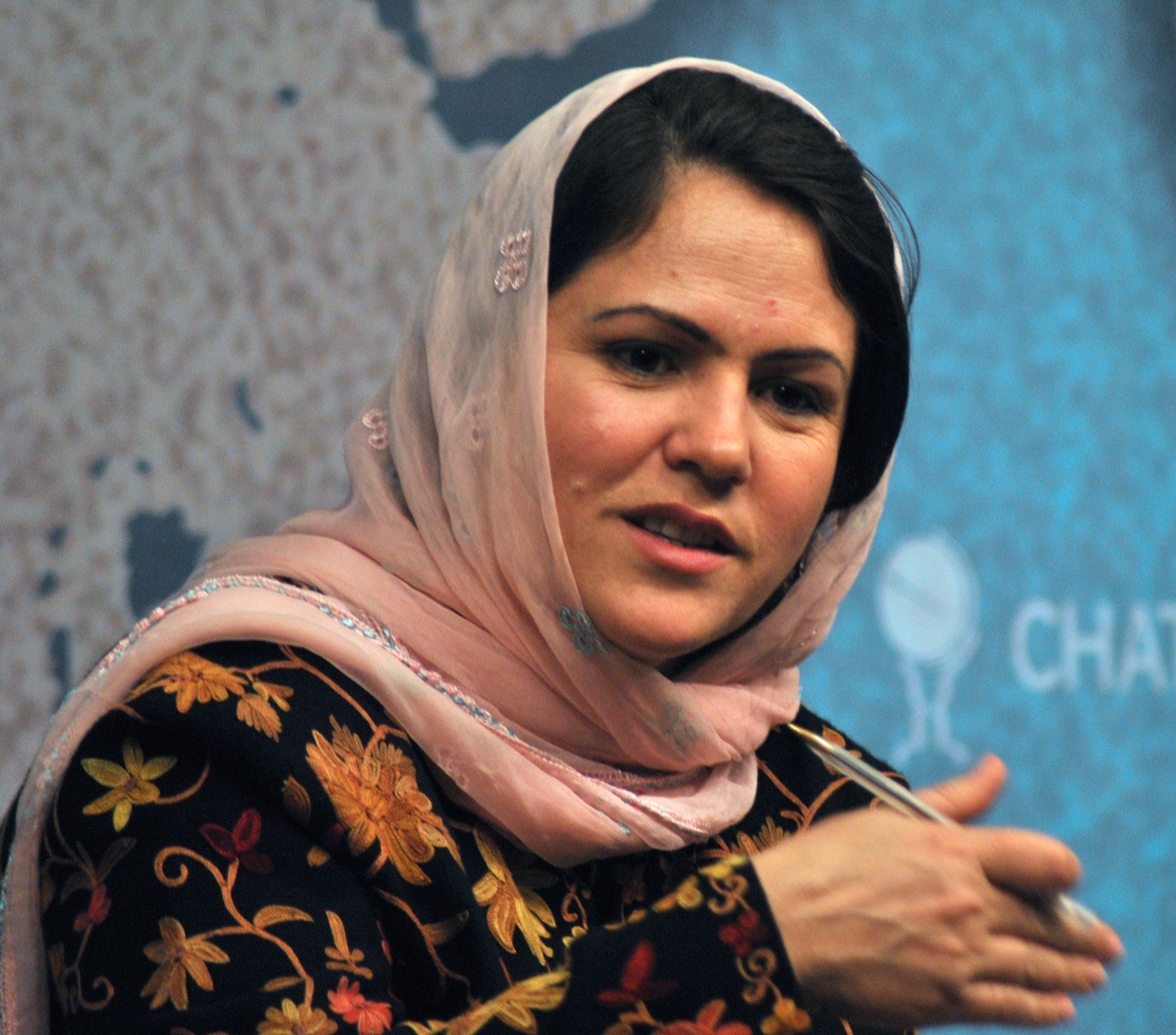
Fawzia Koofi
Fawzia Koofi is the former Vice President of the National Assembly of Afghanistan discussing the Taliban's return to power and consequences of the U.S. withdrawal.
Jake Cusack
Jake Cusack is a former U.S. Marine and investor in Afghanistan who helped rescue hundreds fleeing the Taliban's return to power.
Episode Summary
The United States' longest foreign war came to an end as the last American troops departed Afghanistan’s Bagram Air Base on August 15, 2021. On the same day, Taliban forces breached the walls of Kabul, taking full control of the country as President Ashraf Ghani fled. One Decision sits down with the former Vice President of the National Assembly, Fawzia Koofi, and former U.S. Marine and investor in the country, Jake Cusack, who also helped to rescue hundreds fleeing the extremist group's return to power. They delve into President Biden’s much-criticized decision to proceed with pulling out American troops and consequences it has had on the country, as well as America's standing around the world. Resident analyst Sir Richard Dearlove, who led the British intelligence agency MI6, also weighs in on what may lie for Afghans under Taliban rule.
Listen & Subscribe
- Watch on YouTube
- Listen on Apple Podcasts
- Listen on Spotify
Transcript
INTRODUCTION
Mcfarlane: You're listening to One Decision. I'm your host, Julia McFarlane. This week a year ago, the US ended the longest war abroad in its history. Twenty years of fighting in Afghanistan came to an end with a hasty withdrawal that coincided with Taliban militants who began the conflict by refusing to hand over Osama bin Laden shortly after 9/11, taking control of the capital Kabul, winning swathes of land from the government in a stunning rampage across the country. One year on, we revisited that decision by President Biden to make good on the deal the Trump administration made with the Taliban and to pull out US forces ahead of that formal deadline just as the Taliban began gaining ground over the summer. I am delighted to welcome my guests today. We have joining us, Fawzia Koofi. She is a former member of the Afghan parliament and the vice president of the Afghan assembly. She's also formerly part of the Afghan delegation to the peace talks negotiations with the Taliban in Doha. Fawzia, thank you so much for joining us. We also have Jake Cusack. He's a former US Marine Corps officer. He's a Harvard Business and Kennedy Schools grad and the co-founder of CrossBoundary Group, which is an investment firm specializing in frontier markets. Jake, it's great to have you with us. And lastly, but not leastly, we have of course, my partner in crime, Sir Richard Dearlove, the former chief of Britain's Intelligence Service MI6. Richard, great for you to join us. US and NATO led withdrawal of Western forces from Afghanistan, the Taliban takeover of the country and the capital Kabul, and the collapse of the civilian Afghan government. On the July 2, the US quietly withdrew soldiers from Bagram Air Base, the main US base in Afghanistan throughout the war. By that point, the Taliban had taken nearly half of all the provinces in Afghanistan, and by the time we got to mid August, Kandahar, the second largest city in Afghanistan, had fallen to the Taliban. Now before we begin the discussion, I want to quote President Biden who is speaking the day after Kandahar fell on the August 14, where he said, one more year or five more years of US military presence would not have made a difference if the Afghan military cannot or will not hold its own country. And an endless American presence in the middle of another country's civil conflict was not acceptable to me. And it was very shortly after that that things spiraled further. We had the fleeing of Afghan president Ghani, on the day that Kabul fell on the fifteenth, the Taliban took the Presidential Palace and the US embassy was evacuated. Now I firstly want to start with Fawzia. Fawzia, take us back to that day, the day that Kabul fell, the 15th of August 2021. Where were you, and what were you doing at the time?
INTERVIEW
Koofi: So I was in Kabul on that day. I remember how Kabul was full of traffic. Everybody wanted to escape, not knowing where to go. They just wanted to escape themselves. They knew something, they could sense. We all could sense something is happening, but not to the extent and in that speed that it happened. I remember I was receiving a lot of messages from women across Afghanistan asking me what to do because I was in the negotiation. And I contacted one of the negotiation members with Taliban, and I told him that, you know, there is a lot of women rights activists and everybody's in Kabul. So can you tell me what will happen if your troops enter Kabul with these women rights activists and civil society and journalists? And he said, I remember exactly, he said, well, the agreement, you know that, we are not entering Kabul military. That's the agreement. So even he, as the negotiator, was not aware of that rapid escalation.
Mcfarlane: I mean, Jake, as a former senior officer in the Marine Corps, the chaos of that and the symbolism of the US deserting Afghanistan in the dead of night, where more than 2,400 US servicemen and women lost their lives. It was a difficult summer for you, wasn't it? To watch that happening.
Cusack: Yeah, I do think it was, I mean, was of course, depressing, I think for many people involved or had been involved. I think you could disagree with the policy decision to withdraw from Afghanistan as I did and others did. But obviously that's the right of the elected president and his team to make these kind of policy decisions. But even if you take that as a given that we are withdrawing from Afghanistan, I think it's certainly clear that it could have been done better in a more orderly way and in a way that took care of the friends and allies who had fought alongside us for two decades.
Mcfarlane: Right. Richard, it was a policy decision that obviously a lot of people have disagreed with since, and something that struck me was the way President Biden stuck to his guns during those press conferences in the summer, where he sort of tried to reframe what was clearly being seen on the international stage as a complete collapse and a chaotic withdrawal, where he said, in one statement, you know, we did not go to Afghanistan to nation build. We went to Afghanistan to get the terrorists who attacked us in 9/11 and to deliver justice to Osama bin Laden. We did that. And yet a report by the Republicans in the Senate Foreign Affairs Committee this year on the withdrawal found that while there was substantial disagreement about the policy to leave Afghanistan, Americans actually share an outrage in how the United States withdrew last summer and what that failure has done to America's standing overseas. And in the report, it says that the Biden administration ignored numerous intelligence reports about the potential for a speedy Taliban takeover of Kabul. They decided to abandon Bagram Air Base, disregarded dissent cables from the State Department, failed to plan an evacuation until it was too late, and in the process, abandoned tens of thousands of Afghan partners. The administration did not make a decision on evacuations from Afghanistan until a National Security Council Committee meeting just hours before the fall of Kabul. So Richard, I want to ask you how much responsibility lies in the Biden administration for the nature of that withdrawal. And, you know, hands were obviously tied to the deal that had been signed by the previous administration, the Trump administration with the Taliban in Doha. But did that mean the total abandonment of the Afghan army and the messy nature of the withdrawal, was that written in stone, do you think?
Dearlove: No. I don't think it was. And, I mean, I think that, you know, Biden's foreign policy team made a series of very, very poor decisions. I mean, the first thing I would say is that if you make your foreign policy decisions around domestic considerations, which is certainly what happened in this case with the Democratic administration, I think you're in for trouble. The second thing I would say is they could have planned a withdrawal over a long period of time, and they had the facilities, they had the logistics to be able to do that. To me, it was completely incomprehensible that they sort of shut down and ran away. Look, my involvement in Afghanistan was a long time ago, and it was after 9/11. And I went to Afghanistan in the period up to my retirement in 2004, and I went there with Blair. And I remember very clearly a prominent Afghan saying to me, you'll get tired of this. We'll wait you out. And, you know, we will ultimately win. And that sort of horrible prediction rings in my ears. The decision to deploy large scale British forces in the southern part of Afghanistan happened just after I retired. A group of us in government then in 2004 was strongly opposed to making a big boots on the ground commitment because I think we felt that we would get sucked in to an endless conflict and that we would build responsibility to the Afghan people, which in the medium to long term we would not fulfill. It was how you managed our intervention and how you managed our departure. And I think what we did for the Afghan people and then what we did to them, I mean, what we did for them initially was very constructive. What we then did to them was dreadful. It was a betrayal. And I feel very, very strongly and sorely about that. And, you know, the idea that we would just run away, which what, you know? And the Biden administration did not consult their NATO allies. And NATO forces would have stayed for a longer period of time, a much longer period of time, if the Americans had stayed because the Americans deployed the logistical power, and NATO could have supplied the ground forces. And they could have easily had a phased withdrawal that could have taken two years. They could have kept control of the airports. They could have kept control of Kabul. Okay. It would have been problematic, but it would not have been impossible. And I feel really awesome about the whole thing.
Mcfarlane: I mean, that idea of keeping a small presence of highly trained special forces units on the ground Afghanistan to deter the Taliban and other groups, it was made throughout the summer. It's been made since, in retrospect, to something the West should have considered. Jake, let's hear from you first. Do you think that that would you have advocated for that, for the West and NATO to keep small contingents of special forces in strategic areas in Afghanistan? Do you think that would have been enough to keep the Taliban out of power? And I'm taken back to an interview we did recently with Bob Gates, the former Secretary of Defense, where he agrees with that. He said that we could have prevented the catastrophe that took place, but that the outcome would have taken much longer. And it's no way to tell if the Taliban would have ended up eventually winning in time.
Cusack: Yeah. So I do agree with that. And I think that argument was actually being made even a decade earlier when deadlines first started being set for troop withdrawal. I think it was a little bit of a false dichotomy to say we need to completely fix Afghanistan and make it like Denmark and have hundreds of thousands of troops or have no troops at all. I think there was a viable path from my perspective to have a small number of troops for an indefinite period of time, essentially, as we have done in other countries. I think setting a deadline, as Sir Richard said, leads to a situation where you're just being waited out. And so I think there's a middle ground between the total withdrawal that happened and a situation, as was mentioned, where you're trying to fully control Helmand or something like that. I just think there was a more viable path forward and you just need the political will to sustain that across multiple administrations as well.
Mcfarlane: Yeah, I mean, the political will was never there, was it? I mean, were all those announcements for a timeline, a deadline of withdrawal from the US point of view? Was that more about various US administrations struggling to continue the political argument for these forever wars rather than committing to the mission in Afghanistan?
Cusack: Yeah, I think certainly there was domestic considerations that fed into all of those pronouncements from Obama to Trump to Biden. I also think, and I say this, you know, I was after the Marines, I went to Harvard Kennedy School. And there's a little bit of maybe too much analysis or trying to be too cute policy wise in thinking that if you have just the right policy and sort of just the right conditions, you can sort of make everyone happy. You can make your domestic audience happy. You can make your foreign policy audience or you can achieve your foreign policy goals. And I think the reality is, one, you have to adapt to what is actually happening on the ground. We didn't adapt to that. And sometimes you have to make open ended commitments. Now I really only became significantly involved again during the evacuation. So I don't have access to all the information, but from my perspective, there was this middle path.
Mcfarlane: But do you think it would have been feasible to have stationed special forces troops in various strategic parts in Afghanistan? Or would they have needed all of the big heavy support, you know, this idea of, oh, it's just, you know, if we just kept a small number of special forces, none of this would have happened. Was that a realistic option? I mean, militarily, would there have needed to be a lot more infrastructure and support there, and not just a matter of leaving a handful of Special Forces troops in Afghanistan, and them standing between the Taliban and the Afghan army?
Cusack: I think it would have been probably a bit more than a handful of special forces troops, but I think somewhere between, you know, 3,000, 5,000 troops would have been tenable. You wouldn't have been trying to control all of Afghanistan. You would have been trying to control Bagram, Kabul, possibly Herat and Mazar and all of our other population centers. And essentially, hold the line, hold the gains that had been made. And I think in that world, we'd be today still in a place where a large group of Afghan women could still go to high school, which is no longer the case. We gave up a lot of those gains.
Mcfarlane: Fawzia, I want to hear from you exactly on that, on how it changed when we started talking to the Taliban directly in Doha because many have accused the Americans of cutting out the Afghan civilian government in that sense. But just lastly, before we move on to that, I do want to put to you, would the Afghans, obviously it's not a homogenous society, a lot of dissenting opinion, but do you think a long term stationing of Special Forces troops in certain parts of Afghanistan would have been accepted by the civilian population? Did they want the Americans out as much as Biden did? Do you think it would have been tenable? Would it have been the right thing to do to have kept a small contingent of Western Special Forces supporting the Afghan army in strategic places in Afghanistan?
Koofi: I don't think it was about the number. It was about the message. So I think the US or NATO presence message was important to our security forces in terms of their morale, in terms of making them more accountable and responsible to take over gradually. A small number, it was about the message. It was not about, you know, when completely withdrawal happened, especially, you know, unconditional withdrawal by September was announced, the surrendering increased, expedited, and partly because in my conversation, our security forces thought that, well, this is part of the plan to withdraw from Afghanistan and then hand over everything to Taliban. So, you know, this is part of the international community plan. There was a lot of conspiracy theory which demoralized our troops as well. And if there was, like, a few thousand or whatever thousand of troops in Afghanistan, it would have made a big difference, I think, in terms of the outcome, as the others I guess mentioned as well. Because this is one of the wars. I mean, I know there is a lot of anti war movements around the world that are happy about the withdrawal from Afghanistan. But this is one of the wars that you have invested blood and treasure along with Afghans to keep Afghan schools open for girls.
Mcfarlane: Richard, on that question of morale, there was a very interesting report by RUSI on this sort of covert program that the Taliban had embarked on to undermine Afghan army morale. And it detailed how Afghan security forces throughout last summer were surrendering to the Taliban. It talked about the use of tribal elders sent to deliver quite stark messages to Afghan troops saying that, you know, that they could surrender now and that the Taliban would protect them or if they were to fight that they would be killed. And at the time there was also, it appeared that the Taliban had been honoring their promise not to punish Afghan soldiers who surrendered. Now that of course didn't last but that certainly can't have helped the Afghan army retain a lot of its morale. And then also of course, there's the fact that quite a few Afghan generals and leaders were leaving the country as well. So what do you make of that idea that there was not morale in the Afghan army, and whether it was fair to the Afghan army, which had continued to really fight quite bravely against the Taliban, especially throughout the earlier part of last year when there were heightened Taliban offences throughout the country, at the same time as they were slowly getting less and less air support and evacuation support from the West as they were beginning their wind down?
Dearlove: Well, I think it reflects the complexity that the West embarked on trying to build a national military force. I mean, there's no question that, you know, Afghans are significant warriors according to their tradition, and there were some amazing units within the Afghan military. But I think part of the problem was the sort of isolation of military units across the country. And in a way, you put your finger on it when you mentioned tribal leaders. I think our whole approach to Afghanistan in terms of nation building, I mean, I disagreed with right from early on, which is why I favored this idea of small detachments of special forces going into each province and working with the tribal leaders. Because, you know, the nature of Afghanistan outside the urban areas, it's essentially a tribal country. And therefore, you know, you build and use the tribal structures to the extent that you're able rather than these massive military commitments. And if you've been to Afghanistan and you've flown over the country, I mean, the complexity of the geography, the isolation of the valleys, the difficulty of movement through the country, is just quite formidable. It's quite unlike almost anywhere else, you know, what one has seen, and you only have to read a little bit of Afghan history from the eighteenth and nineteenth centuries and read about the great game, you know, to understand why it has this extraordinary nineteenth century history. So to an extent, I'm mystified by the surprise that people expressed that the military collapsed so fast, particularly when some of the leading figures in the Afghan military had already, you know, done a runner or taken their money and disappeared into the Gulf States. You know, what does that say for the ordinary warriors' morale? I mean, it's tremendously problematic and difficult, and the implosion was just spectacular.
Mcfarlane: I completely agree with that. Fawzia, you were in Doha when those talks were taking place, and while we're just sort of looking into that issue of morale, may I put it to you that a real key element that undermined the Afghan army's morale was that point when the US began the negotiations with the Taliban sort of behind the back of the elected Afghan government. It was described as a clear act of bad faith that wasn't lost on the Afghan army troops who at that point many will have realized the likelihood of a future Taliban takeover. I mean, did you feel that that was a betrayal to your team, to the Afghan government negotiating team? Do you think that was really sort of a key moment where morale was really starting to deflate at that point?
Koofi: I remember on the February 28 when the Doha agreement was signed in Doha. So I was on the way when there were security check posts and the police officers stopped my car just to check. And when they realized that I'm inside the car, they would open the door and start, like, already sharing, you know, their sadness and anger over what was happening in Doha and telling me that, Miss Koofi, what's happening? You know? What is going to happen? What the future will look like? Really a lot of uncertainty, a lot of questions. I don't think the actual collapse actually, you know, happened on the fifteenth or fourteenth or during July. It basically started mainly after the signing of the agreement. But as I said, even from 2014, there was a lot of distrust between the population and the government, which was one of the reasons. And, of course, the international community, especially the US policy to talk with Taliban without including the Afghan broad based society, the Afghan government, the political community, further infiltrated that mistrust. And that's why I think, you know, to just conclude by saying it happened overnight is probably unjust to our security forces because they had a very, very long about twenty years. And when I was in conversation with some of these people from my area who fled to Tajikistan, some of them were in their military bases for two years without, so, like, these small things, mismanagement. If you are in a military base for two years without visiting your family, you are, of course, desperate. You are frustrated. You are overwhelmed. There should have been a proper, you know, a better way of managing everything. I think the political aspect of it along with, you know, the talks and bypassing the security forces in the agreement. The agreement between Taliban and the Americans, the title is that this agreement is between the Islamic Emirate of Afghanistan in the bracket that the United States does not recognize it and the Americans, which already was kind of in a way giving legitimacy to Taliban. So I think many factors contributed, corruption, obviously, poor management. The fact that power was so centric. You know, chief of police of our police officers in district were appointed by national security adviser of the president from the palace where he obviously never actually was able to visit some of these districts. So everything was controlled by few people, which, you know, contributed to already a fragile situation, you know, being impacted by foreign or international dimension, but rather also internal dimensions as well.
Mcfarlane: I think that's a really, really good point. And I think it's also it was a really interesting assessment, that RUSI report that I mentioned earlier, looked at the collapse of the Afghan army. It also pointed out something I think that we should note, as we've discussed sort of the various logistical issues of the Afghan mission. It noted that the Afghan army, as Richard said, was spread across the country in piecemeal district centers, often surrounded by Taliban controlled countryside and needed to be resupplied by air, which was a completely unsustainable model. And also, as Fawzia mentions, a number of the Afghan leaders, officials and military officers had emigrated and the National Police Force was known for corruption and abuse, was widely distrusted by the populace, and lastly, that report also cited that a lot of the hardware of the army was dependent on Western maintenance contractors who obviously were part of that withdrawal over the summer. I want to turn over now, I think, to the resettlement program and to the issue of Afghan refugees and their status now. I believe the US has resettled roughly 76,000 vulnerable Afghans who were evacuated from Afghanistan since last year. The operation covers around 85,000 in total. It's one of the largest resettlement programs in recent US history. I believe that the largest was after the Vietnam War, where more than a million Vietnamese were resettled in the US. But with the Afghan asylum program, that has a backlog of, I think more than 410,000 cases, according to the Department for Homeland Security. What's happening now is a lot of people are lobbying for this Afghan Adjustment Act, which would allow those people to bypass the program and apply for permanent residency directly, because tens of thousands of Afghans are stuck in this sort of limbo, and I think it's also really important to mention that there are lots of cases of thousands of Afghan evacuees remaining at various locations across the Middle East. There's I think 6,500 Afghan evacuees at the Emirates Humanitarian City, which is this apartment complex in the outskirts of Abu Dhabi, but all the refugees there, they cannot leave this sort of makeshift refugee housing facility. They're not allowed to leave it day or night, and it's resulting in the mental health deterioration of a lot of people there. Jake, I saw you last summer, when you were deep in the throes of trying to do everything that you could as a civilian, a military veteran, but as a civilian trying to help the efforts to evacuate vulnerable Afghans from Kabul. I think I saw you just three days after the fall of Kabul. Talk to us about that summer and how you managed to try and get Afghans out off the back of the British and American evacuations.
Cusack: Yeah, it was certainly an intense period and it was interesting because at first I was a little bit more on the outside and I was thinking, you know, I'll really just be able to help some people with their paperwork and there'll be sort of an orderly process here. And then as it became close to the fall of Kabul, I was urging people to fly if they could to Dubai or Turkey to other places. Then even so on the fifteenth when it fell, I was stunned. And then I think a couple of days in, it became clear that the evacuation system was not working very well. Part of how that became clear to me is that people within the US government, even at senior levels were reaching out to me for help and to others for help. People who had past connections on the ground there, who knew people in the military there, who knew people that might have access to vehicles or transportation to help move people to the airport, which very quickly became overwhelmed. And so what kind of sprung up during that period was this sort of informal network of networks where you would have these WhatsApp and Signal groups that were composed of ex military NGO business people in some cases, in some cases strictly ex military or ex intelligence. And you sort of would have to be vouched into the group. And then once you were in those groups, you were exchanging information and resources and trying to get people access to the airport, which was overwhelmed and had a number of gates, but it wasn't clear when those gates were open or what sort of routes the airport were safe. And so it became this sort of intensifying effort, which at the beginning was really, when I think I saw you sort of ducking out to take a phone call and try to move some people, and eventually became absolutely completely full time. Flew to Dubai. I tried to get into Kabul. With some of my colleagues, sort of set up a twenty four hour system of constantly being on WhatsApp and monitoring the movement of different groups. And we did have some success that we got, I think several 100 people out in conjunction with others. But after the Abbey Gate attack on August 26, 13 American military members were killed, it became much more difficult to move people out and soon the efforts were essentially shut down entirely. Now, since then, there is still some movement of people out of Afghanistan through various channels. That's been encouraging to see. And there's certainly a huge need on the refugee side. Now there is, as you said, a number of people, including people I know who are still in sort of temporary housing in the Middle East or in the US. And they need a pathway to the US and not just to be here, but also to have jobs, to be able to provide for their families. And so that's where I think some of mine and others efforts have shifted.
Dearlove: Well, I think, of course, we could have done better. And of course, you know, this type of evacuations can be very complex and difficult. I think one of the problems with what happened in Kabul was, okay, the lack of time, the rapid deterioration of the security system. But, you know, what tends to happen in the UK, you know, is they put together a team of people in the, let's say, the Foreign Office in London. And the trouble is that however much goodwill those people have, if you get a list of relatively junior civil servants who don't have much operational experience and stick them behind desks with telephones? What are they actually going to achieve? And what Jake has talked about, you know, is the practicalities. I mean, you know, he knew Afghanistan, knew Afghans, had contacts. And I mean, similarly, I can give you examples in the past. I don't want to go into detail, where in an emergency situation, the government had to come to my service to find officers who spoke the right language, had the right contacts, could do things fast, knew how to operate in really flexible, difficult situations, and put together whatever necessary rescue group that you wanted. And I mean, there were some magnificent achievements against pressure in Afghanistan, but basically the teams were put together too late, they were inadequately staffed, they didn't have the right people. And the people that achieved the most were people like Jake and freelancers, and people who felt massive personal commitments to Afghan friends who, as it were, did it off the cuff but did it pretty effectively, but their means were limited. So I think someone could probably sit down and write a report about this, but you need in these circumstances of crisis to be incredibly entrepreneurial, and you don't need to follow a set of rules. And very often the very worst people to be asked to organize it are a set of unimaginative, relatively junior civil servants sitting in an office in London. I'm sorry to say that, but that's the reality. And if you run a service which is highly operational and you have lots of people who are used to doing weird things in weird places and thinking on their feet, those are the people in these emergency situations who tend to give you answers and get results. But it's a very, very tough thing for a government to sort of think round these corners.
Mcfarlane: I think a lot of people might agree with you on the limits of Whitehall and the civil service in situations like that last year. We have space for a couple questions left. I have to ask, Fawzia, one of the biggest losers of all of this are Afghanistan's women and girls, of course. I mean, initially, the Taliban, at the start of their takeover, they were talking up all these claims and promises to respect education and rights for women and girls. And that, of course, was swiftly put to bed when I think they banned girls from school September, less than a month after the beginning of their rule. It's difficult now for female teachers to remain at work. Also female civil servants, doctors and nurses are finding it hard to remain in work across the country. Fawzia, what is the current status of women's rights in Afghanistan? And how likely do you think it is that the Taliban might be able to be pushed or coerced somehow into rowing back their draconian treatment of women and girls in exchange for more international aid and cooperation?
Koofi: I think Taliban managed to create a narrative that they have now changed, that they are, you know, not the Taliban as they were in power in 1996 till 2001. Even including in dialogue and negotiation that we had with them, they have been making statements, generic statements, press releases, public appearance that, you know, they would respect women's rights within the principles of Islam. I remember during one of our talks, one of the Taliban's leaders who is now, you know, at one of the key ministries, he's a minister, said women can become, you know, public officials, run for office, and can become minister of foreign affairs and prime minister. We all, you know, seem to believe that narrative, but we are now trapped into the narrative that we tried to believe and created for the Taliban. I think since they have taken over, they have become more extreme in their approach towards women and civic liberties. So they have issued almost 28 verdicts and decrees to eliminate women's rights. And so it's like since they have taken over every month, they issued two decrees from the fact that September 19 is when they have publicly said that girls cannot go to school beyond grade six. Two, the fact that they have asked women to get out of their homes with male companion and cover their, you know, their face as burqa, which is full cover, is Taliban's favorite hijab, but also women, if they don't wear burqa, they need to be properly covered. And if they don't appropriately cover, their male member of the family will be punished to the fact that mobility is minimized and limited. And the last decree that they have issued is basically about freedom of speech. If anybody say anything that is disrespectful to the Taliban leadership, they will be punished. So I think they have basically put all their emphasis on minimizing women's rights. And this is in a situation where if you look at most of these Taliban who have studied in Pakistani Madrasa, in Pakistan, it's not the same. The Pakistan was witnessing a woman prime minister, a woman parliament speaker, foreign minister, where in the other country across, you know, the Gulf in Qatar, Doha, where they had their political office and negotiations were held there, they have more female in schools than male, 12% more female in schools than men. So the question many Afghans keep raising is, you know, what kind of Islam the Taliban represent. I think girls school is one of the milestones against which we measure Taliban's genuineity on their promises. But I must say that girls not being allowed to go to school is not the only challenge. What if girls go to school, but the Taliban, you know, review the curricula and make it so extreme that, you know, after grade 12, we have a bunch of girls who graduate as Taliban's ideology. So, yes, we need to emphasize on Taliban reopening the school because a lot of girls are being traumatized. Now I am in contact. We do have a school in Kabul, and in school now, we are opening in provinces for girls. But it's not about education. It's also about their mental health that one has to take care. But I think it's also right for us to be worried about the future of the country as a whole. Where are we going? There is lack of political vision, lack of, a lot of uncertainty, or other military extremists using Afghanistan soils once again. I know that from Central Asian countries, for instance, all these jihadi leaders or figures are in Afghanistan between Afghanistan and Pakistan. Ayman al-Zawahiri was killed in Kabul. We don't know if really Taliban have meaningfully disassociated themselves with other military extremism. There is a government or a power that is not legitimate. So I'm really worried as a whole for the country's future and for all the transformation that has happened, and Taliban were so confused when they initially entered Kabul about how to handle a transformed nation.
ANALYSIS WITH SIR RICHARD DEARLOVE
Mcfarlane: I think all of that is really, really important context from Fawzia. And Fawzia mentions, of course, Ayman al-Zawahiri. Now I want to just finish with that question of terrorism in Afghanistan. This summer, the US carried out that drone strike right in the heart of Kabul, killing the leader of Al Qaeda, Ayman al-Zawahiri. The speculation that the Taliban were doing quite a lot to shelter and even protect Zawahiri. Do you think, could his death mean the end of the decades long relationship between the Taliban and Al Qaeda?
Dearlove: Well, I think, you know, you're talking about the Taliban as though it were a government which has, you know, a firm central structure. I think the problem within the Taliban is, you know, there are various centers of influence, various people of authority who probably have different views and different ways of seeing different problems. And in my view, it would be very naive to think that the Taliban or elements of the Taliban are not sheltering terrorist individuals and in cahoots with them, working with them, maybe even, you know, planning new conspiracies with them. There are probably bits of the Taliban that disapprove of that and have a different view, but they do not, you know, operate like, you know, a controlled administration. So, I mean, I wasn't the slightest bit surprised to discover that the Egyptian doctor was sitting in a prominent house in Kabul. And, you know, hats off to the Americans for finding him. But in a way, that's the solution to a past problem because there will be other people linked with Al Qaeda, you know, who will come forward. And, okay, it's a counterterrorist success in inverted commas, but it isn't a solution to a long term problem. And I think that the result of what's happened in Afghanistan is that probably it again becomes a focus for extremists where they can find a degree of sanctuary and ability to plan and prepare attacks under a protective regime. I mean, what we found in Afghanistan when we went in after 9/11 was pretty shocking, and I don't want to go into detail about that. But I fear that we may be going down the same path again. Maybe not quite to the same degree, but there will be elements of the terrorist movement such as we can call it that, that will find sanctuary under this Taliban administration or so called administration.
Mcfarlane: Jake, do you agree with that? And do you think the assassination of Zawahiri is sort of cutting the head off the snake of Taliban Al Qaeda relationships? Or is it more like a Hydra where if you cut the head off, another one just springs in to replace it?
Cusack: Yeah. I think it's a bit more towards the Hydra. I think it is an important symbolic victory of sorts, I guess, to remove essentially this sort of spiritual head of Al Qaeda. But I had my experiences in Iraq where I think we were being quite successful in terms of hunting high value targets and capturing or eliminating them. But it wasn't necessarily changing the reality on the ground. You know, I think sort of that type of strategy of targeting key individuals within Al Qaeda or other terrorist groups is only one part of a strategy. It is not a strategy in and of itself. And so I think it is a milestone of sorts, but it's a little bit of a Pyrrhic victory in the overall context of Afghanistan right now.
Mcfarlane: That's it for this week's episode of One Decision. If you enjoyed this conversation, why not subscribe to us so you never miss an episode? We drop new shows every Thursday. From me and the team, thanks for listening, and see you next time.