Hosted by Christina Ruffini and Sir Richard Dearlove
Guests
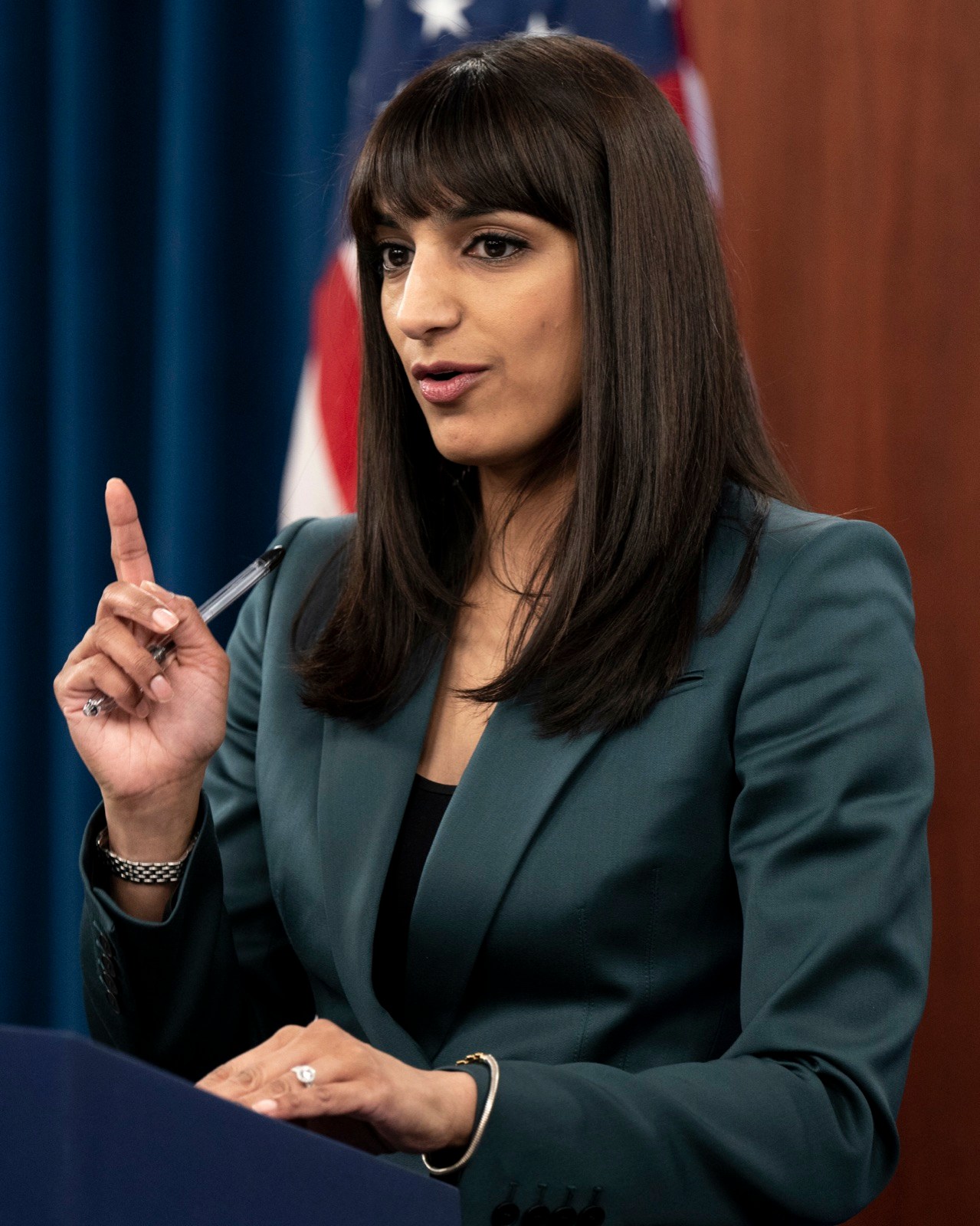
Sabrina Singh
Sabrina Singh is a former Deputy Pentagon Press Secretary and senior official in the Biden administration.
Jim Sciutto
Jim Sciutto is CNN's Chief National Security Analyst and anchor of The Brief.
Episode Summary
In this special year-end episode of One Decision, host Sir Richard Dearlove, former Chief of MI6, welcomes a panel featuring Sabrina Singh, former Deputy Pentagon Press Secretary and senior official in the Biden administration, and Jim Sciutto, CNN’s Chief National Security Analyst and anchor of The Brief. They assess the year 2025, which has been arguably one of the most disruptive years in modern foreign policy. The conversation begins addressing global instability, technological change driven by AI, and a shift in U.S. foreign policy under the Trump administration, and how this shift has shaken allied confidence and raised doubts about U.S. commitments. The panel examines Israel’s efforts to weaken Iran-backed groups across the region, the collapse of the Assad regime, and U.S.-led strikes on Iranian nuclear facilities. The panel also discusses U.S policy with Ukraine and Russia, the perceived willingness to pressure Ukraine into giving up territory and what that could mean for European security and the ability to deter future aggression. The episode wraps with reflections on the year’s most bizarre moments and the enduring role of political humor and satire during times of geopolitical change.
Episode produced by Situation Room Studios. Original music composed and produced by Leo Sidran.
Listen & Subscribe
- Watch on YouTube
- Listen on Apple Podcasts
- Listen on Spotify
Transcript
COLD OPEN
Sheridan: And we're at one of those moments where America First actually is not in our, not just in Europe's national security interest, but not in our own national security interests.
Dearlove: The other event, which I think was really incredibly funny, was the Swiss turning up in the White House and giving Donald Trump a Rolex and a gold bar. It seems to me that looked exactly like a Swiss bribe.
Singh: With Israel sort of emerging as a very dominant power in the region, that's gonna reshape history for, you know, decades to come.
INTRODUCTION
Dearlove: Welcome to One Decision. And our guests today are Sabrina Singh, who's the former deputy Pentagon press secretary in the DOD and also served as a special assistant to President Biden and was deputy press secretary to Kamala Harris, and Jim Sciutto, is the chief national security analyst and reporter for CNN and anchor of The Brief, and has also reported for more than 50 countries including Iraq, Afghanistan, and Iran. Now today we were gonna talk about 2025 and your observations for what's been a pretty extraordinary year. I think it's a year of unprecedented disruption in international affairs. Gold price has never been higher, which is a good indicator of instability. AI is making us rethink employment, education, aspects of creativity, and the long shadow of the pandemic has upended various economies and certainly inhibited their growth. Ozempic is slaying the dragon of obesity perhaps, and then we have Trump, Putin, Xi, and Netanyahu, and each in their own way, I think you can say, has taken a hammer to the fragile porcelain of international security. So, let me ask you, Sabrina, first how you would characterize 2025 and what your sort of general comments before we get into more specifics.
INTERVIEW
Singh: Yeah, no, you sort of encapsulated a lot, I think, of what I think about when I think about 2025. You know, it's everything from tariffs to how much more present AI has become in our lives, and that's something that's not going away. And then, you know, sort of the unraveling of US foreign policy that we've known it since, you know, pretty much the Cold War and this sort of this new isolationist doctrine that's come out of the Trump administration, really pulling The United States back from the world stage. And I think, you know, this idea that sort of modeling and after the Monroe Doctrine of like these spheres of influence, I think that's really rattling not just, you know, people here in The United States, but all around the world. I think, you know, countries, leaders look to The United States for steady leadership. And this year we've certainly seen a reversal of traditional policies. We've seen sort of other countries potentially want to take the leadership role on the global stage and, you know, you're thinking of China and also, you know, Russia is certainly reasserting its dominance. So, I think you sort of encapsulated everything that we're thinking of, but it's also this just complete upending of American foreign policy. And, you know, just I think this administration is going to continue to push the limits of what US foreign policy looks like on the global stage and also how that impacts and fractures our alliances around the world.
Dearlove: Jim, turning to you. Well, you and I share a strong interest and expertise in national security, but how do you see this sort of general scenario now in this extraordinary year?
Sheridan: Well, I'll begin by agreeing with Sabrina that I think the principal disruption is the American retreat from the somewhat uninspiringly named rules based international order, post World War II order, whatever you want to call it, that not only did a decent though imperfect job of keeping the peace largely, at least among the great powers since World War II, but also served US interests remarkably well, and not just national security interests, but also trade interests, economic interests, well, keeping the peace in Europe, keeping sea lanes in Asia open. And it's an American retreat, unforced, right? A voluntary retreat from a system that I'd argue served American interests pretty remarkably well. And if you or I were sitting in Beijing or Moscow a year ago and hoping for an outcome that would serve our own interests, one thing that would be at the top of our list — and by the way, this is not secret. You know, Russia and China have been rooting for the end of this system or the dissolution of it or the reordering of this system for years, decades, arguably. If you and I were sitting in Moscow or Beijing a year ago, we would, this would be at the top of our wish list, and it's been granted voluntarily by The United States Of America. And I've been speaking to diplomats and officials around the world over the last several weeks and months because I'm writing a book on this topic. And what strikes me is that what they say in private is remarkably different from what they say in public. It's much like talking to Republicans on Capitol Hill. In private, they will say, this is a major disruption. There's no turning back. We don't trust The US anymore. We're on our own. While in public, they will say quite differently, well, we celebrate, you know, many of the changes coming out of Washington, etcetera, but the private concerns are very real.
Dearlove: If it's about America great again, okay, that's just a sound bite. I mean, the way you express it, Jim, we're going absolutely in the opposite direction. It seems counterintuitive because you can look at it in such a negative fashion. The only thing I would say though, as a student of American history in my past, is that there have been periods in American foreign policy which are distinctly isolationist when looking at the rest of the world. And, you know, you can put Trump into that isolationist context, and if you do, it doesn't seem quite as odd as it seems at the moment. Okay. Given Pax Americana and the state of the world since 1945. So, I mean, I try to say to people, why are you so surprised?
Singh: Yeah. Well, you know, I think when you talk about America First, I mean, it's not a surprise that these are some of the policies that this administration is enacting and pushing forward. I mean, Donald Trump came in and was elected by the American people on the idea that we are going to refocus on America. But I think what they're really missing is reprioritizing American interests or saying, you know, the slogan, Make America Great Again or America First, abdicating our leadership on the world stage actually does not make us stronger. And it's actually not in the interest of American values, American national security, and American leadership. And so I think there's a bit of a dichotomy between what this administration promises and sort of these catchphrases that, you know, are frankly, as we saw both in 2016 and 2024, you know, these slogans that Donald Trump came in on are incredibly effective and they rally people around sort of this idea that, yes, America First, but when you pull The United States back from its real leadership, what you're going to have is countries like China, like Russia, like, you know, other actors around the world that are going to want to rise and fill the void. And that is going to be at a loss of American national security. So it's not America First when you really take us back and then also abandon all of our alliances.
Sheridan: And you're always smart if you're agreeing with Sabrina, right?
Singh: Well, Jim, I was gonna say the same thing. I was agreeing with you on the last one.
Sheridan: Well, listen, first of all, I agree that, you know, when you look at the broad — not just the current slate of challenges to The US, particularly in a great power context, but even the sweep of history of the last hundred years — that, you know, that it is not in America's interest to retreat from the world entirely. And to your point, Richard, The US of course has gone through these, through this pendulum swing, right, of interventionism and retreat or isolationism. But I'd argue that when America has gone through these pendulum swings, it is often overcorrected, right? And if you think of America First in the late 1930s, where, you know, where the term came from, had Roosevelt not coaxed America into intervening in World War II, what would the world have looked like? Right? What if the America Firsters had won in the 1940 election, etcetera? Would we be safer had we let, you know, Hitler march through Europe unchallenged? I'd argue no. And I think that we're in one of those moments here where, while — I'm not one to equate Hitler and Putin, they're different in many ways, but I would argue there are a lot of parallels between the challenge when you have a, you know, a revanchist expansionist European leader trying to redraw the borders of Europe by force. And if he is not challenged and he's allowed to win and he's allowed to see that, well, actually, if I send my tanks across the border, I can expand my empire. You know, that parallel is real and that we're in one of those moments where America First actually is not in our, not just in Europe's national security interests, but not in our own national security interests.
Dearlove: Looking at more specifically the events of 2025, I mean, I think the big event for me and the most surprising event was Israel's defeat of the axis of resistance and the collapse of the Syrian regime, which obviously changes very significantly the tectonic plates in The Middle East. I would almost refer to Israel as the new Sparta — has been extraordinarily successful in conflict without making a judgment, a moral judgment, on Gaza because obviously the follow ons across the region are so significant. What events would you pick up as being particularly potent and important looking at geopolitics for the coming five to ten years?
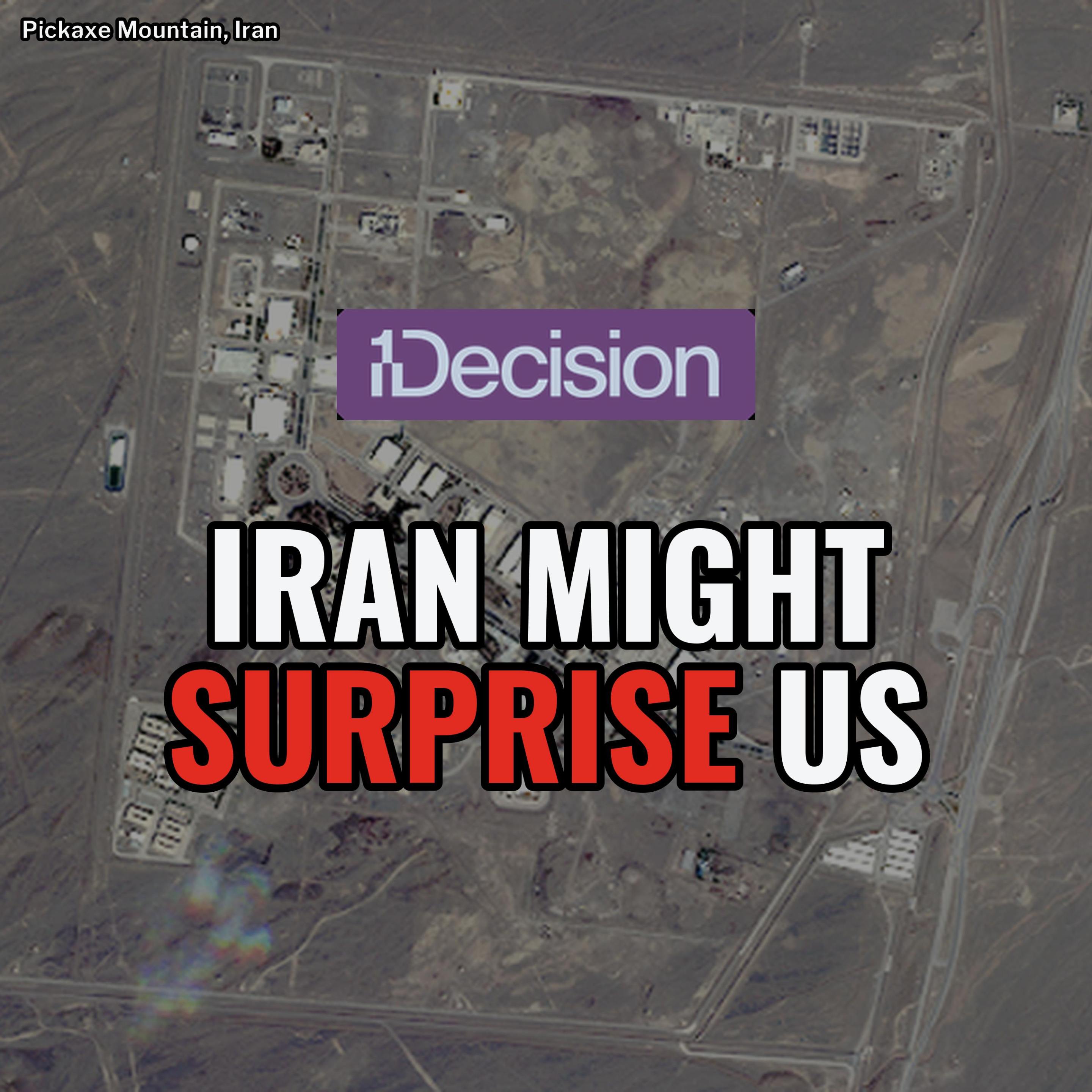
Singh: You know, to pull on the thread that you had started, I think the twelve day war changed the game and changed the regional dynamics in The Middle East. I think with The US leading those strikes on Iranian nuclear facilities, I mean, that did set Iran back. And Iran, we know, financially supports, you know, groups like Hezbollah, Hamas, you know, IRGC backed groups in Syria and Iraq. And so the fact that, you know, Iran — what was this sort of, I mean, remains a threat, but a very different sort of threat in the region — changed the dynamics for Israel. And I completely agree. I mean, what is happening in Gaza is separate and needs to be addressed. But like just from a geopolitical standpoint of Iran as the threat, I think that twelve day war did really change the balance of power within The Middle East. And now with Israel sort of emerging as a, you know, a very small country, as a very dominant power in the region, that's going to reshape history for decades to come. But I think, you know, the consequences coming out of Gaza, and, and there will be, you know, people held accountable, but I think that's also something that really changed the dynamics in the region as well.
Sheridan: It's arguably, to both your points, you know, the reduction of Iranian power is enormous and beyond the twelve day war. Right? Because it's many more days and weeks, the war against Hezbollah and Lebanon. The at least for now successful suppression of the Houthis, you know, and their threats to shipping, etcetera, the reduction of Hamas at enormous human costs there, and then the collapse of the Assad regime. Wow. I mean, who would have predicted that all in that span of time? It's remarkable. And really principally Iranian power. The US piece of that, you know, it's interesting. In the wake of The US strikes, J. D. Vance tried to draw from those circumstances. I think he called it even a Trump doctrine, and I'm paraphrasing here, but he was saying, you know, overwhelming US force with no US losses, etcetera. You know, this is the Trump doctrine. I was like, okay, find me another problem in the world you could solve that way, like, in a minute. Right? Because the circumstances were so particular. You know, Israel had already removed all the air defenses, etcetera. It was a great target of opportunity, you know, that's difficult to apply that, you know, to other places, although you might argue they're trying to apply that to Venezuela right now, the overwhelming force and just kind of hope the whole thing collapses, but it was a very particular kind of set of circumstances there if you're sort of looking for a Trump doctrine. I would say that on the willingness of President Trump to strike a nuclear power sent, I would argue, sent a signal to say North Korea or elsewhere that, well, actually, you know, he might strike. And again, North Korea has different circumstances because it already has nukes and means of delivery, but that there was a warning to some degree sent around the world. The other piece I would say that I think is a significant development this year, and it didn't start this year, but it's intensified, and this is a product of the American retreat from the post World War II order, is the open discussion of the acquisition of nuclear weapons by our allies. There's a quite public debate about this in Japan, in South Korea. You have Germany discussing an expansion of its cooperation agreement with France, and then you have others who, you know, look at Saudi Arabia who are considering this. This is a byproduct of the reduction of the American nuclear and national security umbrella, which is an unintended consequence, but I think a quite significant one, particularly when you think that Donald Trump, I believe, sincerely does look at the threat of nuclear war as awful. We're just seeing the beginning of that, and that will have, I think, enormous — I worry enormous consequences going forward in terms of proliferation.
Dearlove: Yeah. I think that's a really crucial point. And, I mean, if you had to pick out a foreign policy decision — the one I would pick out, like you, Jim, is the bombing of the Iranian nuclear facilities. I watched that problem escalate with no one really managing to do much about it from the time that I was still in office. This is way back in 2004 and it's just been pushed down the road. My view is it hasn't entirely removed the problem but it certainly cauterized it to an extent at the moment and changed the dynamic internationally, as you say, on nuclear weapons. So, I mean, there are aspects of Trump's decision making which have, let's say, beneficial knock on effects, or you could say negative depending on how you look at the nuclear issue. I'd like you to pick out other decisions that may have been taken in the year, either had good consequences or, let's say, rather unfortunate negative consequences.
Singh: Well, you know, I think from the Biden administration leading up to the Trump administration, I think you're seeing, you know, the dynamics of how we interact with Europe completely change. And that is going to have consequences, whether it's coming from our defense industrial base or how European partners, you know, look to other nations to fill their security gaps. You know, the Biden administration did and believed that Ukraine, that we had to continue to arm Ukraine, in order to protect European security and American security. And I think one of the biggest missteps that this administration has made is really how we treat our European counterparts, you know, particularly that NATO block, but then Ukraine itself. I think, I mean, looking back at that, you know, February 1 meeting with Zelenskyy and how off the rails it went, you know, some of that relationship has been reset, but I think the rolling out, and I mean that quite, you know, literally, of the red carpet for Putin, I think was such a misstep of this administration in Alaska. I mean, just an absolute miscalculation of how Putin would play this game, and he is, you know, a master manipulator. And so Richard, you know, this is, you know, this might be more of your area of expertise. This is someone that is incredibly smart, who knows how to manipulate his subjects and used that meeting to just continue to run down the clock. And Putin does have the time on his side. I mean, he continues to, you know, send his forces into a meat grinder and doesn't really care about that. And, you know, Ukraine has suffered from whether it's, you know, The United States turning off military intel sharing, to slowing weapons packages to now, you know, going through NATO, which I'm not necessarily saying that's a bad thing, but I think, you know, when you look at decisions, I think the Biden administration had a very different decision calculus when it came to Ukraine to this administration. I think to kind of where we started the conversation, Jim, you were saying this like Russia's sitting back, Putin's sitting back, and this is like the perfect playing field for him. So, you know, that's sort of what I'm gonna keep looking for as certainly as we head into the new year as well.
Sheridan: I would say two major foreign policy decisions, and not to make it all about The US, but but did emanate from Washington. One is, and these are both works in progress, one is The US approach to attempting to end the Ukraine war and this administration's leaning towards Russia. And that's not even my description. It's a description of many European leaders even quite openly. Right. In terms of being willing just to give up more territory, right, to get to the finish line here and not realizing it seems the consequences of that, not just for Ukraine, but for Europe going forward, the precedent set, etcetera. And again, this is a work in progress, you know, already we've already moved closer to the center from that original 28 point plan due to a lot of pressure from Europe and Ukraine. And I think internally in this administration, I think from the Marco Rubios of the world, etcetera, we don't know where we'll finish. Right. You know, and does Trump just at some point say I'm bored with this war, I'm backing out. It's your problem. We'll see. But that again, still a work in progress, but the leaning towards an outcome favorable to Russia. And then the other one I would say is, again, a work in progress, but this enormous buildup of military power around Venezuela. I've heard different estimates from a quarter to a third of the entire US Navy is now situated around there without a clear explanation of what the administration's intentions are. Is it — I mean, it's clearly not just drug interdiction, right? Oil's a big piece and they really would love Maduro just to leave under pressure. How far are they willing to go? Are they really willing to — well, seems like they're quite willing to drop bombs on Venezuela. What is the end game here if he doesn't leave voluntarily? That has enormous consequences too, I think, and again, a work in progress, but man, we're in it.
Dearlove: I also wanted to cover some of the more bizarre moments of 2025.
Singh: There are so many to pick from.
Dearlove: I mean, the ones I was thinking about — SignalGate and Hegseth, and obviously as someone who's very familiar with security and security of communications that was pretty extraordinary. Obviously, there's the whole business of Greenland, and I'm fascinated to see that he's appointed Jeff Landry, who's the governor of Louisiana. I looked up the statistics on the Louisiana Purchase in the nineteenth century. The Louisiana Purchase is exactly the same size as Greenland, by the way, so it was the same amount of territory. It's almost exactly in square miles matches Greenland. So, I don't think Trump is a historian. He probably didn't realize that appointing the governor of Louisiana had a certain resonance if you looked at the Louisiana Purchase. Of course, it's up to the inhabitants of Greenland, and it's not up to the Danes. I've got a feeling they might be offered a very large bribe because there aren't very many of them, and a lot of them live in very tough conditions, but they are also very fond of their own precise and rather extraordinary identity. The other event, which I think was really incredibly funny, was the Swiss turning up in the White House and giving Donald Trump a Rolex and a gold bar, because under a previous administration they might have been prosecuted by the DOJ for violations of FCPA. I just wonder what other incidents spring to mind as bizarre and amusing.
Sheridan: Well, I could — one thing I'll say is on the ones you cite, and this is what I worry about them. They are bizarre, but they're also indicative, right? If you look at SignalGate, for instance, you know, here's an administration full of people who have attacked others for mishandling classified information through the years, going back to Hillary Clinton, but there are no consequences, right, for doing quite the same thing. And it's not the only instance. Right? And that's an example of a broader phenomenon. I think that there aren't consequences for breaking the rules, or the norms or whatever or the law, it seems at times. I mean, to the point about gold bars, we're in a period of quite open public corruption. Right? I mean, the president starts his own meme coin, and anybody in the world can buy that coin to drive up the price, which immediately enriches the president. Who's doing that? To what degree? You know, we have Trump — this might go for your list, Richard, but suddenly a profitless social media company built entirely on a platform that is really just the president's social media plaything is now in the nuclear fusion business. Right? Why? What's the financial basis for that other than his position? And it's just part of a broader phenomenon that is really, I think, quite concerning. And final on just the Greenland piece, you know, talking about how we are antagonizing our own allies, it's notable that in Denmark's national security strategy, they now have identified The US as a potential threat because of its pressure on taking Greenland. You know, NATO ally, treaty ally, I always remind people the Danish are not a low level ally. They sent forces to Afghanistan to die. Right? They did hard duty on the front lines there and paid for it in blood. And, you know, that's all forgotten if you wanna make a big land deal, you know, big New York real estate deal writ large. Right?
Singh: I mean, I completely agree with Jim and sort of the norms that most presidents operate under have just been completely ripped apart with this administration. I mean, the enrichment of the Trump family, doing business, you know, in The Middle East, the meme coin, I think for sure as well, you know, you don't have that separation anymore. And so Donald Trump is going to walk away from the presidency a very rich man and so is his family. But I think that's not only bizarre, but, you know, where is the outcry from his own party about this? I mean, this is the, you know, the party that in 2016 was waving the signs around of drain the swamp. I mean, this is the swamp. This is what we talk about here in DC. And so, to see no check, no one actually willing to stand up to Donald Trump, and I think partly is because they are scared. I mean, look at what happens when you do. You get, you know, you get death threats against you. Your family gets harassed. So, you know, and even Democrats, it's really hard to stand up, especially when you don't have any lever of power in Congress. I mean, Pete Hegseth has been bizarre in and of himself. I mean, he is like almost like a kind of a caricature of, you know, like he's playing secretary of defense. And just because you're the declassification authority on something does not mean that when an operation is ongoing that you have the right or should have that right to declassify very sensitive operations that could have put our pilots' lives at risk and no consequence from this administration. You know, I think the final thing that I will say, which is not surprising, but it's just like kind of like really, like we're doing this, is like Trump putting his name on everything. The Kennedy Center, the Institute of Peace, you know, this new like naval fleet that he wants. And it's just kind of bizarre, you know, a president to name a fleet after him still living that doesn't happen. So, you know, that's a bizarre storyline that I expected, but here we are.
Sheridan: Well, to your point, if we thought the limit was putting Trump's name above a memorial to a dead president, an assassinated president, which the Kennedy Center is. So, you know, the spirit, it says it as much, the John F. Kennedy Memorial Center for the Performing — that was the history of it. And I've lived in DC for years and you look at that building on the river and you think of it as a tribute to this president taken down in his prime, to put his name not just on it but above it. Right. It's pretty indicative, right?
Dearlove: I mean, we are merciless here in The UK when it comes to political humor with our politicians. We have a particularly unpopular government at the moment with a prime minister who is the endless butt of irony, of jokes. Similarly, our Finance Minister, Rachel Reeves, the chancellor. She's known by everybody as Rachel from Accounts. She was, let's say, imaginative with regard to her CV and her experience of first line economics. But it's amazing to me how Trump seems to have silenced a lot of American humorous riposte. Who are the thorns, let's say, in the side of the administration? Not necessarily the political thorns, but the media thorns that have a big following and really make people laugh.
Sheridan: I always think, you know, oftentimes the humorous news could do a better job of covering some of those extreme examples, because some of it does require the darkest of comedy. Right? And not just for our own psychological therapy to get through it all, but because it is black comedy, right? I mean, if, for instance, to your point, if you leak classified information, just say by leaking it, I've declassified it. I mean, it's like the most comical circular logic. It requires laughing just to identify how extreme it is. Right. You need it. Oh, you know, I sold my laptop full of classified information to a Russian agent — that I declassified it. I mean, literally, there's literally no limit. There's no limit to how far you can go. Right? But I will say it's interesting. Some of my very conservative friends will say this to me often. They say, if you listen to the Tucker Carlsons — he's not a comic, as you know, but if you listen to the Tucker Carlsons of the world and so on, as they begin to split with this administration on a number of things, including, say, military buildup around Venezuela, there's a thorn and thorns in Trump's side from inside not just the conservative movement, but the MAGA movement.
Singh: Yeah. I mean, you sort of saw that on display with, you know, kind of the actual foreign policy implications that this administration is, whether it's Venezuela or what's happening in Gaza. I mean, the MAGA movement is sort of fractured on where the administration should be. And so I agree with Jim. That is like definitely a thorn in, you know, Trump's side. I think just on the sort of lighter note of this, like, you know, you have the late night shows that, you know, of course are trying to continue to stand up and hold Trump accountable. But, you know, South Park has really had a resurgence of viewing, not just here, I think in The US, but like, you know, they have done an incredible job of sort of holding this administration's feet to the fire through humor. And whether it's, you know, it's Kristi Noem, it's Pete Hegseth, it's J. D. Vance or Donald Trump, you know, they have been able to find humor in some of the very dark things that are happening. I think humor does shed a light on, you know, some of the biggest issues facing our country today. So I think South Park is definitely one.
Dearlove: So thank you to Sabrina Singh and Jim Sciutto for that fascinating discussion of the events of 2025. I'm your host, Sir Richard Dearlove. Stay tuned to my conversation where we look at the state of geopolitics and global threats with Andrew McCabe, a former deputy director of the FBI, and General Joe Votel, the retired commander of CENTCOM.