Note: this podcast contains explicit content.
Episode Info
- Season3
- Episode5
Hosted by Christina Ruffini and Sir Richard Dearlove
Guest
Patricia Moller
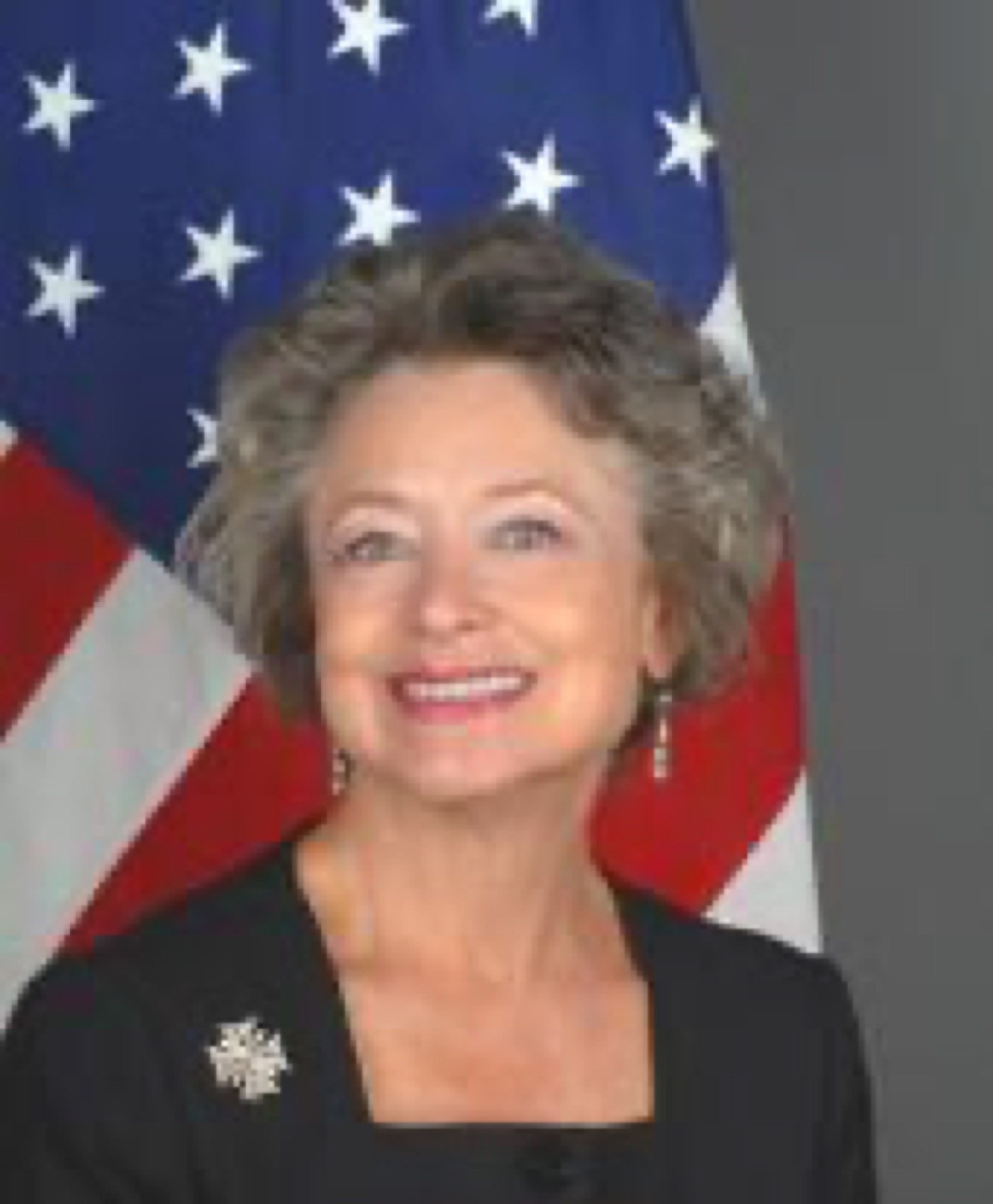
Patricia Moller is a legendary American ambassador who made a decision that helped spark democracy in a West African country.
Episode Summary
Patricia Moller, legendary American ambassador, describes a big decision she made that helped spark democracy in a West African country.
Which, just fell to a military coup. Not good. Or—is it? Her words may surprise you!
Listen & Subscribe
- Watch on YouTube
- Listen on Apple Podcasts
- Listen on Spotify
Transcript
COLD OPEN
Mueller: Coming up on One Decision. I felt kind of like it was a scene from Apocalypse Now. And I thought to myself, surely this is the dumbest thing I have ever done.
INTRODUCTION
Kosinski: Welcome back to One Decision Podcast. I'm Michelle Kosinski. Today we are talking the coup, that abrupt change in leadership that can be tough to even imagine what that feels like in a place like the United States. For others though, it is part of the landscape. A friend of mine who grew up in Bolivia told me that when he was little, when they turned on the radio in the morning and the national anthem was playing, that meant there was another coup. And bonus, they got a day off from school. We have seen multiple coups lately. In Myanmar, another military takeover. In Mali, two coups in one year. Sometimes it's obvious it's going make life harder for people. In other cases, it's far more ambiguous. And some coups come cleverly disguised. But when is a coup a good thing in today's world? We'll look at a very interesting and still evolving one in Guinea, with someone who has an extremely unique perspective on this West African country. In fact, you could say a decision made by Ambassador Patricia Mueller played an unexpectedly pivotal role in Guinea's young democracy, which was just overthrown. And her reaction may surprise you. Plus, she's a character. But first, let's check-in with another rather unique human, Britain's former head of MI6, Sir Richard Dearlove.
ANALYSIS WITH SIR RICHARD DEARLOVE
Dearlove: So to coup or not to coup, that is the question. These small West African states, their politics always seem to revolve around what I would describe as big men. Big manism in Africa is very characteristic of their politics and you either get these senior army officers or you get democratic leaders who are tending towards autocracy and wanting their children to succeed them. So it's a constant struggle. And I think in most, I mean, there's a lack of institutional strength, and one of the few institutions which is constant is the military leader. Has become all too easy to throw a coup? Look what's just happened in Sudan. Clearly, the Sudanese people want to move in the direction of a more democratic process, and the military feel, well, hang on. You know, that's threatening our position of privilege.
Kosinski: This coup in Guinea, though, in September by the military, this was a weird one.
Kosinski: Because when we watch it, okay, so there I am in my office watching this coup happen and thinking, oh my gosh, it's terrible for this country. But then the interviews start coming in from people on the streets and they're all saying things like, yeah, that's probably the best thing to do. It's a good idea. And then it's like, wait, it makes rethink your whole view of a forceful, yeah.
Dearlove: So maybe it does offer a better opportunity for the country over time. But let's see. I mean, the acid test is within two years are they going to have a proper democratic election and not run themselves as candidates.
Kosinski: That's really what it boils down to. Right. Okay. Thanks, Richard. Now let's bring in legendary American diplomat Patricia Mueller. Ambassador, first tell us a little about yourself.
INTERVIEW
Mueller: Well, you know, I grew up sort of all over the place. My dad was a colonel in the Air Force, and so I was accustomed to changing my venue every couple of years. Did you always want to be an ambassador?
Kosinski: Well, no. Patricia actually started in investment banking for a decade but felt unfulfilled. She found what she was looking for in the State Department serving all over the world, India, Armenia, Georgia, Burundi in her first role as US Ambassador, and then Guinea.
Mueller: My whole career was served in places that were politically challenging because that's where I always had the most fun. I will never forget the call I got from a very senior person at the State Department to say, I don't know how you're going to feel about this, but we'd really like you to go to Guinea as ambassador.
Kosinski: Does your heart drop a little bit when you realize it's going to be not exactly a cushy position?
Mueller: I never sought cushy positions. I think it's much more fun to live when you have a chance to make a difference. And I'm so grateful for it. What a wonderful experience it has been to be connected with Africa.
Kosinski: Her introduction to the continent was Burundi, where there had just been an election following a long civil war.
Mueller: One night I was coming home and suddenly wham, right in front of my car, this Katyusha rocket exploded. It was the beginning of a real active role by the opposition to try and derail the government. I was having a dinner party one night and suddenly we were under attack, not we as objects of the attack, but under mortar fire and small arms fire. Anyway, that was pretty good preparation for Guinea.
Kosinski: That is incredible.
Mueller: These things happen.
Kosinski: Guinea was an even bigger challenge. One military dictatorship had just supplanted another with a leader, Moussa Dadis Camara, so outrageous that the US decided Patricia should not even meet with him. Him doing interviews in his pajamas with his four year old daughter in bed.
Mueller: And screaming and shouting at diplomats. And he did all of his receiving of ambassadors and all, after midnight in an army camp. His closest friend tried to kill him, but wounded him so grievously, he could not be treated in Guinea. So I feel so happy to say that I never met Dadis Camara. Under his power, there had been a ghastly massacre of opposition leaders in the football stadium, just egregious and horrible in all kinds of bad ways.
Kosinski: His second in command took over, a general nicknamed El Tigre. And that's where things really got interesting.
Mueller: Quite a different character. Very quiet, apparently militarily quite accomplished. You know, I said right away, we've gotta meet this guy. I got out of my great big old black Chevy Suburban at El Tigre's personal compound. And, I mean, I felt kind of like it was a scene from Apocalypse Now, but I got out in my little high heeled shoes and my little black dress, and there were piles of grenades. There were bandoliers of machine gun bullets. Soldiers were lounging everywhere. And I thought to myself, surely this is the dumbest thing I have ever done. And was directed upstairs into kind of foyer for El Tigre's sort of bedroom suite. And it had a big TV screen where, of course, soccer was playing and some cans of Red Bull and oh my god. And suddenly in comes this chap in fatigues. And the fellow who was El Tigre kind of looked puzzled, he said, I thought I was meeting the US ambassador. I said, yes, I am. And I said, well, I would like to talk about the possibility of working together to give your country free, fair, democratic elections. And I want to know if that sounds to you like something you'd like to achieve during your time as transitional president. You just went right for it. Well, he needed to think about it a little bit. One of my arguments to him was that he would be seen the Guinean who moved his country toward democratic elections since he knew well that it had never before in its history had a democratic election. I sort of invoked the judgment of history for him. He was, I believe, quite seized, taken, and touched by the idea that perhaps he would be an iconic figure in the ongoing history of his country. And he had spent enough time outside Guinea to understand, I think, something of the relative merits of different governmental systems. He said to me, So, you're asking me to have elections, and if I agree, you'll work with me. And I said, credible, free, fair, democratic elections. And, of course, you must agree not to run because you are a military figure, and we're looking for a civilian government. And he thought about that and had another little chat with his pal in the local language. And finally, he looked at me and said, All right, I agree. Did you nearly fall off your chair? I don't think the full impact of it hit me until a bit later because I was, you know, really revved up about this.
Kosinski: It figures that you needed to appeal to his ego. You know, you could be a historical icon.
Mueller: And he is. You changed history. Well, he had to agree. You understand.
Kosinski: Yes, but you put that idea in his head and you dangled the carrot.
Mueller: I felt very, very happy about that.
Kosinski: Patricia, you're a fucking genius of diplomacy.
Mueller: Well, no, I think, you know, we're always fortunate when we arrive at the right place with the right timing.
Kosinski: Is there some kind of special State Department medal for somebody who brings democracy to a country? Well, is actually. Well, good. Well, good. I'm glad you got more than a handshake and a congratulations for that, but that is really incredible.
Mueller: It was quite a moment. It was quite a moment. It was really a rare privilege. I still believe that one of the great decisions that was made was made by General Konaté. He was a military dictator who could have managed with a certain amount of ferocity to stay in power for a long time. And he said, No, the right thing to do is to move forward with a democratic government. That was a pretty big decision.
Kosinski: I mean, you so rarely see any dictator go that route. It seems like the modern day dictator only digs in their heels.
Mueller: Yes, yes. That is, alas, a concerning trend that I'm seeing.
Kosinski: He, by golly, he pulled up his socks and said, Nope, it's a democracy for us. Elections did move forward. A man named Alpha Condé became president, and Patricia was ambassador for another two years. So you were able to see some progress.
Mueller: People felt relieved that they didn't have pickup trucks with automatic weapons full of troops at every corner of the street anymore. There was no civil unrest. It was a pretty good time.
Kosinski: Could you feel the newness and the chapter turning?
Mueller: Yes. Yes, I absolutely. And immediately, new businesses sprang up. There was hope. The hope was really palpable for a happier future. Here's a country with the world's largest bauxite reserves, richest iron ore, gold, uranium, graphite, rare earth, precious stones. The people are some of the poorest people in Africa. And so the idea that you could see these people who were living in ways they should not have had to be living, have the opportunity to have hope for a brighter future was a pretty moving experience.
Kosinski: That was 2010. Fast forward eleven years, and Patricia, who now serves on a number of boards in Guinea as a member of the business community, was there on September 5, when that same first elected president, Alpha Condé, now 83 years old, was overthrown by the military. The democracy she had pushed so hard for, gone again in another coup.
Mueller: Well, it was very distressing. I arrived in Guinea on a Saturday night flight, and Sunday morning, I was awakened at eight by the sound of gunfire. I just thought, oh, come on. Really? And by 10:30, it was over. The coup had successfully removed the president from office. By all standards, he was well treated. He was restrained, but in a hotel room. Restrained, like tied up? No, no. He was under house arrest. But, I mean, as coups go, this was pretty sedate.
Kosinski: But to see the end of democracy that was in some small way, or maybe big way, your baby, did it just make you feel sick?
Mueller: I was very distressed by this thing. But as it developed, these coup leaders said, We not here to take power and stay in power. We are here because we and the people of Guinea were dissatisfied with President Alpha Condé. We elected him democratically twice. He then, in a transparently illegal manner, they said, changed the constitution so that he could run for a third term. Right. And at that point, we feel that the democratic process in Guinea came to a halt.
Kosinski: So as a journalist, we hear the same things. First of all, we hear them say Condé had just taken too much. He was reversing the country away from democracy, and then you hear people interviewed around the country saying, Yeah, yeah, this coup was probably a good idea. So then you feel like your initial reaction of horror that, Oh my gosh, there's a coup again, you feel like, Wait, well, maybe I'm wrong. Maybe this is the better thing for the country. So what is true? There are no black and whites, are there?
Mueller: To my sorrow, I had heard very expressions of great unhappiness increasingly with President Condé's rule. He ignored it. I think he genuinely could not imagine Guinea being run by anybody but him.
Kosinski: Did it seem like this was the lead up to a coup, in your opinion?
Mueller: Well, one always hoped it wouldn't be, but realistically, I think the people of Guinea began to realize that Alpha Condé, zealot, patriot, friend of Guinea as he was, was not going to leave office. And the people of Guinea, I believe, thought to themselves, you know, this is not what we call a democratic government right now.
Kosinski: I think that in the United States, we've been conditioned to feel like any coup is absolutely the wrong way to go. What do you think?
Mueller: Not only did the people of Guinea tell me that they thought President Condé was violating the terms of their democratic agreement, but the people who now have promised to lead a transition back into democracy were people for whom they had enormous respect. These are educated people, and the citizens of Guinea have a lot of time for them, a lot of respect for them.
Kosinski: And the coup leader, Colonel Doumbouya, do you know him?
Mueller: Very, very slightly. I know a number of the senior people, one of whom has just been named the new minister of defense. And he is someone for whom I have always had enormous respect and admiration. He is truly a patriot. I know a number of them, and they really are sort of stand up people.
Kosinski: Have you maintained touch with President Condé throughout his third term?
Mueller: I've maintained close touch with President Condé throughout his entire incumbency.
Kosinski: Leading up to the coup, did you warn him that this was not looking good and he needs to think about letting go?
Mueller: One tried to do that. President Condé is not a man who listens to what he doesn't want to hear, Michelle. And that is always very hard.
Kosinski: Well, that's a good trait of a dictator or a wannabe dictator.
Mueller: I President Condé ever saw himself as a dictator, saw himself as the patriotic leader of his country. And he believed his own press and that stuff.
Kosinski: So the way Doumbouya and the other coup leaders have organized this coup, at least they say it's going to lead to another election and the people who are currently in the transition won't be allowed to run or be in office. What do you think about this structure? It's interesting. It's pretty admirable.
Mueller: The second day after the coup took place, they called all of the ministers of government and asked them to surrender their passports and the keys to their official vehicles and then said, Go home. And I mean, I was texting to a couple of the ministers while this was going on. And I said, What's going on? Are you guys okay? And they said, Absolutely okay. Problem. What did those ministers think about this? Well, it was hard for them not to be okay with it.
Kosinski: Yeah. Didn't have much choice there, I guess. Do you have reason to trust that this coup, which is always shocking, will lead to democracy again?
Mueller: Well, I do. But when people ask me that, I kind of feel like I'm being asked to call the stock market. It's a difficult call. But knowing the people who staged the coup and knowing the quality of their concern for the people of Guinea, I would say it's a really good bet that this indeed is a transitional period and that these people will honor their pledges to the citizens.
Kosinski: Practically as it happened, though, the US, UN, EU, and African Union all condemned the overthrow. Did you have any indication that it was going to happen?
Mueller: Let me see. I want to be accurate when I answer this. I had been aware that a lot of the citizens of the country believed that President Condé's incumbency should come to an end. And because there is no, that I'm aware of, constitutional way to recall a president in infamy, there was only one way that that could happen. But as to timing, no, I had no idea. I was as surprised as everybody else. I wasn't astonished by the fact that there had been this abrupt seizure of power, but I was certainly surprised about the timing and that it actually happened.
Kosinski: So as a former State Department person, is it difficult for you sort of philosophically to be in support of a coup? Or is this one of those instances where, yes, this is the right thing for this country that I know so well?
Mueller: I think it's always unfortunate when an abrupt change of government has to happen. But I celebrating will for the people of Guinea if indeed this becomes a transition back to democracy instead of, you know, the feeling that one person is going to stay in power until, you know, they carry him out with his boots on. What are your biggest worries for the country now that they're in this strange time? As long as this interim government continues to make decisions that positively benefit the people of the country, I'm hoping that the international community will keep an open mind. Nobody likes an abrupt change of government. That said, when it does happen, I think intelligent people have to make intelligent decisions about what's going on, and you have to be a little bit pragmatic about it.
Kosinski: Do you think that Western countries and other bodies are too quick to condemn a coup like this in this instance?
Mueller: The proof of the pudding of this thing is gonna be, in two years, does this government host free, fair, and secure elections that are credible? And does a new government come to power that is positive for the people of Guinea? And that's almost all you can say.
Kosinski: Have you spoken to any of the new leaders since this happened?
Mueller: Yes. Yes, I have. They've reached out to me. And what have you heard? They wanted to give the people of the country a shot at better lives.
Kosinski: And do you feel like after so many years of people not benefiting from the resources that Guinea has, that they have ideas for changing that.
Mueller: Well, I do. You know, just things like freeing up credit lines and taking control of some of the resources. For instance, Guinea still exports 100% of its bauxite ore as rocks. They're exporting rocks. I'm seeing entrepreneurs who are increasing their business internationally. We had an announcement from this government a couple of days ago saying, Do not pay any sort of money to any member of the police, the gendarmerie, or the military. You know, that's a big step because, you know, they're going to, I think, sort out pay for civil servants so that civil servants can actually live on their pay and not on their bakshish. There are real possibilities here.
Kosinski: Is it strange that you witnessed the birth of democracy and you helped it along? And now what was a coup seems to be like the next promising chapter.
Mueller: It's remarkable that Condé couldn't do these things that you say that these coup leaders are willing to do. They don't have political debts to pay, these coup leaders. That's very interesting. Yeah. I'm so looking forward to having a happy ending for this. And the people of Guinea, you know, they just deserve this.
Kosinski: It's so weird that we're talking promisingly about a coup, isn't it?
Mueller: Isn't it strange? Isn't it strange? But let us hope. Let us hope that they fulfill our best wishes for them.
Kosinski: Does it make you worry, that let's say that this does have a good ending, that it makes coups more possible, that it's a positive example that could sort of make them happen more often in Africa or elsewhere. Yeah. That's the scary part, isn't it?
Mueller: That's why people don't endorse coups. That's why people come down hard and smack them. Because if folks think they can carry off an abrupt change of government and be welcomed for it, wow, there's no end to it, is there? So it's a delicate balance, Michelle.
Kosinski: While this was going on and you could hear it happening, what was your feeling? Were you afraid? What does one do while it is going on around them?
Mueller: I thought, okay, now, who's doing this? And almost immediately, pictures were texted out of President Condé with his military minders from the coup. They were very concerned that people understand they were not going to harm him. It wasn't a terrifying experience.
Kosinski: Are there already things that you've noticed in the functioning of the country and the things that you do? Oh, tell me about that.
Mueller: Yes. When I rode in from the airport last Sunday night, I kept thinking, What is different? What is different? And I thought, Oh, my goodness, the streets are clean. And then you know, we passed trucks gathering rubbish. Unbelievable, unbelievable because Conakry was rather sad with its piles of rubbish everywhere. And the streets were clean.
Kosinski: Why is that? Are they just paying people now? Or like, why couldn't that have happened?
Mueller: Well, indeed, it is a big deal. And I think that the second part of that big deal is that this group of men who have assumed power seem to be working very hard to instill a feeling of personal responsibility in the citizens of the country. And not the government is going to take care of you, you know, from cradle to grave, but you have a responsibility also to help out. The government is not just sitting on a cloud above the citizenry. And gosh, wouldn't that be a positive change?
Kosinski: Is there a sense that they want to change their constitution and put in more checks and balances?
Mueller: Yes, yes. The leaders of the transitional government have been very specific to say, we want to restore the constitution to its former state, and we also want to make it, put in, as you suggest, a number of checks and balances that make it far more difficult for someone to upend the constitution.
Kosinski: So if this coup had not happened, what do you think would have been the course? What would Guinea be like for the next several years?
Mueller: Probably like it has been for the last several years, and the people seem to be getting increasingly poor.
Kosinski: So this decision to, I guess you could say, overthrow the government was the right decision. It's hard to form those words with my mouth, but it seems to be.
Mueller: Well, it will be right if it works out for the people. It really is hard to call, but we want it to work out anyway.
Kosinski: Did any of those people consult with you as they were thinking about doing this? Did anybody run this by you and say, what do you think?
Mueller: No. They have been very careful to say, we do not want to involve you in anything that is improper. And I said, good. Hold that thought. I am a civilian.
Kosinski: It seems like you were sort of viewed as the, I don't know, the godmother of democracy there, though. Tell me about the people of Guinea that you've come to know and everyday people. What are they like?
Mueller: Well, they're very kind. They're warm. They've been treated badly by successor governments from the time that France left as a colonial power. And so they really had to make do in ways that are quite sad, but they want to succeed. They want to be able to support themselves. They just need a sustainable way out. I've seldom experienced such real affection from all walks of life in a country as here in Guinea.
Kosinski: What do you want people to know about this decision to stop the course that democracy was on temporarily to stage a coup?
Mueller: It's a difficult question because people died in that coup on both sides. What I hope very much is that an homage can be paid in two years to these men who seized power in the government and called it a transitional government.
Kosinski: And it's quite a risky decision to take on this responsibility of the country, these people who decided to do it.
Mueller: Yes, you're really out there on a limb, aren't you? But people of Guinea just seemed overjoyed by this. And how you look at a coup and say, Oh, it's great to have an abrupt change of government. It's great to have a firefight. It's great to have people die. It's great to have this. It isn't great. On the other hand, it isn't great for the people of an entire country to be in a sort of spiral downward, poverty spiral going down. That's not a good thing. So that's why, I mean, you can't say one thing is good and the other one is bad, white hats, black hats. It's all shades of gray and it's all going to be judged on its results, I think.
Kosinski: Yeah. We will see. Well, it has been such a pleasure talking to you. It's lovely to speak with you, Michelle.
ANALYSIS WITH SIR RICHARD DEARLOVE
Kosinski: Let's bring Sir Richard Dearlove back in. You know, I think our first reaction in the West is always to say, Oh, it's terrible. They've overthrown the democracy. But if that democracy was turning into, if it was just a thinly veiled dictatorship anyway, then it kind of seems like the coup was the right thing to do.
Dearlove: I very much agree with that line and that point of view. I mean, just because it's a military coup, there is a tendency to say, oh, this is dreadful. But in fact, if you've got a really corrupt government or a government that's gone completely off the rails, maybe temporarily the military coup is the right direction in which to go. It's what then subsequently happens afterwards, you know, the speed at which the country is returned to an election or democracy.
Kosinski: There tends to be immediate condemnation of these moves, though, like we saw here.
Dearlove: And that can really confuse things in the beginning. You know, the problem is that there's a sort of holy grail of democracy, and if democracy is violated, i.e., if you want to get rid of the current government, have an election and get rid of them by another democratically elected government. And all revolutions, if you consider a coup a minor revolution, has a way that usually evolves into something which was not intended. Go back to the French Revolution. It ends up being the terror.
Kosinski: Well, what we see so often now is there are so many fake democracies that there's an opposition that ends up getting jailed anyway, and then they have another election, and it's all just a big sham.
Dearlove: That's the problem. I mean, military coups generally, particularly in Africa, have a pretty bad name because of what subsequently happened. And democratic leaders also that try then to install their families to run the country also have a pretty bad name. Even some of the more reputable leaders like, let's say, Museveni in Uganda, certainly became very, very autocratic the longer he remained in power, and was happy to manipulate elections so that he could remain in power, and do it in a quite blatant fashion. So let's see how it plays out.
Kosinski: And I think in these fragile political situations, you've got to give people the benefit of the doubt, say, well, hang on a moment. Well, the moral of the story, I guess, is that all coups are different and not all of them are bad, I guess. But it sounds so strange to say that.
Dearlove: Well, I think I'm a bit of a heretic on this issue. I would definitely take that position. And if they haven't sort of got their act together by the time the date stamp expires, then okay. One can be judgmental.
Kosinski: Okay. Thanks, Richard. And thank you for joining us here at One Decision. Follow us wherever you find your podcasts and on social media, where we also love hearing from you. I'm Michelle Kosinski here at One Decision.